
BTK抑制剂

Search documents
首次实现年度盈利!百济神州2025年净利润2.87亿美元,营收增长40%至53.43亿美元|财报见闻
Hua Er Jie Jian Wen· 2026-03-25 13:01
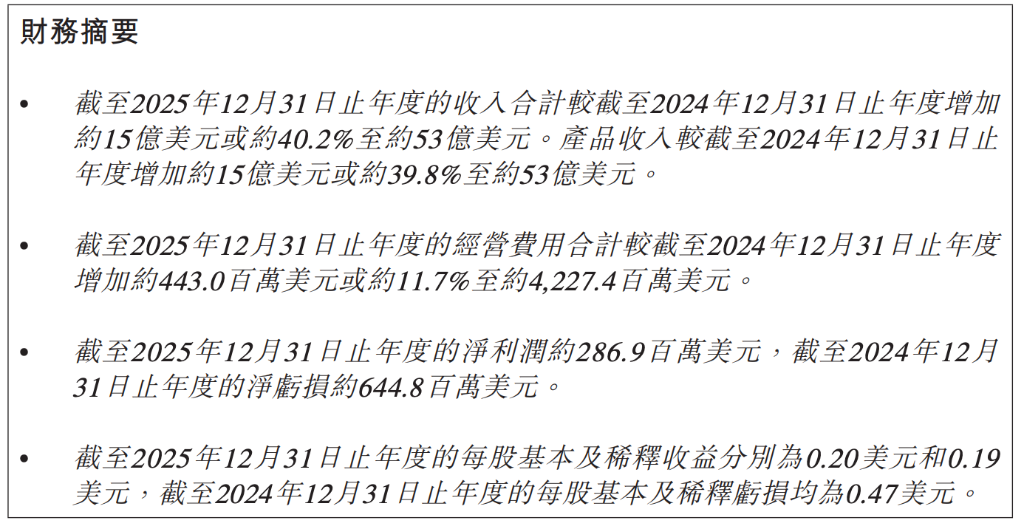
Core Insights - The company achieved a milestone in 2025 by recording a net profit of $287 million, successfully turning around from a net loss of $645 million in the previous year, marking its first annual profit since inception [1] - Total revenue for the year reached $5.343 billion, representing a year-on-year growth of 40.2%, with product revenue netting $5.282 billion, up 39.8% [1] Revenue Breakdown - The core product, Baiyueze, generated $3.928 billion in global sales, a 48.6% increase, maintaining its leading position among BTK inhibitors [3] - Bai Ze An (Tislelizumab) contributed $737 million, growing by 18.8% [3] - Other products included Anjiao Wei (Denosumab) at $306 million, up 36.4%, and Beili Tuo (Bonetuzumab) at $104 million, up 40.2% [3] - Other income reached $60.97 million, a significant increase of 98.6%, primarily from royalties related to the collaboration with Amgen [4] Profitability and Cash Flow - Gross profit for 2025 was $4.67 billion, with a gross margin of 87.3%, up from 84.3% in 2024, driven by improved product mix and manufacturing efficiencies [5] - The company reported a net cash flow from operating activities of $1.128 billion, a turnaround from a net outflow of $141 million in the previous year [1] Cost Structure and Efficiency - Research and development expenses totaled $2.146 billion, a 9.9% increase, while sales and administrative expenses were $2.081 billion, up 13.7% [6] - The combined expenses accounted for 78.6% of product revenue, down from 90.2% the previous year, indicating improved operational leverage [6] Financial Health - As of the end of 2025, total assets were $8.189 billion, with shareholder equity at $4.361 billion and total liabilities at $3.827 billion [8] - The company secured approximately $768 million in term loans from financial institutions for refinancing short-term operational funding [8] Pipeline Progress - The company is advancing its pipeline with the approval of Sotokura (a new generation BCL2 inhibitor) expected in January 2026 for treating relapsed or refractory mantle cell lymphoma and chronic lymphocytic leukemia [9] - The HERIZON-GEA-01 study for Bai He An (Zanidatamab) achieved positive endpoints, paving the way for a market application in HER2-positive gastric adenocarcinoma [9] - The company is uniquely positioned with potential best-in-class candidates across three key targets in chronic lymphocytic leukemia [9]


医药行业深度报告:多发性硬化症全球累及患者群体庞大,BTK抑制剂有望成为新型治疗方案
Ping An Securities· 2026-03-23 05:51
Investment Rating - The industry investment rating is "Outperform the Market," indicating an expected performance exceeding the market by more than 5% within the next six months [54]. Core Insights - The global population affected by multiple sclerosis (MS) is substantial, with over 2 million patients worldwide, particularly prevalent in Europe and the United States. The disease primarily affects individuals aged 20-40, with a significant economic burden, as the costs in the U.S. alone exceed $24 billion [3][6]. - Current therapies for MS include CD20 monoclonal antibodies, which dominate the market. Notably, Roche's Ocrelizumab is projected to generate approximately $9 billion in sales by 2025, while Novartis's Ofatumumab is expected to reach $4.426 billion [3][17]. - BTK inhibitors are emerging as a promising new treatment option for MS, targeting both adaptive and innate immune mechanisms. Several companies, including Sanofi, Roche, and Novartis, are advancing their BTK inhibitors through clinical trials, with significant results expected in the near future [3][24][30][34]. Summary by Sections 1. Global Patient Population of Multiple Sclerosis - MS is characterized by inflammatory demyelination in the central nervous system, with symptoms including vision loss and motor impairment. The disease typically begins between the ages of 20 and 40, with a global prevalence of approximately 2.99 million patients as of 2022 [6][10]. 2. BTK Inhibitors as a New Treatment Option - BTK inhibitors are significant due to their ability to modulate B cell and myeloid cell activity, making them potential treatments for MS. Several BTK inhibitors are in clinical development, with promising results from trials conducted by companies like Sanofi and Roche [24][30][34]. 3. Investment Recommendations - The report recommends focusing on companies with advanced pipelines in the MS treatment space, particularly those with BTK inhibitors in late-stage clinical trials, such as Novartis's Remibrutinib and Innovent Biologics's Orelabrutinib [50].



刚刚!罗氏新药III期成功,但8例死亡病例引发关注
Xin Lang Cai Jing· 2026-03-02 11:50
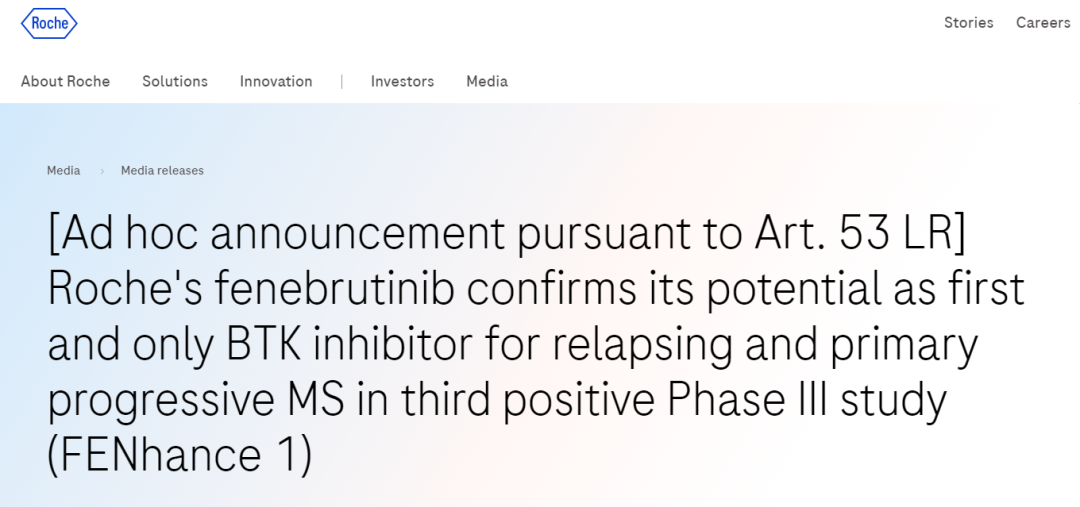
Core Insights - Roche announced that its oral BTK inhibitor Fenebrutinib achieved the primary endpoint in the pivotal Phase III study (FENhance 1) for relapsing multiple sclerosis (RMS) [1][6] - This marks the completion of all three pivotal Phase III studies for Fenebrutinib in the multiple sclerosis (MS) field [2][8] Efficacy Results - The FENhance 1 study demonstrated a significant reduction in annualized relapse rate (ARR) by 51% compared to the active control drug teriflunomide over a treatment period of at least 96 weeks, consistent with the results from the previously published FENhance 2 study, which showed a 59% reduction in ARR [3][9] - Combined data from both studies indicate that patients treated with Fenebrutinib experience a relapse on average every 17 years, showcasing strong disease control capabilities [4][10] Secondary Endpoints and Safety - Both RMS studies showed statistically significant and clinically meaningful effects of Fenebrutinib in reducing brain lesions (MRI lesions) [4][10] - All disease progression-related endpoints, including the composite confirmed disability progression at 12 and 24 weeks (cCDP), indicated favorable trends for Fenebrutinib [4][10] - The overall tolerability of Fenebrutinib was good, with liver enzyme elevations comparable to the control drug teriflunomide, and only one case of asymptomatic and reversible Hy's Law observed in each treatment group [4][10] - Notably, there were 8 deaths of various causes reported in the Fenebrutinib group across the two RMS studies, compared to 1 in the control group, prompting further investigation by Roche to clarify the reasons [4][10] Drug Profile and Future Plans - Fenebrutinib is a non-covalent, reversible, and highly selective BTK inhibitor designed to target both the peripheral and central nervous systems, addressing both acute inflammation and chronic damage driving long-term disability progression [5][11] - Roche's Chief Medical Officer, Dr. Levi Garraway, stated that the key study results, combined with early data, provide strong evidence that Fenebrutinib could become the first high-efficacy oral therapy for both relapsing (RMS) and primary progressive multiple sclerosis (PPMS) [5][11] - Roche plans to present the complete data from the FENhance 1, FENhance 2, and FENtrepid studies at the 2026 American Academy of Neurology (AAN) annual meeting and submit it to regulatory authorities [5][11]
百济神州接待196家机构调研,包括淡水泉、APS Asset、AJ Asset Management、BOCOM International等
Jin Rong Jie· 2026-03-02 08:36
Core Viewpoint - BeiGene has demonstrated strong execution in Q4 2025, achieving significant product revenue growth and solid cash flow, with its lead product, Brukinsa (Zebutinib), becoming the top BTK inhibitor globally [1][4][17]. Financial Performance - Q4 2025 product revenue reached $1.5 billion, a 33% year-over-year increase, with Brukinsa global revenue of $1.1 billion, up 38% [3][17]. - For the full year 2025, Brukinsa generated $3.9 billion in global revenue, reflecting a 49% increase [3][17]. - Gross margin improved to 87%, with operating profit of $447 million and GAAP net profit of $287 million for Q4 2025 [3][19]. - The company expects total revenue for 2026 to be between $6.2 billion and $6.4 billion, with GAAP operating expenses projected at $4.7 billion to $4.9 billion [3][21]. Product Development and Pipeline - In 2025, BeiGene made significant progress in R&D, with the approval of ZS in China for relapsed/refractory MCL and CLL, and ongoing regulatory reviews in the US and EU [2][8]. - The company is advancing multiple clinical trials, including three Phase 3 trials for BTK degraders and a combination therapy for HER2-positive gastric cancer [2][8][14]. - BeiGene aims to establish Brukinsa as a foundational treatment in CLL, with plans to expand its use in fixed-duration treatment regimens [10][11]. Market Position and Strategy - Brukinsa has established itself as the leading BTK inhibitor, with a market share of approximately 50% in the CLL treatment space [7][27]. - The company is targeting three ambitious goals for CLL innovation, focusing on improving patient outcomes and treatment options [6][10]. - BeiGene is also expanding its pipeline beyond CLL, with ongoing research in various hematologic malignancies and solid tumors [11][12][13]. Future Catalysts - Key upcoming milestones include the initiation of a global Phase 3 study comparing ZS with another oral fixed-duration treatment in newly diagnosed CLL patients [16][21]. - The company plans to submit a marketing application for ZS in combination with chemotherapy for HER2-positive gastric cancer in mid-2026 [16][21]. - BeiGene is also set to report on several concept validation studies in immunology throughout 2026 [16].
1款产品狂揽267亿!“创新药一哥”稳了?
Xin Lang Cai Jing· 2026-02-27 10:31
Core Insights - BeiGene has become a focal point in China's innovative drug sector, achieving significant revenue and profit growth driven by its core products and strategic market positioning [1][11] - The company's total global revenue for 2025 reached $5.3 billion, marking a 40% year-on-year increase, primarily due to the strong performance of its flagship product, Brukinsa (Zebutinib) [1][11] - Brukinsa generated $3.9 billion in global sales, a 49% increase year-on-year, solidifying its role as the main driver of revenue growth [1][11] Revenue Growth - The two main self-developed products contributed over 90% of total revenue, with Brukinsa accounting for more than 70% [2][12] - The product matrix's synergy and the launch of new products, such as the BCL-2 inhibitor, have established a sustainable growth model for the company [2][12] Market Positioning - Brukinsa is recognized as the most widely approved BTK inhibitor globally, benefiting from its efficacy and safety, which has helped it secure a leading market position [3][13] - The BTK inhibitor market is experiencing a structural shift, with new-generation products gaining traction as first-generation products lose market share, providing a favorable environment for Brukinsa's growth [3][14] Product Development - The approval of the BCL-2 inhibitor, BeiGene's new product, in January 2026, fills a gap in the domestic treatment landscape and is expected to contribute to future revenue growth [5][15] - The steady growth of the other core product, Tislelizumab (Breztri), in the solid tumor space, further supports the company's dual-driven growth strategy [4][15] Industry Trends - The global demand for oncology drugs is expanding, driven by an aging population and increasing healthcare awareness, creating a broad market opportunity for innovative drug companies [6][16] - The competitive landscape in the innovative drug sector is intensifying, with both domestic and international companies vying for market share, leading to a phenomenon of "Matthew Effect" where established players gain more advantages [6][17] Future Outlook - The company projects total revenue for 2026 to be between $6.2 billion and $6.4 billion, indicating continued growth potential [9][20] - Future growth will rely on multiple product launches and expansions into new therapeutic areas, including autoimmune diseases, which could open new revenue streams [8][19]

正面挑战跨国药企 创新药老兵谭芬来博士底气何在?
Nan Fang Du Shi Bao· 2026-02-26 23:14
Core Insights - Dr. Tan Fenlai, a veteran in China's innovative drug development, founded LUPENG Pharmaceutical after leading the clinical development of China's first small molecule targeted cancer drug, Aiketing (Kaimena) [5][10] - LUPENG has achieved significant milestones, including the development of Lobatinib, the world's first and only dual mechanism BTK inhibitor, which has been recognized as a breakthrough therapy for DLBCL and is undergoing critical Phase II clinical trials [5][14] - The company aims to address unmet clinical needs in the oncology sector, particularly focusing on drug resistance in chronic lymphocytic leukemia and small lymphocytic lymphoma [15][19] Company Background - Dr. Tan's journey began with a strong foundation in medicine, leading to his involvement in pioneering drug development and regulatory frameworks in China [8][10] - After returning to China in 2007, he played a crucial role in developing Aiketing, which became a milestone in China's innovative drug history, benefiting over 850,000 lung cancer patients by 2024 [11][12] Strategic Positioning - LUPENG was established in 2018, capitalizing on favorable market conditions and government support for the biopharmaceutical industry, aiming to create globally competitive innovative drugs [13][14] - The company focuses on small molecule drugs in the hematological oncology field, specifically targeting BTK and BCL-2 pathways, amidst a competitive landscape dominated by established global players [14][15] Clinical Development and Innovation - Lobatinib is designed to tackle drug resistance by targeting both wild-type and mutated BTK, with promising clinical data showing a 63.9% objective response rate in patients with refractory or relapsed mantle cell lymphoma [15][16] - The company is also expanding its research into autoimmune diseases, recognizing the significant market potential in this area, with BTK inhibitors expected to play a crucial role [19][20] Financial and Operational Challenges - The company faced significant challenges during the capital market downturn, leading to strategic decisions to ensure financial stability while maintaining employee support [20][21] - A recent investment round has positioned LUPENG to regain momentum, with plans for an IPO to accelerate global innovation efforts [21]

百济神州2025年总收入382.05亿元 归属于母公司所有者的净利润达14.22亿元
Zheng Quan Ri Bao Wang· 2026-02-26 13:12
Group 1 - The core viewpoint of the news is that BeiGene Limited reported a significant increase in revenue and net profit for the fiscal year 2025, driven by product sales growth and improved operational efficiency [1][2] Group 2 - For the fiscal year 2025, the total revenue reached 38.205 billion yuan, representing a year-on-year growth of 40.4% [1] - The net profit attributable to the parent company was 1.422 billion yuan, reflecting strong financial performance [1] - Product revenue amounted to 37.770 billion yuan, with a year-on-year increase of 39.9%, primarily due to the sales growth of the drug Brukinsa (Zebutinib) and other licensed products [1] Group 3 - Brukinsa achieved record global sales of 28.067 billion yuan, with a year-on-year growth of 48.8% [1] - In the U.S. market, Brukinsa's annual sales reached 20.206 billion yuan, growing by 45.5% [1] - In Europe, Brukinsa's annual sales were 4.265 billion yuan, with a significant increase of 66.4% [1] - In China, Brukinsa's annual sales reached 2.472 billion yuan, marking a growth of 33.1% [1] Group 4 - BeiGene's Brukinsa is the most widely approved BTK inhibitor globally, with approvals in over 75 markets [2] - The company plans to conduct a mid-term analysis of the MANGROVE trial in the first half of 2026, comparing Brukinsa combined with Rituximab against Bendamustine combined with Rituximab for first-line treatment of adult patients with mantle cell lymphoma [2] - The other core product, Tislelizumab (百泽安), achieved global sales of 5.297 billion yuan, reflecting an 18.6% year-on-year growth [2] - Tislelizumab is approved in over 50 markets, and the company expects to submit a new indication application for its combination with Zai Lab's (Zanidatamab) for HER2-positive gastric adenocarcinoma in the first half of 2026 [2]
ICP-248联合奥布替尼一线治疗慢淋/小淋的III期临床完成患者入组
Xin Lang Cai Jing· 2026-02-26 10:21
Group 1 - The company announced the completion of patient enrollment for a Phase III clinical trial of its novel BCL2 inhibitor mesutoclax (ICP-248) in combination with BTK inhibitor ibrutinib for first-line treatment of chronic lymphocytic leukemia/small lymphocytic lymphoma (CLL/SLL) [1][2][3] - Mesutoclax is a new oral, highly selective BCL2 inhibitor that restores apoptosis in tumor cells by selectively inhibiting BCL2 protein, which is crucial in the apoptosis pathway and is associated with various malignant hematological tumors [1][2][3] - The combination of mesutoclax and ibrutinib aims to provide deeper remission for first-line CLL/SLL patients and avoid the development of resistance mutations, presenting a significant potential treatment option [1][2][3] Group 2 - At the 67th American Society of Hematology (ASH) annual meeting in December 2025, multiple studies on mesutoclax were presented, showing good efficacy and safety in both treatment-naive and relapsed/refractory CLL/SLL patients, with an overall response rate (ORR) of 100% in the 125 mg mesutoclax dose group [2][4] - The rate of undetectable minimal residual disease (uMRD) in patients treated with mesutoclax and ibrutinib after 36 weeks was reported to be 65% [2][4] - In addition to first-line CLL/SLL treatment, mesutoclax is advancing towards clinical trials for treating mantle cell lymphoma after BTK inhibitor resistance and has received China's first breakthrough therapy designation [2][4] Group 3 - CLL/SLL is one of the most common types of leukemia, characterized as an indolent malignancy of B lymphocytes, with approximately 191,000 new cases and 61,000 deaths globally each year, and an increasing incidence trend in China [5]

医药生物周报(26年第5周):Roche口服BTK抑制剂PPMS三期临床数据公布
Guoxin Securities· 2026-02-13 00:45
Investment Rating - The report maintains an "Outperform" rating for the pharmaceutical and biotechnology sector [5][39]. Core Insights - The pharmaceutical sector has shown resilience, outperforming the overall market, with traditional Chinese medicine leading the gains [1][28]. - Roche's oral BTK inhibitor Fenebrutinib has demonstrated non-inferiority to Ocrelizumab in treating primary progressive multiple sclerosis (PPMS), marking a significant advancement in the treatment landscape [2][11]. - The global market for multiple sclerosis (MS) treatment exceeds $20 billion, with unmet needs in PPMS due to limited treatment options [3][25]. Summary by Sections Market Performance - The overall A-share market declined by 1.3%, while the biopharmaceutical sector increased by 0.1%, indicating a stronger performance relative to the market [1][28]. - Specific segments within the biopharmaceutical sector showed varied performance, with traditional Chinese medicine rising by 2.6% [1][28]. Clinical Data and Drug Development - Roche's Fenebrutinib trial for PPMS included 985 patients and achieved its primary endpoint, showing a 12% reduction in disease progression risk compared to Ocrelizumab [2][11][24]. - The safety profile of Fenebrutinib was comparable to Ocrelizumab, with a similar incidence of adverse events [22][24]. Company Earnings Forecast and Investment Recommendations - Key companies in the sector, such as Mindray Medical, WuXi AppTec, and Aier Eye Hospital, are rated as "Outperform" with projected earnings growth [4][39]. - Mindray Medical is highlighted for its strong R&D and international expansion, while WuXi AppTec is recognized for its comprehensive drug development services [39]. Valuation Metrics - The TTM price-to-earnings ratio for the pharmaceutical and biotechnology sector stands at 37.31x, compared to the overall A-share market at 21.98x [35][36]. - Specific segments like chemical pharmaceuticals and biological products have higher valuations, indicating investor confidence in these areas [35][36].



医药生物周报(26年第5周):Roche口服BTK抑制剂PPMS三期临床数据公布-20260212
Guoxin Securities· 2026-02-12 12:27
Investment Rating - The report maintains an "Outperform" rating for the pharmaceutical and biotechnology sector [5][39]. Core Insights - The pharmaceutical sector has shown resilience, outperforming the overall market, with traditional Chinese medicine leading the gains [1][28]. - Roche's oral BTK inhibitor Fenebrutinib has demonstrated non-inferiority to Ocrelizumab in a Phase III trial for primary progressive multiple sclerosis (PPMS), marking a significant advancement in treatment options for this condition [2][11]. - The global market for multiple sclerosis (MS) treatment exceeds $20 billion, with Roche's Ocrevus projected to generate CHF 7 billion in sales by 2025, indicating substantial unmet needs in the PPMS segment [3][25]. Summary by Sections Market Performance - The overall A-share market declined by 1.3%, while the biopharmaceutical sector increased by 0.1%, indicating a stronger performance relative to the market [1][28]. - Specific segments within the biopharmaceutical sector showed varied performance, with traditional Chinese medicine rising by 2.6% and medical services increasing by 1.3% [1][28]. Clinical Data and Drug Development - Roche's Fenebrutinib trial included 985 PPMS patients and achieved its primary endpoint, showing a 12% reduction in disease progression risk compared to Ocrelizumab [2][11]. - The trial results suggest potential benefits for upper limb function, reinforcing the viability of BTK inhibitors in MS treatment [3][25]. Company Earnings Forecast and Investment Recommendations - Key companies in the sector, such as Mindray Medical, WuXi AppTec, and Aier Eye Hospital, are rated as "Outperform" with projected earnings growth over the next few years [4][39]. - Mindray Medical is highlighted for its strong R&D and international expansion, while WuXi AppTec is recognized for its comprehensive drug development services [39]. Valuation Metrics - The TTM price-to-earnings ratio for the pharmaceutical and biotechnology sector stands at 37.31x, compared to the overall A-share market at 21.98x, indicating a premium valuation for the sector [35][36]. - Within the sector, chemical pharmaceuticals and biological products have higher valuations at 45.18x and 46.09x, respectively [35].