
中国太平

Search documents
中国太平旗下寿险财险齐“补将”:实战派“老将”,基层起家!
Xin Lang Cai Jing· 2025-12-26 12:32
Core Viewpoint - The leadership changes at China Taiping Insurance Group's subsidiaries, Taiping Life and Taiping Property Insurance, have been finalized, with Wang Xuze and Peng Yunping appointed as the new heads of their respective companies [1][10]. Group and Subsidiary Leadership Changes - Wang Xuze has been officially appointed as the Party Secretary and proposed General Manager of Taiping Life, while Peng Yunping has been appointed as the Party Secretary and proposed General Manager of Taiping Property Insurance [1][10]. - The official appointment of the General Manager position is pending regulatory approval [2][11]. Background of New Leaders - Wang Xuze, born in August 1972, has over 30 years of experience in the insurance industry and has held various positions within Taiping Life, including roles in team development and market expansion [3][13][4]. - Peng Yunping, born in October 1973, has over 20 years of experience in the property insurance sector and has held multiple roles within China Taiping, focusing on business planning and technology integration [5][14][6]. Recent Trends in Leadership Appointments - The trend of appointing leaders from the "70s generation" has been observed, with several key positions within China Taiping being filled by individuals born in the 1970s [8][17]. - Recent appointments include Yin Zhaojun as Chairman and Li Kedong as General Manager of China Taiping, along with various leadership changes across subsidiaries [8][17][18]. Strategic Focus of China Taiping - China Taiping is committed to transforming its operations in line with national strategies, emphasizing risk management, development promotion, and safety assurance [9][18].

同日调整!王旭泽任太平人寿党委书记,彭云苹任太平财险党委书记
Xin Lang Cai Jing· 2025-12-26 10:49
Group 1 - The core point of the article is the significant personnel changes at China Taiping's life insurance and property insurance companies, with Wang Xuze appointed as the Party Secretary and proposed General Manager of Taiping Life, and Peng Yunping appointed as the Party Secretary and proposed General Manager of Taiping Property Insurance [2] - Wang Xuze has over 30 years of experience in the life insurance industry, having held various positions including market director and general manager of multiple branches, showcasing his extensive management experience [2] - Peng Yunping has over 20 years of experience in the property insurance industry, with a strong background in sales, management, governance, and party discipline, indicating her capability in leading Taiping Property Insurance [3] Group 2 - In the first three quarters of this year, Taiping Life achieved insurance business revenue of 158.04 billion yuan and a net profit of 18.13 billion yuan, with solvency ratios indicating strong financial health [3] - As of the end of the third quarter, Taiping Life's comprehensive solvency adequacy ratio and core solvency adequacy ratio were 247.69% and 155.55%, respectively, with recent risk ratings of AA and A [3] - Taiping Property Insurance reported insurance business revenue of 25.87 billion yuan and a net profit of 974 million yuan in the same period, with solvency ratios also reflecting solid financial stability [3]

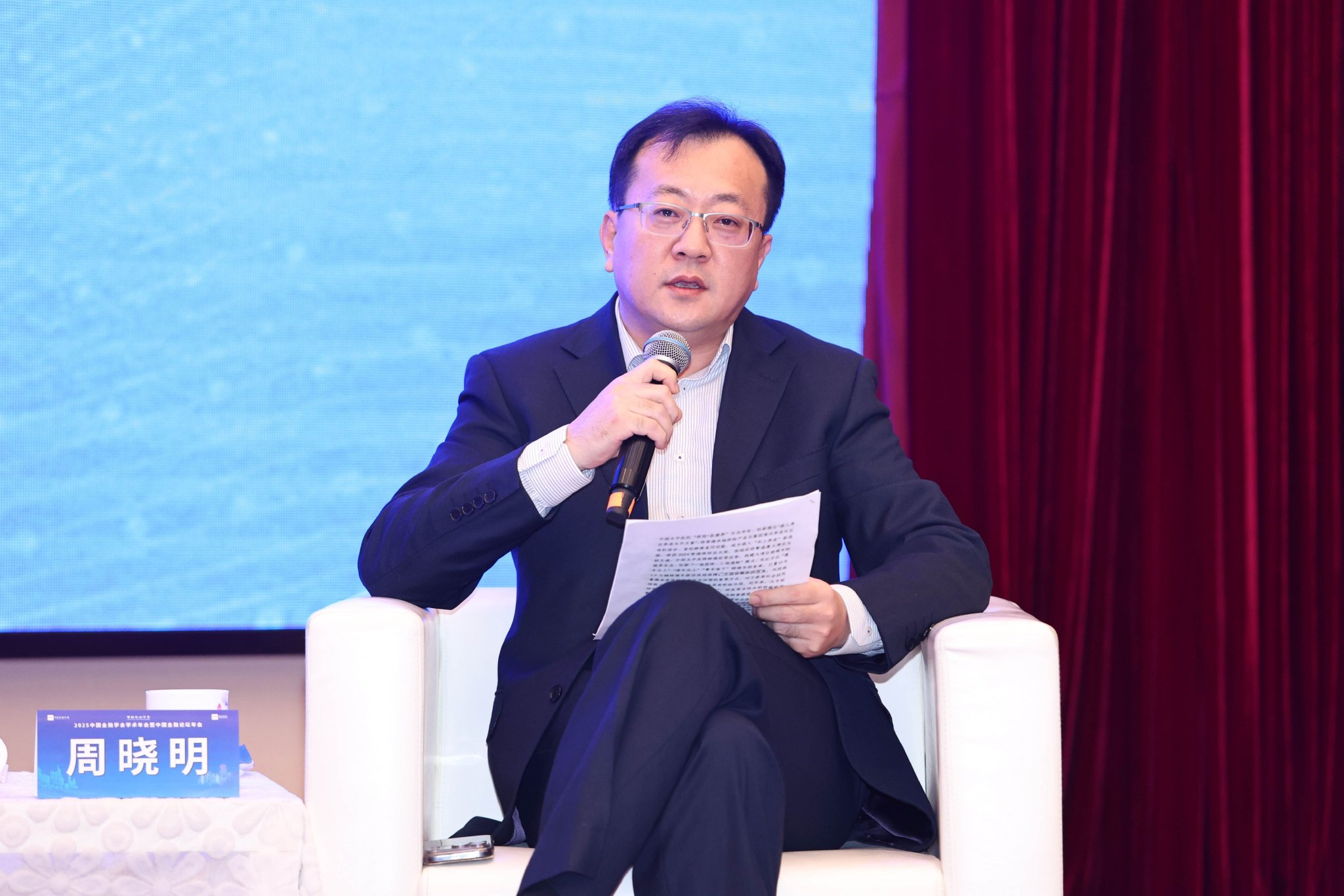
中国太平保险集团战略规划部助理总经理周晓明在2025中国金融学会学术年会暨中国金融论坛年会上的演讲
Zhong Guo Jin Rong Xin Xi Wang· 2025-12-26 06:42
Core Viewpoint - The speech emphasizes the importance of deepening supply-side structural reforms in finance, particularly in the insurance sector, to enhance service quality and support high-quality economic development [4][9]. Group 1: Financial Supply-Side Structural Reform - Deepening financial supply-side structural reform is a crucial part of China's financial development strategy, aimed at promoting high-quality financial growth and building a strong financial nation [4]. - The insurance sector plays a vital role as a modern financial pillar, connecting various industries and impacting national and public welfare [4]. Group 2: Innovation in Insurance Products and Services - China Pacific Insurance is actively exploring new models of "product + service" to drive a virtuous cycle of supply and demand, focusing on five key areas of service for high-quality economic development [5]. - The company has introduced innovative products such as the first scallop farming wind index insurance and carbon sink index insurance for marine aquaculture, supporting the development of green finance [5]. - In the realm of inclusive finance, the company has developed insurance products tailored for new economy workers, such as ride-hailing drivers, covering their entire operational process [5]. Group 3: Utilizing Insurance Capital for New Productive Forces - Insurance serves as an economic stabilizer and social stabilizer, providing risk management and long-term investment support for high-level technological self-reliance and the cultivation of new productive forces [6]. - The company has increased investments in technology innovation through various financial instruments, supporting strategic emerging industries and advanced manufacturing [7]. Group 4: Insurance Technology and Social Governance - The insurance sector has significant potential in innovating social governance and enhancing governance efficiency through specialized and market-oriented mechanisms [8]. - The company has developed a cross-border car insurance service ecosystem in the Guangdong-Hong Kong-Macao Greater Bay Area, facilitating insurance for cross-border vehicles [8]. - Long-term care insurance is highlighted as a key measure to address aging populations and improve social security systems, with successful pilot programs demonstrating significant social benefits [8]. Group 5: Future Outlook - The deepening of supply-side structural reforms presents both a major task for the insurance sector and an important opportunity for its own high-quality development [9].
险资的2025年: 在支持科创、服务民生中展现“耐心”
Jin Rong Shi Bao· 2025-12-26 02:01
Group 1 - The year 2025 is identified as a critical year for enhancing the quality and efficiency of financial services to the real economy, with insurance funds playing a significant role due to their large scale, long duration, and strong stability [1] - Insurance funds are increasingly aligning with national strategic needs, focusing on key areas such as technological innovation, social welfare, and green transformation, thereby injecting lasting momentum into high-quality economic development [1][10] - By the end of Q3 2025, the equity investment scale of life and property insurance companies reached 5.59 trillion yuan, an increase of 1.49 trillion yuan or 36.18% from the beginning of the year, highlighting the active role of insurance funds in the capital market [2][3] Group 2 - A series of supportive policies have been implemented to facilitate the entry of insurance funds into the market, including measures to remove barriers and enhance investment channels [3] - The regulatory authorities have raised the investment ratio limit for equity assets, allowing insurance funds to expand their allocation in the equity market [3] - Insurance funds have been actively participating in long-term investment reforms, with a total approved funding scale of 222 billion yuan for pilot projects aimed at supporting the real economy and technological innovation [3] Group 3 - Insurance funds have been particularly active in equity stakes, with 37 instances recorded this year, involving 14 insurance companies, primarily in sectors like renewable energy and high-end manufacturing [4] - The diversification of investment methods includes increased allocations to public REITs, various industry funds, and long-term equity investment funds, enhancing the stability of the capital market and supporting the real economy [4] Group 4 - Insurance funds are increasingly directed towards technological innovation, with significant investments in the entire chain of technology development, providing stable financial support for key technological breakthroughs and emerging industries [6][7] - By the end of 2024, the insurance industry had invested 680 billion yuan in strategic emerging industries, reflecting a 17% year-on-year increase, and supported self-reliance in technology with 880 billion yuan, a 107% increase [7] Group 5 - In the realm of social welfare, insurance funds are focusing on addressing urgent public needs, particularly in the elderly care sector, by investing in high-quality elderly care projects across multiple cities [8][9] - Major insurance companies are actively developing integrated elderly care communities, combining living, medical, rehabilitation, and entertainment services to enhance the quality of life for the elderly [8] Group 6 - Insurance funds are also involved in green transformation and energy security projects, demonstrating their commitment to long-term capital investment in key sectors [10]
多家险企康养社区密集落地
Jin Rong Shi Bao· 2025-12-26 02:01
Core Insights - The article highlights the growth and development of senior living communities in China, particularly those operated by major insurance companies, as they adapt to the aging population and enhance service offerings [1][2][3] Group 1: Company Developments - China Taiping's "Wutong Renjia" community in Shanghai welcomed its 1500th resident, showcasing its successful growth since opening in November 2019, with interest groups increasing from over 10 to over 30 [1] - Taikang's "Taikang Zhijia" in Nantong opened a new experience center, planning to build approximately 1500 senior living units and a rehabilitation medical facility, expected to be operational by Q4 2027 [2] - China Pacific Insurance launched two new communities, "Taibao Jiayuan" in Beijing and "Sanya International Leyang Center," expanding its network to 15 projects, with 14 already operational [2] Group 2: Industry Trends - The insurance sector is transitioning from single project operations to a nationwide network, offering comprehensive services that include health management, cultural entertainment, and travel vacation options for seniors [3] - The trend of travel-based senior living communities is emerging, with companies like Dajia Insurance establishing locations in scenic areas, indicating a diversification in the types of services offered [2][3]

保险业季度观察报(2025年第2期)
Lian He Zi Xin· 2025-12-25 11:38
Investment Rating - The report does not explicitly state an investment rating for the insurance industry Core Insights - The competitive landscape of China's insurance industry remains stable, with a significant head effect among leading companies. In Q3 2025, premium income for life insurance companies saw a breakthrough growth, driven by concentrated release of residents' savings demand due to the switch in predetermined interest rates. The premium income for new energy vehicle insurance surged, becoming a new engine for growth in auto insurance premiums, further enhancing the contribution of auto insurance to property insurance companies' premium income. The scale of fund utilization by insurance companies continues to rise, with a shift towards equity investments, while the proportion of bond investments and bank deposits has decreased. The overall profitability of life and property insurance companies has significantly improved due to better premium income growth, recovering investment returns, and optimized business costs. However, the overall solvency of the insurance industry has declined, with life insurance companies facing dual pressure on both asset and liability sides, necessitating attention to changes in solvency and capital replenishment pressures [5][6][12]. Summary by Sections Industry Overview - In the first three quarters of 2025, life insurance companies achieved a record premium income of CNY 38,434 billion, a year-on-year increase of 10.19%, marking the highest growth in nearly four years. The growth was primarily driven by life insurance business, with health insurance and accident insurance showing modest growth and decline respectively [17][18]. Premium Income and Market Concentration - The top three life insurance companies maintained a high market share, with the top five companies collectively holding 55% of the market. The property insurance sector also saw steady growth, particularly in new energy vehicle insurance, which became a significant contributor to premium income [18][19]. Fund Utilization and Investment Strategy - As of September 2025, the total fund utilization balance of the insurance industry reached CNY 37.46 trillion, a year-on-year increase of 16.52%. The allocation towards equity investments has increased, while the proportion of bond investments has decreased due to rising interest rates and regulatory changes [23][24]. Profitability Analysis - Life insurance companies reported a net profit of CNY 4,620 billion in the first three quarters of 2025, a year-on-year increase of 62%. Property insurance companies also saw a significant profit increase, with net profits rising by 53.5% [25][26]. Solvency Status - The solvency adequacy ratio of insurance companies showed a structural decline, with life insurance companies experiencing significant pressure. As of September 2025, the comprehensive solvency adequacy ratio was 186.3%, down from 204.5% in the previous quarter [27][28]. Future Outlook - The report anticipates that as insurance companies gradually advance digital transformation and channel specialization, operational efficiency and service quality are expected to improve. The implementation of the "reporting and operation integration" policy for non-auto insurance is expected to standardize operations and optimize expense ratios. The full implementation of new accounting standards starting January 1, 2026, will further enhance business quality and efficiency, promoting sustainable high-quality development in the insurance industry [6][10][45].
固定收益点评:分红险复兴,如何影响保险配置偏好?
Guohai Securities· 2025-12-25 08:05
1. Report Industry Investment Rating No relevant content provided. 2. Core Viewpoints of the Report - The report addresses the asset allocation characteristics of dividend - paying insurance and the impact of its transformation on the bond market [4][10] - In 2025, the transformation of dividend - paying insurance became an industry trend, with significant growth in scale. The income of ordinary dividend - paying insurance of six listed insurance companies in the first half of 2025 reached 157.7 billion yuan, a year - on - year increase of 12%, and its proportion in total life insurance income rose from 15% at the end of 2024 to 16.3% [5][11] - The rapid expansion of dividend - paying insurance meets the needs of both clients and insurance companies. For clients, it offers "certainty of guaranteed return + elastic dividend expectation"; for insurance companies, it helps prevent interest spread losses and reduces the impact of investment asset prices on financial statements [5][14][15] - Compared with ordinary life insurance, the asset allocation logic of dividend - paying insurance is more return - oriented, increasing the allocation of high - volatility assets [5] - The growth rate of insurance companies' bond allocation scale may slow down marginally, and their preference for equities will continue. In terms of specific bond types, insurance companies may increase trading demand for ultra - long - term treasury bonds and allocation demand for secondary perpetual bonds while maintaining the allocation of ultra - long - term local government bonds [5][20][22] 3. Summary by Directory 3.1 Dividend - paying Insurance Transformation Initiation - In 2025, major listed insurance companies placed dividend - paying insurance at the core of their products, driving it to dominate new business. The income of dividend - paying insurance of six listed insurance companies in the first half of the year increased significantly [11] - Each major insurance company has taken measures to promote dividend - paying insurance. For example, China Ping An focused on dividend - paying products, and China Pacific Insurance optimized its product structure with increased dividend - paying insurance new - policy premium [12] 3.2 Reasons for the Rapid Increase in Dividend - paying Insurance Scale - Client side: In the context of low - interest rates and expected stock market improvement, the "certainty of guaranteed return + elastic dividend expectation" of dividend - paying insurance meets clients' demand for more elastic returns [5][14] - Insurance company side: It can prevent interest spread losses and reduce the impact of investment asset price fluctuations on financial statements [5][15] 3.3 Differences in the Asset Allocation Logic of Dividend - paying Insurance - Accounting mechanism: Dividend - paying insurance uses the "floating fee method" for measurement, allowing its liability - side price to be linked to the asset - side. It has a return smoothing mechanism, giving its account a higher risk tolerance [5][16][17] - Business transformation: Higher and stable investment returns are crucial for attracting customers, fulfilling dividend promises, and promoting successful transformation [17] 3.4 Impact on the Bond Market - Overall bond demand: The growth rate of insurance companies' bond allocation scale may slow down marginally, and their preference for equities will continue. In the first three quarters of 2025, the proportion of equity assets in insurance companies' new investments increased from 10.4% in 2024 to 39.9%, while the proportion of bonds decreased from 72.2% to 57.1% [20] - Specific bond types: Insurance companies may increase trading demand for ultra - long - term treasury bonds and allocation demand for secondary perpetual bonds while maintaining the allocation of ultra - long - term local government bonds [22]


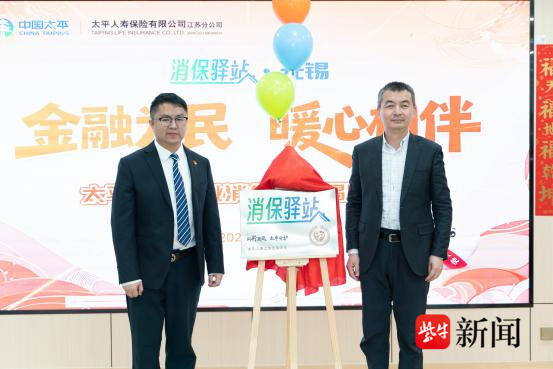
太平人寿江苏分公司“消保驿站”无锡站揭牌 打造“一站式”金融为民服务新阵地
Yang Zi Wan Bao Wang· 2025-12-25 05:42
Core Viewpoint - The establishment of the "Consumer Protection Station" by Taiping Life Insurance in Wuxi, Jiangsu, represents a significant step in enhancing consumer rights protection and upgrading convenient service systems, aiming to integrate financial services with consumer rights protection into community life [1][3]. Group 1: Functions of the Consumer Protection Station - The station combines four main functions: financial education, insurance service processing, consumer rights protection, and community innovation co-construction, creating a "nearby, warm, one-stop" service front [3]. - The "Financial Education Zone" serves as a "financial knowledge charging station" for community residents, promoting financial literacy and risk awareness through various outreach activities [6]. - The "Insurance Service Zone" focuses on providing convenient and personalized services for in-person clients, particularly catering to the needs of foreign nationals, the elderly, and individuals with disabilities through bilingual services and accessible facilities [6]. Group 2: Consumer Rights Protection and Community Engagement - The "Rights Protection Zone" aims to preemptively address disputes by establishing mediation stations in collaboration with regulatory bodies, ensuring efficient and fair resolution of consumer complaints [6]. - The "Innovation Co-construction Zone" offers community amenities such as microwaves and charging stations, while also organizing skill training and festive activities to foster interaction between the company and the community [6]. - Following the unveiling ceremony, a traditional Chinese medicine free clinic was well-received, indicating the community's positive response to the station's initiatives [8].
多家险企康养社区密集落地
Jin Rong Shi Bao· 2025-12-24 03:00
Group 1 - The core viewpoint of the articles highlights the rapid development and expansion of senior care communities by major insurance companies in China, indicating a shift towards diversified and high-quality elderly care services [1][2][3] Group 2 - China Taiping's "Wutong Renjia" community in Shanghai welcomed its 1500th resident, showcasing the community's growth since its opening in November 2019, with interest groups increasing from over 10 to over 30 [1] - The community has established a comprehensive health保障 system, integrating community medical services with a rehabilitation hospital and a three-tier referral system [1] - As of now, China Taiping operates five major senior care communities across different cities, all of which are fully operational [1] Group 3 - The opening of the "Taikang Zhijia - Tongyuan Experience Center" in Jiangsu is part of Taikang Insurance's broader strategy, with plans for approximately 1500 elderly care units and a rehabilitation medical facility expected to be operational by Q4 2027 [2] - Taikang Insurance has established a presence in 37 cities with 47 projects, serving over 20,000 residents across 27 operational communities [2] - China Pacific Insurance has launched two new communities in Beijing and Sanya, bringing its total to 15 projects, with 14 already operational, completing a national elderly care service network [2] Group 4 - The trend of travel-based elderly care is emerging as a new focus for insurance companies, with Dajia Insurance unveiling its "Dajia's Home - Huangshan Feicui Valley" community in a scenic area [2] - Dajia Insurance plans to establish 16 urban medical care communities and multiple travel therapy communities in various locations by November 2025 [2] Group 5 - The insurance industry is transitioning from single project operations to a nationwide network, offering comprehensive services that include health management, cultural entertainment, and travel vacation options, addressing the challenges of an aging population [3]
北京启动安责险安全宣贯赋能计划
Xin Lang Cai Jing· 2025-12-23 17:03
Group 1 - The core initiative of the "Beijing Safety Responsibility Insurance Safety Promotion Empowerment Plan" aims to enhance safety management at the grassroots level through training and professional team building, creating a safety ecosystem led by the government and involving enterprises and the public [1][2] - The plan includes two main tasks: empowering enterprise safety emergency capabilities and establishing a professional promotional team called "Jing An Envoy" to disseminate knowledge on safety production and safety responsibility insurance [1][2] - The training will consist of at least 30 sessions, with 10 sessions to be completed by the end of December 2025 and 20 additional sessions to follow after the release of new national policies in 2026 [1][2] Group 2 - The training curriculum will cover five key modules: prevention, rescue, technology, risk, and interaction, focusing on safety risk identification, hazard investigation, emergency response, first aid skills, and understanding safety responsibility insurance policies [1] - The "Jing An Envoy" team will utilize a "1+1" combination model for presentations, targeting both enterprises and the general public to enhance the relevance of the training [2] - The project will be implemented in two phases, with the first phase from November to December 2025 focusing on preparation, implementation, and a summary of the initial training sessions [2]