Tencent

Search documents
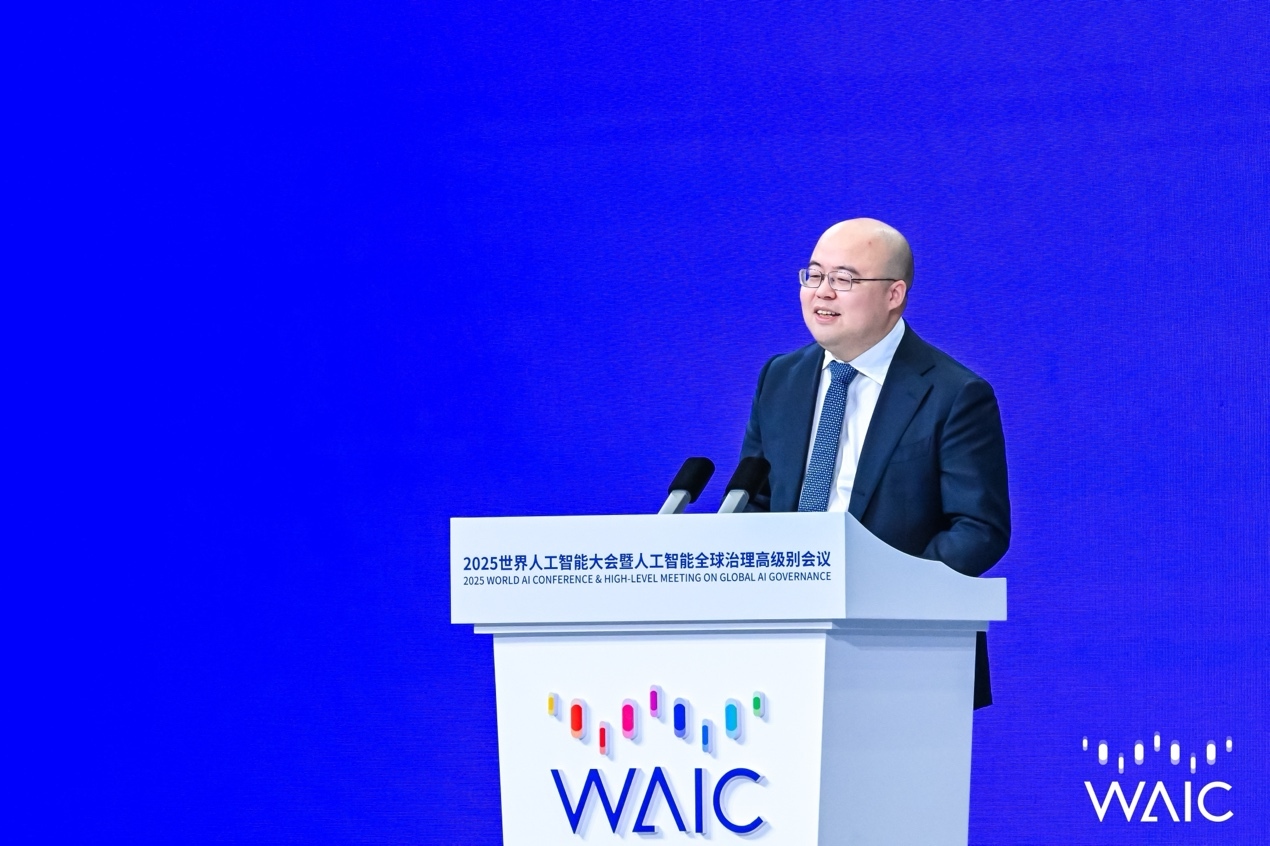
直击WAIC 2025 | AI会不会被垄断?MiniMax创始人闫俊杰:AI领域一定会有多个玩家持续存在
Mei Ri Jing Ji Xin Wen· 2025-07-26 10:57
Core Viewpoint - The 2025 World Artificial Intelligence Conference emphasizes the growing importance of AI as a fundamental productivity tool in society, with multiple players expected to coexist in the AI landscape [3][4]. Group 1: AI Development and Trends - AI is becoming increasingly powerful and is expected to enhance both individual and societal capabilities [3][4]. - The AI field will have multiple players, as different organizations will have varying alignment goals for their models, leading to diverse characteristics and long-term coexistence [4][5]. - Recent advancements show that AI systems are evolving from single models to multi-agent systems, which can tackle more complex problems [5][6]. Group 2: Open Source and Innovation - The rise of open-source models has significantly impacted the AI landscape, with many intelligent systems emerging outside of large corporations [6][7]. - The cost of AI development is expected to decrease due to innovations, making it a less capital-intensive industry, although the use of computational power will still increase [7][8]. - The MiniMax platform has generated over 300 million videos globally, showcasing the widespread application and accessibility of AI technologies [7]. Group 3: Future of AI - The realization of Artificial General Intelligence (AGI) is anticipated, with a focus on serving and benefiting the public [9].

中国互联网的边界-China Internet_ The edge of the Internet...
2025-07-25 07:15
Summary of Key Points from the Conference Call Industry Overview - The conference call primarily discusses the **China Internet** sector, focusing on **e-commerce** and **food delivery** competition among major players like **Alibaba**, **JD**, and **Meituan** [1][12][8]. Core Insights and Arguments - **Competitive Landscape**: The ongoing competition among Meituan, JD, and Alibaba is intense, with significant financial implications. Alibaba has announced **RMB50 billion** in food delivery incentives, while JD has indicated **RMB30 billion** in investments for the same purpose [12][13]. This competition is expected to last into **2026**, potentially exceeding **RMB100 billion** in total costs [13]. - **Profitability Concerns**: The companies are struggling to grow profitably due to overlapping target markets, with **600-800 million MAUs** and **200-250 million core DAUs** competing for the same consumer base [9][55]. The expectation is that the transactional platforms will find it increasingly difficult to achieve sustainable profitable growth without engaging in destructive competition [9][68]. - **Market Sentiment**: There is a prevailing negative sentiment among investors regarding the sector, but recent tactical positioning suggests that stocks may have room for a rebound [8][18]. The normalization of competition, aided by government regulation, could lead to improved conditions for Alibaba and JD [8][17]. - **Earnings Estimates**: The estimates for JD and Alibaba have been reduced due to higher-than-expected food delivery losses and spending plans. The companies are expected to experience material earnings damage through the September quarter [12][95]. Additional Important Insights - **User Subsidy Limits**: The companies are reaching the limits of their user subsidy budgets, with JD managing a quarterly spend of **RMB10 billion** [3]. The expectation is that the competitive intensity will moderate, allowing for a focus on service quality and unit economics rather than just order volume growth [17]. - **Market Dynamics**: The competition is leading to increased multi-homing among users, with Meituan retaining a larger share of unique merchants compared to JD and Ele.me [15][16]. This indicates a potential long-term advantage for Meituan in the food delivery market, despite the overall profit pool shrinking [16]. - **Valuation Metrics**: The valuation metrics for the companies indicate that JD and Alibaba's shares appear cheap in a context where food delivery losses are expected to moderate [4][20]. The adjusted P/E ratios for JD and Alibaba are **7.8x** and **12.9x** respectively for 2026 [11]. Conclusion - The China Internet sector, particularly in e-commerce and food delivery, is facing significant challenges due to intense competition and profitability concerns. While there are signs of potential normalization and recovery, the long-term outlook remains cautious as companies navigate overlapping markets and regulatory pressures.


Own Amazon Stock (AMZN)? This Is the 1 Thing to Watch Now.
The Motley Fool· 2025-07-22 08:55
While Amazon's e-commerce is critical, I think that the better business right now is AWS because its margins are so much better. But it's that business that could be in jeopardy if Amazon's not careful. Amazon (AMZN 1.39%) is a powerhouse name in the stock market, with soaring revenues, a key role in both e-commerce and cloud computing, and a market capitalization of more than $2.3 trillion. But Amazon stock is only up less than 2% so far this year and its dominance in the cloud computing space is beginning ...


独处却不孤独:服务中国单身群体-Trend Tapestry -Alone but not lonely Serving China’s singletons
2025-07-19 14:57
Summary of Key Points from J.P. Morgan's Research on China's "Un-loneliness" Economy Industry Overview - The report focuses on the **"un-loneliness" economy** in China, driven by the rise of single-person households and changing demographics, particularly among young adults and the elderly [1][4][5]. Core Insights 1. **Increase in Solo Living**: - As of 2020, 8.9% of the Chinese population lived alone, a significant increase from 4.4% in 2010. Single-person households now account for 25% of all households in China [4][12][17]. 2. **Emerging Demand for Social Connection**: - Survey data indicates that 21% and 24% of people in China experience collective and relational loneliness, respectively, highlighting a growing demand for services that foster social connections [4][22]. 3. **Sector Opportunities**: - **Sports and Live Entertainment**: The need for community is driving growth in sports participation, with amateur leagues and events gaining popularity. Anta Sports is identified as a top pick in this sector [4][56]. - **Solo Travel**: The rise in solo living is boosting solo travel, particularly among women, with Trip.com highlighted as a key player [4][66]. - **Social Media**: Platforms like Tencent, Kuaishou, and Bilibili are well-positioned to benefit from the increasing need for social interaction [4][66][78]. - **Romance Narrative Games**: The growth of otome games reflects a shift in how intimate connections are formed, with Netease identified as a key player in this market [4][86][92]. 4. **Demographic Shifts**: - Family sizes in China are shrinking, with one and two-person households becoming the most common types. The average family size decreased from 4.41 in 1982 to 2.62 in 2020 [6][8]. 5. **Impact of Marriage Trends**: - The number of marriages in China has fallen by over 50% from its peak in 2013, contributing to the rise of single-person households. The average age of first marriage has also increased significantly [81][82]. Additional Insights - **Health Implications of Loneliness**: Loneliness is linked to poor health outcomes and is recognized as a public health concern by the WHO [34]. - **Community through Sports**: The sports industry contributed 1.15% to China's GDP in 2023, with a notable increase in participation in running and winter sports [35][43]. - **Cultural Events in Macau**: Macau is positioned to benefit from the growing demand for live entertainment, hosting over 2,000 large-scale performances in 2023 [63][64]. Conclusion - The report emphasizes the potential for growth in various sectors as a response to the increasing prevalence of single-person households and the associated demand for social connection. Companies in social media, travel, entertainment, and sports are identified as key beneficiaries of this trend [5][56][66].
Nvidia CEO: Next Wave of AI is "Physical AI," Taps China's Expanding Role in Global AI Ecosystem
Tai Mei Ti A P P· 2025-07-17 11:33
Core Insights - Nvidia's CEO Jensen Huang emphasized the strategic importance of the Chinese market during his recent visit to Beijing, highlighting significant developments such as regulatory approval for the H20 AI chip and the upcoming launch of the RTX Pro GPU, alongside Nvidia's market capitalization surpassing $4.1 trillion [2][3][15] Group 1: AI Development in China - Huang addressed the rapid progress in AI development in China, particularly in large models and computing infrastructure, during the 3rd China International Supply Chain Expo [3][4] - He noted China's strength in AI lies in its talent density and educational foundation, training about half of the world's AI researchers [5] - Companies like Alibaba and DeepSeek are advancing quickly in model development and product integration, fostering a competitive innovation ecosystem [5] Group 2: Nvidia's Product Developments - The approval of Nvidia's H20 chip aligns with U.S. export controls and is designed for large model training, although supply chain uncertainties remain [6] - The RTX Pro GPU is focused on digital twin simulations and robotics, which are key growth areas for Nvidia [7] Group 3: Strategic Partnerships and Ecosystem - Nvidia has a long-standing history in China, with partnerships dating back three decades with companies like Tencent and Xiaomi, which are crucial for its strategy as AI integrates into consumer applications [8] - Nvidia's platform supports over 1.5 million developers in China, enabling the development of commercially viable AI models [9] Group 4: Robotics and Mechatronics - Huang identified robotics as a major AI frontier, with China's unique position in AI software and manufacturing providing a competitive advantage [10] - The combination of advanced mechatronics and strong AI capabilities positions China to lead in the global robotics economy [11] Group 5: Geopolitical Context and Company Strategy - Nvidia's role as a global technology provider is emphasized, with increasing government engagement to understand AI deployment for national priorities [12] - Huang highlighted that practical effectiveness, rather than theoretical intelligence, will drive long-term value in AI models [13] Group 6: Company Evolution and Future Outlook - Founded in 1993, Nvidia has evolved from a gaming chip designer to a key player in global AI infrastructure, significantly impacting various sectors [14] - Huang's increasing visibility in China underscores the importance of the Chinese market in Nvidia's global strategy [15]


After Years of Lagging, Can Uber Save Baidu's Stock?
Forbes· 2025-07-17 09:00
Group 1: Core Insights - Baidu's stock surged nearly 9% following a collaboration with Uber to introduce autonomous vehicles on Uber's platform outside of China and the U.S. [2] - The partnership marks a significant step in Baidu's efforts to internationalize its autonomous driving initiatives, with initial launches expected in Asia and the Middle East by the end of 2025 [3] - Baidu's Apollo Go division reported over 1.4 million rides in Q1 2025, a 75% increase year-over-year, and operates over 1,000 fully driverless vehicles across 15 cities [4] Group 2: Market Potential - Uber's human-driven rides generated a $375 billion annual revenue pool, indicating a substantial opportunity for the autonomous sector, which could potentially double the existing ride-hailing market to a $750 billion opportunity [4] - The demand for autonomous ride-hailing is expected to increase as users experience the benefits, with Robotaxis like Waymo showing higher customer retention and fewer accidents [4] Group 3: Challenges and Valuation - Baidu's stock has faced challenges due to a slower-than-expected post-Covid economic recovery in China, leading to reduced advertising revenue in its core search business [5] - The emergence of generative AI has created uncertainty for traditional search models, with competition from other Chinese tech giants like Alibaba and Tencent [5] - Baidu is currently valued at around $90 per share, trading at approximately 10x projected 2025 earnings, significantly lower than its nearly 40x multiple during the pandemic, with nearly $22 billion in net cash [6]



高盛:中国数据中心 -芯片供应改善,更好把握人工智能需求
Goldman Sachs· 2025-07-16 15:25
Investment Rating - The report maintains a "Buy" rating for Nvidia (NVDA) and highlights "Buy" ratings for Alibaba (BABA), Tencent (700.HK), and Baidu (BIDU) among cloud service providers, while GDS (GDS/9698.HK) and VNET are also rated positively among data center operators [4][29]. Core Insights - Improved chip availability is expected to enhance the ability of Chinese cloud service platforms (CSPs) to meet AI demand, particularly with Nvidia's new RTX Pro GPU tailored for China [2][4]. - The resumption of Nvidia's AI GPU exports to China is anticipated to alleviate the chip shortage that has hindered capital expenditure (capex) for CSPs and data center operators [2][3]. - There is a potential for sequential capex growth in the second half of 2025 as chip availability improves, despite cautious expectations for hyperscalers' capex and data center order volumes in the second quarter of 2025 [3]. Summary by Sections Market Reactions - The market is expected to respond positively to Nvidia's announcement regarding AI GPU exports, which could lead to increased capex spending by CSPs and improved order visibility for data center operators [2][4]. Company Performance - The report forecasts that Alibaba and Tencent's capex will likely reach a bottom in the second quarter of 2025 and recover sequentially in the latter half of the year [8]. - GDS's 12-month target price has been raised to US$40/HK$39, reflecting the net debt amount and the conversion of convertible bonds [16][17]. Future Developments - Upcoming events include the second quarter results for CSPs and data centers expected in mid-to-late August, updates on US AI chip export rules, and the listing of GDS's C-REIT [4].

Jensen Huang lauds China's AI models as Nvidia gears up to resume chip exports
CNBC· 2025-07-16 04:54
Core Insights - Nvidia CEO Jensen Huang commended China's generative AI models, highlighting their global impact and innovation [1][2] - Nvidia anticipates resuming shipments of its H20 AI chip to China following U.S. government assurances, after a halt in sales due to new regulations [4] Group 1: AI Models and Development - Huang mentioned that models like DeepSeek, Alibaba, Tencent, MiniMax, and Baidu Ernie bot are world-class and have contributed significantly to global AI advancements [2] - Over 1.5 million developers in China utilize Nvidia's technology to foster innovation [2] - The DeepSeek model developed in China surprised global investors by offering lower development and operating costs compared to OpenAI, despite U.S. chip restrictions [3] Group 2: Nvidia's Market Position - Nvidia's expectation to resume H20 chip shipments indicates a potential recovery in its sales to the Chinese market, which was previously impacted by U.S. regulations [4]
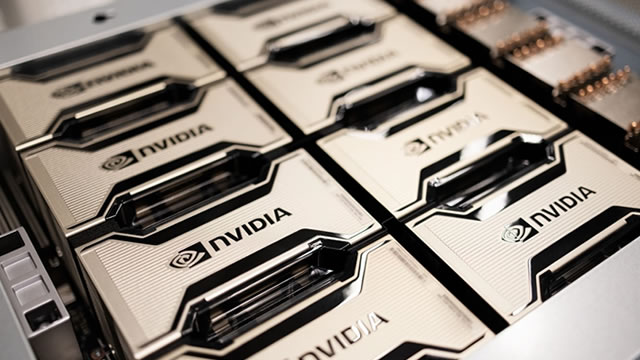
Nvidia is set to resume China chip sales after months of regulatory whiplash
TechCrunch· 2025-07-15 04:36
Core Insights - Nvidia is filing applications to restart sales of its H20 artificial intelligence chips to China, following a period of regulatory changes and discussions with U.S. officials [1][6] - The company anticipates receiving U.S. government licenses soon and plans to introduce a new "RTX Pro" chip tailored for the Chinese market, which is claimed to be fully compliant with regulations [2] Group 1: Regulatory Environment - The H20 chip is central to the U.S.-China tech standoff, being the most powerful chip Nvidia can legally sell to China under current export controls, designed for inference tasks rather than training new AI systems [3] - The Trump administration's restrictions in April could have cost Nvidia between $15 billion to $16 billion in revenue, based on Chinese firms' spending in the first quarter [5] - The restrictions were briefly lifted after Nvidia's CEO met with Trump, where promises of U.S. investments and job creation were made in exchange for continued access to chip sales [6] Group 2: Market Dynamics - Chinese tech giants like ByteDance, Alibaba, and Tencent have been stockpiling H20 chips in anticipation of stricter export controls, attracted by the chip's superior memory bandwidth and Nvidia's software ecosystem [4] - The ongoing situation highlights the balancing act U.S. policymakers face between national security concerns and commercial interests, suggesting potential future reversals in policy [10]