
Blue Origin

Search documents
Former Washington Post exec. editor: Jeff Bezos ‘long feared reprisals from Donald Trump’
MSNBC· 2026-02-07 15:10
in American urnalism, and my former employer a place I called home for six years, has been gutted. This week the Washington Post owned by billionaire Jeff Bezos laid off roughly one-third of its staff in a sweeping round of cuts. nearly every department was affected.The sports desk, book section and several foreign bureaus were eliminated. All reporters stationed in the Middle East lost their jobs as well as key correspondents covering and living in war zones also let go the reporter who covered Amazon and ...


AI算力的下一个战场,已经延伸到了太空
硅谷101· 2026-02-07 00:00
Have you ever considered that the next generation of "computing power factories" might not even be on Earth. In the past few years, AI has turned data centers into new "energy monsters." Electricity, heat dissipation, water supply, and site selection have all become key bottlenecks restricting the evolution of AI. Suddenly, a seemingly futuristic idea was brought to the forefront : moving data centers into space.Building data centers in space might sound like a PowerPoint presentation designed to attract in ...

国防军工2026年度策略:商业航天前景明朗,发射能力亟需提升
材料汇· 2026-02-06 15:54
Group 1: New Economic Cycle and Industry Outlook - A new economic upturn is beginning, with 2025 marking the end of the 14th Five-Year Plan, leading to a gradual release of delayed orders and a recovery in industry prosperity. Events such as the India-Pakistan 5.7 air battle and the 9.3 military parade have enhanced military trade expectations, resulting in a surge in the aerospace sector and military industry reaching new highs in 2025 [1][7][8] - By the end of 2026, multiple new medium and large rockets are expected to launch, with breakthroughs in reusable technology anticipated. This will effectively eliminate the capacity bottleneck that has constrained China's commercial aerospace development, leading to an explosive growth period in the industry [1][7][8] Group 2: Global Geopolitical Tensions and Military Trade - The global geopolitical landscape is increasingly tense, with ongoing conflicts such as the Russia-Ukraine war and Japan's military expansion. This has led to unprecedented increases in global military spending, as countries seek to modernize and expand their arsenals [2][24] - China's military equipment has reached a world-class level, and Chinese military enterprises are positioned to provide comprehensive solutions to clients, potentially reshaping the global military trade landscape [2][14] Group 3: Satellite Internet Development - The Taiyuan Satellite Launch Center is expected to play a crucial role in the high-frequency deployment of satellite internet, with several new medium and large rockets set to launch by the end of 2025. The acceleration of reusable rocket technology in 2026 will further enhance the deployment of satellite internet constellations [3][14] - The deployment of low Earth orbit constellations, particularly in sun-synchronous and polar orbits, is anticipated to increase significantly, driven by the need for global coverage and the impact of climate change [3][14] Group 4: Investment Opportunities in Military and Aerospace Sectors - The new military transformation focuses on precision-guided munitions, unmanned weaponry, and networked battlefield systems. Key investment opportunities are identified in the missile weapon industry chain, new aviation equipment industry chain, unmanned equipment industry chain, and commercial aerospace industry chain [4][14] - The commercial aerospace sector is expected to become a primary investment theme in 2026, driven by the resolution of capacity bottlenecks and the rapid deployment of satellite internet [4][14]
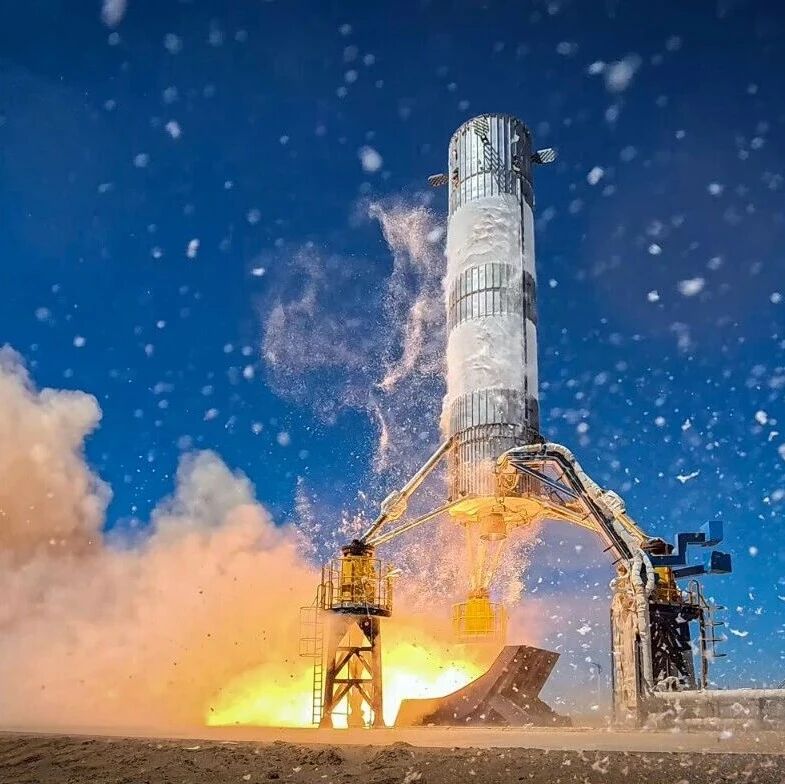
The new space race: U.S. vs. China #shorts
60 Minutes· 2026-02-05 03:01
What would it mean if China were to put humans back on the moon first. >> Of course, it'd be massively embarrassing. Scott Pace was executive secretary of the National Space Council during the first Trump administration and helped NASA develop the Aremis program.He says establishing a presence on the moon is important. Who gets there first this century is not. I don't downplay the embarrassment and bad headlines and everything else that would come from the Chinese, you know, returning to the moon before we' ...

First look at Blue Origin’s Mark 1 lunar lander #shorts
60 Minutes· 2026-02-05 00:15
On Friday, Jeff Bezos owned Blue Origin announced at least a two-year pause of its space tourism flights to focus on moon missions. >> Take motion. >> In November, Blue Origin sent its powerful New Glenn rocket into orbit and returned the booster to a platform in the Atlantic.A first for Blue Origin. to bring back that first stage was gamechanging because now like an airplane you're now able to reuse that vehicle. >> John Kolis is senior vice president of lunar permanence at Blue Origin.NASA tapped the comp ...

Bezos' Blue Origin Tops 90 Space Travelers With NS-38
Bloomberg Technology· 2026-02-04 15:44
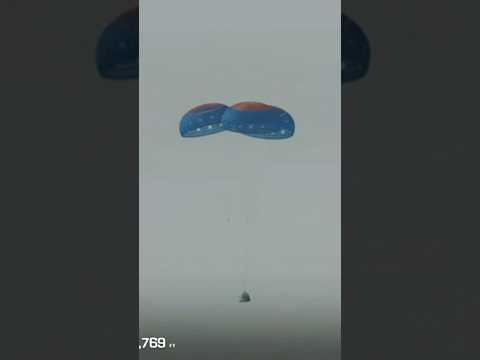
Mach 1 vehicle is supersonic. >> 3 minutes 10 seconds into flight. It is flat.>> Booster descent nominal. >> Welcome home. New Shepard booster.Welcome home. Tail four. >> Capital means deployed.>> Capsule touchdown. Welcome home NS-38. puffing up that West Texas dust and slowing down the capsule to about a mile or two before landing. ...
X @Bloomberg
Bloomberg· 2026-02-02 18:52
Defense Secretary Pete Hegseth heaped praise on Jeff Bezos-backed Blue Origin in a visit to the space venture’s facility, recruiting another billionaire in his effort to reform government weapons buying and pressure traditional defense contractors. https://t.co/X4bc9UeFFD ...
Inside NASA's journey to the far side of the moon with Artemis II | 60 Minutes
60 Minutes· 2026-02-02 03:56
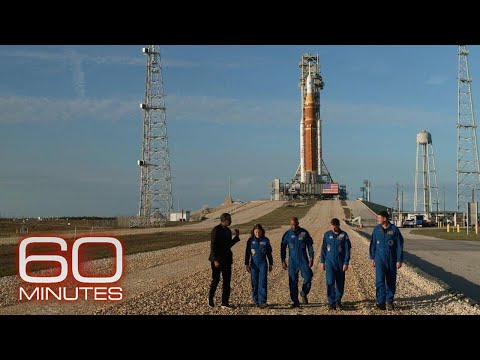
This month, NASA is aiming to launch four astronauts a top a 32story rocket on a 10-day mission around the far side of the moon. The flight of Artemis 2 will be NASA's first human mission to the moon since Apollo 17 53 years ago. NASA sees it as a critical stepping stone toward its ultimate goal, landing astronauts on the lunar surface again, establishing a sustained presence there, and using the moon as a gateway to future Mars missions.After a number of delays, President Trump set a goal of returning Amer ...
光伏设备:低轨星座竞赛与太空算力革命,引爆太空光伏需求新周期
国盛证券有限责任公司· 2026-02-01 10:24
Investment Rating - The report provides a positive investment rating for solar equipment suppliers, specifically recommending "Buy" for companies like Gaoce Co., Ltd. and "Increase" for Maiwei Co., Ltd. and Mingyang Smart Energy [7][33]. Core Insights - The demand for space photovoltaic systems is expected to surge due to the explosive growth in satellite deployment and AI computing power in space. The competition between China and the U.S. for low Earth orbit resources is intensifying, with China planning to submit applications for 203,000 satellites by the end of 2025, while the U.S. has already launched over 10,000 satellites [1][10]. - New technological pathways such as P-type HJT and perovskite tandem cells are emerging, which promise lower costs and improved performance compared to traditional gallium arsenide batteries. These technologies are seen as the future of space photovoltaic systems [2][16]. - The global manufacturing landscape is shifting, presenting historic opportunities for Chinese equipment and battery manufacturers to expand internationally, particularly in the context of the growing demand for space energy [3][29]. Summary by Sections Section 1: Satellite Deployment and Space AI Computing - The report highlights the critical period for low Earth satellite deployment, emphasizing the fierce competition between China and the U.S. for orbital resources. The U.S. has launched a significant number of satellites under the SpaceX Starlink program, while China is advancing its national satellite constellation plans [1][10]. - The AI computing power explosion is creating a new paradigm for space-based data centers, which can operate continuously in sunlight and utilize the cold of space for cooling, leading to a substantial increase in demand for space photovoltaic systems [1][10]. Section 2: Technological Advancements - The report discusses the advantages of P-type HJT cells and perovskite tandem cells, which are expected to dominate the future of space photovoltaic technology due to their high efficiency and lower production costs. These technologies are particularly suited for the harsh conditions of space [2][16][27]. - The report notes that traditional gallium arsenide batteries, while efficient, are too costly for large-scale deployment in satellite constellations, thus paving the way for new technologies [2][26]. Section 3: Global Manufacturing Opportunities - The report identifies a mismatch in global manufacturing capabilities, with U.S. companies lacking the necessary equipment for HJT and perovskite production. Chinese manufacturers are positioned to benefit from this gap, as they have already established leadership in these technologies [3][29]. - The report suggests that the increasing demand for space energy, coupled with the restructuring of supply chains between China and the U.S., will create significant growth opportunities for Chinese photovoltaic companies [3][29]. Section 4: Key Companies and Recommendations - The report recommends several key companies for investment, including Maiwei Co., Ltd., Gaoce Co., Ltd., and others that are well-positioned to capitalize on the growing demand for space photovoltaic systems [7][33]. - It emphasizes the importance of companies with aerospace certification and proven technology in the context of the expanding space energy market [3][29].





低轨星座竞赛与太空算力革命,引爆太空光伏需求新周期
GOLDEN SUN SECURITIES· 2026-02-01 10:08
Investment Rating - The report provides a positive investment rating for solar equipment suppliers, particularly highlighting companies like Maiwei Co., Ltd. and others with potential capabilities in the solar photovoltaic sector [7][33]. Core Insights - The demand for space photovoltaic systems is expected to surge due to the explosive growth in satellite deployment and AI computing power in space, with China planning to submit applications for 203,000 satellites by the end of 2025, while the U.S. has already launched over 10,000 satellites [1][10]. - New technological pathways such as P-type HJT and perovskite tandem cells are emerging, offering lower costs and improved performance compared to traditional gallium arsenide batteries, which are currently too expensive for large-scale deployment [2][27]. - The global manufacturing landscape is shifting, presenting historic opportunities for Chinese equipment and battery manufacturers to expand internationally, especially as the U.S. lacks capabilities in HJT and perovskite production lines [3][29]. Summary by Sections Section 1: Satellite Deployment and Space AI - The global low Earth orbit satellite deployment is entering a critical phase, with intense competition between China and the U.S. for orbital resources and frequency bands [10]. - The AI computing explosion is creating a new paradigm for space-based data centers, which can operate continuously under sunlight and utilize the cold of space for cooling, leading to exponential growth in demand for space photovoltaic systems [1][10]. Section 2: Technological Advancements - P-type HJT batteries and silicon/perovskite tandem cells are identified as the main directions for future space photovoltaic technology, with significant advantages in efficiency and cost [2][16]. - The report highlights the limitations of traditional gallium arsenide batteries, which are costly and reliant on scarce materials, making them unsuitable for large-scale satellite constellations [2][26]. Section 3: Global Market Dynamics - The report emphasizes that the demand for solar photovoltaic systems in space is set to enter a new cycle, benefiting domestic equipment and battery manufacturers as they transition from ground support to core space applications [29][30]. - Companies like Junda Co., Ltd., Trina Solar, and others are noted for their advancements in space-grade batteries and solar technologies, positioning them well for future growth in the space photovoltaic market [30][33].