太空光伏系统

Search documents
“制造强国”实干系列周报-20260323
Shenwan Hongyuan Securities· 2026-03-23 08:11
Group 1: Space Photovoltaics and Computing - The TERAFAB project aims to establish a chip manufacturing facility with a target annual capacity of 1 terawatt (1TW), with 80% of production dedicated to space missions[9] - The demand for solar power is expected to surge due to the deployment of AI satellites and the need for high-efficiency solar systems in space[10] - The transition of space photovoltaics from auxiliary power units to essential energy infrastructure for space computing is anticipated to drive significant growth in this sector[10] Group 2: 3D Printing Advancements - The 3D printing industry is experiencing growth due to improved equipment efficiency and reduced material costs, particularly in aerospace and consumer electronics[11] - Metal 3D printing is becoming a key technology for intelligent manufacturing, with applications expanding in various fields including AI computing and aerospace[11] - The price of titanium alloy powder for 3D printing has halved from 600 yuan/kg to below 300 yuan/kg, opening new application scenarios[33] Group 3: Home Products and AI Integration - Companies like Gujia Home and Mousse are focusing on smart and functional home products, with Gujia's new product line achieving over 15,000 orders within 24 hours of launch[44] - Mousse is collaborating with Huawei to create a comprehensive sleep solution, integrating AI technology into their product offerings[49] - The home furnishings sector is witnessing a shift towards smart, functional products that address consumer pain points, enhancing market competitiveness[44]




节后,大利好!
Xin Lang Cai Jing· 2026-02-25 17:32
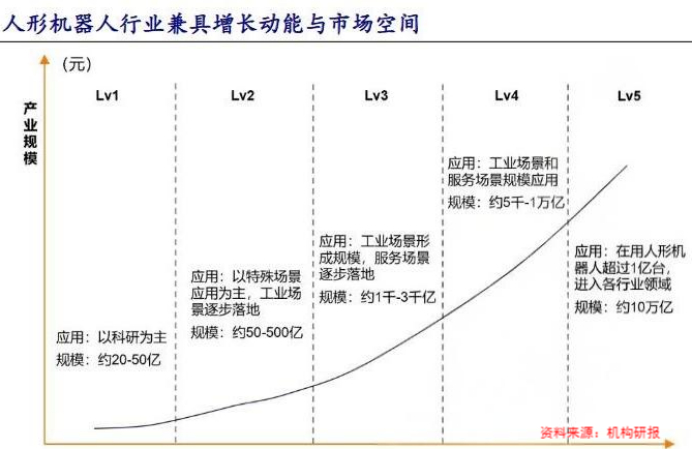
Group 1: Humanoid Robots - The humanoid robot industry is entering a significant commercialization phase, with substantial improvements in performance and user demand, as evidenced by a 4-fold increase in user visits and a 25-fold increase in searches for "robots" during the Spring Festival [1] - By 2026, humanoid robots are expected to become a new production factor in the real economy, with the market scale potentially exceeding 1 trillion yuan if applied on a large scale in industrial and service sectors [2] - The humanoid robot industry has transitioned from the technology introduction phase to the growth phase, indicating a period of rapid performance and valuation increases for companies in the supply chain [7] Group 2: Key Components of Humanoid Robots - The critical components of humanoid robots include: 1. Main control chip (brain) [10] 2. Rotational joints for shoulder and waist movements [11] 3. Linear joints for upper and lower limb movements, with high technical barriers [12] 4. Controllers that manage the actions of each part [13] 5. Batteries with higher energy density and lower power consumption [14] 6. Perception systems acting as the robot's eyes [15] 7. Dexterous hands, crucial for performance, with high technical barriers [16] 8. Skin [17] Group 3: Solar Industry - The solar industry is at a critical juncture of cycle repair and incremental release, with a reported over 3% reduction in silicon wafer production, reinforcing inventory reduction expectations [21] - Space solar power is expected to bring significant growth, with Elon Musk proposing a target of deploying 100 GW of space solar systems annually over the next three years [21] - The industry is experiencing rapid technological advancements, with heterojunction (HJT) technology being favored for its cost-effectiveness and production efficiency, while gallium arsenide batteries are identified as optimal for space solar applications due to their radiation resistance and stability [21][22]

马斯克最新推荐!这个板块一定不要错过
Sou Hu Cai Jing· 2026-02-05 13:27
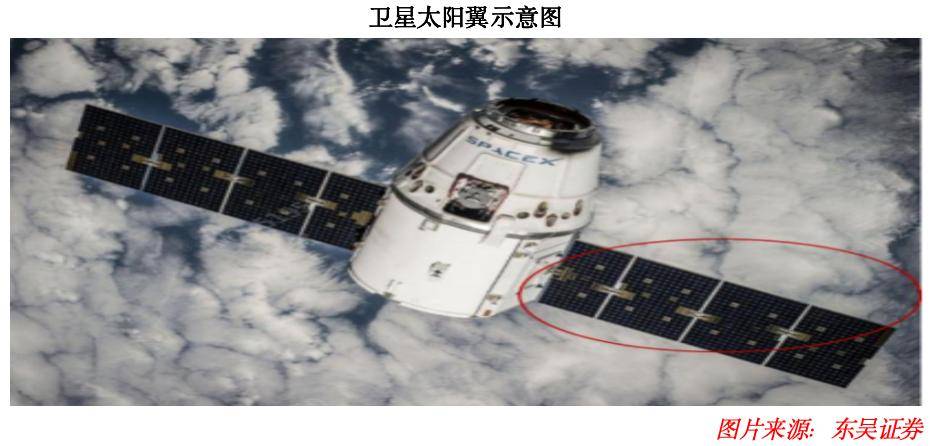
Core Viewpoint - SpaceX's plan to deploy a satellite constellation of one million satellites has reignited interest in the space photovoltaic industry, which aims to harness solar energy in space to address power supply challenges for AI data centers [1][13]. Group 1: Space Photovoltaic Overview - Space photovoltaic refers to systems that capture solar radiation in various space environments and convert it into electrical energy, providing stable energy supply for spacecraft [1]. - The current most mature application of space photovoltaic technology is in satellite power supply, with a growing range of applications expected in deep space exploration and space data centers [2]. Group 2: Industry Development Drivers - The global satellite launch market is entering a phase of scale and normalization, with a focus on low-cost, high-efficiency, lightweight, and flexible photovoltaic systems [4]. - The number of satellite launches has seen exponential growth, with over 4,300 satellites reported launched in 2025, a year-on-year increase of over 50% [13]. - Space photovoltaic systems can provide continuous and stable power, essential for the long-term operation of satellites [14]. Group 3: Technological Advancements - The current leading technology in space photovoltaic is gallium arsenide (GaAs) batteries, known for their high efficiency and radiation resistance, but they are costly and complex to produce [9][10]. - Heterojunction (HJT) batteries are emerging as a mid-term alternative to GaAs batteries, offering advantages in radiation resistance, lightweight design, and lower costs [10][11]. - Perovskite tandem solar cells are anticipated to become a dominant technology due to their high energy density, low cost, and flexibility, potentially reshaping the space photovoltaic landscape [12]. Group 4: Market Potential and Future Outlook - The demand for space photovoltaic is expected to grow exponentially with the implementation of SpaceX's satellite launch plan, potentially creating a market space of nearly 200 billion yuan for solar wings if 10,000 satellites are launched annually [16]. - The space photovoltaic market could exceed 7 trillion yuan if the space computing market reaches 50GW [16]. - Companies with established market shares and complete industrial chains are likely to benefit significantly from the growth of the space photovoltaic industry [16].
国盛证券:低轨星座竞赛与太空算力革命 引爆太空光伏需求新周期
智通财经网· 2026-02-02 07:34
Group 1 - The rapid increase in satellite deployment and the planning of space AI computing power are driving exponential growth in demand for space photovoltaic systems, which are transitioning from supporting components to strategic infrastructure [1] - China plans to submit applications for 203,000 satellites by the end of December 2025, while the US has launched over 10,000 satellites under the SpaceX Starlink program, intensifying the global space race [1] - The emergence of "space-based data centers" is driven by the limitations of ground data centers, with space offering continuous sunlight and near-zero cost cooling due to the cold cosmic background [1] Group 2 - New technological pathways are emerging, including P-type HJT batteries and silicon/perovskite tandem cells, which offer lower costs and improved performance compared to traditional gallium arsenide batteries [2] - P-type HJT batteries benefit from lower costs due to their manufacturing process and established supply chains, while silicon/perovskite tandem cells have demonstrated laboratory efficiencies of around 35% [2] - Perovskite materials are seen as the ultimate solution for space photovoltaics due to their high defect tolerance and radiation resistance, making them suitable for the harsh conditions of space [2] Group 3 - The global manufacturing landscape is misaligned, presenting historic opportunities for Chinese equipment and battery manufacturers as the US lacks capabilities in HJT and perovskite production lines [3] - The demand for photovoltaic equipment is expected to surge as SpaceX and Tesla plan to build a total of 200 GW of photovoltaic capacity in the US over the next three years [3] - Chinese photovoltaic companies, equipped with aerospace certification and large-scale delivery capabilities, are transitioning from ground support to core space applications, positioning themselves to benefit from the growing demand for space photovoltaics [3] Group 4 - Investment recommendations include photovoltaic equipment suppliers such as Maiwei Co., and potential players like Laplace, Liancheng CNC, Jiejia Weichuang, Aotwei, Gaocai Co., Dier Laser, and Jingsheng Mechanical & Electrical [4] - Material suppliers recommended include Junda Co., Dongfang Risheng, Mingyang Smart Energy, Shanghai Port, Qianzhao Optoelectronics, Trina Solar, and Shuangliang Energy [4]

光伏设备:低轨星座竞赛与太空算力革命,引爆太空光伏需求新周期
国盛证券有限责任公司· 2026-02-01 10:24
Investment Rating - The report provides a positive investment rating for solar equipment suppliers, specifically recommending "Buy" for companies like Gaoce Co., Ltd. and "Increase" for Maiwei Co., Ltd. and Mingyang Smart Energy [7][33]. Core Insights - The demand for space photovoltaic systems is expected to surge due to the explosive growth in satellite deployment and AI computing power in space. The competition between China and the U.S. for low Earth orbit resources is intensifying, with China planning to submit applications for 203,000 satellites by the end of 2025, while the U.S. has already launched over 10,000 satellites [1][10]. - New technological pathways such as P-type HJT and perovskite tandem cells are emerging, which promise lower costs and improved performance compared to traditional gallium arsenide batteries. These technologies are seen as the future of space photovoltaic systems [2][16]. - The global manufacturing landscape is shifting, presenting historic opportunities for Chinese equipment and battery manufacturers to expand internationally, particularly in the context of the growing demand for space energy [3][29]. Summary by Sections Section 1: Satellite Deployment and Space AI Computing - The report highlights the critical period for low Earth satellite deployment, emphasizing the fierce competition between China and the U.S. for orbital resources. The U.S. has launched a significant number of satellites under the SpaceX Starlink program, while China is advancing its national satellite constellation plans [1][10]. - The AI computing power explosion is creating a new paradigm for space-based data centers, which can operate continuously in sunlight and utilize the cold of space for cooling, leading to a substantial increase in demand for space photovoltaic systems [1][10]. Section 2: Technological Advancements - The report discusses the advantages of P-type HJT cells and perovskite tandem cells, which are expected to dominate the future of space photovoltaic technology due to their high efficiency and lower production costs. These technologies are particularly suited for the harsh conditions of space [2][16][27]. - The report notes that traditional gallium arsenide batteries, while efficient, are too costly for large-scale deployment in satellite constellations, thus paving the way for new technologies [2][26]. Section 3: Global Manufacturing Opportunities - The report identifies a mismatch in global manufacturing capabilities, with U.S. companies lacking the necessary equipment for HJT and perovskite production. Chinese manufacturers are positioned to benefit from this gap, as they have already established leadership in these technologies [3][29]. - The report suggests that the increasing demand for space energy, coupled with the restructuring of supply chains between China and the U.S., will create significant growth opportunities for Chinese photovoltaic companies [3][29]. Section 4: Key Companies and Recommendations - The report recommends several key companies for investment, including Maiwei Co., Ltd., Gaoce Co., Ltd., and others that are well-positioned to capitalize on the growing demand for space photovoltaic systems [7][33]. - It emphasizes the importance of companies with aerospace certification and proven technology in the context of the expanding space energy market [3][29].





低轨星座竞赛与太空算力革命,引爆太空光伏需求新周期
GOLDEN SUN SECURITIES· 2026-02-01 10:08
Investment Rating - The report provides a positive investment rating for solar equipment suppliers, particularly highlighting companies like Maiwei Co., Ltd. and others with potential capabilities in the solar photovoltaic sector [7][33]. Core Insights - The demand for space photovoltaic systems is expected to surge due to the explosive growth in satellite deployment and AI computing power in space, with China planning to submit applications for 203,000 satellites by the end of 2025, while the U.S. has already launched over 10,000 satellites [1][10]. - New technological pathways such as P-type HJT and perovskite tandem cells are emerging, offering lower costs and improved performance compared to traditional gallium arsenide batteries, which are currently too expensive for large-scale deployment [2][27]. - The global manufacturing landscape is shifting, presenting historic opportunities for Chinese equipment and battery manufacturers to expand internationally, especially as the U.S. lacks capabilities in HJT and perovskite production lines [3][29]. Summary by Sections Section 1: Satellite Deployment and Space AI - The global low Earth orbit satellite deployment is entering a critical phase, with intense competition between China and the U.S. for orbital resources and frequency bands [10]. - The AI computing explosion is creating a new paradigm for space-based data centers, which can operate continuously under sunlight and utilize the cold of space for cooling, leading to exponential growth in demand for space photovoltaic systems [1][10]. Section 2: Technological Advancements - P-type HJT batteries and silicon/perovskite tandem cells are identified as the main directions for future space photovoltaic technology, with significant advantages in efficiency and cost [2][16]. - The report highlights the limitations of traditional gallium arsenide batteries, which are costly and reliant on scarce materials, making them unsuitable for large-scale satellite constellations [2][26]. Section 3: Global Market Dynamics - The report emphasizes that the demand for solar photovoltaic systems in space is set to enter a new cycle, benefiting domestic equipment and battery manufacturers as they transition from ground support to core space applications [29][30]. - Companies like Junda Co., Ltd., Trina Solar, and others are noted for their advancements in space-grade batteries and solar technologies, positioning them well for future growth in the space photovoltaic market [30][33].
给太空光伏泼泼冷水
3 6 Ke· 2026-01-27 06:23
Core Viewpoint - The concept of "Space-Based Solar Power" (SBSP) has gained significant attention in the capital market and technology sector, but it remains far from large-scale commercialization due to various technical, economic, and engineering challenges [1][10]. Technical Challenges - The core logic of SBSP involves placing solar panels in geostationary orbit (GEO) to achieve near-constant power generation, but the entire system's efficiency is only about 13%, with significant energy losses at each conversion stage [3][4]. - The energy transmission efficiency is critically low, with 87% of energy lost during the conversion and transmission process, and the challenges of beam spreading and environmental interferences further complicate the feasibility [3][5]. - The structural scale required for a 2GW system is immense, necessitating thousands of rocket launches for assembly in space, which presents significant technical hurdles in terms of assembly, maintenance, and collision risks in GEO [4][5]. Economic Challenges - The cost of launching materials into space remains a major barrier, with estimates indicating that launch costs could account for 71-77% of the total lifecycle cost of a 2GW system, leading to a total capital expenditure of $900-1370 billion [7][8]. - The levelized cost of electricity (LCOE) for SBSP is projected to be significantly higher than that of terrestrial solar power, with estimates ranging from $0.61 to $1.59 per kWh compared to $0.02 to $0.05 per kWh for ground-based solar by 2050 [7][8]. - The total lifecycle cost of a 2GW SBSP system could reach $2760-4340 billion, with a payback period of 30-50 years, making it unattractive for private capital investment [8]. Current Progress - While there are ongoing experimental projects, such as Caltech's MAPLE experiment and ESA's SOLARIS project, these efforts are still at the laboratory level and far from achieving the scale required for commercial viability [9][10]. - The current enthusiasm in the capital market regarding SBSP is largely driven by narrative and speculative investment rather than substantial technological advancements or market readiness [9][10].
太空光伏万亿赛道启幕 概念高热与产业博弈升温
Zhong Guo Zheng Quan Bao· 2026-01-26 20:54
Core Viewpoint - The A-share space photovoltaic sector continues to experience high enthusiasm, driven by Elon Musk's statements regarding space solar energy and production capacity goals, alongside multiple listed companies disclosing their progress in this area [1] Group 1: Market Dynamics - Musk announced a plan for SpaceX and Tesla to jointly create 200GW of photovoltaic capacity in the U.S. over the next three years, with each company responsible for 100GW, primarily for ground data centers and space AI satellites [1] - The industry faces challenges such as high electricity costs and lengthy commercialization cycles, but the expectation of a trillion-dollar market continues to fuel the sector's growth [1] Group 2: Technological Developments - The space photovoltaic technology route is undergoing rapid iteration and breakthroughs, with competition focusing on cost control and conversion efficiency [2] - Gallium arsenide batteries have dominated the market due to their radiation resistance and stability, but their high costs limit scalability, leading to a focus on silicon and perovskite technologies for cost advantages [2] - Heterojunction (HJT) technology is gaining traction due to its short production process and adaptability to high labor cost scenarios, making it a key direction for overseas capacity expansion [2] Group 3: Company Initiatives - Mingyang Smart Energy announced plans to acquire control of Zhongshan Dehua, which has significant expertise in gallium arsenide space solar cells, marking Mingyang's entry into the space photovoltaic sector [3] - JunDa Co. is initiating a strategic transformation by investing in Shanghai Xingyi Chip Energy, although it is still in the R&D verification stage [3] - Trina Solar has established long-term layouts in crystalline silicon, perovskite tandem cells, and III-V gallium arsenide multi-junction cells, and is collaborating with domestic and international aerospace institutions [3] Group 4: Industry Outlook - The space photovoltaic technology route is expected to evolve in three stages, with gallium arsenide batteries leading high-value aerospace scenarios in the short term, HJT technology penetrating low Earth orbit satellite missions in the next five years, and perovskite tandem cells supporting GW-level space data center deployments in the long term [4] - The Chinese low Earth orbit satellite photovoltaic market is projected to exceed $3 billion by 2030, with global market potential reaching $500 billion to $1 trillion if the 100GW space data center deployment phase is achieved [4] Group 5: Challenges Ahead - The industry is still in its introduction phase, facing multiple challenges for commercialization, including high current space photovoltaic electricity costs of $2-3 per kilowatt-hour, which is significantly higher than ground photovoltaic costs [5][6] - The extreme conditions in space require photovoltaic materials to have high radiation resistance and temperature tolerance, which presents additional challenges for technology maturity and cost stability [6] - The commercial aerospace industry's growth provides ample application scenarios for space photovoltaics, and companies with core technologies and stable supply capabilities are expected to benefit from industry development [6]
马斯克找太空要电,太空光伏找投资者要钱|甲子光年
Sou Hu Cai Jing· 2026-01-24 06:40
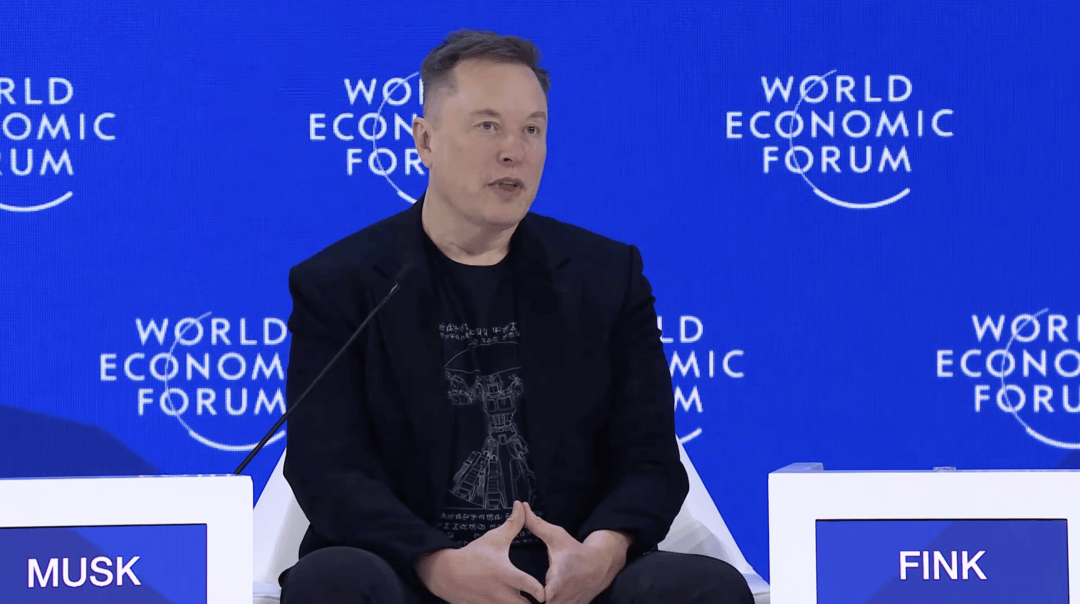
Core Viewpoint - The concept of space-based solar power (SBSP) is being revisited as a potential solution to the increasing energy demands driven by AI, despite historical challenges in commercialization and implementation [2][14][27] Group 1: Space-Based Solar Power Concept - Space-based solar power involves deploying large-scale solar energy systems in space to harness stable solar radiation and transmit energy wirelessly to Earth or other space facilities [2] - The idea of space solar power is not new, having been proposed since the 1970s, but has faced challenges such as high launch costs and the feasibility of energy transmission back to Earth [3][12] - Current engineering challenges include the choice of orbit (low Earth orbit vs. geostationary orbit) and the method of energy transmission (microwave vs. laser) [5][6][9] Group 2: Recent Developments and Interest - Recent discussions, particularly by Elon Musk at the World Economic Forum, have reignited interest in SBSP, linking it to the energy needs of AI and the potential for cost-effective energy solutions in space [2][18] - The successful demonstration of energy transmission from space by projects like the Microwave Array for Power-transfer Low-orbit Experiment (MAPLE) indicates progress in the field, although large-scale commercialization remains distant [12][13] Group 3: Market Dynamics and Future Outlook - The renewed focus on SBSP is driven by the increasing energy demands of AI, prompting a search for energy solutions that are not constrained by terrestrial limitations [17][18] - In China, the concept of SBSP aligns with national narratives around large-scale engineering projects, leveraging existing capabilities in solar manufacturing and space technology [20][22] - The capital market's interest in SBSP reflects a broader anxiety about energy limitations in the AI era, positioning SBSP as a potential long-term solution despite its current impracticality for immediate commercial returns [27]