太空AI算力

Search documents
马斯克不讲武德!月球造卫星工厂,OpenAICEO:十年内绝不可能!
Sou Hu Cai Jing· 2026-02-26 11:16
Group 1 - The core idea revolves around Elon Musk's ambitious "Moon Electromagnetic Catapult AI Satellite Plan," which aims to establish a massive electromagnetic catapult on the Moon to launch satellites into Earth's orbit, potentially creating a network of one million satellites [1][3] - Musk claims that deploying AI data centers in space could reduce costs by ten times compared to Earth, addressing the growing demand for computational power while overcoming the limitations of terrestrial resources [3] - The challenges of building such infrastructure on the Moon are significant, including the need for advanced electromagnetic catapults and the transportation of equipment from Earth, which raises concerns about feasibility and cost [3][5] Group 2 - Concurrently, SpaceX's Starlink has announced a drastic reduction in hardware costs and subscription fees, aiming to capture market share ahead of an impending IPO, with projections indicating Starlink could contribute $15 billion in revenue by 2025, accounting for 90% of the company's total income [5][7] - The competition in satellite internet is intensifying, with Amazon's Kuiper project and other telecom giants entering the market, prompting Musk to adopt aggressive pricing strategies to secure users [5][7] - Musk's Moon plan is not just about profit; it aims to establish SpaceX's dominance in space governance and resource allocation, positioning the company to control future space resources and potentially reshape international regulations [7][9] Group 3 - The Moon plan could democratize access to space-based resources, allowing individuals in remote areas to benefit from high-speed internet and enabling various applications such as satellite-based agriculture monitoring [9] - However, there are inherent risks, including potential financial instability for SpaceX if the Moon project fails and concerns over communication security if Starlink monopolizes space networks [9] - Ultimately, Musk's Moon initiative represents a bold attempt to redefine power dynamics through technology, with the potential to usher humanity into a new era of "space civilization" [9]

马斯克重磅发声:三年内部署AI成本最低的地方在太空,Optimus是“无限印钞机”
华尔街见闻· 2026-02-07 12:35
Core Insights - Elon Musk predicts that within 30 to 36 months, space will become the most cost-effective location for deploying AI due to Earth's electrical power constraints [6][30][17] - Musk envisions launching 100 gigawatts (GW) of AI computing power annually into space, aiming to exceed the total AI computing power on Earth within five years [9][50][55] - The xAI business model targets a trillion-dollar market by creating "digital humans" capable of performing various tasks, which Musk believes could generate significant revenue [11][18] - The Optimus robot is described as an "infinite money printer," with its production expected to scale significantly, enhancing the competitiveness of U.S. manufacturing [14][18] Group 1: Space AI Computing - Musk emphasizes that the efficiency of solar panels in space is five times greater than on Earth, eliminating the need for expensive battery storage systems [8][27] - He warns of an impending surplus of chips that cannot be powered due to stagnant electrical output outside of China [7][82] - The plan involves launching approximately 10,000 Starship missions annually to achieve the necessary power and computing capacity in orbit [9][52] Group 2: xAI and Digital Humans - Musk's xAI aims to emulate human tasks digitally, potentially unlocking trillions in revenue as it competes with existing tech giants [11][18] - He anticipates that by the end of the year, significant advancements in digital human simulation will be achieved [12] - The strategy relies on rapid hardware iteration and vertical integration capabilities from Tesla and SpaceX [12] Group 3: Optimus and Manufacturing - The Optimus robot is positioned as a critical factor for U.S. manufacturing competitiveness, with Musk highlighting the need for innovation to counter China's manufacturing dominance [14][15] - Musk proposes building a "TeraFab" chip factory to overcome current supply chain limitations and meet the growing demand for chips [15][69] Group 4: Energy and Supply Chain - Musk discusses the necessity of self-manufacturing energy equipment to support the ambitious AI and robotics plans [15][46] - He notes that the current supply chain for energy components is insufficient to meet the rapid expansion required for his projects [15][46] - The company aims to produce solar panels domestically, targeting an annual output of 100 GW [38][50]


疯了!马斯克放狠话:30个月把AI全搬去太空,地球算力被抛弃?
Sou Hu Cai Jing· 2026-02-07 09:47
Core Viewpoint - Elon Musk predicts that within 30 months, the most economically attractive place for AI deployment will be in space, as costs will significantly undercut all terrestrial options [1][3]. Group 1: AI Development Challenges - The primary challenge for AI expansion on Earth is not chip shortages but rather the stagnation of global electricity supply, which cannot keep pace with the geometric increase in AI computing demand [3]. - High operational costs for data centers, including electricity and cooling, are threatening the scalability of AI initiatives by major tech companies [3]. Group 2: Space as a Solution - Space is described as a "paradise for AI computing" due to its unobstructed solar energy access, which is five times more efficient than on Earth, and the absence of cooling costs [3]. - Musk asserts that only space can facilitate the unrestricted growth of AI [3]. Group 3: Musk's Strategic Initiatives - SpaceX aims to achieve 1-3 launches per year, with each launch capable of carrying 100-150 tons, drastically reducing the cost of deploying infrastructure in space [5]. - SpaceX has submitted a proposal to the FCC to deploy a network of 1 million satellites for a space-based data center, which is nearing approval [5]. - Tesla and SpaceX plan to establish 200GW of solar power capacity within three years to provide stable energy for space AI computing centers [6]. Group 4: Technological Advancements - Tesla is developing a chip factory named TeraFab to ensure self-sufficiency in chip production, mitigating risks associated with external supply chains [6]. - Musk is confident in the reliability of chips tested on Earth, stating that maintenance in space will not be a significant issue [6]. - The Starlink network has achieved global coverage, enabling efficient data transmission between space and Earth [6]. Group 5: Future Predictions - Musk forecasts that within five years, the AI computing capacity deployed in space will surpass the total historical capacity on Earth, indicating a transformative shift in the industry [8]. - Musk's track record of disrupting industries suggests that his ambitious plans for space-based AI may indeed come to fruition [8].
目标浩瀚星空的SpaceX盯上智能手机! “星链直连终端”或将通信推向卫星纪元
智通财经网· 2026-02-05 14:09
Core Insights - Starlink, a subsidiary of SpaceX, is planning to enter the smartphone market and global consumer communication services, offering direct-to-device internet services and a space tracking service [1] - The initiative includes developing a high-performance mobile device that connects to Starlink's satellite internet constellation, potentially competing with existing smartphones [1][3] - Starlink is a significant revenue generator for SpaceX, contributing approximately 50% to 80% of the company's revenue, with last year's revenue estimated between $15 billion and $16 billion and profits around $8 billion [2][3] Group 1: Business Strategy - Starlink aims to transition from a satellite broadband service to a global communication platform for mobile devices, targeting both B2B and B2C markets [3] - The potential launch of a "Starlink smartphone" is seen as a way to enhance consumer satellite communication experiences and integrate AI services [1][3] - The strategy may involve partnerships with telecom operators to provide satellite communication as a supplementary service [1][3] Group 2: Financial Implications - The move into the mobile device market is expected to enhance SpaceX's valuation ahead of its planned IPO, which could raise up to $50 billion and achieve a valuation of $1.5 trillion [6] - The combination of subscription cash flow, a large total addressable market (TAM), and high-margin data services is aimed at boosting the company's overall valuation [3][5] - Analysts suggest that the merger of Tesla, SpaceX, and xAI could create a "super commercial empire," further influencing market perceptions and valuations of these companies [2][6] Group 3: Market Positioning - The integration of Starlink smartphones with cloud and network platforms is expected to attract higher long-term cash flow multiples from investors [5] - The narrative of combining AI, communication, aerospace, energy, and robotics into a unified infrastructure platform is seen as beneficial for pricing and investor engagement during the IPO process [7] - SpaceX's advancements in satellite communication and AI capabilities are likely to enhance the long-term valuation of Tesla and create new catalysts for growth [6][7]
全面碾压?中国申请20万颗卫星1个月后,马斯克直接申请100万颗
Sou Hu Cai Jing· 2026-02-03 15:22
Core Viewpoint - SpaceX, led by Elon Musk, has applied to the U.S. Federal Communications Commission for the deployment of 1 million satellites, aiming to establish a space data center, which is seen as a response to China's recent application for satellite frequency resources [2][4][5]. Group 1: SpaceX's Strategy - SpaceX's strategy involves starting small and gradually scaling up, with Musk emphasizing that the satellites will be spaced far apart, making direct visibility between them unlikely [2]. - The company has gained a significant advantage in low Earth orbit satellite frequency resources due to the "first come, first served" principle, prompting China to apply for a large number of satellites to counteract potential monopolization by SpaceX [4]. - The application for 1 million satellites is viewed as a tactical move to secure valuable orbital slots and limit competitors' access, even if only a fraction of the satellites are ultimately deployed [7]. Group 2: Implications for U.S. Military and Commercial Interests - SpaceX's satellite network is expected to enhance both commercial and military capabilities, providing a dual-use advantage by improving AI training and real-time communication while strengthening U.S. military command and control [8]. - The integration of SpaceX's AI systems with U.S. military operations indicates a close relationship between the company and the U.S. government, suggesting that strategic decisions may be influenced by governmental interests [5]. Group 3: Challenges and Comparisons with China - Despite its ambitious plans, SpaceX faces significant technical challenges, including limited radiation resistance of space chips and high power dissipation difficulties, which could hinder the efficiency of satellite operations [10]. - The financial burden of deploying 1 million satellites could exceed $500 billion, raising concerns about the sustainability of such an investment for SpaceX [10]. - In contrast, China possesses substantial advantages in satellite production capacity, supply chain control, and the development of reusable launch vehicles, positioning it favorably in the competitive landscape [12].
国盛证券:低轨星座竞赛与太空算力革命 引爆太空光伏需求新周期
智通财经网· 2026-02-02 07:34
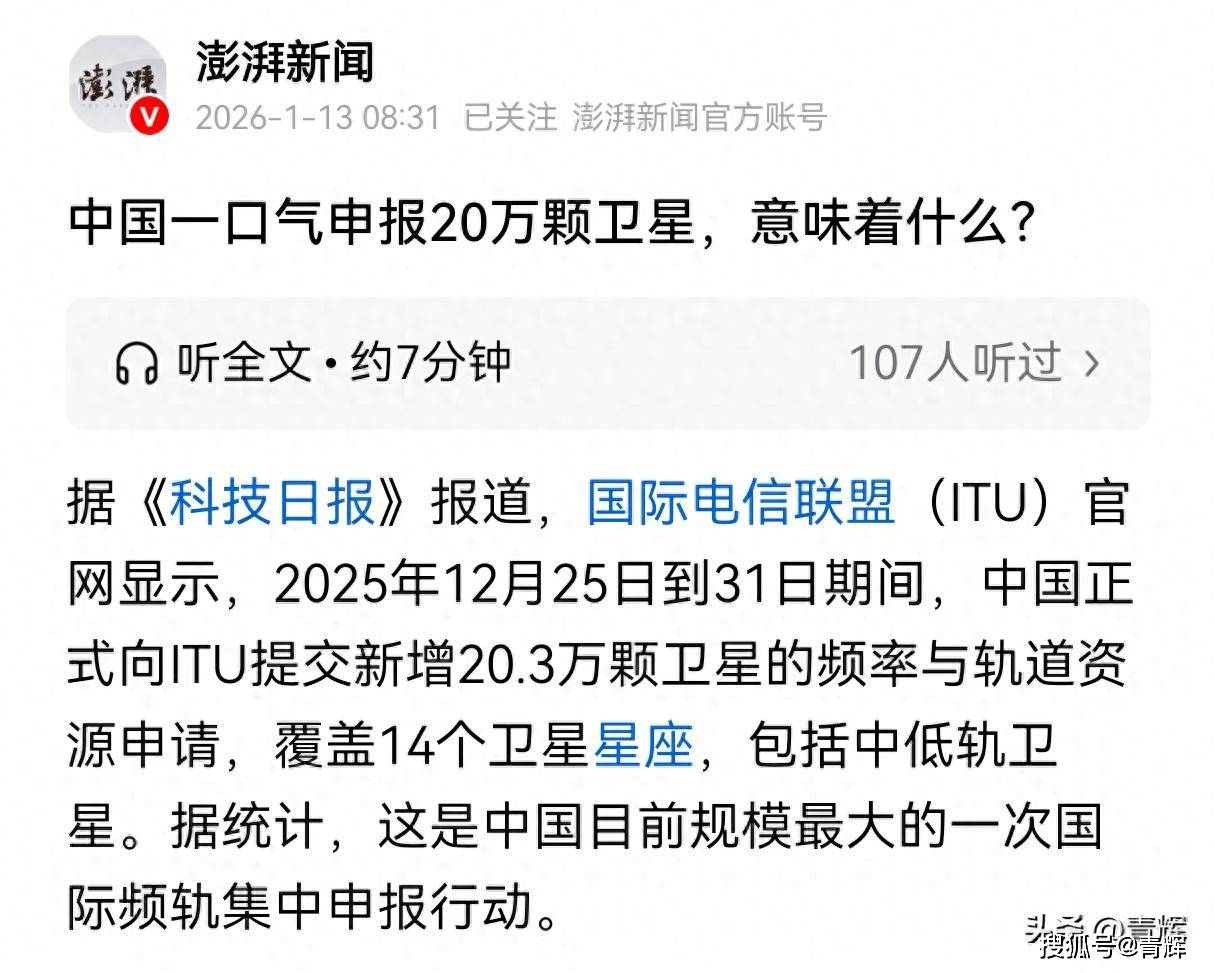
Group 1 - The rapid increase in satellite deployment and the planning of space AI computing power are driving exponential growth in demand for space photovoltaic systems, which are transitioning from supporting components to strategic infrastructure [1] - China plans to submit applications for 203,000 satellites by the end of December 2025, while the US has launched over 10,000 satellites under the SpaceX Starlink program, intensifying the global space race [1] - The emergence of "space-based data centers" is driven by the limitations of ground data centers, with space offering continuous sunlight and near-zero cost cooling due to the cold cosmic background [1] Group 2 - New technological pathways are emerging, including P-type HJT batteries and silicon/perovskite tandem cells, which offer lower costs and improved performance compared to traditional gallium arsenide batteries [2] - P-type HJT batteries benefit from lower costs due to their manufacturing process and established supply chains, while silicon/perovskite tandem cells have demonstrated laboratory efficiencies of around 35% [2] - Perovskite materials are seen as the ultimate solution for space photovoltaics due to their high defect tolerance and radiation resistance, making them suitable for the harsh conditions of space [2] Group 3 - The global manufacturing landscape is misaligned, presenting historic opportunities for Chinese equipment and battery manufacturers as the US lacks capabilities in HJT and perovskite production lines [3] - The demand for photovoltaic equipment is expected to surge as SpaceX and Tesla plan to build a total of 200 GW of photovoltaic capacity in the US over the next three years [3] - Chinese photovoltaic companies, equipped with aerospace certification and large-scale delivery capabilities, are transitioning from ground support to core space applications, positioning themselves to benefit from the growing demand for space photovoltaics [3] Group 4 - Investment recommendations include photovoltaic equipment suppliers such as Maiwei Co., and potential players like Laplace, Liancheng CNC, Jiejia Weichuang, Aotwei, Gaocai Co., Dier Laser, and Jingsheng Mechanical & Electrical [4] - Material suppliers recommended include Junda Co., Dongfang Risheng, Mingyang Smart Energy, Shanghai Port, Qianzhao Optoelectronics, Trina Solar, and Shuangliang Energy [4]

光伏设备:低轨星座竞赛与太空算力革命,引爆太空光伏需求新周期
国盛证券有限责任公司· 2026-02-01 10:24
Investment Rating - The report provides a positive investment rating for solar equipment suppliers, specifically recommending "Buy" for companies like Gaoce Co., Ltd. and "Increase" for Maiwei Co., Ltd. and Mingyang Smart Energy [7][33]. Core Insights - The demand for space photovoltaic systems is expected to surge due to the explosive growth in satellite deployment and AI computing power in space. The competition between China and the U.S. for low Earth orbit resources is intensifying, with China planning to submit applications for 203,000 satellites by the end of 2025, while the U.S. has already launched over 10,000 satellites [1][10]. - New technological pathways such as P-type HJT and perovskite tandem cells are emerging, which promise lower costs and improved performance compared to traditional gallium arsenide batteries. These technologies are seen as the future of space photovoltaic systems [2][16]. - The global manufacturing landscape is shifting, presenting historic opportunities for Chinese equipment and battery manufacturers to expand internationally, particularly in the context of the growing demand for space energy [3][29]. Summary by Sections Section 1: Satellite Deployment and Space AI Computing - The report highlights the critical period for low Earth satellite deployment, emphasizing the fierce competition between China and the U.S. for orbital resources. The U.S. has launched a significant number of satellites under the SpaceX Starlink program, while China is advancing its national satellite constellation plans [1][10]. - The AI computing power explosion is creating a new paradigm for space-based data centers, which can operate continuously in sunlight and utilize the cold of space for cooling, leading to a substantial increase in demand for space photovoltaic systems [1][10]. Section 2: Technological Advancements - The report discusses the advantages of P-type HJT cells and perovskite tandem cells, which are expected to dominate the future of space photovoltaic technology due to their high efficiency and lower production costs. These technologies are particularly suited for the harsh conditions of space [2][16][27]. - The report notes that traditional gallium arsenide batteries, while efficient, are too costly for large-scale deployment in satellite constellations, thus paving the way for new technologies [2][26]. Section 3: Global Manufacturing Opportunities - The report identifies a mismatch in global manufacturing capabilities, with U.S. companies lacking the necessary equipment for HJT and perovskite production. Chinese manufacturers are positioned to benefit from this gap, as they have already established leadership in these technologies [3][29]. - The report suggests that the increasing demand for space energy, coupled with the restructuring of supply chains between China and the U.S., will create significant growth opportunities for Chinese photovoltaic companies [3][29]. Section 4: Key Companies and Recommendations - The report recommends several key companies for investment, including Maiwei Co., Ltd., Gaoce Co., Ltd., and others that are well-positioned to capitalize on the growing demand for space photovoltaic systems [7][33]. - It emphasizes the importance of companies with aerospace certification and proven technology in the context of the expanding space energy market [3][29].





史上最大IPO来袭?SpaceX凭什么值1.5万亿美元?
36氪· 2025-12-24 09:51
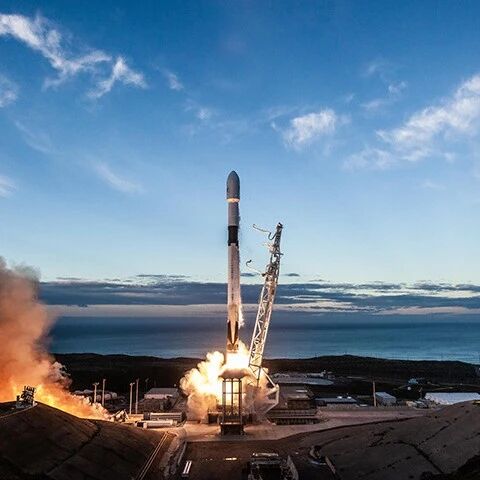
Core Viewpoint - SpaceX's valuation of $1.5 trillion raises questions about whether it is a bubble or a reflection of future potential, with significant contributions from its Starlink project and ambitious plans for space AI computing [4][7][9]. Group 1: Business Model and Revenue Streams - SpaceX is not just a rocket company; it generates significant revenue from its Starlink satellite internet service, projected to contribute approximately $128 billion by 2025, accounting for 70.3% of total revenue [11][12]. - The company’s revenue model includes $51 billion from launch services and $3 billion from human landing systems, with total projected revenue of $182 billion by 2025 [12]. - Starlink has rapidly expanded its user base from 900,000 at the end of 2021 to over 8 million currently, covering more than 150 countries [17][19]. Group 2: Technological and Strategic Advantages - SpaceX's success relies on its ability to launch satellites at a low cost, with Falcon rockets reducing launch costs to less than one-tenth of traditional rockets [26]. - The company has established a self-sustaining cycle where revenue from Starlink supports rocket development, which in turn lowers costs for future satellite launches [37]. - The ambitious concept of "space AI computing" aims to leverage the unique conditions of space for cost-effective AI training and processing, potentially creating a new revenue stream [31][34]. Group 3: Challenges and Risks - SpaceX faces significant technical challenges, particularly with the Starship program, which is crucial for its future ambitions [42][46]. - The company’s reliance on government contracts and support poses a risk, as political dynamics can impact its operations and funding [50][53]. - The competitive landscape is intensifying, with new entrants and established players like Blue Origin and various national space agencies increasing competition in the commercial space sector [75][83]. Group 4: Market Dynamics and Future Outlook - The global market for satellite internet and space services is evolving, with increasing competition from both private companies and state-sponsored initiatives [76][81]. - SpaceX's valuation hinges on its ability to maintain user growth for Starlink and successfully execute its ambitious projects, including space data centers and lunar missions [66][90]. - The future of SpaceX and its valuation will depend on navigating complex technological, political, and commercial landscapes, with the potential for significant rewards if successful [89].
史上最大IPO来袭?SpaceX凭什么值1.5万亿美元?
3 6 Ke· 2025-12-23 23:14
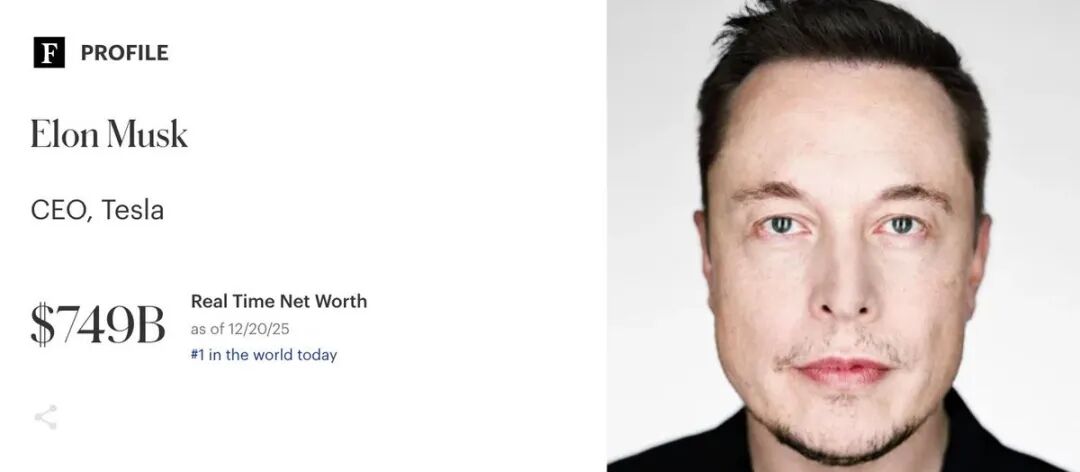
Core Insights - Elon Musk's wealth surged to $749 billion following a Delaware court ruling that validated a batch of Tesla stock options worth over $100 billion, placing him significantly ahead of Google's co-founder Larry Page by nearly $500 billion [1] - The potential for Musk to become the world's first trillionaire is increasingly linked to SpaceX, which is rumored to be planning an IPO next year, aiming to raise over $30 billion and achieve a valuation of $1.5 trillion, surpassing Saudi Aramco's record IPO [3][5] Group 1: SpaceX's Business Model and Revenue Streams - SpaceX is not merely a rocket company; it has diversified its revenue streams, with projections indicating total revenue of approximately $18.2 billion by 2025, of which $12.8 billion (70.3%) will come from the Starlink business [6][7] - Starlink has become the backbone of SpaceX's valuation, with Morgan Stanley estimating that 70% of SpaceX's current valuation is derived from anticipated future revenues from Starlink [7] - As of 2025, Starlink is expected to have around 9,300 satellites in orbit, making it the largest near-Earth satellite network in history [8] Group 2: Starlink's Growth and Market Potential - Starlink's user base has grown from 900,000 at the end of 2021 to over 8 million currently, covering more than 150 countries and regions [11][12] - The operational model of Starlink involves a network of satellites relaying data, which enhances user experience and revenue potential, creating a self-reinforcing cycle of growth [13] - Starlink's acquisition of over $17 billion in wireless spectrum licenses and its partnership with T-Mobile for direct satellite-to-phone connectivity could transform it into a global telecommunications operator [16][18] Group 3: Rocket Launch Business as a Cost Lever - SpaceX's rocket launch business, projected to generate $5.1 billion (28% of total revenue) by 2025, plays a crucial role in supporting Starlink's expansion by reducing launch costs through reusable technology [19][22] - In 2024, SpaceX completed 138 launch missions, with 90 of those dedicated to Starlink, demonstrating a closed-loop system that allows for cost control and operational efficiency [22] Group 4: Future Aspirations and Challenges - Musk's vision includes the ambitious concept of "space AI computing," which aims to leverage the unique conditions of space for cost-effective AI training and processing [25][27] - The potential for space-based data centers could generate significant revenue, with estimates suggesting annual revenues of $80-120 billion by 2030 from this segment alone [25][27] Group 5: Competitive Landscape and Market Dynamics - The commercial space sector is becoming increasingly competitive, with established players and new entrants vying for market share, including Blue Origin, which emphasizes reliability over speed [50][53] - China's rapid advancements in commercial space capabilities, including the successful launch of reusable rockets, pose a significant challenge to SpaceX's market dominance [60][62] - The evolving landscape of space infrastructure is attracting interest from tech giants, indicating that the competition will not be limited to traditional aerospace companies [62][64]
首富又要“上天”,梦想价值10.6万亿
3 6 Ke· 2025-12-11 08:13
Core Viewpoint - Elon Musk plans to take SpaceX public in 2026 with an estimated valuation of approximately $1.5 trillion, aiming to raise over $30 billion, which would make it the largest IPO in history, surpassing Saudi Aramco's $29.4 billion in 2019 [1] Group 1: Space-Based AI Computing - Musk introduced the concept of "space AI computing" at the Baron Capital annual investor conference, suggesting that within five years, running AI training and inference in space will become the most cost-effective solution [2] - The unique environmental characteristics of space, such as constant sunlight and vacuum conditions, could significantly reduce energy and cooling costs associated with AI infrastructure on Earth [2][5] - The energy consumption of training large AI models, such as GPT-5, is substantial, with electricity costs being a major factor [3] Group 2: Technical Challenges - Space-based computing faces challenges such as heat dissipation and radiation exposure, which require technological breakthroughs to ensure economic viability [6][7] - The cost of transporting a 200MW orbital data center to space is estimated to be between $5 billion and $7.5 billion, significantly lower than building a similar facility on Earth [6] Group 3: Market Response and Valuation - Morgan Stanley highlighted that the revaluation of SpaceX is driven by the expansion of its commercial boundaries, with "orbital data centers" becoming a new narrative for AI infrastructure [8] - Cathie Wood's Ark Invest has begun valuing SpaceX as a high-growth software and AI infrastructure company, projecting significant revenue growth from both Starlink and orbital data centers [10] Group 4: Competitive Landscape - Other companies, including Blue Origin and OpenAI, are also exploring space-based AI computing, indicating a competitive environment [12][14] - Amazon's Project Kuiper, which plans to deploy 3,200 satellites, poses a direct challenge to SpaceX, although it relies on traditional cloud infrastructure [15] Group 5: Regulatory and Strategic Considerations - Regulatory issues, such as space debris management and international spectrum coordination, could impact SpaceX's progress in the coming years [15] - Musk's strategy integrates Tesla's chip capabilities, xAI models, Starlink bandwidth, and Starship capacity, targeting the expensive resource of low-cost computing in the AI era [16]