
Lenovo

Search documents
Chinese Firms Resume Global Dealmaking, As A Top Lender Stalls - Luckin Coffee (OTC:LKNCY)
Benzinga· 2026-02-04 13:46
Group 1: Diverging Trends in China's Corporate Landscape - Major Chinese consumer brands, such as Anta Sports and TCL, are resuming foreign acquisitions to secure growth amid a sluggish domestic economy [1][2] - The trend of acquiring foreign brands is reminiscent of early 21st-century strategies, like Lenovo's acquisition of IBM's PC business, which had diminished over the past decade [3] - The acquisitions are driven by strategic necessity, as companies face increased competition and underperformance in their domestic markets [4] Group 2: Banking Sector Challenges - China Merchants Bank, a leading commercial bank, reported a significant slowdown in profit growth, with a mere 1.2% increase last year and operating income rising only 0.01% [5][6] - The bank's net interest income grew by just 2%, which is below the 5.4% increase in its loan book, indicating squeezed interest margins due to a low-interest-rate environment [6] - The bank is prioritizing loan quality over aggressive expansion, reflecting prudent management in uncertain economic conditions [7]




Walmart hits $1T market cap, PepsiCo CEO talks earnings beat and GLP-1 strategy
Youtube· 2026-02-03 21:54
Disney Succession Plan - Disney has officially named Josh Dearo as its next CEO, succeeding Bob Iger later this year [1][10] - Josh Dearo's experience in overseeing the parks and cruises business, which accounts for nearly 60% of Disney's profits, is seen as a critical factor for his selection [4][10] - The transition is expected to be smoother than previous succession attempts due to a more deliberate process and the retention of key executives like Dana Walden [14][15] Business Performance and Strategy - Disney's reliance on its experiences segment is crucial for growth, especially as the entertainment sector faces challenges [4][8] - The company has established a strong base of intellectual property (IP) that supports its content strategy, although there are concerns about the need for more content [6][9] - The stock performance has been rangebound over the past decade, with a need for continued growth in experiences and streaming to improve profitability [15][20] Market Outlook - Despite short-term headwinds, such as a dip in tourism to domestic parks, the long-term outlook for Disney is considered optimistic due to the growth potential in its core businesses [21][22] - The company is viewed as undervalued, with expectations for a recovery as it navigates the transition in leadership and focuses on its growth-oriented segments [20][22]


大中华区科技硬件:成本上涨会改变 2026 年盈利展望吗-Greater China Technology Hardware Will Input Cost Hike Change the 2026 Profit Outlook
2026-01-29 02:42
Summary of Greater China Technology Hardware Conference Call Industry Overview - The conference focused on the Greater China Technology Hardware sector, specifically addressing the impact of input cost hikes on profit outlook for 2026 [4][8]. Core Insights - **Opportunities in AI and Server Upgrades**: There are significant opportunities in AI GPU and ASIC server/rack design upgrades, particularly with the upcoming Vera Rubin platform and Kyber architecture [8][8]. - **AI ASIC Server Expansion**: The magnitude of AI ASIC server upgrades and volume expansion is primarily centered around TPU and Trainium platforms [8][8]. - **Share Price Upside Potential**: Analysts see potential for share price upside in the near term due to various factors including AI server power solutions and capacity expansion across the tech hardware supply chain [8][8]. - **Risks Identified**: - Consumer electronics demand, particularly for smartphones and PCs, is being negatively impacted by rising memory costs [8][8]. - Anticipated lower business momentum in the second half of 2026 due to pull-forward builds in the first half [8][8]. - Raw material price hikes (copper, nickel) and supply tightness are expected to create margin headwinds [8][8]. - Supply shortages may delay shipment pace, affecting overall market performance [8][8]. Key Stock Ideas - **AI Server Hardware**: Recommended stocks include Wistron, FII/Hon Hai, Wiwynn, Delta Electronics, AVC, BizLink, King Slide, Accton, Chenbro, Gold Circuit, Innolight, FIT, and Fositek [8][8]. - **Edge AI Companies**: Notable mentions include Xiaomi, Luxshare, and Lenovo [8][8]. Valuation Comparison - A detailed valuation comparison of various companies within the Greater China Technology Hardware sector was provided, including metrics such as market cap, EPS estimates, P/E ratios, and target prices [10][10]. - Companies highlighted include Lite-On Tech, Delta, Hon Hai, Foxconn Tech, and others, with specific price targets and ratings [10][10]. Additional Considerations - The report emphasizes the importance of considering Morgan Stanley Research as one of several factors in investment decision-making, acknowledging potential conflicts of interest [4][5]. This summary encapsulates the key points discussed in the conference call, providing insights into the current state and future outlook of the Greater China Technology Hardware industry.
Gearing Up for The Big Game: WeShop Announces Electronics Offerings with Best Buy, Samsung, Lenovo and eBay
Globenewswire· 2026-01-28 12:00
Core Insights - WeShop Holdings Limited has announced retail partnerships with Best Buy, Samsung, Lenovo, and eBay to enhance its electronics offerings as demand for televisions surges ahead of major sporting events [1][5] Group 1: Partnerships and Offerings - The new partnerships aim to leverage existing relationships with leading electronics retailers to make high-ticket purchases more rewarding for consumers [2][3] - WeShop's ShareBack™ program allows users to earn WePoints through everyday purchases, which can convert into ownership in WeShop, aligning consumer spending with long-term participation in the platform's growth [2][3] Group 2: Market Strategy - WeShop integrates ShareBack™ rewards directly into the shopping experience, enabling users to earn WePoints while purchasing essential devices for game-day gatherings [3] - The company continues to expand access to ShareBack rewards across various retail categories in the U.S. and the U.K., including fashion, electronics, beauty, home goods, and travel [4] Group 3: Consumer Engagement - The head of commercial at WeShop highlighted that electronics shopping typically rises during major events like the Super Bowl, emphasizing the potential for consumers to turn planned purchases into opportunities for ownership [5]

CNBC's The China Connection newsletter: China-made humanoid robots set sights on Middle East and U.S. markets
CNBC· 2026-01-28 07:49
Core Insights - Chinese humanoid robots, particularly from LimX Dynamics, are preparing to enter the U.S. market ahead of competitors like Elon Musk's Optimus [2][3] - LimX Dynamics has ambitious plans for global expansion, starting with the Middle East, and aims to establish local partnerships [3][5] - The humanoid robot market in China is projected to see significant growth, with Morgan Stanley doubling its sales forecast for 2025 [7] Company Developments - LimX Dynamics has raised $69.31 million as of July 2025, with notable investors including Alibaba, JD.com, and Lenovo [4] - The company has launched its humanoid robot, Oli, with a base model priced at approximately $22,660 [10] - LimX aims to enhance its technology, focusing on advanced AI capabilities to improve robot functionality [12] Market Trends - In 2022, around 13,000 humanoid robots were shipped globally, with Chinese companies leading the market [6] - Morgan Stanley's revised forecast predicts 28,000 humanoid robot sales in China for 2025, with expectations for business sales to drive growth [7] - By 2050, the Chinese humanoid market could potentially reach annual sales of 54 million units [7] Competitive Landscape - LimX Dynamics faces competition from other Chinese companies like Unitree and U.S. rival Figure AI, as the market for humanoid robots becomes increasingly competitive [5][6] - Tesla's Optimus robot is not expected to be available for public sale until late 2027, giving LimX a potential advantage in the interim [8]

科技硬件:英特尔电话会与 IDC 四季度 PC 出货数据的启示- China Technology Hardware-Implications from Intel Call and IDC 4Q PC Shipment Data
2026-01-26 02:49
Summary of Key Points from the Conference Call Industry Overview - The conference call primarily discusses the **Greater China Technology Hardware** industry, with a focus on **Intel** and its implications for related companies in the sector [1][2]. Core Insights and Arguments - **Server Demand**: Intel's comments on robust general server demand align with supply chain observations, boosting confidence in companies with high server exposure such as GCE, Wiwynn, Lotes, and Unimicron [1]. - **1Q26 Guidance**: Intel emphasized internal wafer constraints and depleted buffer inventory, leading to a shift towards more server production compared to PCs. The revenue guidance midpoint for 1Q26 is at the lower end of seasonal expectations, with a notable decline in Client Computing Group (CCG) revenue [2][3]. - **PC Shipments Forecast**: The top five notebook original design manufacturers (NB ODMs) are expected to see a 9% quarter-over-quarter decline in shipments, totaling 29.3 million units, with a year-over-year decrease of 1%. Full-year notebook volumes are projected to decline in the mid- to high-single-digit range [2]. - **Supply Constraints**: Intel highlighted increasing industry-wide constraints for DRAM, NAND, and substrates due to AI infrastructure buildout, which may limit customers' ability to procure Intel CPUs [3][8]. - **Market Dynamics**: The overall PC market is expected to experience a rise in average selling prices (ASPs) in 2026 as vendors prioritize midrange and premium systems to offset higher component costs, particularly for memory [16]. Company-Specific Insights - **Lotes**: Viewed as a potential beneficiary of strong server demand, but PC weakness may offset gains. The lack of opportunities in AI and unattractive valuation leads to an equal-weight rating [4]. - **Unimicron**: Could benefit from Intel regaining market share from AMD in both PC and server markets, as well as increased adoption of EMIB-T in AI chips [4]. - **Intel's Financial Performance**: In 4Q25, Intel reported non-GAAP revenue of $13.874 billion, exceeding estimates. CCG revenue was $8.193 billion (down 7% year-over-year), while Data Center & AI (DCAI) revenue was $4.737 billion (up 9% year-over-year) [31]. Additional Important Information - **PC Shipment Data**: IDC reported 4Q25 PC shipments of 76.4 million units, reflecting a 1% quarter-over-quarter and 10% year-over-year increase, exceeding estimates [13]. - **Market Share**: Lenovo maintained the top position in the PC market with a 25.3% share, followed by HP at 20.1% and Dell at 15.3% [33]. - **Consumer Behavior**: The severity of supply shortages may lead to smaller brands struggling to survive, with consumers potentially delaying purchases or shifting spending to other devices [15]. This summary encapsulates the key points discussed in the conference call, providing insights into the current state and future outlook of the technology hardware industry, particularly in relation to Intel and its market dynamics.

Intel shares fall sharply following Q4 results
Youtube· 2026-01-22 22:03
All right, uh let's get another check on Intel. Those shares are plunging now in overtime after reporting earnings moments ago. The company beating on the top and bottom lines, but the stock under pressure uh now at session lows.Now, the stock had been up nearly 50% this month coming into the print. Joining us now is Seapport Research senior analyst Jay Goldberg. He upgraded the stock to buy this week.So Jay um first of all the rationale behind the upgrade and what did the numbers tell you pro or con that c ...
AMD Data Center CPUs To Fuel Next Growth Cycle, Analysts Say
Benzinga· 2026-01-16 18:24
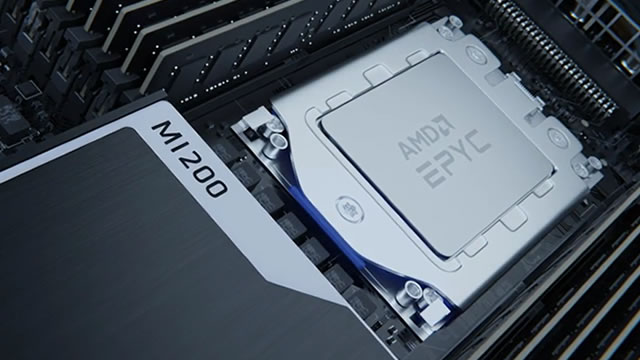
Core Insights - Advanced Micro Devices, Inc. (AMD) is focusing on integrating artificial intelligence into mainstream PCs while leveraging its data center capabilities for long-term growth [1] Group 1: AI Integration in PCs - AMD is targeting mass-market AI PCs, emphasizing scale and affordability, as highlighted during CES 2026 [2] - Six major PC manufacturers, including Dell, HP, and Lenovo, plan to launch new AMD-powered AI PCs in early 2026, marking a significant push into the next generation of Windows PCs [3] - AMD is introducing desktop AI PCs starting at approximately $499, aiming to drive widespread adoption [4] Group 2: Strategic Focus and Market Position - AMD's strategy prioritizes practical workloads such as productivity, gaming, and creative tasks, rather than solely focusing on raw AI performance [5] - The introduction of desktop AI PCs is expected to initiate a new upgrade cycle for businesses and power users, an area where AMD sees potential as competitors focus more on mobile devices [5] Group 3: Data Center and Platform Execution - AMD's outlook for 2026 relies heavily on execution rather than directly competing with Nvidia [6] - The company's data center CPUs are identified as the main earnings driver, supported by strong demand and over 50% growth in server CPUs [7] - The Helios program is seen as a critical test for AMD's transition from a component supplier to a full platform provider [7] - Broader adoption by large customers like Microsoft and Meta could establish AMD as a standard in AI infrastructure [8] Group 4: Market Performance - AMD shares increased by 1.95% to $232.37 at the time of publication [8]

联想集团:12 月 PC 出货超预期;内存成本上涨下韧性更强,稳居全球龙头;评级:买入
2026-01-14 05:05
Summary of Lenovo (0992.HK) Conference Call Company Overview - **Company**: Lenovo Group Limited (0992.HK) - **Industry**: Personal Computers (PCs) and Technology Key Points and Arguments 1. **PC Shipment Performance**: Lenovo reported a flat quarter-over-quarter (QoQ) PC shipment of 19.3 million units in the December quarter, maintaining its position as the global leader with a year-over-year (YoY) growth of 14%, compared to the global PC shipment growth of 9.6% [1][2] 2. **Market Position**: The strong shipment growth reflects Lenovo's robust market position and suggests a consumption pull-in effect amid rising memory costs [1] 3. **Gross Margin (GM) Stability**: Lenovo's gross margin remained stable in the September quarter, and it is expected to stay stable in the December and March quarters due to strong bargaining power and market position. However, a decline in GM is anticipated in the June quarter, dropping from 15.6% to 14.6% due to rising memory costs [1][2] 4. **Historical GM Trends**: In previous memory price upcycles, Lenovo's blended GM decreased from 14.7% in CY2016 to 13.8% in CY2017, before recovering to 14.0% in CY2018 [1] 5. **Earnings Revision**: FY2026E revenues have been reduced by 2% due to a less aggressive product mix upgrade in PCs, leading to a slight reduction in GM from 15.4% to 15.2% and a 3% cut in gross profit [2] 6. **Operating Expenses**: The operating expense (opex) ratio is expected to improve due to better operational efficiency, keeping net income largely unchanged [2] 7. **Future Earnings Estimates**: For FY2027E, net income is reduced by 5% mainly due to lower GM, while FY2028E estimates remain largely unchanged as product mix upgrades are expected to support GM recovery post-memory upcycle [2] 8. **Valuation and Price Target**: The target price for Lenovo is set at HK$11.98, reflecting a 9.6% reduction from HK$13.25, based on a target P/E multiple of 10.3x derived from peer averages [8][11] 9. **Investment Rating**: Goldman Sachs maintains a "Buy" rating on Lenovo, indicating a potential upside of 33.9% from the current price of HK$8.95 [11] Risks and Considerations 1. **Market Demand Recovery**: Risks include slower-than-expected recovery in market demand across PCs, servers, storage, and smartphones [9] 2. **Competition**: Increased competition in smartphones and AI servers could impact Lenovo's market share [9] 3. **Inventory Management**: Longer-than-expected inventory digestion in PCs and servers may pose challenges [9] 4. **Product Mix Upgrades**: Slower-than-expected upgrades in product mix or total solutions could hinder growth [9] Additional Insights - **Operational Efficiency**: The company is focusing on improving operational efficiency, which is expected to positively impact the SG&A ratio in FY2026E compared to FY2025A [2] - **Investment in AI**: Lenovo is maintaining a stable R&D ratio to continue investing in generative AI, which is seen as a key growth area [2] This summary encapsulates the essential insights from the conference call regarding Lenovo's performance, market position, financial outlook, and associated risks.

Factbox-Countries and industries most exposed to Trump's IEEPA-based tariffs
Yahoo Finance· 2026-01-08 23:32
Group 1: Legal Context and Implications - The U.S. Supreme Court is expected to rule on the legality of tariffs imposed by President Trump under the International Emergency Economic Powers Act (IEEPA), which could result in nearly $150 billion in refunds to importers if deemed illegal [1][2] Group 2: Companies Challenging Tariffs - Major corporations such as Costco, Revlon, EssilorLuxottica, Bumble Bee Foods, Yokohama Tire, and Kawasaki Motors have filed lawsuits against the U.S. government, contesting the IEEPA-based tariffs and seeking refunds [2] Group 3: Tariff Categories - The tariffs under the IEEPA fall into three categories: 1. Fentanyl-linked tariffs on China, Mexico, and Canada 2. Broad "reciprocal" tariffs aimed at reducing trade deficits 3. Punitive levies against countries for non-trade political reasons [2] Group 4: Industries Exempt from Tariffs - Pharmaceuticals, energy, agricultural commodities, services, and aircraft/aerospace industries are largely exempt from U.S. tariffs due to their critical nature and potential impact on public health and international commerce [3] Group 5: Countries and Industries Affected by Tariffs - **China and Hong Kong**: Consumer electronics, machinery, medical devices, chemicals, toys with a tariff rate of 10% [4] - **Taiwan**: Semiconductors and chipmakers with a tariff rate of 20% [4] - **Mexico**: Autos and auto parts with no tariff for USMCA-compliant goods, but 25% for non-USMCA goods [4] - **Canada**: Metals and energy products with no tariff for USMCA-compliant goods, but 25% for non-USMCA goods [4] - **European Union and UK**: Autos and machinery with a tariff rate of 15% on most EU goods, and 10%-25% on UK goods depending on the product [4] - **Japan and South Korea**: Autos and machinery with reduced tariffs to about 15% [4] - **Southeast Asia**: Apparel and footwear with tariffs ranging from 19% to 20% [4]