Primark

Search documents
越年轻,越怕孤独?
Hu Xiu· 2025-08-27 23:46
Group 1 - The article discusses the lingering effects of remote work policies initiated during the COVID-19 pandemic, highlighting a shift back to traditional office environments as companies like Amazon and JPMorgan push for employees to return to the office [6][12] - A study from King's College London indicates that UK employees work an average of 1.8 days from home per week, making the UK known as "Europe's remote work capital" [9] - Despite assumptions that younger employees prefer remote work, a survey by Bupa reveals that 40% of young people aged 16-24 feel lonely working from home, indicating a desire for more in-person social interactions [13][15] Group 2 - The article emphasizes that many Generation Z employees began their careers during the pandemic and missed out on traditional office experiences, leading to a strong desire for social opportunities in their next jobs [14][15] - The findings suggest that feelings of loneliness are particularly prevalent among young social media influencers, with nearly half reporting loneliness and a third planning to return to traditional full-time work [17] - Experts recommend that employers provide more face-to-face interaction opportunities to help young employees feel connected and supported in the workplace [18] Group 3 - The article highlights the potential negative impact of remote work on career advancement, citing a study that shows remote workers have a 41% lower promotion rate compared to their in-office counterparts [21] - It discusses the "digital transparency trap," where remote workers may feel invisible and lose opportunities for advancement due to reduced visibility and interaction with management [22] - The article warns that many entry-level positions are being replaced by AI, with a reported 28% decrease in jobs that typically require recent graduates, further complicating the job market for young employees [24][26]
英国零售业:截至4月27日的12周英敏特数据显示服装销售额同比增长1.4%;玛莎增长11.5%,Primark增长3.1%,Next增长2%
Goldman Sachs· 2025-05-28 05:15
Investment Rating - The report does not explicitly state an investment rating for the industry or specific companies [1]. Core Insights - The UK clothing market experienced a year-over-year growth of +1.4% for the 12 weeks ending April 27, compared to +0.9% in the previous period [1]. - Notable performers include M&S with +11.5% growth, Primark at +3.1%, and Next at +2% [1]. - Zara led with a remarkable +16.1% growth year-over-year, while H&M reported +8.9% [1][4]. Summary by Relevant Sections Market Performance - The UK clothing market's growth of +1.4% year-over-year is an improvement from +0.9% in the prior 12 weeks [1]. - Pre-COVID comparisons show a +3.3% growth stack versus +4.5% previously [1]. Company-Specific Performance - **Primark**: Achieved +3.1% year-over-year growth, a recovery from -0.2% in the previous period. Market share increased by +11 basis points to 6.7% [4]. - **M&S**: Reported +11.5% growth, up from +8.8% in the previous period. Market share rose by +99 basis points to 11% [4]. - **Next**: Recorded +2% growth, with market share increasing by +6 basis points to 9.3% [4]. - **Zara**: Achieved +16.1% growth year-over-year, with a pre-COVID growth of +78.9% [4]. - **H&M**: Reported +8.9% growth year-over-year, with a pre-COVID growth of +4.4% [4]. Future Projections - Forecasts for Inditex suggest a +5.1% growth in 1Q26E, while H&M is expected to see +1% growth in 2Q25E [4].
小包裹引爆大通胀:145%关税逼退零售商们 “通胀猛兽”即将再度席卷美国
智通财经网· 2025-05-02 09:16
Group 1: Impact of Tariff Changes - The cancellation of the de minimis tax exemption for low-value packages from China has resulted in tariffs as high as 145%, leading many retailers to halt shipments to the U.S. market [1][3][5] - Retailers are increasing prices to cope with the new tariffs, which may exacerbate inflationary pressures on U.S. consumers already facing high living costs [1][4][5] - The effective tariff rate in the U.S. is now close to 23%, the highest in over a century, significantly impacting consumer and business confidence [4][5] Group 2: Retailer Responses - Major retailers, including Amazon, have reported that the new tariffs will have a significant negative impact on their earnings, with Amazon's profit guidance falling short of analyst expectations by as much as 27% [2][9][10] - Smaller retailers are withdrawing from the U.S. market due to the prohibitive costs associated with the new tariffs, which are expected to lead to price increases for essential goods [3][7] - Companies like Space NK and Understance have already suspended U.S. shipments to avoid unexpected costs due to the new tariff regime [3][7] Group 3: Economic Outlook - Analysts warn that the combination of high tariffs and ongoing inflation could lead to a significant downturn in consumer demand, potentially pushing the U.S. economy into recession [5][6] - The impact of tariffs is expected to ripple through various sectors, including e-commerce and advertising, as companies like Snap Inc. have indicated that they are facing macroeconomic headwinds due to these changes [6][9] - The overall economic environment is becoming increasingly challenging for retailers reliant on Chinese imports, with many predicting a slowdown in global economic growth [5][6]

第一批00后厂二代,硬刚关税风暴
3 6 Ke· 2025-04-27 08:05
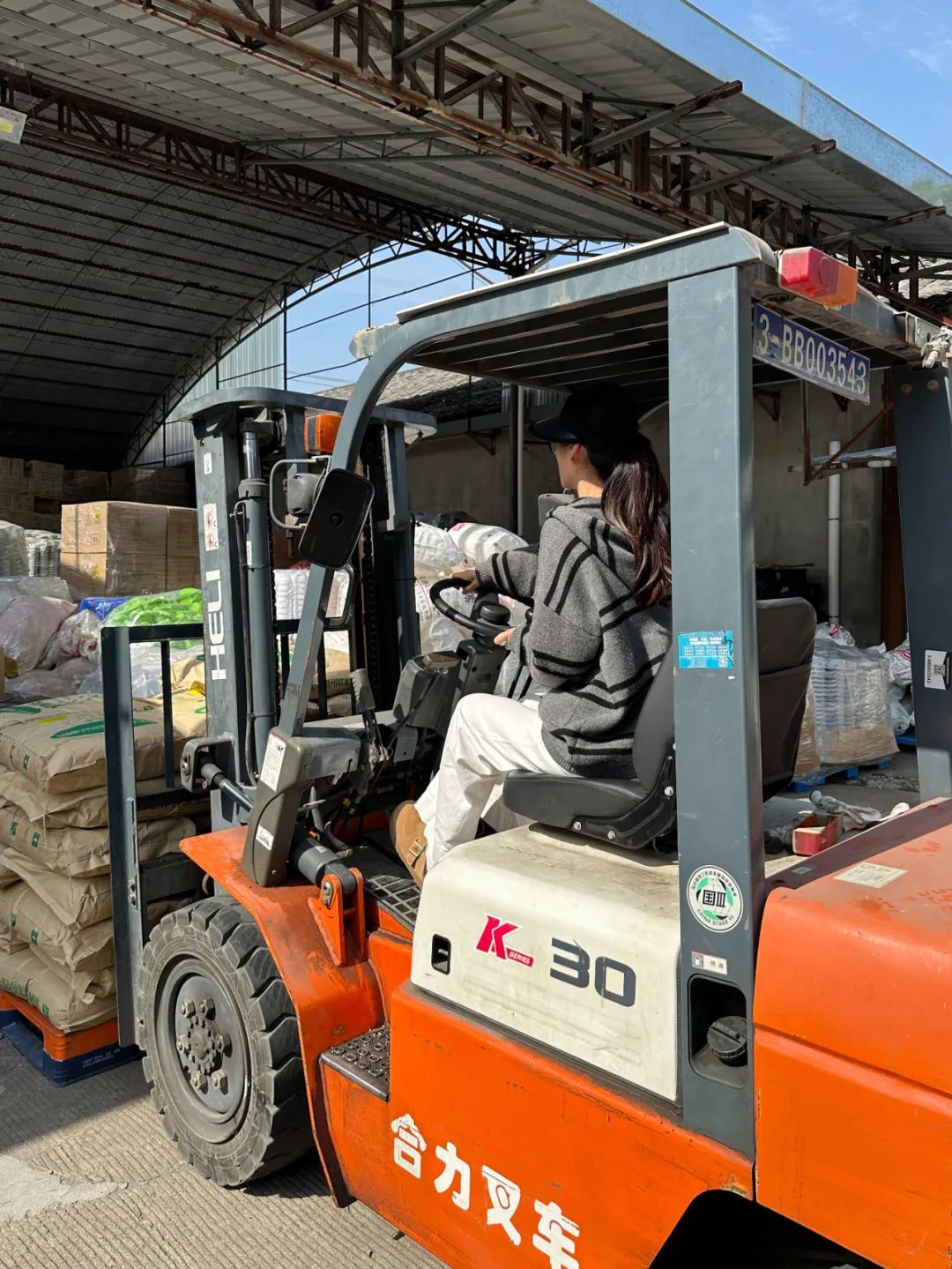
Core Viewpoint - The article discusses the impact of recent U.S. tariff policies on Chinese manufacturers, particularly focusing on the experiences of the new generation of factory owners, known as the "second generation" or "厂二代," who are navigating a turbulent trade environment and adapting their strategies to survive and thrive in the changing landscape. Group 1: Tariff Impact - In April, President Trump announced a series of tariffs on China, with cumulative tariffs reaching 125% by April 10 [1] - Many factories, particularly those heavily reliant on U.S. orders, faced significant disruptions, with some halting operations entirely due to the tariffs [4][5] - Howard's textile factory, which relies on U.S. clients for 45% of its business, experienced order cancellations and delays as tariffs exceeded 100% [6][7] Group 2: Adaptation Strategies - Young factory owners are exploring new markets and strategies, with some moving operations to Southeast Asia to mitigate tariff impacts [10][11] - Zhang Yirun, a "00后" factory manager in Vietnam, reported an influx of new orders from U.S. clients seeking alternatives to Chinese suppliers due to tariffs [10] - The younger generation is leveraging technology and online platforms to attract customers, moving away from traditional sales methods [17][19] Group 3: Operational Challenges - The ongoing trade tensions have led to increased operational challenges, including rising costs and the need for factories to adapt quickly to changing market conditions [16][22] - Naysa, involved in the seafood export business, noted a shift in the effectiveness of traditional trade shows, which are now more about maintaining visibility than securing orders [16] - The younger generation of factory owners is more service-oriented, focusing on customer needs and product improvements to retain business [19][21] Group 4: Labor Market Dynamics - The labor market in Southeast Asia is becoming increasingly competitive, with many Chinese manufacturers relocating to countries like Vietnam and Thailand [11][13] - Despite higher labor costs in China, the efficiency and quality of Chinese workers remain competitive compared to their Southeast Asian counterparts [21] - The "厂二代" are influenced by their parents' values, emphasizing the importance of providing jobs even for low-margin orders to support their workers [22]