
Unitree

Search documents
We asked a humanoid robot if there is an AI bubble. Here's what it said.
CNBC· 2025-12-30 22:11
Core Insights - The AI bubble debate is a significant topic in the tech industry, with opinions varying on whether the current excitement around AI represents a bubble or a transformative wave [2] - KOID, a humanoid robot from Unitree, emphasizes that AI and humanoids are likely to remain integral to society and will continue to evolve [2] Company Insights - Unitree is a leading Chinese tech company known for its humanoid robots, including KOID, which features 23 degrees of freedom, allowing for diverse movements [3] - KOID is available for purchase in the U.S. through RoboStore, with prices ranging from $8,990 to $128,900 [3] - Unitree is preparing for an initial public offering (IPO) that could value the company at up to $7 billion, showcasing its growth potential in the robotics market [6] Industry Trends - The humanoid robotics sector is becoming increasingly competitive, with companies like Boston Dynamics and Agility Robotics emerging alongside Tesla's Optimus robots, which are expected to significantly contribute to Tesla's valuation [5] - The industry is still in a "prototyping" phase, as companies explore the various roles robots can play in daily life, from household assistance to industrial applications [4]


搞过自驾的小伙伴,在其他领域还是很抢手
自动驾驶之心· 2025-12-28 03:30
Core Insights - The autonomous driving industry has experienced significant developments this year, focusing on technology, cost, and efficiency improvements as it matures [1] - There has been a notable shift in talent, with many professionals transitioning to other sectors like L4, embodiment, and drones, while algorithm talent in autonomous driving remains highly sought after [1][2] - Major technological advancements in autonomous driving have consolidated around key areas such as end-to-end systems, VLA, world models, and reinforcement learning, with many midstream companies actively hiring [3] Industry Trends - The autonomous driving sector is seeing an increase in B-end clients and a movement towards offline engagement, while C-end services are becoming more specialized [1] - The community of paid members in the autonomous driving sector has surpassed 4,000, indicating growing interest and engagement in technology development and job opportunities [3] - The industry is characterized by strong collaboration capabilities among professionals who have experience with large clusters and corner cases, which are lacking in other sectors [2]
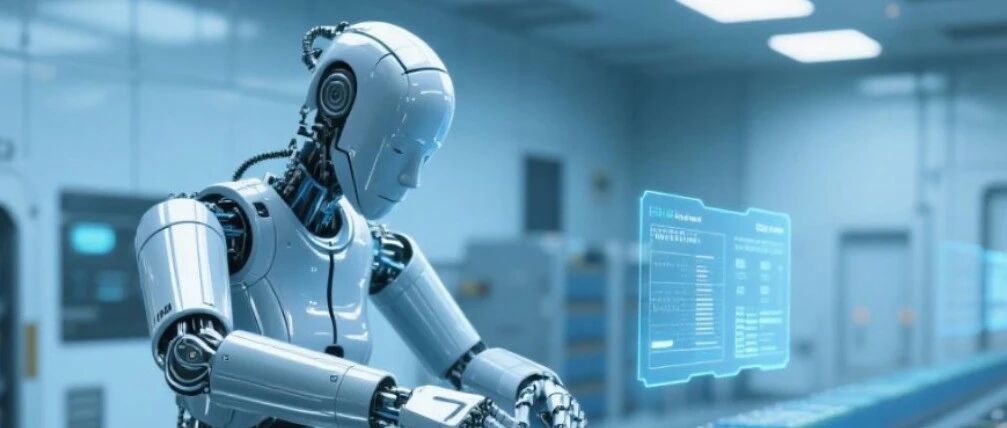
美国人形机器人初创公司:连我们都觉得,外界吹得太过了
华尔街见闻· 2025-12-27 10:53
Core Viewpoint - Despite billions of dollars flowing into the humanoid robot sector, executives from startups are collectively voicing concerns to temper the overheated market expectations [1][2]. Group 1: Industry Concerns - Executives express worries that while recent technological advancements have been made, the hype surrounding humanoid robots has become detached from reality, with significant technical challenges remaining for commercial deployment [3]. - Agility Robotics' CTO emphasizes the distinction between creating a robot and one capable of performing "useful work," highlighting that current robots lack the reliability for complex tasks [4]. - The CEO of Weave Robotics compares the current state of humanoid robots to Apple's Newton, indicating that while the concept is promising, the technology is not yet mature enough for commercial success [6]. Group 2: Investment and Cost Considerations - Approximately $5 billion has been invested in the humanoid robot field this year, showcasing a stark contrast between the industry's cautious perspective and the capital market's enthusiasm [5]. - Cost-effectiveness is a critical consideration for investors, as installation costs are a primary reason companies avoid deploying robots, with only about $20 of every $100 spent on robots going towards the purchase itself, while the remaining $80 is for safety measures [6]. Group 3: Design and Efficiency Debate - The industry may be overly fixated on humanoid form as the ultimate robot design, with some engineers suggesting that specialized robots could be more efficient in factory settings [8]. - Challenges such as stability and tactile feedback in mimicking human form are noted, with predictions that future robots may not replicate human shapes but instead exceed them, potentially using designs like four arms or suction grips [8]. Group 4: Industry Outlook - Despite optimistic predictions from figures like Elon Musk regarding the production of Tesla's Optimus robot, startup executives advocate for a more cautious approach, urging the industry to be responsible with timelines and avoid overpromising [9].
美国人形机器人初创公司:连我们都觉得,外界吹得太过了
Hua Er Jie Jian Wen· 2025-12-27 03:13
Core Insights - Despite significant investment inflow into humanoid robotics, industry executives express concerns about overhyped market expectations and the substantial technical challenges that remain for commercial viability [1][2] Group 1: Industry Concerns - Executives from various humanoid robotics startups voiced worries at the Humanoids Summit, highlighting a disconnect between technological advancements and realistic market applications [1] - Agility Robotics' CTO emphasized that while creating a robot is one challenge, developing robots capable of performing "useful work" is a much greater hurdle [1] - Weave Robotics' CEO compared the current state of humanoid robots to Apple's Newton, indicating that while the concept is promising, the technology is not yet mature enough for commercial success [2] Group 2: Cost and Deployment Challenges - Cost-effectiveness is a critical consideration for investors, with installation costs being a primary barrier to robot deployment in enterprises [2] - A survey indicated that for every $100 spent on deploying robots, only about $20 is allocated to the robots themselves, while the remaining $80 is spent on safety measures to protect human workers [2] Group 3: Design and Efficiency Debate - There is skepticism within the engineering community regarding the focus on humanoid design, with some experts suggesting that specialized robots may be more efficient in industrial settings [3] - Challenges such as stability and tactile feedback in humanoid robots may lead to a future where robots do not mimic human form but instead utilize alternative designs, like multiple arms or suction grips [3] - Despite optimistic predictions from industry leaders about the future of humanoid robots, startup executives advocate for a more cautious approach to timelines and commitments [3]


机器人年鉴第 3 卷:人形与工业机器人 摩根士丹利全球实体 AI 团队 2025 年 12 月-The Robot Amanac Vol.3 Humanoids & Industrial Robots Morgan Stanley Global Embodied Al Team December 2025
摩根· 2025-12-17 03:01
Investment Rating - The report does not explicitly provide an investment rating for the industry [1]. Core Insights - The global labor market is estimated to be valued at $40 trillion, with approximately 4 billion workers worldwide, suggesting a significant total addressable market for humanoid and industrial robots [42][43]. - The report anticipates that by 2050, there will be an estimated 1 billion humanoids globally, indicating a substantial growth potential in the humanoid robotics sector [48]. - The report highlights that China currently dominates the humanoid landscape, with significant government support and numerous publicized events showcasing humanoid technology [73][86][89]. Summary by Sections Humanoids - Humanoids are capable of performing complex tasks that require advanced dexterity and intelligence, but they are still in development and require significant training and data [59]. - The primary barrier to scaling humanoids is the availability of data for training [61]. - The report notes that the cost of building a humanoid robot is significantly lower in China, estimated at around $50,000 compared to $130,000 in the US, highlighting the impact of supply chain efficiencies [150][152]. Industrial Robots - Industrial robots are effective at performing simple, repetitive tasks but may require modifications to existing workplaces [60]. - The report identifies that the most relevant job replacements for industrial robots are in boring, dangerous, and repetitive tasks, particularly in warehouses and heavy manufacturing [45]. - The report emphasizes that the integration of AI and robotics is accelerating, driven by labor shortages and technological advancements [36]. Market Dynamics - The report discusses the competitive landscape, noting that major US tech firms are beginning to test humanoids in various applications, including delivery operations [114]. - It highlights a significant public support gap for humanoids between the US and China, with higher acceptance and interest in China [102][107]. - The report also mentions that every major auto company in China is involved in humanoid development, indicating a strong industry push [98].
X @CoinDesk
CoinDesk· 2025-12-13 21:17
🤖 @micoolcho gives us a glimpse into the future by showing off Unitree G1 dancing at @Solanaconf. https://t.co/VWeKqWWTJy ...
Hidden Details in Unitree's Latest WILD Humanoid Robot Demos
CNET· 2025-12-07 13:01
Robot Development & Capabilities - Unitree's H2 (5'11in) demonstrates greater power compared to the G1 (4'4in) while performing similar tasks [1] - Unitree's demos reveal advancements in agility, balance, and robustness, including fights, flips, kicks, and fall recoveries [3] - Unitree is developing new hands for its robots, unlocking new capabilities [3][4] - Unitree is showcasing a tea operation system (embodied avatar) for controlling humanoid robots by mirroring human movements [8][9] - Unitree's G1 model is shown performing at-home tasks, similar to demos by American robotics companies like Figure and 1X [15] Market Positioning & Competition - Unitree has established itself as a leading robotics company in China and globally, comparable to Boston Dynamics in the US [5] - Unitree focuses on affordability and accessibility, offering both high-end robots (costing over $100,000) and stripped-down, remote-controlled versions [6] - Unitree's strategy of offering more affordable robots aims to build recognition, familiarity, and trust [7] - The robotics industry is actively developing teleoperation methods, with Unitree showcasing a full-body motion capture system [12] - Some companies are training robots to fight other humanoids, indicating a competitive landscape [17]
人形机器人新突破!敏捷稳定两不误
具身智能之心· 2025-12-05 00:02
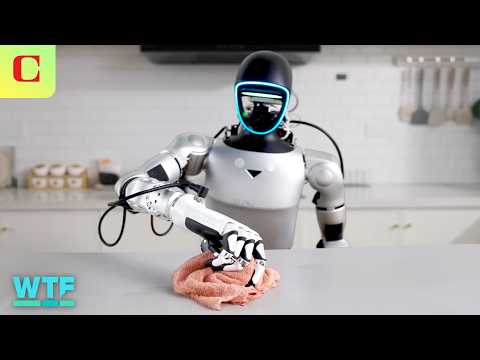
Core Idea - The article discusses the AMS (Agility Meets Stability) framework developed by a joint research team from the University of Hong Kong, NVIDIA, and Tsinghua University, which successfully integrates dynamic motion tracking and extreme balance control in humanoid robots using a single strategy [3]. Group 1: Key Innovations of AMS - Heterogeneous Data Sources: AMS generates scalable balance data by directly sampling from the robot's action space, overcoming human data limitations and alleviating long-tail distribution issues [2][17]. - Hybrid Reward Mechanism: AMS employs selective application of balance prior rewards to provide precise balance guidance without sacrificing agility, resolving conflicts in optimization objectives [4][21]. - Adaptive Learning Strategy: The framework dynamically adjusts sampling probabilities and tailors learning for each action, enabling efficient adaptive learning [4][23]. Group 2: Challenges in Humanoid Robotics - Humanoid robots face a dilemma of needing both agile dynamic movement and precise balance control to perform tasks in human environments [5][6]. - Existing research primarily focuses on either dynamic motion tracking or balance control, making it difficult to achieve both capabilities within a unified framework [8][10]. Group 3: Experimental Results - The AMS framework was validated on the Unitree G1 humanoid robot, demonstrating excellent performance in dynamic motion tracking, including activities like shuttle runs and basketball dribbling [24]. - AMS also showcased precise balance control capabilities, effectively managing extreme balance poses [26]. - The framework supports various real-time teleoperation modes, highlighting its practical value as a foundational control model [29]. Group 4: Conclusion - AMS represents a significant advancement in humanoid robot control, combining heterogeneous data sources, a hybrid reward mechanism, and an adaptive learning strategy to achieve both dynamic agility and robust balance, laying a crucial foundation for humanoid robots in human environments [33].

中国人形机器人调研:高采用意愿遭遇产品尚不成熟-China Humanoids Survey High Willingness to Adopt Meets Premature Products
2025-12-03 02:16
December 2, 2025 09:00 PM GMT Humanoids | Asia Pacific China Humanoids Survey: High Willingness to Adopt Meets Premature Products M This is our first AlphaWise survey with C-suites across various industries in China. In this report, we share the key findings, which are interesting and in some cases surprising to us. Key Takeaways Data Analyst Mavis.Ng@morganstanley.com +852 2239-7840 Tim Hsiao Equity Analyst Tim.Hsiao@morganstanley.com +852 2848-1982 Carlos Chai Research Associate Carlos.Chai@morganstanley. ...
人形机器人前景:热度过高却被低估-Humanoid Horizons Overhyped yet Underappreciated
2025-12-01 03:18
Summary of Humanoid Industry Conference Call Industry Overview - The humanoid industry is experiencing strong investor interest and rapid acceleration, with aggressive targets set for 2026. However, near-term hurdles must be addressed before realizing long-term potential [1][2][3] - The industry is awaiting verification of commercialization to unlock significant long-term potential [1][3] Key Insights - **Strong Order Intake in China**: In the second half of 2025, integrators in China announced orders exceeding Rmb2 billion (~US$300 million) across three key areas: industrials, commercial services, and data collection centers, primarily government-backed projects [8][46] - **Delivery Challenges**: Many announced orders may not be completed this year, with some categorized as "framework orders" that have low execution certainty [8][46] - **Reality vs. Expectation**: Companies have set aggressive shipment targets for 2026, with estimates reaching up to 100,000 shipments. However, conservative estimates suggest limited near-term growth due to working capability constraints [8][9] - **Government Support**: The Chinese government is pushing for humanoids as a strategic emerging sector, with over 90% component localization in the supply chain, which is expected to support gradual commercialization [8][9] Company Developments - **Tesla**: Preparing to expand Gigafactory Texas for manufacturing Optimus, with an anticipated annual capacity of 10 million units [8] - **Xpeng**: Showcased its Iron robot, aiming for mass production by the end of 2026 [8] - **Hon Hai**: Plans to deploy humanoid robots at its Houston plant, targeting 1Q26 [8] - **UBTech**: Plans to raise US$400 million through a share placement for acquisitions and investments [29] - **Dobot**: Completed a US$100 million share placement for investment and acquisition opportunities [29] Market Performance - The equal-weighted Humanoid 100 index has increased by 22.7% since its inception on February 6, 2025, outperforming the S&P 500 and MSCI Europe but underperforming MSCI China and Korea [9] - The China Humanoid Value Chain index was down 8.4% in November but up 61.5% year-to-date [9] Policy Developments - The Ministry of Industry and Information Technology (MIIT) has formed a Standardization Technical Committee for humanoid robots to develop and implement industry standards [54][57] - The National Development and Reform Commission (NDRC) has warned against market overcrowding, emphasizing the need for a regulatory framework and support for technology advancement [54][57] Adoption and Technological Advancements - **Figure AI**: Announced that its humanoid has participated in the production of 30,000 BMW vehicles [36] - **Ubtech**: Expects production capacity for industrial humanoid robots to reach 5,000 units by 2026 [36] - **Unitree**: Launched its first wheeled humanoid robot, G1-D, aimed at data collection and training [37] - **1X Technologies**: Made its NEO humanoid robot available for pre-order, with deliveries expected in 2026 [37] Conclusion - The humanoid industry is poised for growth, driven by strong government support, technological advancements, and increasing investor interest. However, challenges related to order execution and market saturation must be navigated to realize its full potential [1][54][57]
