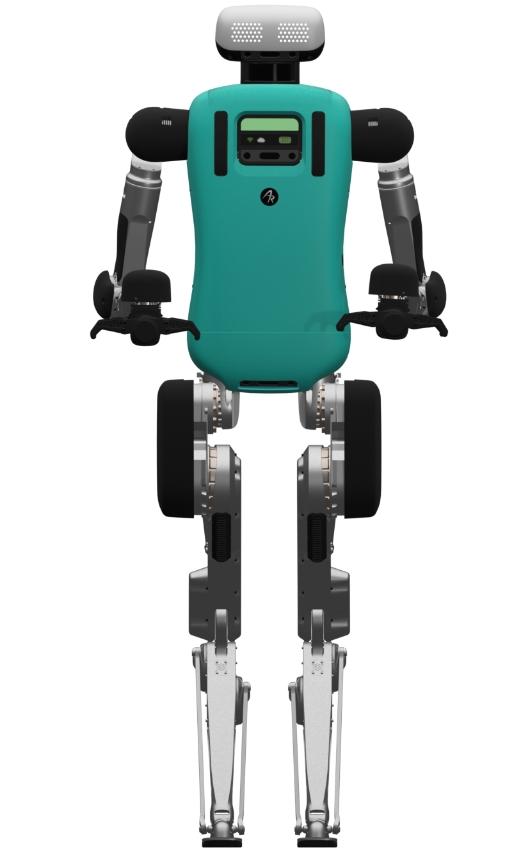
Digit机器人

Search documents
美国人形机器人初创公司:连我们都觉得,外界吹得太过了
华尔街见闻· 2025-12-27 10:53
Core Viewpoint - Despite billions of dollars flowing into the humanoid robot sector, executives from startups are collectively voicing concerns to temper the overheated market expectations [1][2]. Group 1: Industry Concerns - Executives express worries that while recent technological advancements have been made, the hype surrounding humanoid robots has become detached from reality, with significant technical challenges remaining for commercial deployment [3]. - Agility Robotics' CTO emphasizes the distinction between creating a robot and one capable of performing "useful work," highlighting that current robots lack the reliability for complex tasks [4]. - The CEO of Weave Robotics compares the current state of humanoid robots to Apple's Newton, indicating that while the concept is promising, the technology is not yet mature enough for commercial success [6]. Group 2: Investment and Cost Considerations - Approximately $5 billion has been invested in the humanoid robot field this year, showcasing a stark contrast between the industry's cautious perspective and the capital market's enthusiasm [5]. - Cost-effectiveness is a critical consideration for investors, as installation costs are a primary reason companies avoid deploying robots, with only about $20 of every $100 spent on robots going towards the purchase itself, while the remaining $80 is for safety measures [6]. Group 3: Design and Efficiency Debate - The industry may be overly fixated on humanoid form as the ultimate robot design, with some engineers suggesting that specialized robots could be more efficient in factory settings [8]. - Challenges such as stability and tactile feedback in mimicking human form are noted, with predictions that future robots may not replicate human shapes but instead exceed them, potentially using designs like four arms or suction grips [8]. Group 4: Industry Outlook - Despite optimistic predictions from figures like Elon Musk regarding the production of Tesla's Optimus robot, startup executives advocate for a more cautious approach, urging the industry to be responsible with timelines and avoid overpromising [9].

美国人形机器人初创公司:连我们都觉得,外界吹得太过了
Hua Er Jie Jian Wen· 2025-12-27 03:13
Core Insights - Despite significant investment inflow into humanoid robotics, industry executives express concerns about overhyped market expectations and the substantial technical challenges that remain for commercial viability [1][2] Group 1: Industry Concerns - Executives from various humanoid robotics startups voiced worries at the Humanoids Summit, highlighting a disconnect between technological advancements and realistic market applications [1] - Agility Robotics' CTO emphasized that while creating a robot is one challenge, developing robots capable of performing "useful work" is a much greater hurdle [1] - Weave Robotics' CEO compared the current state of humanoid robots to Apple's Newton, indicating that while the concept is promising, the technology is not yet mature enough for commercial success [2] Group 2: Cost and Deployment Challenges - Cost-effectiveness is a critical consideration for investors, with installation costs being a primary barrier to robot deployment in enterprises [2] - A survey indicated that for every $100 spent on deploying robots, only about $20 is allocated to the robots themselves, while the remaining $80 is spent on safety measures to protect human workers [2] Group 3: Design and Efficiency Debate - There is skepticism within the engineering community regarding the focus on humanoid design, with some experts suggesting that specialized robots may be more efficient in industrial settings [3] - Challenges such as stability and tactile feedback in humanoid robots may lead to a future where robots do not mimic human form but instead utilize alternative designs, like multiple arms or suction grips [3] - Despite optimistic predictions from industry leaders about the future of humanoid robots, startup executives advocate for a more cautious approach to timelines and commitments [3]


华尔街日报:人形机器人赛道过热,创业者警告技术成熟度被高估
Sou Hu Cai Jing· 2025-12-26 09:14
Core Insights - Investors are pouring billions into humanoid robot startups, betting on their deployment in warehouses, factories, and homes soon, but leaders in the field caution that humanoid robots are overhyped and face significant technical challenges before becoming viable human worker replacements [2][4] Group 1: Industry Trends - The humanoid robot sector is experiencing a surge in investment, with approximately $5 billion allocated this year alone [14] - Predictions suggest that by 2035, around 1 million humanoid robots could be in operation, although the lack of training data remains a significant barrier to growth [14] - Technological advancements in battery and motor technology are enabling robots to better mimic human movements and operate for longer periods [13] Group 2: Challenges and Limitations - Current humanoid robots are primarily suited for simple, repetitive tasks, and the technology is not yet mature enough for more complex applications like household chores [10][15] - Safety concerns and high deployment costs are major factors deterring companies from adopting humanoid robots, with only about $20 of every $100 spent on robot deployment going towards the robots themselves [5] - The gap between the current capabilities of humanoid robots and the ambitious expectations for their future roles is significant, as highlighted by industry experts [5][10] Group 3: Perspectives from Industry Leaders - Some industry leaders express skepticism about the current state of humanoid robots, comparing them to the failed Newton PDA, suggesting that while the direction is correct, the technology is not yet ready for widespread adoption [8][9] - Optimistic views from figures like Elon Musk predict an insatiable demand for humanoid robots, with plans for Tesla to produce 1 million Optimus robots annually by 2030 [11][13] - The focus on humanoid form may be misguided, as experts suggest that future robots might be more efficient if designed with different forms rather than strictly humanoid [15]
从工厂到客厅,人形机器人要进家门,先过“降本”这道坎
Sou Hu Cai Jing· 2025-12-15 03:25
Core Insights - The interest in humanoid robots is high, but there is a significant gap between consumer desire and actual purchases due to concerns over functionality and pricing [3][12][40] Consumer Perception - 65% of consumers find the concept of "advanced home robots" appealing, but only 15% understand the technical details [5][6] - Consumers prioritize practical tasks such as cleaning, laundry, and cooking over entertainment functions like chatting or dancing [9][11] Pricing Challenges - Consumers are willing to spend around $5,000 if a robot can save them 300 hours of household chores annually, but current offerings like Tesla's Optimus are priced around $20,000, making only 5% of consumers willing to buy [12][15] - The cost of humanoid robots has decreased by 40% in the past year due to industrial applications, but further reductions are necessary for consumer adoption [18][20] Technological and Design Considerations - Robots need to navigate complex home environments, which presents challenges in environmental perception and flexible actuation [23][25] - Current designs are either too robotic or cold, while consumer preferences lean towards more approachable and aesthetically pleasing designs [30][32] Safety and Privacy Concerns - There is a lack of standardized safety protocols for home robots, leading to consumer fears about safety and data privacy [33][35] - Implementing safety features and data encryption is essential for consumer trust [35] Market Strategy - Companies like Tesla aim for a universal humanoid robot, while others like UBTECH focus on a rental model to test functionalities in real-world settings [27] - Successful market penetration may require a phased approach, starting with high-end models and gradually moving to more affordable options [29][40] Consumer Engagement - Direct consumer experiences, such as hands-on demonstrations, are crucial for building trust and understanding of robot capabilities [36][40] - The evolution of consumer electronics, like smartphones, illustrates that technology must mature and become affordable to achieve widespread adoption [40][42]

中方反制措施见效!马斯克为“擎天柱”大倒苦水
21世纪经济报道· 2025-04-23 10:00
Core Viewpoint - Tesla's production of humanoid robots, "Optimus," is impacted by China's export controls on rare earth materials, specifically affecting the supply of rare earth magnets necessary for the robots' servo motors [1][2][3]. Group 1: Impact of Export Controls - China's Ministry of Commerce announced export controls on seven categories of heavy rare earth materials, including samarium, gadolinium, and dysprosium, effective April 4 [3]. - The purpose of these controls is to safeguard national security and fulfill international obligations, reflecting China's commitment to maintaining global peace and stability [3]. Group 2: Demand for Rare Earth Materials - Tesla plans to produce thousands of "Optimus" robots this year, with each robot requiring approximately 3.5 kg of high-performance neodymium-iron-boron magnets [3][10]. - The demand for rare earth materials in humanoid robots is projected to be significant, with Goldman Sachs predicting that humanoid robot shipments could reach 890,000 units by 2030, representing a compound annual growth rate of 53% from 2025 to 2030 [9][10]. Group 3: Market Reaction - Following the announcement of export controls, rare earth permanent magnet stocks surged, with companies like Jinli Permanent Magnet and Longmag Technology seeing significant stock price increases of over 10% and 7.79%, respectively [4][6][7].






突然,直线拉升!马斯克,传来大消息!
券商中国· 2025-04-23 06:37
Core Viewpoint - The surge in rare earth permanent magnet stocks is primarily driven by Tesla CEO Elon Musk's comments regarding the impact of China's export restrictions on rare earth magnets for the production of humanoid robots [1][2]. Group 1: Market Reaction - Rare earth permanent magnet stocks experienced a sharp increase, with Jinli Permanent Magnet rising over 10%, and other companies like Longmag Technology and Zhenghai Magnetic Materials also seeing gains of over 5% [1][2]. - The robotics sector also saw significant gains, with stocks like Yujian and Horizon Robotics increasing by over 13% and 14% respectively, indicating a strong market correlation between robotics and rare earth magnets [2]. Group 2: Supply Chain and Export Restrictions - China's recent export restrictions on rare earth materials are a response to U.S. tariffs, affecting the supply of minerals used in weapons, electronics, and consumer goods [2][4]. - Exporters now need to apply for licenses from the Chinese Ministry of Commerce, a process that could take several weeks to months, potentially impacting production timelines for companies reliant on these materials [2][4]. Group 3: Demand Forecast - Goldman Sachs predicts that humanoid robot shipments could reach 890,000 units by 2030, with a compound annual growth rate of 53% from 2025 to 2030 [3]. - The demand for rare earth permanent magnets in humanoid robots is estimated to be around 3.5 kg per robot, leading to a projected total demand of 3,115 tons by 2030 if the shipment target is met [4]. Group 4: Industry Dynamics - The use of rare earth permanent magnets in servo motors is crucial for the precise movement of humanoid robots, enhancing motor efficiency and control precision [4]. - China controls over 85% of global rare earth refining capacity, with the U.S. relying on China for 80% of its rare earth imports, highlighting the geopolitical implications of supply chain dependencies [4].
被朱啸虎“清仓”的人形机器人,是泡沫还是潜力股?
3 6 Ke· 2025-04-01 10:23
Core Viewpoint - The humanoid robot industry is experiencing a divide in investment perspectives, with some investors expressing skepticism about its viability while others remain optimistic about its long-term potential [1][2]. Group 1: Industry Challenges - High technical costs and unclear market applications are significant challenges for humanoid robot companies, with products often exceeding the willingness to pay in real-world scenarios [2]. - The humanoid robot sector is currently characterized by inflated valuations, with over 110 billion RMB raised globally in 69 financing events in 2024, while the market size in China is only 27.6 billion RMB [2]. - There is a notable issue of market saturation and homogeneity among domestic humanoid robot companies, leading to resource wastage as they compete on similar capabilities [2]. Group 2: Market Dynamics - The current market is in an exploratory phase, with many manufacturers lacking a clear understanding of demand scenarios, resulting in a supply-demand mismatch [3]. - The concept of "mass production" is viewed critically, as it may not lead to practical applications without a solid product-market fit [5]. - The recognition of the need for cognitive capabilities in humanoid robots is emerging as a critical factor for future investment, as these capabilities will enhance their ability to interact with the physical world [9]. Group 3: Investment Sentiment - Despite recent stock market fluctuations, including a decline in the humanoid robot sector index from around 1600 points, investor interest in the industry remains high [10][12]. - Some major shareholders have begun to reduce their stakes, indicating a cautious approach amidst the industry's volatility, yet experts maintain a positive outlook on the long-term trajectory of humanoid robots [12]. - The differentiation in stock performance is anticipated, with B2B applications likely to see quicker adoption compared to B2C, which may require more time for mass production [12].