
万泰生物

Search documents
万泰生物(603392) - 万泰生物关于注销部分回购股份并减少注册资本暨通知债权人的公告
2025-10-31 09:11
证券代码:603392 证券简称:万泰生物 公告编号:2025-055 北京万泰生物药业股份有限公司 关于注销部分回购股份并减少注册资本 暨通知债权人的公告 本公司董事会及全体董事保证本公告内容不存在任何虚假记载、误导性 陈述或者重大遗漏,并对其内容的真实性、准确性和完整性承担法律责任。 本次回购股份注销完成后,公司股份总数将由1,265,122,774股减少至 1,264,392,804股,注册资本将由1,265,122,774元减少为1,264,392,804元。 二、需债权人知晓的相关信息 一、通知债权人的原由 北京万泰生物药业股份有限公司(以下简称"公司")于2025年10月15日召 开第六届董事会第十次会议、第六届监事会第十次会议,审议通过了《关于变更 部分回购股份用途并注销的议案》。公司拟将回购专用证券账户中已回购但尚未 使用的729,970股股份用途由"用于员工持股计划或股权激励"变更为"用于注 销并减少注册资本"。以上议案已经2025年10月31日召开的公司2025年第一次临 时股东会审议通过。具体内容详见公司于2025年10月16日、2025年11月1日在指 定信息披露媒体披露的《北京万泰生 ...

HPV疫苗纳入国家免疫规划,医药股持续走强
Mei Ri Jing Ji Xin Wen· 2025-10-31 03:21
Group 1 - The core point of the article is the inclusion of the HPV vaccine in the national immunization program starting from November 10, 2025, providing free vaccinations for girls born after November 10, 2011, who are 13 years old or older [1] - The initiative aims to maximize prevention effectiveness and reduce the incidence and mortality rates of cervical cancer, based on WHO recommendations and China's national conditions [1] - The Chinese Center for Disease Control and Prevention (CDC) will be responsible for aggregating vaccine demand and conducting centralized procurement, with a budget of 425 million yuan [1] Group 2 - The HPV vaccine to be provided is the bivalent type, with a recommended two-dose schedule spaced six months apart [1] - The suppliers for the vaccine will be Wantai Biological Pharmacy and Watson Biotech, which is expected to enhance vaccination rates and promote health equity [1]

适龄女孩免费接种HPV疫苗!市场格局生变
Shang Hai Zheng Quan Bao· 2025-10-30 23:43
Group 1: HPV Vaccine Inclusion in National Immunization Program - The Chinese government has decided to include the HPV vaccine in the national immunization program starting from November 10, 2025, allowing eligible girls to receive the vaccine for free [1][2] - This initiative is a significant step towards China's commitment to eliminate cervical cancer by 2030, as outlined in the global strategy by the World Health Organization [1][3] Group 2: Target Population and Vaccination Details - Girls born after November 10, 2011, who are at least 13 years old will be eligible for two doses of the bivalent HPV vaccine, with a six-month interval between doses [2] - Local health authorities are required to assess the number of eligible girls and their previous vaccination status, and to set up vaccination units accordingly [6] Group 3: Market Dynamics and Production - The centralized procurement project for the bivalent HPV vaccine has a budget of approximately 425 million yuan, with a total quantity of 15.4465 million doses [8] - Only two companies are specified to produce the bivalent HPV vaccine for the national immunization program, with six HPV vaccines currently available in China, including three bivalent vaccines [10] - Domestic companies, such as Wantai Biological Pharmacy and Watson Biotech, have successfully launched their bivalent HPV vaccines, contributing to a more competitive market landscape [10][11] Group 4: Competitive Landscape - The domestic HPV vaccine market is becoming increasingly diversified, with imported products like Merck's nine-valent HPV vaccine and four-valent HPV vaccine leading the high-priced segment [11] - New entrants, such as China National Pharmaceutical Group's four-valent HPV vaccine, have recently received approval, indicating a shift in market dynamics [11]


HPV疫苗纳入国家免疫规划:国产力量终结进口垄断,千万女性免费受益
Guan Cha Zhe Wang· 2025-10-30 15:57
Group 1 - The inclusion of the HPV vaccine in the national immunization program marks a significant breakthrough in public health in China, with over 10 million eligible girls expected to benefit annually from the free vaccination policy starting November 10, 2025 [1][2] - The two-valent HPV vaccine can prevent approximately 70% of cervical cancer cases, which is a major advancement in cervical cancer prevention [1][5] - The market demand for HPV vaccines is projected to reach tens of millions of doses annually, with the market size expected to exceed 10 billion RMB, indicating a substantial growth opportunity for domestic vaccine manufacturers [1][5][6] Group 2 - The government has allocated a budget of approximately 425 million RMB for the centralized procurement of the two-valent HPV vaccine, with an estimated procurement price of 27.5 RMB per dose [5] - The total market size for the national immunization program from 2025 to 2030 is estimated to be around 3.8 billion RMB, which includes both new eligible girls and existing populations needing booster shots [5][6] - The policy is expected to enhance public awareness and willingness to receive HPV vaccinations, potentially increasing demand for self-paid vaccinations among other age groups [5][6] Group 3 - Domestic vaccine companies such as Wantai Biological Pharmacy and Watson Bio are leading the charge in the HPV vaccine market, with significant advancements in technology and production capacity [6][8] - Wantai Biological's two-valent HPV vaccine was the first domestically produced vaccine to break the monopoly of imported vaccines, and the company has also developed the first nine-valent HPV vaccine in China [8][9] - The competition among domestic companies is expected to ensure supply security and drive technological innovation, while also reducing costs and enhancing industry safety and self-sufficiency [9]
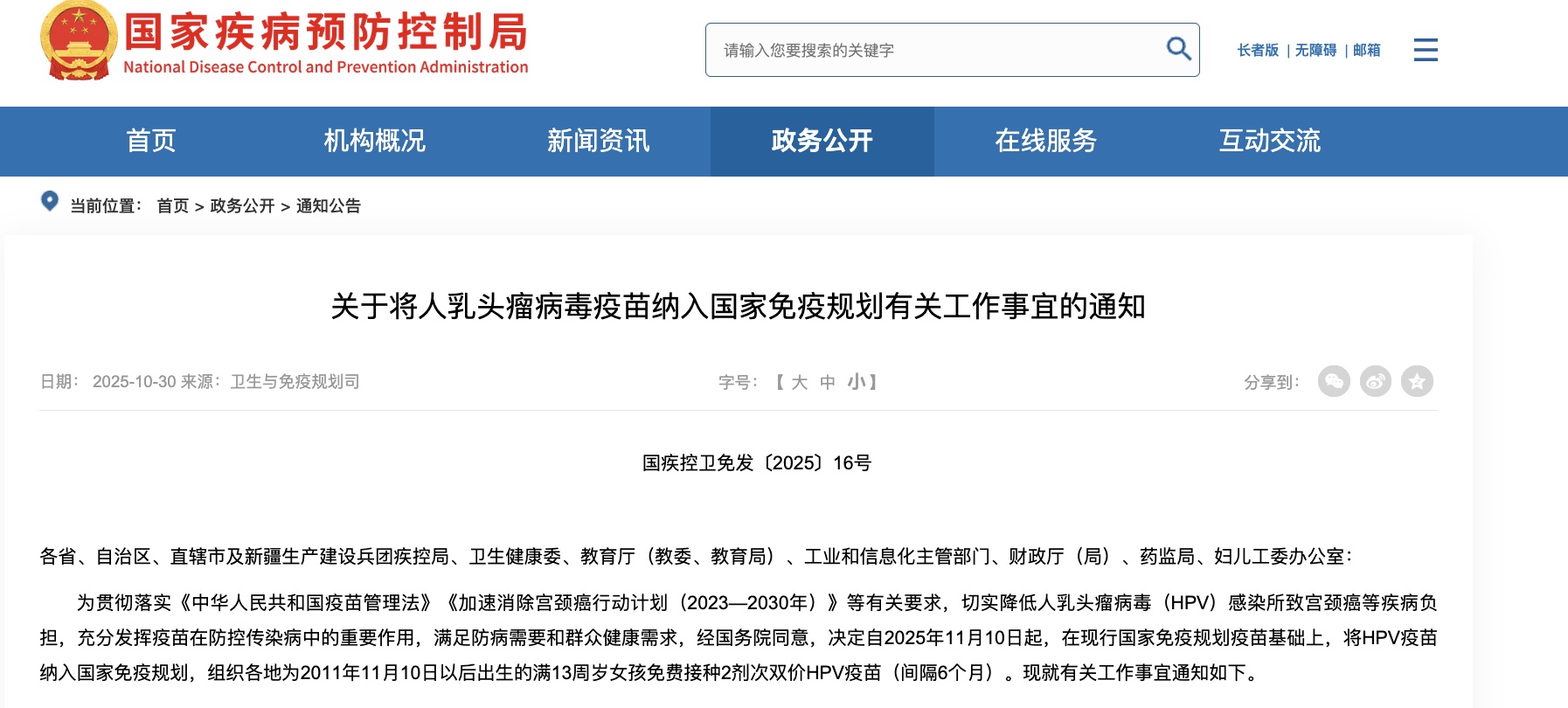
13周岁女孩可免费接种!HPV疫苗纳入国家免疫规划
Bei Jing Shang Bao· 2025-10-30 14:05
Core Viewpoint - The HPV vaccine has been officially included in the National Immunization Program, allowing free vaccination for girls born after November 10, 2011, who are 13 weeks old or older, with two doses of the bivalent HPV vaccine administered six months apart [1][4]. Group 1: Health Impact - The incidence and mortality rates of cervical cancer in China have been rising, with younger age groups increasingly affected. Vaccination against HPV can effectively prevent high-risk HPV infections and reduce the occurrence of cervical cancer and related diseases [4]. - The inclusion of the HPV vaccine in the National Immunization Program aims to lower the disease burden caused by HPV infections and meet public health needs [4]. Group 2: Implementation and Monitoring - Various departments, including the Ministry of Industry and Information Technology and the National Medical Products Administration, are tasked with monitoring the production and supply of the HPV vaccine, ensuring stable production and timely resolution of issues faced by manufacturers [4][5]. - Local health authorities are required to establish management systems for vaccine storage and distribution, ensuring compliance with quality standards and preventing misuse [5]. Group 3: Demand and Accessibility - Health departments are to assess the target population and previous vaccination rates to accurately gauge vaccine demand [6]. - As of June 2025, 18 provinces in China have implemented policies for free HPV vaccinations or subsidies for eligible girls, laying a practical foundation for the national inclusion of the vaccine [6]. - The inclusion of the bivalent HPV vaccine in the National Immunization Program is expected to enhance vaccination rates and reduce disparities in access among different regions and income groups [6]. Group 4: Market Implications - The approval of domestic bivalent HPV vaccines from companies like Wantai Biological Pharmacy and Watson Bio is significant, as national procurement is likely to increase vaccine sales [6].
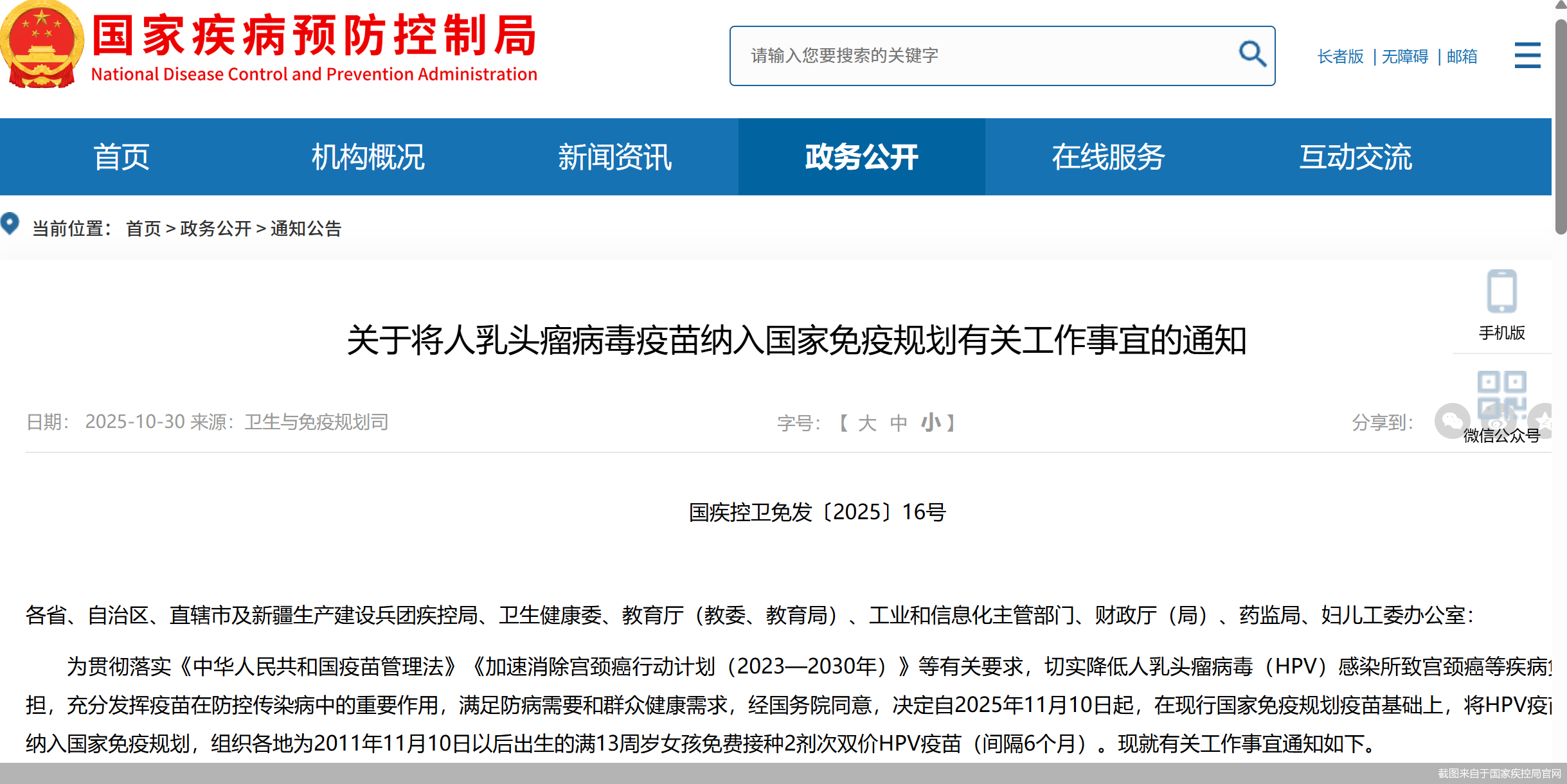
11月起HPV疫苗纳入免疫规划:为何满13周岁女孩接种?免疫欠账怎么补?
第一财经· 2025-10-30 11:51
Core Viewpoint - The inclusion of the HPV vaccine in the national immunization program is a significant step towards reducing cervical cancer incidence in China, particularly by targeting girls aged 13 and above for vaccination [3][4]. Summary by Sections Vaccination Plan - The HPV vaccine will be provided free of charge to girls born after November 10, 2011, who are 13 years old, with a schedule of two doses administered six months apart starting from November 10, 2025 [3][4]. - The initiative aims to reduce the social costs associated with cervical cancer prevention by ensuring that more eligible females receive the vaccine before potential sexual exposure [3]. Target Population - The decision to target girls aged 13 aligns with research indicating that vaccination between the ages of 9-14 generates a stronger immune response, providing better protection against HPV [6][7]. - The high-risk age groups for HPV infection in China are identified as 17-24 years and 40-44 years, emphasizing the need for early vaccination [7]. Implementation Challenges - Despite previous efforts in 18 provinces to include HPV vaccination in public health projects, actual vaccination rates remain low, with school-based vaccination being a critical bottleneck [3][4][14]. - The transition from local to central funding for vaccination programs poses challenges in policy implementation and coverage [3][12]. Catch-Up Vaccination - The plan includes provisions for catch-up vaccinations for girls who missed the initial vaccination opportunity, allowing them to receive the vaccine before turning 18 [11][12]. - Concerns exist regarding the execution of catch-up programs, particularly for mobile populations and areas with lower vaccination rates [12][13]. School-Based Vaccination - The article discusses the potential for school-based vaccination programs to improve accessibility and increase vaccination rates among eligible girls [14][15]. - Collaboration between health and education departments is essential for the successful implementation of school-based vaccination strategies [15]. Economic Impact - The inclusion of the HPV vaccine in the national immunization program is expected to stabilize vaccine prices, as the government procurement price has already reached a low of 27 yuan per dose [19][20]. - Experts suggest that the focus should shift from price competition to ensuring vaccine quality and maintaining supply [20][21]. Future Considerations - The integration of HPV vaccination with cervical cancer screening programs could enhance overall cancer prevention strategies, potentially reducing healthcare costs associated with treatment [17][18]. - The long-term effectiveness of the vaccination program will take 15-20 years to manifest, necessitating sustained efforts in vaccination and public health education [4][13].
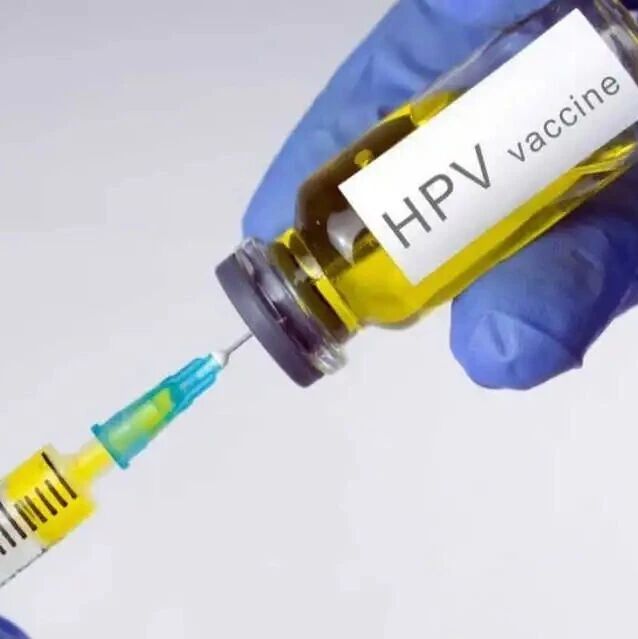
11月起HPV疫苗纳入免疫规划:为何满13周岁女孩接种?免疫欠账怎么补?
Di Yi Cai Jing· 2025-10-30 10:24
Core Viewpoint - The inclusion of the HPV vaccine in the national immunization program is a significant step towards reducing cervical cancer incidence in China, but challenges remain in achieving effective vaccination rates and addressing existing immunity gaps among older populations [1][2]. Group 1: HPV Vaccine Implementation - The HPV vaccine will be provided for free to girls aged 13 and above, starting from November 10, 2025, as part of the national immunization program [1]. - The vaccination plan aims to ensure that girls receive two doses of the bivalent HPV vaccine, spaced six months apart, to establish immunity before potential sexual exposure [1][3]. - Previous initiatives in 18 provinces have shown that actual vaccination rates are not ideal, with school-based vaccination being a critical bottleneck [1][2]. Group 2: Target Population and Age Considerations - The decision to target girls aged 13 aligns with research indicating that vaccination between the ages of 9-14 generates a stronger immune response [3][4]. - There is a significant immunity gap among older populations who may not yet be eligible for cancer screenings, highlighting the need for ongoing vaccination efforts [2][10]. Group 3: Challenges in Implementation - The feasibility of mobilizing parents for vaccination in higher grades of elementary school is questioned, suggesting that early middle school is a more suitable time for vaccination [4][5]. - The notification includes provisions for catch-up vaccinations for girls who miss the initial opportunity, allowing for one additional dose before the age of 18 [8][10]. Group 4: Vaccine Market Dynamics - The government procurement price for the bivalent HPV vaccine is set at approximately 27.5 yuan per dose, with a total budget of about 425 million yuan for 2025 [14]. - The market for the HPV vaccine is expected to stabilize in terms of pricing, as the focus shifts from price competition to ensuring vaccine quality [15][17]. Group 5: Integration of Preventive Measures - The integration of HPV vaccination with cervical cancer screening is seen as a cost-effective strategy to reduce overall healthcare expenditures related to cervical cancer treatment [13]. - The potential for optimizing screening strategies in the "post-vaccine era" is highlighted, with suggestions for extending screening intervals as vaccination rates increase [13].
集体“瞄准”外企高管,国产仪器破解成长焦虑
仪器信息网· 2025-10-30 09:07
Core Viewpoint - The domestic scientific instrument industry is accelerating its transition from "single-point breakthroughs" to "systematic leadership" by recruiting experienced executives from foreign companies to address technical and management shortcomings, thereby fast-tracking domestic substitution [2]. Group 1: Key Developments in Rui Lai Pu - Rui Lai Pu's recruitment of experts Han Zhiqiang and Wang Qin aligns with the critical needs of many domestic instrument companies, addressing both technical and market challenges [3]. - Han Zhiqiang's extensive experience in mass spectrometry fills a crucial gap in the domestic instrument sector, enhancing the transition from research and development to practical application [4]. - Wang Qin aims to reconstruct the sales service system, addressing the market pain points of many domestic companies that struggle with sales and service efficiency [5][6]. Group 2: Industry Trends of Hiring Foreign Executives - The trend of hiring foreign executives is becoming prevalent in the scientific instrument market, moving beyond price competition to focus on technology, design, talent, and management [7]. - The appointment of Li Mingkang at Aotu Technology exemplifies how foreign executives can resolve common challenges in high-end instrument technology [8]. - The hiring of Jiang Zhiming at Wantai Biologics addresses the company's weaknesses in commercialization, leveraging his experience to enhance market penetration [8]. Group 3: Reasons for Targeting Foreign Executives - The cases of Rui Lai Pu, Wantai Biologics, and Aotu Technology reflect the growth anxiety and upgrade needs of the domestic instrument industry, as they seek to compete in high-end markets [9]. - Historically, domestic instruments excelled in "single-point technological breakthroughs," but high-end markets require comprehensive capabilities across the entire product lifecycle [10]. - The management experience brought by foreign executives helps domestic companies transition from informal operations to standardized competition, enhancing their market competitiveness [11]. Group 4: Resource Integration and Industry Ecosystem - The resources accumulated by foreign executives in the industry serve as "invisible wealth" for domestic companies, facilitating connections within the supply chain and international collaboration [12]. - The integration of foreign executives' networks accelerates the domestic substitution process by linking research, production, sales, and service [12]. Group 5: Strategic Implications of Executive Recruitment - The recruitment of foreign executives signifies a mature logic in the domestic instrument industry, focusing on precise matching of needs rather than blind talent acquisition [13]. - This trend of "precise positioning" is becoming a new norm, transitioning from imitation of foreign products to the establishment of domestic standards [14]. - The integration of systematic thinking and foreign executive experience is crucial for the independent innovation and brand rise of Chinese scientific instruments [15].

万泰生物:第三季度营收同比上升12.5%至6.55亿元,报告期内国产九价HPV疫苗完成首针接种
Cai Jing Wang· 2025-10-30 04:33
Core Insights - The company reported a significant decline in revenue and net profit for the first three quarters of 2025, with total revenue at 1.5 billion yuan, down 23.1% year-on-year, and a net loss of 173 million yuan, down 165.0% year-on-year [1] - In Q3 2025, the company experienced a revenue increase of 12.5% year-on-year, totaling 655 million yuan, but still reported a net loss of 29.38 million yuan, a decline of 576.3% year-on-year [1] - The company’s non-recurring net profit also worsened, with a loss of 650.1 million yuan compared to a loss of 225.2 million yuan in the same period last year, marking an 850.4% decline [1] Business Developments - During the reporting period, the company completed the batch release of 9 batches of its nine-valent HPV vaccine, gained access in 16 provinces, and initiated first vaccinations in 7 provinces/regions [1] - The international business of the vaccine showed robust growth, with approximately 15.05 million doses exported, representing a threefold increase compared to 2024 and a sixfold increase compared to 2023 [1] - As of the end of the reporting period, the company’s vaccine received market access in 24 overseas countries, including Angola, Pakistan, and Belarus [1]
机构风向标 | 万泰生物(603392)2025年三季度已披露前十大机构持股比例合计下跌2.67个百分点
Xin Lang Cai Jing· 2025-10-30 01:35
Group 1 - Wantaibio (603392.SH) reported its Q3 2025 results, with 12 institutional investors holding a total of 731 million shares, representing 57.77% of the total share capital [1] - The top ten institutional investors include major entities such as YS Health, Hong Kong Central Clearing, and various index funds, collectively holding 57.76% of shares, a decrease of 2.67 percentage points from the previous quarter [1] Group 2 - In the public fund sector, four funds increased their holdings, including Huaxia National Bio-Medical Index Fund and others, with a slight increase in holding percentage [2] - Five public funds reduced their holdings, with a total decrease of 0.10%, including funds like China National Bio-Medical Index A and others [2] - One new public fund was disclosed this period, while 253 funds were not disclosed compared to the previous quarter, indicating significant turnover in fund disclosures [2]