Amazon

Search documents
Amazon Secures Court Order Against Perplexity AI Shopping Agent
PYMNTS.com· 2026-03-10 19:34
Core Viewpoint - Amazon has secured a temporary injunction to prevent Perplexity's AI agent from making purchases on its platform, indicating a legal dispute over unauthorized access and the rights of AI shopping tools [1][2][3]. Group 1: Legal Proceedings - A federal judge ruled that Amazon presented "strong evidence" of unauthorized access by Perplexity's Comet browser, suggesting a likelihood of success in Amazon's legal claim [2]. - The judge has paused the injunction for a week to allow Perplexity to appeal the decision [2]. Group 2: Company Statements - Amazon's spokesperson emphasized that the injunction is crucial for maintaining a trusted shopping experience for its customers [4]. - Perplexity stated its intention to fight for users' rights to choose their preferred AI tools for shopping [8]. Group 3: Background of the Dispute - The conflict became public in November when Perplexity disclosed receiving a legal threat from Amazon regarding the use of its AI assistants for shopping [8]. - Amazon argues that third-party applications should respect the decisions of businesses regarding participation in their platforms, drawing parallels to other service industries [9][10].



Amazon joins Meta, Google in jumbo bond club with up to $42 billion issuance
MarketWatch· 2026-03-10 19:01
Core Viewpoint - Amazon is preparing to issue between $37 billion and $42 billion in corporate bonds to fund its artificial intelligence initiatives, marking one of the largest bond offerings in history [1]. Group 1: Company Actions - Amazon's projected capital expenditures for the year are estimated at $200 billion, the highest among its Big Tech peers [1]. - The bond issuance is part of Amazon's strategy to finance its AI buildout, joining other major tech companies like Meta and Google in significant borrowing [1]. Group 2: Market Context - The bond offering is expected to take place in both U.S. and European credit markets, indicating a broad approach to capital raising [1]. - This move reflects a growing trend among major tech companies to leverage debt for funding technological advancements, particularly in artificial intelligence [1].

Meta to charge advertisers a fee to offset Europe's digital taxes
Reuters· 2026-03-10 18:25
Core Viewpoint - Meta Platforms will implement a location fee for advertisers, ranging from 2% to 5%, to offset digital service taxes imposed by various countries, effective July 1 [1] Group 1: Fee Structure - The location fee will apply to image or video ads on Meta platforms, including WhatsApp click-to-message campaigns and marketing messages [1] - The fee percentage varies by country: 2% in the United Kingdom, 3% in France, Italy, and Spain, and 5% in Austria and Turkey [1] Group 2: Regulatory Response - Meta's decision to charge these fees is part of its strategy to adapt to the evolving regulatory landscape and align with industry standards [1] - Previously, Meta absorbed these additional costs, but the new fees reflect a shift in policy due to increasing digital taxes [1] Group 3: Industry Context - The move follows similar actions by other tech giants like Alphabet's Google and Amazon, indicating a trend among major companies to pass on regulatory costs to advertisers [1] - Digital taxes have faced criticism from the U.S. administration for allegedly discriminating against U.S. companies [1]


Shipping CEO on Hormuz Disruptions & Yardeni's 35% Meltdown Warning | Open Interest 3/10/2026
Bloomberg Television· 2026-03-10 17:45
MATT: WE ARE RISK OFF OR THE MINUTE BUT WE HAVE 30 OF THOSE LEFT UNTIL THE START OF THE CASH TRADE. I AM MATT MILLER. DANI: I AM DANI BURGER. BLOOMBERG: OPEN INTEREST STARTS RIGHT NOW. MATT: THE RELIEF RALLY LOSES STEAM AS AIRSTRIKES INTENSIFY IN THE MIDDLE EAST AND IRANIAN OFFICIALS SAY THEY ARE NOT SEEKING A TRUCE. DANI: HEDGE FUNDS TAKE KIDS FROM THE WILD MARKET MOVES WHILE BILL ACKMAN ISA $10 BILLION IP OVER PERSHING SQUARE. MATT: AMAZON KICKS OFF WHAT COULD BE ONE OF THE LARGEST CORPORATE BOND OFFERING ...

Amazon Trades at a Premium P/E: Time to Hold or Fold the Stock?
ZACKS· 2026-03-10 17:26
Core Insights - Amazon.com (AMZN) achieved record quarterly revenues and accelerated cloud growth in Q4 2025, but the stock has struggled to maintain momentum due to aggressive investments compressing near-term cash flows [1][5][16] Financial Performance - Q4 2025 net sales increased by 14% year-over-year to a record $213.4 billion, surpassing consensus estimates [5] - Amazon Web Services (AWS) revenue grew by 24% year-over-year to $35.6 billion, marking its fastest growth in 13 quarters [5][9] - Operating income rose to $25 billion from $21.2 billion in the previous year [5] - Diluted earnings per share were $1.95, slightly missing expectations, while free cash flow decreased sharply to $11.2 billion from $38.2 billion due to record capital investments [6] Capital Expenditure and Guidance - Amazon plans approximately $200 billion in capital expenditures for 2026, a 53% increase from $131.8 billion in 2025, primarily focused on AWS AI infrastructure [7][9] - For Q1 2026, Amazon guided net sales between $173.5 billion and $178.5 billion, reflecting 11% to 15% year-over-year growth, with operating income projected between $16.5 billion and $21.5 billion [7] Competitive Landscape - Amazon's cloud market share stood at 28% in Q4 2025, with Microsoft and Alphabet at 21% and 14%, respectively, indicating increasing competition in the cloud space [9][13] - The competitive pressure from Microsoft and Alphabet is narrowing the gap in growth rates for AWS [13] Long-Term Strategy - Amazon's long-term investment strategy remains strong across e-commerce, cloud, advertising, and emerging technologies, despite near-term cash flow compression and execution risks [16] - The company has made significant investments in infrastructure, including a record $340 billion in U.S. infrastructure, employees, and communities in 2025 [10]
Amazon wins court order to block Perplexity's AI shopping agent
CNBC· 2026-03-10 17:12
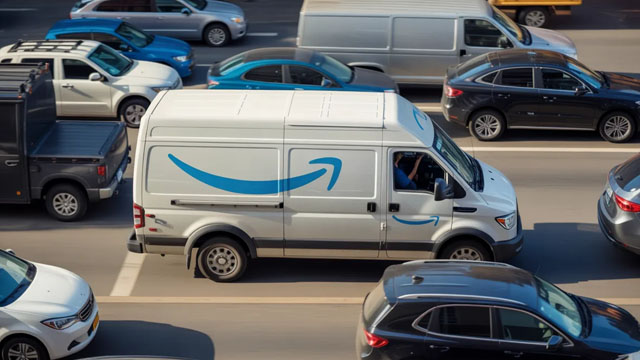
Core Viewpoint - A federal judge has temporarily blocked startup Perplexity from accessing Amazon's site with its Comet AI browser, following a lawsuit filed by Amazon alleging unauthorized access and security risks posed by Perplexity's AI agents [1][2][3]. Group 1: Legal Proceedings - Amazon filed a lawsuit against Perplexity in November, claiming that the startup concealed its AI agents to scrape Amazon's website without permission [2]. - U.S. District Judge Maxine Chesney stated that Amazon provided "strong evidence" that Perplexity's Comet browser accessed its website without authorization [3]. - The judge noted that Amazon incurred over $5,000 in costs to address the issue, including developing tools to block Comet from accessing private customer tools [4]. Group 2: Implications for Amazon - Amazon's spokesperson emphasized that the preliminary injunction is crucial for maintaining a trusted shopping experience for customers [5]. - The lawsuit highlights security risks associated with Perplexity's agents, which can operate within protected systems, potentially compromising customer data [6]. - Amazon has implemented measures to block AI agents from its shopping sites, including OpenAI's ChatGPT, while investing in its own tools like Rufus [7].

Amazon launches healthcare AI assistant on its website, app
Reuters· 2026-03-10 17:03
Core Insights - Amazon has launched a healthcare AI assistant on its website and app, aiming to streamline care for over 30 conditions [1][2] Group 1: Product Features - The AI assistant can explain medical results, connect patients with healthcare providers, and answer questions about medications and symptoms [2] - It is designed to manage non-emergency conditions such as acne, head lice, diabetes, and sleep apnea, providing virtual assessments and treatment advice [3] - The assistant does not create treatment plans but connects patients with providers for complex conditions, with visits costing $29 for non-One Medical members [4] Group 2: Accessibility - Customers can use the AI assistant without being members of Amazon Prime or One Medical, making it widely accessible [2] - The assistant can access medical data, including lab results and clinical notes, and analyze healthcare purchases made on Amazon [4] Group 3: Company Strategy - The initiative reflects Amazon's strategy to reduce friction in healthcare logistics and information, allowing patients and providers to focus on essential care [3]

Delays with SpaceX's Starship risk NASA moon landing timeline, watchdog says
Reuters· 2026-03-10 17:01
Core Insights - SpaceX's Starship has faced at least two years of development delays since being selected as NASA's astronaut moon lander in 2021, with further delays anticipated before a moon landing can occur [1] - NASA is exploring ways to expedite the development of the moon lander as part of its Artemis program, which aims to establish routine astronaut missions to the moon before China potentially sends crews by 2030 [1] - The requirement for Starship to refuel in space presents significant technical challenges, including the need to launch over 11 additional Starships to act as refueling tankers [1] Development Challenges - The process of docking Starships and transferring cryogenic propellants in low-Earth orbit is considered one of the most significant technical challenges facing SpaceX [1] - NASA has identified risks that some of the cryogenic technologies being developed by SpaceX may not be sufficiently mature ahead of the targeted 2028 moon landing [1] - SpaceX has conducted 11 test flights of the Starship system since 2023, with NASA closely monitoring the progress [1] Program Timeline - The original target for a moon landing in 2024 has been pushed back, with 2028 now set as the target date for the first crewed landings by SpaceX [1] - NASA has acknowledged the technical challenges faced by its contractors within the Artemis program, which includes plans for SpaceX to land humans on the moon across two missions starting in 2028 [1]

Elon Musk Says 'Proceed With Caution' As Amazon's AI Bites Back
Benzinga· 2026-03-10 16:31
Core Insights - The article discusses Amazon's internal review of AI-assisted coding changes that have led to system outages and disruptions, highlighting the need for caution in the use of generative AI tools in software development [1][2]. Group 1: AI and Software Development - Generative AI tools are increasingly utilized to assist developers in writing, editing, and deploying software, promising faster coding cycles but also introducing unexpected changes in complex production environments [2]. - Amazon's internal review indicated that AI-generated code changes contributed to incidents affecting the availability of parts of its online infrastructure [2]. Group 2: Internal Response and Oversight - Amazon's senior vice president, Dave Treadwell, acknowledged that the reliability of the retail platform has been poor recently, leading to a deeper internal review [3]. - Following recent outages, Amazon is tightening oversight of AI-assisted development, requiring senior approval for changes generated with AI tools [4]. Group 3: Broader Industry Challenge - The incidents at Amazon reflect a larger challenge in the technology industry: balancing the speed and efficiency of AI-generated code with the stability needed for large-scale digital platforms used by millions of customers [5].
Bill Ackman moves to take Pershing Square hedge fund public
New York Post· 2026-03-10 16:30
Group 1 - Billionaire investor Bill Ackman is taking his firm, Pershing Square Capital Management, public while launching a new investment fund, Pershing Square USA, aiming to raise billions from everyday investors and major financial institutions [1][4] - The new fund is a closed-end fund that will sell a fixed number of shares in an initial public offering (IPO), targeting at least $5 billion total, including $2.8 billion from a private placement [4] - The fund will not exceed $10 billion in combined proceeds from the IPO and placement, with shares starting at $50 each and a minimum buy of 100 shares, costing at least $5,000 for investors [4][5] Group 2 - Ackman previously attempted a similar fund plan in 2024, initially targeting up to $25 billion but later reducing it to $2 billion due to weak interest [5] - Pershing Square currently oversees around $19 billion, including leverage, which enhances potential gains but also increases risks [8] - The firm has shifted focus from activist investing to large holdings in major companies, with recent investments including a $2 billion stake in Meta Platforms and backing for Howard Hughes Holdings [9][11] Group 3 - A team of banks, including Citigroup Global Markets, UBS Securities, Bank of America Securities, Jefferies, and Wells Fargo Securities, will manage the Pershing Square IPO as bookrunners [12] - The shares will be traded on the New York Stock Exchange under a ticker that is yet to be announced [13]