
奇安信

Search documents
全球网络安全相关人士齐聚天津共商风险应对之策
Xin Hua Wang· 2025-09-24 23:02
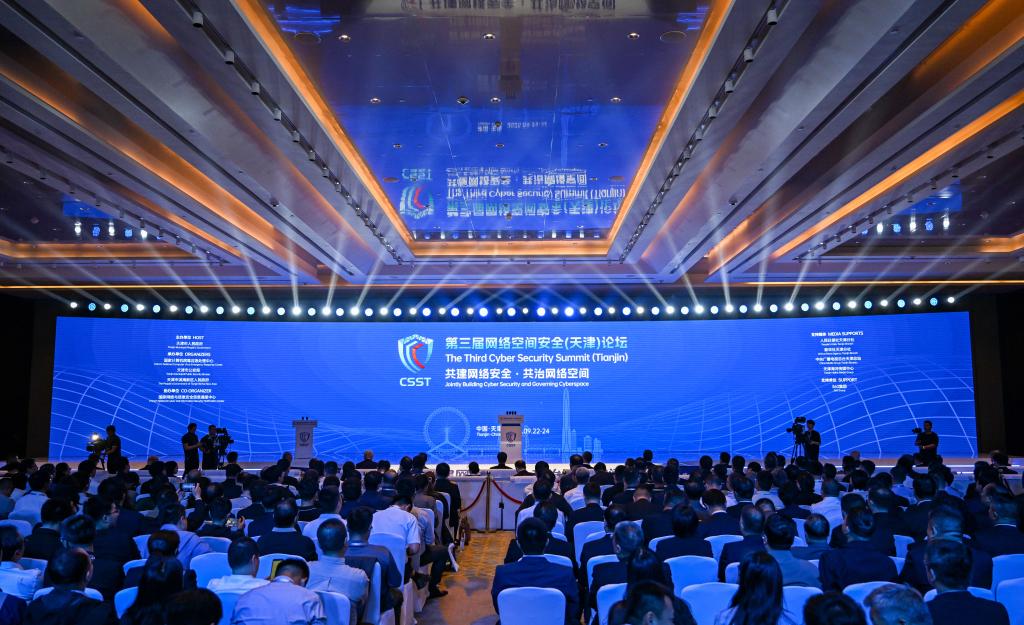
Group 1 - The third Cybersecurity Forum in Tianjin gathered nearly 800 participants from global cybersecurity organizations, research institutions, and enterprises to discuss strategies for addressing cybersecurity risks [2] - The theme of the forum was "Building a Community of Shared Future in Cyberspace," highlighting the need for international cooperation in cybersecurity [2] - A report indicated that from July 2024 to June 2025, there will be 209 severe data security incidents globally, with the Americas, Asia, and Europe being the most affected regions [2] Group 2 - China is enhancing its data security governance framework, with new regulations such as the "Network Data Security Management Regulations" and the "Facial Recognition Technology Application Security Management Measures" set to take effect in 2025 [3] - The Chinese Ministry of Public Security emphasized the importance of legal frameworks in maintaining cybersecurity and combating cybercrime [3] - The report noted a significant increase in AI-related cybersecurity risks, with network attacks accounting for 29%, data security incidents for 26%, and security vulnerabilities for 25% [3] Group 3 - The chairman of Qihoo 360 Technology Group stated that embedding AI within security systems is crucial for enhancing the resilience of digital systems [4] - China has introduced mandatory national standards for identifying AI-generated synthetic content, which aims to improve compliance and enhance the competitiveness of Chinese enterprises in the global AI market [4] - The director of Nigeria's National Information Technology Development Agency highlighted the necessity of regional and global cooperation in achieving cybersecurity [4] Group 4 - An academic from the U.S. National Academy of Artificial Intelligence suggested that integrating technology, management, and legal frameworks can enhance network security resilience [5]

第二大权重股澜起科技领涨6.65%!科创人工智能ETF华夏(589010)高位震荡涨幅超2%!
Mei Ri Jing Ji Xin Wen· 2025-09-24 07:12
Group 1 - The semiconductor industry chain is experiencing a significant market surge, with the AI-focused ETF Huaxia (589010) rising by 2.23% and reaching a peak increase of over 3.5% during the trading session [1] - Among the ETF's holdings, 90% of the constituent stocks are rising, with the second-largest weight, Lianqi Technology, leading with a 6.65% increase [1] - The trading volume is active, exceeding 91 million yuan, indicating a robust market liquidity [1] Group 2 - Omdia's latest report highlights rapid growth in the AI data center chip market, with projected GPU and AI accelerator shipment values reaching $123 billion in 2024, $207 billion in 2025, and $286 billion by 2030 [2] - The annual growth rate from 2022 to 2024 is expected to exceed 250%, but a slowdown to approximately 67% is anticipated from 2024 to 2025 [2] - AI infrastructure spending is projected to peak in 2026, with nearly all incremental spending driven by AI [2]

当AI“一本正经胡说八道”……
Qi Lu Wan Bao· 2025-09-24 06:40
Core Insights - AI is increasingly integrated into various industries, providing significant convenience, but it also generates misleading information, known as "AI hallucinations" [1][2][3] Group 1: AI Hallucinations - A significant number of users, particularly among students and teachers, have encountered AI hallucinations, with nearly 80% of surveyed individuals reporting such experiences [3] - Major AI models have shown hallucination rates exceeding 19% in factual assessments, indicating a substantial issue with reliability [3] - Instances of AI providing harmful or incorrect medical advice have been documented, leading to serious health consequences for users [3] Group 2: Causes of AI Hallucinations - Data pollution during the training phase of AI models can lead to increased harmful outputs, with even a small percentage of false data significantly impacting results [4] - AI's lack of self-awareness and understanding of its outputs contributes to the generation of inaccurate information [4] - AI systems may prioritize user satisfaction over factual accuracy, resulting in fabricated responses to meet user expectations [5] Group 3: Mitigation Strategies - Experts suggest improving the quality of training data and establishing authoritative public data-sharing platforms to reduce AI hallucinations [6] - AI companies are implementing technical measures to enhance response quality and reliability, such as refining search and reasoning processes [6] - Recommendations include creating a national AI safety evaluation platform and enhancing content verification processes to ensure the accuracy of AI-generated information [6][7]
新华视点·关注AI造假丨当AI“一本正经胡说八道”……
Xin Hua She· 2025-09-24 04:43
Core Insights - The article discusses the dual nature of AI, highlighting its benefits in various sectors while also addressing the issue of "AI hallucinations," where AI generates inaccurate or fabricated information [1][2]. Group 1: AI Benefits and Integration - AI has become deeply integrated into modern life, providing significant convenience across various industries, including education and healthcare [1]. - Users report that while AI is useful, it can sometimes produce nonsensical or fabricated responses, leading to confusion and misinformation [1][2]. Group 2: AI Hallucinations and Their Impact - A significant number of users, particularly in sectors like finance, law, and healthcare, have encountered AI hallucinations, with nearly 80% of surveyed university students experiencing this issue [2][3]. - A specific case is highlighted where an individual was misled by AI into using a toxic substance as a salt substitute, resulting in severe health consequences [2]. Group 3: Causes of AI Hallucinations - Data pollution during the training phase of AI models can lead to harmful outputs, with even a small percentage of false data significantly increasing the likelihood of inaccuracies [3]. - AI's lack of self-awareness and understanding of its outputs contributes to the generation of misleading information [3][4]. - The design of AI systems often prioritizes user satisfaction over factual accuracy, leading to fabricated answers [3][4]. Group 4: Mitigation Strategies - Experts suggest that improving the quality of training data and establishing authoritative public data-sharing platforms can help reduce AI hallucinations [5]. - Major AI companies are implementing technical measures to enhance the reliability of AI outputs, such as improving reasoning capabilities and cross-verifying information [5]. - Recommendations include creating a national AI safety evaluation platform and enhancing content review processes to better detect inaccuracies [5][6].
云栖大会召开!阿里狂投3800亿AI建设!科创人工智能ETF(589520)盘中拉升1%,单日吸金2441万元
Xin Lang Ji Jin· 2025-09-24 03:01
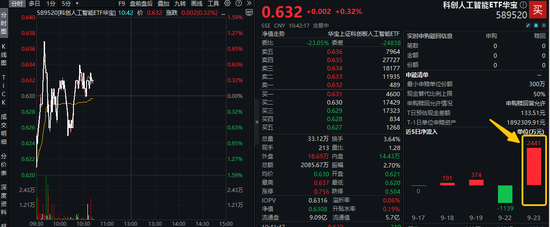
Core Viewpoint - The article highlights the significant growth and investment potential in the domestic AI industry, particularly through the Sci-Tech Innovation Artificial Intelligence ETF (589520), which has shown positive market performance and increased investor interest [1][2]. Group 1: Market Performance - The Sci-Tech Innovation Artificial Intelligence ETF (589520) saw a mid-day price increase of over 1%, currently up by 0.32%, with notable gains in constituent stocks such as Youke De (up over 3%) and Lanke Technology (up over 2%) [1]. - The ETF attracted 24.41 million CNY in investments yesterday, indicating strong market confidence in the sector's future [1]. Group 2: AI Infrastructure and Investment - Alibaba is actively advancing its AI infrastructure with a planned investment of 380 billion CNY, anticipating a tenfold increase in energy consumption for its global data centers by 2032 compared to 2022 [2]. - The current low penetration rate of AI users and the early-stage development of large models suggest a growing capital expenditure in AI, with significant potential for revenue growth [2]. Group 3: Domestic AI Industry Trends - The urgency for domestic AI chip production is increasing due to geopolitical tensions, with expectations for domestic computing power demand to double by 2025, creating a market potential worth hundreds of billions [2][3]. - The focus on domestic AI infrastructure is expected to lead to breakthroughs in computing power and chip technology, maintaining a favorable market outlook [3]. Group 4: ETF Highlights - The Sci-Tech Innovation Artificial Intelligence ETF (589520) is positioned to benefit from policy support and the growing AI sector, with a focus on companies that are leaders in their respective segments [3]. - The ETF offers a low-entry investment option with a high degree of flexibility, as it has a 20% price fluctuation limit, allowing for efficient capital deployment during market upswings [3].
网络安全企业加速AI创新 新产品竞相落地
Zhong Guo Zheng Quan Bao· 2025-09-23 20:26
Core Insights - Multiple cybersecurity companies are actively investing in AI technology development, enhancing their product capabilities and operational efficiency [1][2][3] - The integration of AI in cybersecurity is seen as a double-edged sword, presenting both new security risks and opportunities for improved efficiency [1][4] Group 1: Company Developments - Green Alliance Technology plans to launch AI security products, including an AI security integrated machine and a large model security assessment system [1] - North Trust has developed an AI capability platform that integrates large models and development tools, with applications delivered in finance and energy sectors [1][2] - Deepin Technology has incorporated large model technology into its cybersecurity products, including a security GPT and AI firewall, with plans for further investment in AI R&D [2] - Ant Group has released innovative products that combine cybersecurity and AI technology, including a trusted connection framework for smart glasses [2] - Starry Sky Technology's AI model has been applied in security operations and threat detection, significantly enhancing product capabilities [3] - AsiaInfo reported significant growth in AI model applications and deliveries in the first half of the year, focusing on AI model applications, 5G private networks, and intelligent operations [3] Group 2: Industry Trends and Challenges - Gartner's report indicates a shift in focus towards securing AI systems in cybersecurity, with expectations that 60% of large Chinese enterprises will adopt exposure management technology by 2027 [4] - The need for companies to be aware of risks associated with AI model applications, such as prompt injection and model manipulation, is emphasized [4][5] - The importance of supply chain security in AI applications is highlighted, with calls for enhanced version vulnerability management and code security audits [5] - The rapid adoption of AI models is expected to create significant security risks, necessitating a dynamic defense system and cross-departmental collaboration [5][6] Group 3: Recommendations for AI Security - Experts suggest mandatory registration for AI models to identify risks early and ensure comprehensive understanding of their security and usability [6] - Companies are encouraged to conduct compliance assessments and deploy specialized protections, such as AI security barriers, to defend against new types of attacks [6] - Establishing trust through security measures is seen as essential for promoting data flow and maximizing the value of AI applications across various industries [6]





网络安全企业加速AI创新新产品竞相落地
Zhong Guo Zheng Quan Bao· 2025-09-23 20:16
Core Insights - Multiple cybersecurity companies are actively investing in AI technology development, leading to innovative products and solutions in the cybersecurity sector [1][2][3] - The integration of AI in cybersecurity is seen as a double-edged sword, presenting both new security risks and opportunities for efficiency and product enhancement [1][3] Group 1: Company Developments - Green Alliance Technology plans to launch a series of AI security products aimed at protecting large models, including an AI security integrated machine and an AI security fence [1] - North Trust has developed an AI capability platform that integrates large models and tools, which has been deployed in sectors like finance and energy [1][2] - Deepin Technology has incorporated large model technology into its cybersecurity products, including a security GPT and AI firewall, and plans to increase R&D investment in AI [2] - Ant Group has introduced innovative products that merge cybersecurity with AI technology, including a trusted connection framework for smart glasses [2] - Starry Sky Technology's AI model has been applied in security operations and threat detection, enhancing product capabilities and service efficiency [3] - AsiaInfo reported significant growth in AI model applications and deliveries in the first half of the year, focusing on AI model applications, 5G private networks, and intelligent operations as growth engines [3] Group 2: Industry Trends and Challenges - According to Gartner, the focus of cybersecurity in China is shifting towards ensuring the safety of AI, with expectations that by 2027, 60% of large enterprises will adopt exposure management technologies [3][4] - The risks associated with AI model applications include prompt injection and model manipulation, which require careful monitoring and preventive measures [3][4] - The importance of supply chain security in AI applications is emphasized, as vulnerabilities and configuration errors can lead to significant data leaks [4] - The rapid adoption of AI models is likened to the early days of website proliferation, but it also brings a surge in security risks due to the extensive permissions these models may have [4][5] Group 3: Recommendations for AI Security - Experts suggest mandatory registration for AI models to identify risks early and enhance user understanding of their safety and usability [5] - Companies are encouraged to build protective systems for AI applications, including compliance assessments and the deployment of AI security technologies [5] - Establishing trust through security measures is seen as essential for promoting data flow and maximizing the value of AI across various industries [5]

技术赋能,共筑网络安全防线——2025年国家网络安全宣传周网络安全博览会侧记
Ren Min Ri Bao· 2025-09-23 08:52
Group 1 - The event showcased advancements in network security technology, emphasizing a shift from passive defense to intelligent perception and proactive protection [1][2] - The exhibition featured various innovative applications, including a drone detection and countermeasure system developed by China Telecom, which utilizes AI algorithms for comprehensive control over drone activities [1] - Ant Group introduced the "gPass" framework for secure connections through smart glasses, integrating biometric authentication methods to enhance user experience and security [2] Group 2 - The event highlighted the importance of network security in protecting public interests, with numerous new technologies addressing real-life security needs [2] - Interactive experiences at the exhibition attracted significant public interest, including AI-powered government assistants and tools for detecting AI-generated content [2] - The event aimed to make network security awareness more relatable to the public through engaging displays and case studies [2]
我市中小学守护青少年数字家园
Xi An Ri Bao· 2025-09-23 06:37
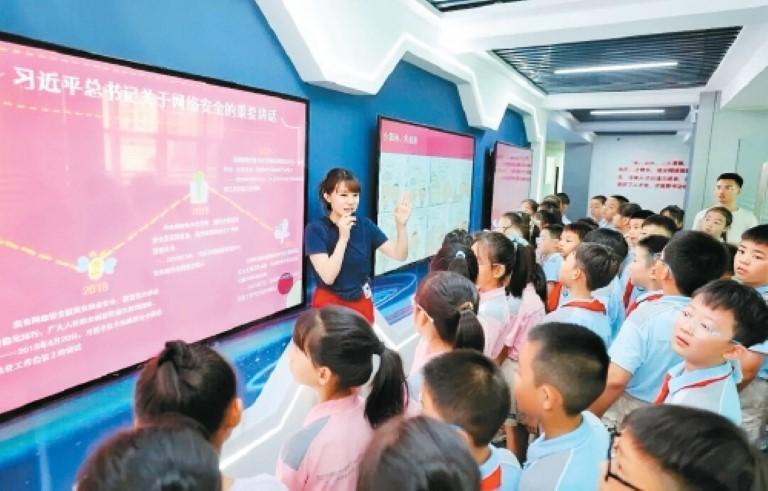
Core Viewpoint - The 12th National Cybersecurity Awareness Week emphasizes the importance of cybersecurity for the public and its role in supporting high-quality development, with various schools in Xi'an actively promoting cybersecurity education among students [1]. Group 1: Educational Initiatives - Schools in Xi'an are utilizing creative interactions, police-school collaborations, and family-school cooperation to enhance cybersecurity education and build a robust safety net for students [1]. - Expert lectures, such as those by Dr. Pei Zhiyong from Qi Anxin Group, have resonated strongly with students, highlighting common online risks like phishing links and personal information leaks [1]. - Interactive lectures at schools, such as the one by Officer Yang Guangqing, engage students through questions and simulations, helping them identify online traps and learn prevention techniques [1][2]. Group 2: Immersive Learning Experiences - The Shaanxi Normal University Experimental Primary School provided immersive cybersecurity education experiences, allowing students to confront hidden risks in the digital age through interactive systems [2]. - High-tech games designed around cybersecurity themes have been implemented in schools, enabling students to learn about online safety while having fun [2]. Group 3: Community and Parental Involvement - Schools are integrating cybersecurity topics into class meetings, encouraging teachers to share personal experiences with online threats to foster discussion and practical understanding among students [4]. - The distribution of a "Family Cybersecurity Guide" by schools has been well-received by parents, enhancing collaboration between home and school in safeguarding children's online experiences [4]. - The Xi'an schools are committed to making cybersecurity education a regular part of their curriculum, with ongoing assessments of network security and the incorporation of cybersecurity into routine teaching practices [4].
计算机行业“一周解码”:荣威上车豆包大模型,智能座舱进入深度思考时代
Bank of China Securities· 2025-09-23 00:35
Investment Rating - The industry investment rating is "Outperform the Market," indicating that the industry index is expected to perform better than the benchmark index over the next 6-12 months [33]. Core Insights - The launch of the SAIC Roewe M7 DMH, which features the Doubao deep thinking model, marks a significant advancement in smart cockpit technology, redefining human-vehicle interaction from command-based to natural interaction [11][12]. - Figure AI has raised over $1 billion in Series C funding, achieving a post-money valuation of $39 billion, highlighting the growing interest in humanoid robotics and its potential applications in both domestic and commercial settings [13][15]. - NVIDIA is pushing for the development of a new microchannel liquid cooling plate (MLCP) technology due to the high power consumption of new AI platforms, which could become a strategic material in the industry [16][18]. Summary by Sections Smart Cockpit - The SAIC Roewe M7 DMH integrates the Doubao deep thinking model, enhancing its ability to understand ambiguous commands and execute complex vehicle control tasks, thus improving user experience significantly compared to conventional models [11][12]. - The smart cockpit is evolving from a simple command execution system to a more intuitive and emotionally engaging partner for users, indicating a shift in the automotive industry's competitive landscape towards data, computing power, and algorithm capabilities [12][11]. Humanoid Robotics - Figure AI's recent funding round reflects strong market confidence in humanoid robots, with plans to expand their production and deployment capabilities for both household and commercial applications [13][15]. - Despite the high valuation, concerns remain regarding Figure AI's ability to convert demonstration capabilities into actual delivery and operational success in real-world scenarios [14][15]. Cooling Technology - NVIDIA's MLCP technology is expected to address the cooling challenges posed by high-power AI platforms, with costs projected to be 3 to 5 times higher than traditional cooling solutions, indicating a shift in the cooling technology landscape [16][18]. - The introduction of MLCP is seen as a necessary evolution in the industry, as traditional cooling methods are becoming inadequate for the increasing power demands of AI hardware [17][18].

