中粮糖业

Search documents
农产品加工板块9月11日涨0.65%,国投中鲁领涨,主力资金净流出7177.65万元
Zheng Xing Xing Ye Ri Bao· 2025-09-11 08:40
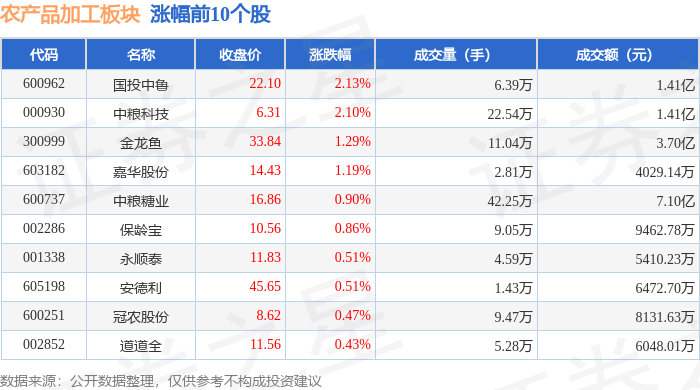
Market Overview - On September 11, the agricultural processing sector rose by 0.65% compared to the previous trading day, with Guotou Zhonglu leading the gains [1] - The Shanghai Composite Index closed at 3875.31, up 1.65%, while the Shenzhen Component Index closed at 12979.89, up 3.36% [1] Stock Performance - Guotou Zhonglu (600962) closed at 22.10, with a gain of 2.13% and a trading volume of 63,900 shares, amounting to a transaction value of 141 million [1] - Other notable stocks included: - COFCO Technology (000930) at 6.31, up 2.10% with a volume of 225,400 shares [1] - Jinlongyu (300999) at 33.84, up 1.29% with a volume of 110,400 shares [1] - Jiayuan Co., Ltd. (603182) at 14.43, up 1.19% with a volume of 28,100 shares [1] Capital Flow - The agricultural processing sector experienced a net outflow of 71.78 million from institutional investors, while retail investors saw a net inflow of 50.28 million [2] - The main capital inflow and outflow for specific stocks included: - COFCO Sugar (600737) had a net inflow of 17.76 million from institutional investors [3] - Guotou Zhonglu (600962) saw a net outflow of 1.38 million from retail investors [3]




以互惠合作促进共同繁荣
Xin Hua She· 2025-09-10 22:21
Group 1 - China's commitment to expanding high-level opening-up and promoting high-quality development of service trade is emphasized in Xi Jinping's message [1][4] - The 2025 China International Service Trade Fair (CIFTIS) features nearly 2,000 enterprises participating, with over 20% internationalization rate [2] - Australia, as the guest country, showcases significant participation, with companies like Canva leveraging AI technology for visual content creation [2] Group 2 - The aging population in China presents vast opportunities for businesses focused on elder care services, as highlighted by Japanese companies [3] - COFCO Group is showcasing its digital transformation in the global agricultural supply chain, aiming for enhanced resilience and safety [3] - The emphasis on aligning with international high-standard trade rules indicates a strategic direction for service industry reforms in China [5]
从“制造”到“品牌” 糖果企业的升维之路
Bei Jing Shang Bao· 2025-09-10 17:35
Core Insights - The Chinese food industry is at a critical juncture for high-quality development, transitioning from "Made in China" to "Chinese Brands" is a pressing issue [1] - The forum highlighted the release of a report on the transformation of the candy industry, providing new strategies for upgrading [2] Industry Growth - The overall scale of the leisure food industry is projected to grow from 784.5 billion yuan in 2020 to 1,009.3 billion yuan by 2024, with a compound annual growth rate of 6.5% [2] - The share of candy and chocolate within the leisure food sector is expected to decrease from 15.2% in 2020 to 14.5% in 2024, although absolute growth continues [2] Innovation and Collaboration - The report emphasizes the integration of food industry with cultural and creative sectors, suggesting that collaboration with cultural IPs can enhance product value, with premium rates for co-branded products reaching 40%-60% [2] - The partnership between candy companies and popular cultural IPs, such as the collaboration with the game "Black Myth: Wukong," is expected to drive market growth by 30% [2] Market Dynamics - The rise of instant retail, particularly through platforms like Meituan, has led to significant growth in the leisure food category, with monthly orders for a popular snack brand reaching nearly 2 million [3] Health and Technology Trends - The industry is focusing on health and digital transformation, with innovations aimed at reducing salt, sugar, and oil content in products [4] - Smart processing equipment is being developed to enhance automation and efficiency in food production [4] Cultural Heritage and Modern Demand - Traditional brands are integrating intangible cultural heritage with modern consumer needs, exemplified by the Ma Dajie brand's low-sugar products that meet health demands [5] - Xu Fu Ji Group emphasizes continuous R&D investment, amounting to nearly 200 million yuan annually, to foster innovation while preserving cultural heritage [5] International Expansion - Companies face challenges in international markets, including regulatory barriers and differing consumer preferences [6] - Xu Fu Ji has achieved consecutive years of overseas market growth, expanding its products to over 60 countries [7] - Wang Wang Group's international strategy includes establishing local operations, with products now available in 64 countries [7] - The establishment of overseas factories is crucial for localizing operations and penetrating global markets [7]
2025服贸会 | 从“制造”到“品牌” 中国食品工业的升维之路
Bei Jing Shang Bao· 2025-09-10 15:22
Core Insights - The Chinese food industry is at a critical juncture for high-quality development, focusing on transitioning from "Made in China" to "Chinese Brands" [1] - A forum held on September 10 discussed the national policy guidance, innovation, and internationalization trends in the food industry, emphasizing the importance of building national brands [1][3] - The report "The Transformation and Expansion Code of the Candy Industry" was released, providing new strategies for the candy sector's transformation [1][3] Policy Guidance - The leisure food sector has seen significant growth, expanding from 784.5 billion yuan in 2020 to 1,009.3 billion yuan by 2024, with a compound annual growth rate of 6.5% [3] - The candy and chocolate segment's market share decreased from 15.2% in 2020 to 14.5% in 2024, although its absolute scale continues to grow [3] - Collaboration between candy companies and cultural IPs has increased, with co-branded products achieving a premium of 40%-60% [3] Heritage and Innovation - The focus on health and digital transformation in the leisure food industry includes innovations in reducing salt, sugar, and oil content [5] - Traditional brands are integrating intangible cultural heritage with modern consumer demands, exemplified by the Ma Dajie brand's low-sugar products [6] - Xu Fu Ji Group invests nearly 200 million yuan annually in R&D, emphasizing collaboration with universities for product innovation [6] International Market Opportunities - Companies face challenges in overseas markets, including regulatory barriers and differing consumer preferences [7] - Xu Fu Ji has achieved consecutive years of doubling overseas market growth, with products available in over 60 countries [7] - Wang Wang Group's "Da Zuo Zhan" gummy candy has successfully penetrated the Japanese market through continuous innovation [7] Globalization and Local Operations - Establishing overseas factories is crucial for localizing operations and expanding into global markets [8] - Companies like COFCO Sugar are increasing imports of sugarcane and exploring international cooperation models [8] Conclusion - Empowering brand value through cultural creativity, enhancing product capabilities via technological innovation, and expanding market reach with an international perspective are key drivers for the Chinese food industry's transition from manufacturing to branding [9]
以互惠合作促进共同繁荣——习近平主席致2025年中国国际服务贸易交易会贺信凝聚开放共赢信心和力量
Xin Hua She· 2025-09-10 15:22
Group 1 - China's commitment to expanding high-level opening-up and promoting high-quality development of service trade is emphasized in President Xi Jinping's congratulatory letter [1][4] - The 2025 China International Service Trade Fair aims to enhance international cooperation and provide better public goods for global enterprises [1][3] - The theme of this year's fair, "Digital Intelligence Leading, Service Trade Renewed," reflects the structural transformation in the service industry driven by digitalization [2] Group 2 - Australia, as the guest country for the 2025 fair, showcases significant participation, with companies like Canva demonstrating AI visual technology applications [2] - The aging population presents vast opportunities for service industries, particularly in elder care, as highlighted by Japanese companies seeking to expand their services in China [3] - The focus on digital transformation in the agricultural supply chain is underscored by COFCO Group's initiatives to enhance resilience and safety in global food supply [3][5] Group 3 - The importance of aligning with international high-standard trade rules is highlighted, with plans for pilot programs in free trade zones and service trade innovation demonstration areas [5] - The fair serves as a platform for exploring new service models and fostering practical cooperation with global partners [3][5] - The overall sentiment among international investors is increasingly positive regarding opportunities in China as the country continues to open up [4][5]
从“制造”到“品牌”,中国食品工业的升维之路
Bei Jing Shang Bao· 2025-09-10 15:17
Core Insights - The Chinese food industry is at a critical juncture for high-quality development, transitioning from "Made in China" to "Chinese Brands" [1] - The forum discussed three main dimensions: policy guidance, cultural inheritance, and internationalization [1] Policy Guidance - The leisure food sector has seen rapid growth, expanding from 784.5 billion yuan in 2020 to 1,009.3 billion yuan by 2024, with a compound annual growth rate of 6.5% [2] - Despite a decrease in market share from 15.2% in 2020 to 14.5% in 2024 for candy and chocolate, the absolute scale continues to grow [2] - The report on the candy industry's transformation emphasizes the integration of food industry and cultural creativity as a new solution for traditional candy companies [2] Cultural Inheritance and Innovation - The industry is focusing on health and digital transformation, with innovations in reducing salt, sugar, and oil content [4] - Traditional brands are combining intangible cultural heritage with modern consumer needs, as seen with the "Palace Pastry" series from the Ma Dajie brand [5][6] - Xu Fu Ji Group invests nearly 200 million yuan annually in R&D, focusing on health snacks and digital transformation [6] International Market Opportunities - Companies face challenges in overseas markets, including regulatory barriers and differing consumer preferences [7] - Xu Fu Ji has achieved consecutive overseas market growth, expanding its products to over 60 countries [7] - The establishment of overseas factories is crucial for local operations and global market penetration [8]
2025服贸会|从“制造”到“品牌”,中国食品工业的升维之路
Bei Jing Shang Bao· 2025-09-10 15:04
Core Viewpoint - The Chinese food industry is at a critical juncture for high-quality development, transitioning from "Made in China" to "Chinese Brands" is a pressing issue that needs to be addressed [1] Group 1: Policy Guidance and Industry Growth - The leisure food industry in China has seen rapid growth, expanding from 784.5 billion yuan in 2020 to 1,009.3 billion yuan by 2024, with a compound annual growth rate of 6.5% [3] - The candy and chocolate segment, while decreasing in market share from 15.2% in 2020 to 14.5% in 2024, continues to grow in absolute terms [3] - The report released at the forum provides new insights for traditional candy companies, suggesting a combination of food industry and cultural creativity [3] Group 2: Brand Innovation and Market Expansion - The collaboration between candy companies and cultural IPs has deepened, with co-branded products achieving a premium price increase of 40% to 60% [3] - Instant retail has significantly boosted the growth of leisure food categories, with brands like "Hao Xiang Lai" seeing monthly orders reach nearly 2 million within four months of collaboration with Meituan [4] - The partnership between Meituan and Xu Fu Ji has created a phenomenon in marketing, enhancing both brand visibility and sales [4] Group 3: Heritage and Innovation - The transition from "Made in China" to "Chinese Brands" emphasizes the importance of cultural heritage and product innovation [5] - The food industry is focusing on health and digital transformation, with innovations in reducing salt, sugar, and oil content while enhancing product health value [5] - Traditional brands like Ma Da Jie are integrating intangible cultural heritage with modern consumer demands, launching low-sugar products to meet health needs [6] Group 4: International Market Opportunities - Chinese brands face challenges in international markets, including regulatory barriers and differing consumer preferences, but companies like Xu Fu Ji have achieved significant overseas growth [7] - The establishment of overseas factories is crucial for localizing operations and penetrating global markets, with companies like COFCO Sugar increasing imports and exploring international cooperation [8] - The trend of empowering brand value through cultural creativity, enhancing product capabilities through technological innovation, and expanding markets with an international perspective is becoming the core driving force for the Chinese food industry [9]
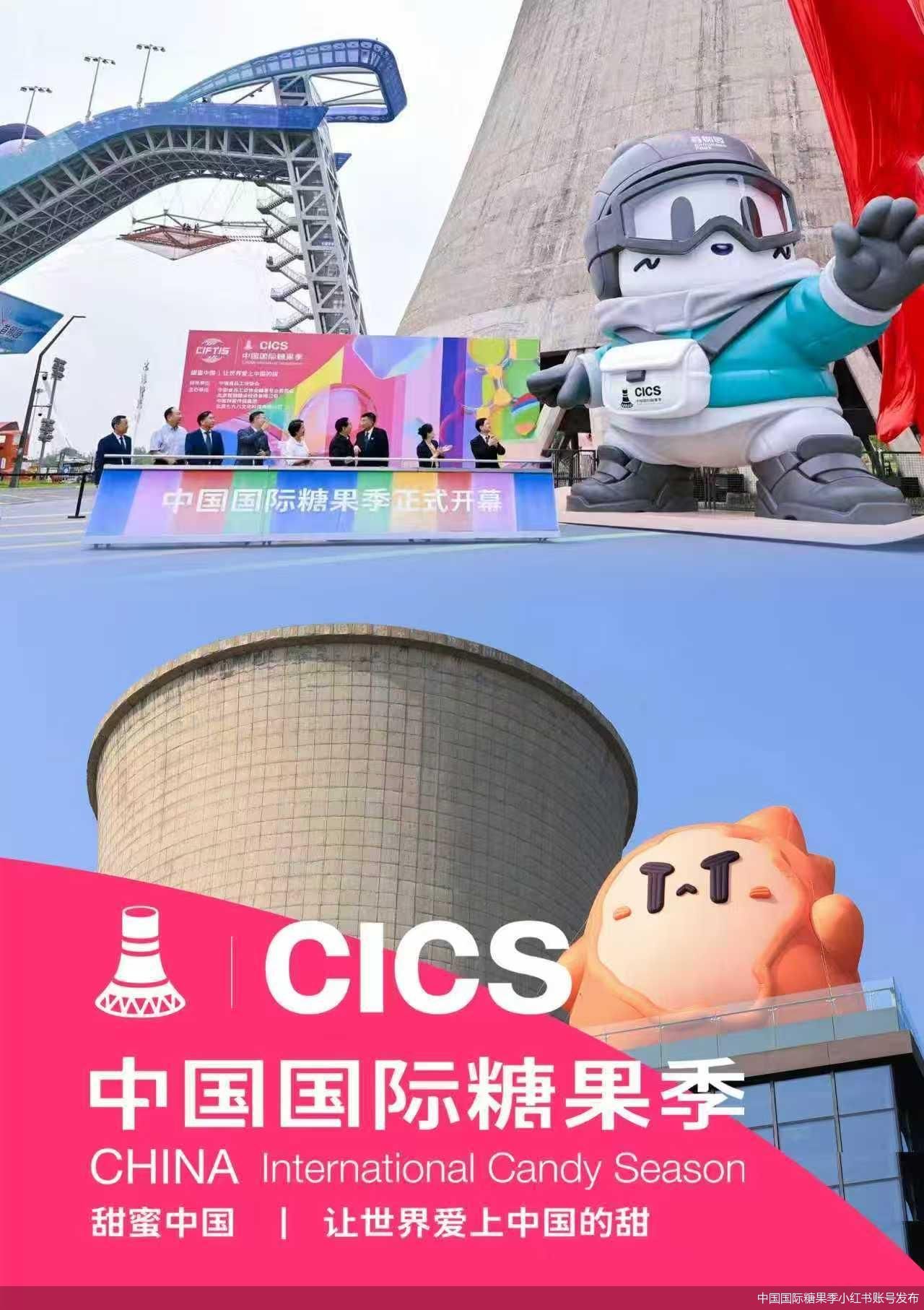
中粮糖业贸易部副总经理胡越洋:多家制糖企业正积极探索“国外种蔗+国内制糖”国际合作模式
Bei Jing Shang Bao· 2025-09-10 14:57
Group 1 - The core viewpoint of the article highlights the increasing trend of sugarcane imports in China and the exploration of international cooperation models in sugar production, particularly the "foreign planting + domestic processing" approach [1] - COFCO Sugar's Deputy General Manager, Hu Yueyang, emphasized the establishment of large-scale raw material bases in ASEAN countries, including Vietnam, by several sugar companies [1]
2025服贸会|中粮糖业贸易部副总经理胡越洋:多家制糖企业正积极探索“国外种蔗+国内制糖”国际合作模式
Bei Jing Shang Bao· 2025-09-10 14:57
Group 1 - The core viewpoint of the article highlights the increasing trend of sugarcane imports by China and the exploration of international cooperation models in sugar production, particularly the "foreign sugarcane planting + domestic sugar production" approach [1] - Hu Yueyang, Deputy General Manager of COFCO Sugar Trade Department, emphasized the establishment of large-scale raw material bases in ASEAN countries, including Vietnam, by several sugar companies, including COFCO Sugar [1]
农产品加工板块9月10日涨0.08%,*ST中基领涨,主力资金净流出7661.97万元
Zheng Xing Xing Ye Ri Bao· 2025-09-10 08:30
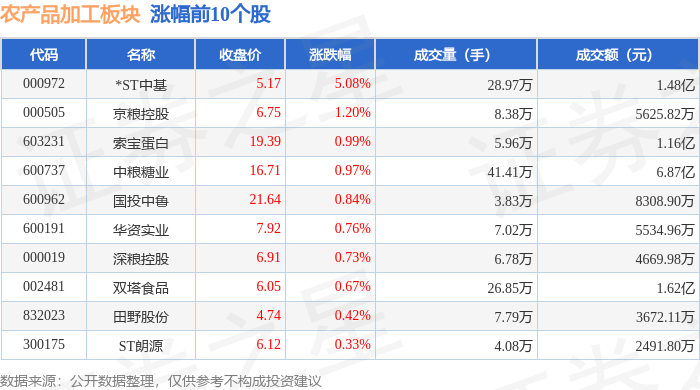
Market Overview - On September 10, the agricultural processing sector rose by 0.08% compared to the previous trading day, with *ST Zhongji leading the gains [1] - The Shanghai Composite Index closed at 3812.22, up 0.13%, while the Shenzhen Component Index closed at 12557.68, up 0.38% [1] Stock Performance - The following stocks in the agricultural processing sector showed notable performance: - *ST Zhongji (000972) closed at 5.17, up 5.08% with a trading volume of 289,700 shares and a turnover of 148 million yuan [1] - Jingliang Holdings (000505) closed at 6.75, up 1.20% with a trading volume of 83,800 shares and a turnover of 56.26 million yuan [1] - Suobao Protein (603231) closed at 19.39, up 0.99% with a trading volume of 59,600 shares and a turnover of 116 million yuan [1] - COFCO Sugar (600737) closed at 16.71, up 0.97% with a trading volume of 414,100 shares and a turnover of 687 million yuan [1] Capital Flow - The agricultural processing sector experienced a net outflow of 76.62 million yuan from institutional investors, while retail investors saw a net inflow of 72.43 million yuan [2] - The following stocks had significant capital flow: - *ST Zhongji had a net inflow of 14.71 million yuan from institutional investors, while it faced a net outflow of 10.67 million yuan from speculative funds [3] - AnDeli (605198) saw a net inflow of 6.43 million yuan from institutional investors but a net outflow of 0.43 million yuan from speculative funds [3]