
天坛生物

Search documents
每周股票复盘:天坛生物(600161)每股现金红利0.1元,权益分派实施
Sou Hu Cai Jing· 2025-06-13 20:13
截至2025年6月13日收盘,天坛生物(600161)报收于19.43元,较上周的20.15元下跌3.57%。本周,天 坛生物6月10日盘中最高价报20.56元。6月13日盘中最低价报19.38元。天坛生物当前最新总市值384.2亿 元,在生物制品板块市值排名5/50,在两市A股市值排名350/5150。 以上内容为证券之星据公开信息整理,由AI算法生成(网信算备310104345710301240019号),不构成 投资建议。 公司公告汇总:天坛生物2024年年度权益分派实施,A股每股现金红利0.1元(含税) 公司公告汇总 天坛生物2024年年度权益分派实施公告指出,A股每股现金红利为0.1元(含税)。股权登记日为2025年 6月19日,除权(息)日和现金红利发放日均为2025年6月20日。此次利润分配方案以公司总股本 1977371446股为基数,每股派发现金红利0.1元(含税),共计派发现金红利197737144.60元(含税)。 分配对象为截至股权登记日下午上海证券交易所收市后,在中国结算上海分公司登记在册的本公司全体 股东。对于持有公司无限售条件流通股的自然人股东及证券投资基金,个人持股期限超过1年 ...

天坛生物: 天坛生物2024年年度权益分派实施公告
Zheng Quan Zhi Xing· 2025-06-13 10:29
Core Viewpoint - The company announced a cash dividend distribution plan, with a cash dividend of 0.1 yuan per share (including tax) for A shares, totaling approximately 197.74 million yuan to be distributed to shareholders [1][2]. Dividend Distribution Plan - The profit distribution plan was approved at the 2024 annual general meeting held on May 27, 2025 [1]. - The total share capital before the distribution is 1,977,371,446 shares, leading to a total cash dividend distribution of 197,737,144.60 yuan (including tax) [1]. Relevant Dates - The key dates for the dividend distribution are as follows: - Equity registration date: June 19, 2025 - Last trading date: June 20, 2025 - Ex-dividend date: June 20, 2025 - Cash dividend payment date: June 20, 2025 [1]. Taxation on Dividends - For individual shareholders holding unrestricted circulating shares, the actual cash dividend received will vary based on the holding period: - Holding period within 1 month: 20% tax, resulting in 0.08 yuan per share after tax - Holding period between 1 month and 1 year: 10% tax, resulting in 0.09 yuan per share after tax - Holding period over 1 year: exempt from personal income tax, resulting in 0.1 yuan per share [2]. - For Qualified Foreign Institutional Investors (QFII), a 10% corporate income tax will be withheld, leading to a net cash dividend of 0.09 yuan per share [3][5]. - For other institutional investors and corporate shareholders, the company will not withhold tax, and the actual cash dividend will be 0.1 yuan per share before tax [5]. Contact Information - For inquiries regarding the dividend distribution, shareholders can contact the Board Office at 010-65439720 [5].
天坛生物(600161) - 天坛生物2024年年度权益分派实施公告
2025-06-13 09:45
北京天坛生物制品股份有限公司 2024年年度权益分派实施公告 本公司董事会及全体董事保证本公告内容不存在任何虚假记载、误导性陈述或者重 大遗漏,并对其内容的真实性、准确性和完整性承担法律责任。 重要内容提示: 证券代码:600161 证券简称:天坛生物 公告编号:2025-025 每股分配比例: A 股每股现金红利0.1元(含税) 相关日期 | 股份类别 | 股权登记日 | 最后交易日 | 除权(息)日 | 现金红利发放日 | | --- | --- | --- | --- | --- | | A股 | 2025/6/19 | - | 2025/6/20 | 2025/6/20 | 差异化分红送转: 否 一、通过分配方案的股东会届次和日期 本次利润分配方案经公司2025 年 5 月 27 日的2024年年度股东大会审议通过。 二、分配方案 1.发放年度:2024年年度 2.分派对象: 截至股权登记日下午上海证券交易所收市后,在中国证券登记结算有限责任公司上海分公 司(以下简称"中国结算上海分公司")登记在册的本公司全体股东。 四、分配实施办法 1.实施办法 公司所有股东为无限售条件流通股股东。除公司自行发放对 ...
中国血王之战
Hua Er Jie Jian Wen· 2025-06-12 06:50
Core Viewpoint - The control of blood product company Palin Bio (000403.SZ) has been transferred to China National Pharmaceutical Group (Sinopharm), which may lead to the integration of Palin Bio and Tian Tan Bio (600161.SH), potentially reshaping the competitive landscape in the blood product industry [1][5][9]. Group 1: Company Control and Financials - On June 10, Palin Bio announced that its controlling shareholder, Qiongcheng Shengbang Yinghao Investment Partnership, plans to transfer its entire 21.03% stake to China National Biotechnology Co., Ltd. [1] - The transaction is valued at 38.44 billion yuan, with a share price of 24.96 yuan, representing a 47% premium over the closing price of 16.96 yuan on June 6 [3]. - The estimated price-to-earnings ratio for this transaction is close to 32 times, based on a projected net profit of 7.45 billion yuan for 2024 [3][4]. Group 2: Industry Competition and Market Position - The integration of Tian Tan Bio and Palin Bio could lead to a combined revenue of approximately 86.87 billion yuan, surpassing Shanghai Lai Shi's (002252.SZ) projected revenue of 81.76 billion yuan for 2024 [7][15]. - If the integration occurs, the combined entity would control at least 123 plasma collection stations and have a total plasma collection volume of 4,181 tons, significantly increasing market share to nearly 30% [7][16]. - The blood product industry is experiencing consolidation due to limited new entrants since 2001, with companies increasingly acquiring others to expand market share [16][17]. Group 3: Challenges and Future Outlook - The integration process may face challenges, particularly regarding the internal conflicts within Palin Bio, especially with its second-largest shareholder, Harbin Tongzhi Cheng Technology Development Co., Ltd. [10][11][14]. - The future of the blood product industry may depend on how effectively China National Pharmaceutical Group can manage these internal dynamics while pursuing further consolidation [9][14]. - The industry is also exploring innovative solutions to reduce reliance on human plasma, with several companies making progress in developing recombinant products [21][22].


派林生物易主中国生物接盘 胜帮英豪38亿转手纯赚超亿元
Chang Jiang Shang Bao· 2025-06-11 23:43
Core Viewpoint - The acquisition of 21.03% of shares in Palin Biotech by China National Pharmaceutical Group (Sinopharm) marks a significant shift in control, with the company expected to become part of the national team in the blood products industry [1][4][12]. Group 1: Acquisition Details - Palin Biotech's controlling shareholder will change from Shengbang Yinghao to China National Pharmaceutical Group, with the actual controller shifting from the Shaanxi Provincial State-owned Assets Supervision and Administration Commission to Sinopharm [1][4]. - The transaction price for the share transfer is approximately 38.44 billion yuan, which includes interest calculated at an annual rate of 9% from March 20, 2023, until the signing of the transaction documents [8][10]. - The share transfer price represents a premium of about 47.40% over the closing price of 16.96 yuan per share on the day before the agreement was signed [6][8]. Group 2: Financial Performance and Growth - Palin Biotech has shown steady revenue growth, with reported revenues of 19.72 billion yuan, 24.05 billion yuan, 23.29 billion yuan, and 26.55 billion yuan from 2021 to 2024, respectively [14]. - The net profit attributable to the parent company has also increased, with figures of 3.91 billion yuan, 5.87 billion yuan, 6.12 billion yuan, and 7.45 billion yuan for the same years [14]. - The company is expected to distribute a total of 5.12 billion yuan in cash dividends in 2023 and 2024, with Shengbang Yinghao projected to receive over 1 billion yuan in dividends [10]. Group 3: Industry Context and Competition - The acquisition raises potential concerns regarding competition, as both Palin Biotech and Tian Tan Biological Products, a subsidiary of Sinopharm, operate in the same blood products sector [2][15]. - The integration of Palin Biotech into Sinopharm's portfolio will increase the number of listed companies under the Sinopharm umbrella to eight, enhancing its presence in the healthcare market [11][12]. - The strategic focus of Palin Biotech remains on blood products, with ongoing efforts to expand production capacity and improve operational efficiency [14][15].
派林生物三年两易主:国药系或坐拥154个浆站,重构血制品格局丨并购一线
Tai Mei Ti A P P· 2025-06-11 08:43
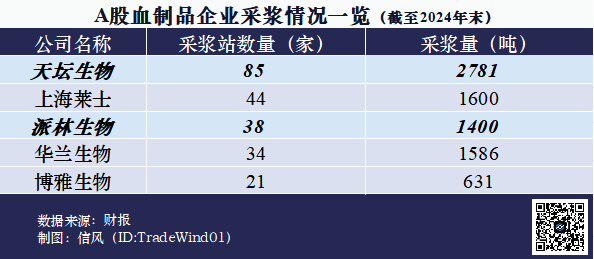
Core Viewpoint - The blood products industry is undergoing significant consolidation, with the leading player, China National Pharmaceutical Group (Sinopharm), acquiring the third-ranked company, Pailin Biotech, which will further solidify its market position [2][3]. Group 1: Acquisition Details - Pailin Biotech's controlling shareholder, Shengbang Yinghao, signed an acquisition framework agreement with China National Pharmaceutical, intending to transfer 21.03% of its shares [2]. - The estimated transaction price for the share transfer is approximately 4.612 billion yuan, translating to a per-share price of about 29.99 yuan, representing a premium of approximately 76.83% compared to the last closing price before suspension [2]. - The acquisition is still subject to due diligence and final agreement on transaction terms, with the final payment arrangements yet to be clarified [2]. Group 2: Market Impact - The acquisition will reshape the competitive landscape of the blood products sector, with Sinopharm's market dominance being reinforced by its ownership of three major blood product companies, including Tian Tan Biological and Wei Guang Biological, totaling 154 plasma collection stations [3][10]. - Following the announcement, Pailin Biotech's stock rose by 1.06%, while Tian Tan Biological and Wei Guang Biological experienced slight declines [3]. Group 3: Historical Context - Pailin Biotech has undergone multiple ownership changes, with its focus shifting to the blood products sector since 2007, culminating in its rebranding after acquiring another company in 2021 [4][5]. - The company has faced internal conflicts and governance issues, particularly during its transition to new shareholders, which have impacted its operational stability [5][9]. Group 4: Industry Dynamics - The blood products market is characterized by a "three-legged" competitive structure, with Sinopharm, China Resources, and Haier Group as the main players, but Sinopharm has established a significant lead in both the number of plasma stations and collection volume [10][15]. - As of 2024, Sinopharm's total plasma collection volume is 4,743 tons, accounting for approximately 35.4% of the industry, with further growth expected as additional stations become operational [10][16].

派林生物易主:国药系拟再收千吨级血企竞逐百亿市场
2 1 Shi Ji Jing Ji Bao Dao· 2025-06-11 06:18
Core Viewpoint - The control of Palin Biotech (000403.SZ) is set to change hands as its major shareholder, Shengbang Yinghao, has signed a framework agreement with China Biotech to transfer 21.03% of its shares, potentially enhancing China Biotech's position in the blood products industry [2][3] Company Summary - The transaction will be completed in cash, but there are risks associated with the due diligence process and the uncertainty of finalizing the agreement [2] - If the deal is successful, the controlling shareholder will shift from the Shaanxi Provincial Government's State-owned Assets Supervision and Administration Commission to China National Pharmaceutical Group (Sinopharm) [2] - Following the acquisition, Sinopharm will strengthen its presence in the blood products sector, joining its existing holdings in Tian Tan Biological (600161.SH) and Weigao Biotech (002880.SZ) [2] - In 2024, the combined plasma collection volume of these three companies is projected to reach 4,743 tons, significantly surpassing competitors like Shanghai Raist (002252.SZ) and Hualan Biological (002007.SZ) [2] Industry Summary - The change in ownership of Palin Biotech may reshape its future development and could lead to a reconfiguration of competition within the blood products industry [3] - The market response has been lukewarm, with Palin Biotech's stock showing minimal fluctuations following the announcement [3] - The blood products industry in China is expected to undergo consolidation, driven by government policies and the need for industry growth, favoring companies with strong plasma collection resources and R&D capabilities [3][7] - The global blood products industry has seen a significant reduction in the number of major players, with the top five companies controlling 80%-85% of the market share [7] - In China, the number of operational blood product companies is under 30, with strict regulations on the establishment of new plasma collection stations [8] - The industry is projected to grow, with the blood products market expected to reach 600 billion yuan in 2024 and 780 billion yuan by 2027, reflecting a compound annual growth rate of 11.6% from 2022 to 2027 [10]
再现大交易!国资出手
Zhong Guo Ji Jin Bao· 2025-06-10 09:58
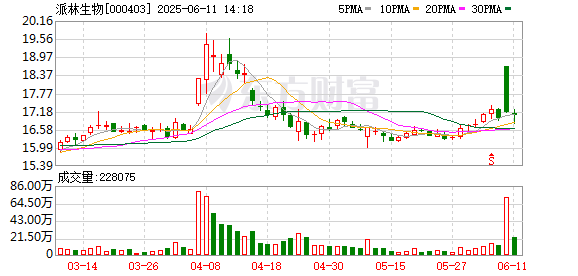
Core Viewpoint - The ownership of Pailin Biotech is changing hands from Shengbang Yinghao to China National Pharmaceutical Group, following internal conflicts within Shengbang Yinghao after two years of control [2][3]. Group 1: Acquisition Details - On June 9, Pailin Biotech announced that China National Pharmaceutical Group plans to acquire 21.03% of the company's shares held by Shengbang Yinghao, resulting in a change of the controlling shareholder [3][5]. - The acquisition price is based on the original investment of 3.844 billion yuan plus interest calculated at an annual rate of 9% since March 20, 2023, rather than the secondary market price [5][6]. - The value of the 21.03% stake is approximately 3.4 billion yuan based on the last closing price of 16.96 yuan per share, indicating that Shengbang Yinghao will not incur a loss and will achieve over 20% investment returns [6]. Group 2: Industry Context and Competition - China National Pharmaceutical Group has a significant presence in the blood products sector, with its subsidiary Tiantan Biological holding about 20% of the domestic plasma collection market [9][10]. - The acquisition raises concerns about potential competition between Pailin Biotech and Tiantan Biological, as both companies operate in similar markets [8][10]. - The governance guidelines for listed companies state that business operations should be independent of the controlling shareholder, which poses a challenge for China National Pharmaceutical Group in managing the interests of both companies [10][11]. Group 3: Historical Context - Pailin Biotech has experienced frequent changes in ownership over the past few years, with various capital players involved, leading to internal conflicts and power struggles [12][13]. - The company has undergone significant changes, including acquisitions and capital raising efforts, to enhance its operational capabilities [15][17]. - The recent entry of China National Pharmaceutical Group, with its substantial industry resources, is expected to bring changes to Pailin Biotech's operations and strategic direction [19].

派林生物时隔两年再次筹划易主 国药集团拟受让21%股份将成实控人
Chang Jiang Shang Bao· 2025-06-10 09:03
Core Viewpoint - The blood product giant, Palin Biotech, is set to be acquired by China National Pharmaceutical Group (Sinopharm), marking another change in ownership within two years [1][2]. Group 1: Ownership Change - On June 9, Palin Biotech announced that its controlling shareholder, Shengbang Yinghao Investment Partnership, plans to transfer 21.03% of its shares to China National Biotechnology Co., Ltd [1]. - If the transaction proceeds, the controlling shareholder will shift from Shengbang Yinghao to China National Biotechnology, with the actual controller changing from the Shaanxi Provincial State-owned Assets Supervision and Administration Commission to Sinopharm [1]. - This marks the second ownership change for Palin Biotech in less than two years, following a previous transfer of 20.99% of shares to Shengbang Yinghao in March 2023 [2]. Group 2: Financial Performance - In 2024, Palin Biotech reported a revenue of 2.655 billion yuan, a year-on-year increase of 14%, and a net profit of 745 million yuan, up 21.76%, marking seven consecutive years of profit growth [3]. - However, in Q1 2025, the company experienced a revenue decline of 14% to 375 million yuan and a net profit decrease of 26.95% to approximately 89.09 million yuan [3]. - The decline in Q1 2025 is attributed to insufficient production capacity to meet growing demand, prompting expansion efforts at its subsidiaries [3]. Group 3: Capacity Expansion - Palin Biotech is currently expanding production capacity at its subsidiaries, with the second phase of expansion at Paisfiko expected to be completed before the 2025 Spring Festival [3]. - The second phase expansion at Guangdong Shuanglin is anticipated to commence production in mid-2025, increasing annual capacity to 1,500 tons, contributing to a total capacity exceeding 3,000 tons [3]. - This expansion aims to support the company's growth and ensure sustainable long-term development [3]. Group 4: Regulatory Compliance - In May 2023, Palin Biotech faced penalties due to internal control issues leading to inaccurate information disclosure [3]. - The company submitted a rectification report on June 3, 2023, committing to enhance internal compliance management and improve information disclosure practices [4].
瑞银:中国医疗健康-欧盟对中国医疗科技企业的市场准入限制
瑞银· 2025-06-10 07:30
Investment Rating - The report maintains a "Buy" rating for several healthcare stocks, including Wuxi Apptec and Eyebright, based on their strong growth potential and market positioning [11]. Core Insights - The EU's planned restrictions on Chinese medtech firms' access to public procurements over EUR 5 million are expected to have limited impact on the covered companies, as most do not participate in such procurements and have manageable revenue exposure to the EU market [3]. - The healthcare indices in China showed positive performance, with HSHCI rising by 4.1% and HSHKBIO by 4.5% during the week of June 2-6, 2025, indicating a favorable market trend [2]. - Recent approvals in the drug sector include Akeso's cadonilimab for cervical cancer and Hansoh's aumolertinib for NSCLC in the UK, showcasing ongoing innovation and regulatory progress in the industry [4][5]. Summary by Sections Market Access and Regulatory Environment - The EU's International Procurement Instrument investigation concluded that China has limited EU medical device producers' access to government contracts, leading to the proposed restrictions [3]. - Companies like Mindray and MGI Tech have established local manufacturing facilities, which may help mitigate the impact of these restrictions [3]. Drug Approvals and Developments - Akeso's cadonilimab received approval for treating first-line cervical cancer, while Innovent and Hutchmed's sintilimab + fruquintinib application was accepted for renal cell carcinoma [4]. - Hansoh's aumolertinib has been approved in the UK for specific NSCLC patients, indicating a strong pipeline for innovative therapies [4]. Stock Performance and Recommendations - The report highlights top picks in the healthcare sector, including Wuxi Apptec and Eyebright, based on their expected solid fundamental recovery and market share potential [11]. - The report notes that the chemicals sector outperformed healthcare indices, with a 1.7% increase in A shares and a 3.8% increase in H shares [12].