微创医疗

Search documents
微创医疗:心脉医疗科技上半年归母净利约3.15亿元,同比减少22.03%
Zhi Tong Cai Jing· 2025-08-26 14:33
Core Insights - MicroPort Medical (00853) reported its subsidiary, HeartCare Medical Technology, achieved revenue of approximately 714 million yuan in the first half of 2025, representing a year-on-year decrease of 9.24% [1] - The net profit attributable to shareholders of HeartCare Medical Technology was approximately 315 million yuan, reflecting a year-on-year decline of 22.03% [1] Financial Performance - Revenue for the first half of 2025: approximately 714 million yuan, down 9.24% year-on-year [1] - Net profit for the same period: approximately 315 million yuan, down 22.03% year-on-year [1]
微创医疗(00853):心脉医疗科技上半年归母净利约3.15亿元,同比减少22.03%

智通财经网· 2025-08-26 14:27
Group 1 - The core viewpoint of the article highlights the financial performance of MicroPort Medical Technology for the first half of 2025, indicating a decline in both revenue and net profit compared to the previous year [1] Group 2 - The revenue reported by MicroPort Medical Technology is approximately 714 million yuan, representing a year-on-year decrease of 9.24% [1] - The net profit attributable to shareholders of MicroPort Medical Technology is around 315 million yuan, showing a year-on-year decline of 22.03% [1]
微创医疗(00853) - 海外监管公告
2025-08-26 14:22
香港交易及結算所有限公司及香港聯合交易所有限公司對本公告之內容概不負責,對其準確性或完 整性亦不發表任何聲明,並明確表示概不就因本公告全部或任何部分內容而產生或因倚賴該等內容 而引致之任何損失承擔任何責任。 微創醫療科學有限公司* (於開曼群島註冊成立的有限公司) (股份代號:00853) 海外監管公告 本海外監管公告乃根據香港聯合交易所有限公司(「聯交所」)證券上市規則(「上市規則」)第13.10B條刊 發。 中國上海,二零二五年八月二十六日 於本公告日期,本公司之執行董事為常兆華博士;本公司之非執行董事為白藤泰司先生、蘆田典裕 先生、孫維琴女士;及本公司之獨立非執行董事為周嘉鴻先生、劉國恩博士及邵春陽先生。 * 僅供識別 1 請參閱隨附上海微創心脈醫療科技(集團)股份有限公司(「心脈醫療科技」)於上海證券交易所科創板 (「科創板」)刊發之公告(「該公告」),內容有關其二零二五年半年度報告。 心脈醫療科技為一家於科創板上市之公司。於本公告日期,本集團持有心脈醫療科技已發行股本約 40.32%及其業績於本公司財務報表合併入賬。 於聯交所網站登載該公告,僅為向香港投資者進行同等的資訊傳達及遵守上市規則第13.1 ...
微创医疗(00853) - 上海微创心脉医疗科技(集团)股份有限公司截至二零二五年六月三十日止六个月...
2025-08-26 14:20
香港交易及結算所有限公司及香港聯合交易所有限公司對本公告之內容概不負責,對其準確性或完 整性亦不發表任何聲明,並明確表示概不就因本公告全部或任何部分內容而產生或因倚賴該等內容 而引致之任何損失承擔任何責任。 承董事會命 以下所載為上海微創心脈醫療科技(集團)股份有限公司(「心脈醫療科技」)截至二零二五年六月三十日 止六個月的未經審核財務資料。本集團持有心脈醫療科技40.32%的股權,其業績綜合入賬至本公司 財務報表。心脈醫療科技的股份在上海證券交易所科創板上市。 | | 截至二零二五年 | 截至二零二四年 | | | --- | --- | --- | --- | | | 六月三十日止 | 六月三十日止 | | | | 六個月 | 六個月 | 變動 | | | 人民幣千元 | 人民幣千元 | 百分比 | | 收入 | 714,429.78 | 787,174.66 | -9.24 | | 利潤總額 | 366,935.69 | 471,155.24 | -22.12 | | 歸屬於心脈醫療科技股權持有人的淨利潤 | 314,647.22 | 403,523.61 | -22.03 | | | 截至二零二五年 ...
腔镜手术机器人:微创精准者:腔镜手术机器人引领外科手术精度革命,头豹词条报告系列
Tou Bao Yan Jiu Yuan· 2025-08-25 12:38
Investment Rating - The report does not explicitly state an investment rating for the laparoscopic surgical robot industry Core Insights - The laparoscopic surgical robot industry is characterized by high technological barriers, long R&D cycles, and strict regulatory oversight, with significant growth driven by domestic breakthroughs and reduced procurement costs. The competitive landscape is expected to evolve towards a "duopoly + niche specialization" model in the long term [4][41][42] Industry Overview - Laparoscopic surgical robots combine endoscopic technology with robotic systems, primarily used in urology, gynecology, and general surgery, offering advantages such as minimal invasiveness and rapid recovery [4][5] - The industry is classified into two main categories based on surgical techniques: multi-port and single-port laparoscopic surgical robots [5] Industry Characteristics - The industry features long R&D cycles and strict regulatory requirements, with the registration process for high-risk medical devices typically taking over five years [6][7] - High levels of industry collaboration are evident, with the integration of precision manufacturing, sensor control, image recognition, and biomaterials [8] - The technological complexity and high patent protection create significant barriers to entry, with a focus on multi-disciplinary collaboration and sustained capital investment [9] Development History - The industry has evolved through three stages: the embryonic phase (1985-2000), the initiation phase (2000-2021), and the rapid development phase (2021-present), with significant advancements in technology and market acceptance [10][11][12][13][15] Market Size and Growth - The market size for laparoscopic surgical robots in China was approximately 3.12 billion RMB in 2022, projected to reach 9.84 billion RMB by 2026, with a CAGR of 33.3% [37][38] - The growth is attributed to domestic production breakthroughs that significantly lower procurement costs, leading to increased hospital purchases [38][39] Competitive Landscape - The market is witnessing an influx of domestic companies, with over 10 models approved for market entry by the end of 2024, leading to intensified competition and potential market consolidation [41] - A high-end competitive landscape is emerging, with established players like Intuitive Surgical's da Vinci system dominating the market, while domestic brands like MicroPort's TiMai are gaining traction [42] Supply Chain Analysis - The supply chain consists of upstream component suppliers, midstream manufacturers, and downstream clinical applications, with the performance of upstream components directly impacting the overall system capabilities [16][17] - The midstream segment is critical, with leading manufacturers focusing on system integration and production, while the downstream segment involves hospital procurement and clinical application [19][30] Conclusion - The laparoscopic surgical robot industry is poised for rapid growth, driven by technological advancements, regulatory support, and increasing acceptance among healthcare providers, with a clear trend towards domestic innovation and market diversification [40][41]

收入2.4亿!赛诺医疗半年报解读:小利润里的大研发
思宇MedTech· 2025-08-23 00:10
Core Viewpoint - The article highlights that Sino Medical has shown significant financial recovery and potential for growth, particularly with its drug-eluting stent receiving FDA conditional approval, marking a pivotal moment for domestic medical devices in the U.S. market [2][33]. Financial Performance - Revenue has recovered to 240 million yuan, an increase of 12.53% year-on-year [5]. - Net profit reached 13.84 million yuan, a year-on-year increase of 296.54% [5]. - The operating cash flow net amount was 52.45 million yuan, up 303.38% year-on-year, exceeding net profit [11]. - Gross margin remained stable at 71%, indicating that price pressures have been absorbed by structural and cost adjustments [11]. Business Progress - The coronary intervention business generated 187 million yuan, a growth of 17.40%, accounting for 78% of total revenue [6]. - The company has expanded its international market presence, with products approved in countries like Argentina and Ecuador [14]. - The FDA conditional approval for the new drug-eluting stent system is a significant milestone, potentially opening the U.S. market for Sino Medical [14]. R&D and Innovation - R&D expenses were 77.8 million yuan, accounting for 32.36% of revenue, which is significantly higher than the industry average [21]. - The company has a robust pipeline covering three major high-barrier areas: coronary, neuro, and structural heart disease [22]. - The introduction of AI in production processes aims to enhance product consistency and stability, crucial for future overseas supply [22]. Market Position and Strategy - Sino Medical is positioned as a resilient player in a challenging environment, focusing on both immediate recovery and long-term growth through innovation [10][20]. - The company is not solely reliant on one business line but is diversifying its offerings to navigate competitive pressures [17]. - The potential for FDA approval and successful market penetration in the U.S. could redefine Sino Medical's industry standing [27][32].



智通港股空仓持单统计|8月22日
智通财经网· 2025-08-22 10:37
Group 1 - The top three companies with the highest short positions as of August 15 are WuXi AppTec (02359), CATL (03750), and COSCO Shipping Holdings (01919), with short ratios of 14.92%, 14.41%, and 13.40% respectively [1][2] - The companies with the largest absolute increase in short positions are Heng Rui Medicine (01276), Yao Cai Securities (01428), and Modern Animal Husbandry (01117), with increases of 2.49%, 1.34%, and 1.31% respectively [1][2] - The companies with the largest absolute decrease in short positions are Ganfeng Lithium (01772), WuXi AppTec (02359), and Fourth Paradigm (06682), with decreases of -2.98%, -2.67%, and -2.28% respectively [1][2] Group 2 - The top ten companies with the highest short ratios include Ping An Insurance (02318) at 12.46%, Green Leaf Pharmaceutical (02186) at 12.36%, and Vanke Enterprises (02202) at 12.13% [2] - The companies with the most significant increases in short ratios include Heng Rui Medicine (01276) from 0.51% to 2.99%, Yao Cai Securities (01428) from 3.47% to 4.81%, and Modern Animal Husbandry (01117) from 4.74% to 6.05% [2] - The companies with the most significant decreases in short ratios include Ganfeng Lithium (01772) from 13.32% to 10.34%, WuXi AppTec (02359) from 17.59% to 14.92%, and Fourth Paradigm (06682) from 2.74% to 0.46% [2][3]

已经有国资放弃直投了
母基金研究中心· 2025-08-22 09:34
Core Viewpoint - The article discusses the shift in strategy among state-owned enterprises (SOEs) in China, moving from direct investments to mergers and acquisitions (M&A) due to poor performance in previous direct investments [2][3][4]. Group 1: Strategy Shift - Many SOEs are adjusting their investment strategies, opting not to pursue direct investments anymore, focusing instead on M&A opportunities [2]. - The poor performance of past direct investments has led to a reluctance to invest further, with some investment departments being downsized or becoming inactive [2][3]. - The trend of moving from direct investments back to mother fund strategies is noted among several SOEs [3]. Group 2: M&A Opportunities - There has been a rise in M&A opportunities that are attracting SOEs, with numerous new M&A funds being established [4][5]. - Over 10 regions have introduced policies to support M&A and the establishment of M&A funds, indicating a growing trend [5]. - The Shanghai municipal government has launched an M&A fund matrix with a total scale exceeding 500 billion yuan, focusing on various sectors including biomedicine and high-end equipment [4]. Group 3: Market Potential - The current market shows significant potential for M&A, with over 60% of listed companies having a market value of less than 10 billion yuan, suggesting ample opportunities for consolidation [5]. - The recent regulatory changes, such as the "924 New Policy," are expected to facilitate more M&A activities by private equity funds [8][10]. Group 4: Recent M&A Activities - Several notable M&A transactions have occurred this year, including the acquisition of a 26.1% stake in Tianmai Technology for 4.52 billion yuan, marking a significant move in the market [8]. - The involvement of state-owned capital in various M&A deals is increasing, with examples including the acquisition of Honghe Technology and other companies by state-backed funds [9][10]. Group 5: Future Outlook - The article anticipates a surge in M&A activities as private equity funds increasingly engage in acquisitions, driven by the need for industry integration and the easing of regulatory constraints [11]. - The emphasis on the ability of general partners (GPs) to provide industrial synergy and resource integration is becoming crucial as the market evolves [11].

12亿新总部开工!民营医院为何做器械?
思宇MedTech· 2025-08-22 01:58
Core Viewpoint - Suzhou Ruixing Group is establishing a headquarters project for high-end medical device research and production, with a total investment of 1.2 billion yuan, marking a significant step for a physician-founded private hospital group transitioning into the medical device sector [4][9]. Group Development and History - The founder, Dr. Hou Ruixing, established the first hand surgery center in 1999 and has since expanded the group through various milestones, including the establishment of multiple hospitals and the initiation of an A-share IPO counseling in 2023 [5][10]. - The group has evolved from a hand surgery focus to a broader medical service provider, emphasizing the integration of medical device development into its operations [6][10]. Rationale for Medical Device Focus - The choice to develop medical devices stems from the inherent need for specialized instruments in hand and trauma surgery, where the success of procedures heavily relies on the quality of surgical tools [7][9]. - The transition from hospital services to medical device development is seen as a natural extension, driven by clinical needs and the desire to create a closed-loop system of demand, research, and application [8][10]. Industry Context and Implications - The establishment of the headquarters is not just a local investment but signifies a potential shift in the orthopedic industry, where hospitals may increasingly become innovators in medical technology [9][10]. - The Wu Zhong District, where the project is located, has a robust medical device industry with approximately 400 companies and a market size of 38.2 billion yuan, growing at a compound annual growth rate of nearly 30% over the past three years [15][16]. Supportive Ecosystem - The local government has introduced policies to support medical device innovation, including financial incentives for high-end device registration and the establishment of public platforms for product testing and clinical trials [12][13]. - The district has also attracted significant talent and resources, with over 200 leading teams in biomedicine and several top-tier hospitals available for clinical trials [12][13].

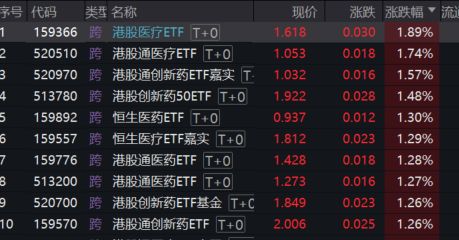
港股医疗ETF(159366)领涨“T+0”ETF,成分股平安好医生涨超15%
2 1 Shi Ji Jing Ji Bao Dao· 2025-08-21 06:08
Core Viewpoint - The Hong Kong stock market's AI healthcare sector is experiencing significant activity, with notable gains in various stocks and ETFs, particularly driven by the performance of Ping An Good Doctor [1] Group 1: Market Activity - The Hong Kong Medical ETF (159366) saw an intraday increase of over 2%, with constituent stocks like Ping An Good Doctor (01833) rising over 15% and Kingsoft Biotech (01548) increasing by 6.24% [1] - The trading volume for the Hong Kong Medical ETF reached 235 million yuan, with a turnover rate of 73.21% [1] - Over the past week, the average daily trading volume for the Hong Kong Medical ETF was 381 million yuan [1] Group 2: Company Performance - Ping An Good Doctor reported a total revenue of 2.5 billion yuan for the first half of 2025, marking a year-on-year growth of 19.5%, and a net profit of 134 million yuan, a significant increase of 136.8% [1] - The company's F-end and B-end business segments saw a revenue increase of 30.2%, with the overall number of paying users rising by 35.1% [1] Group 3: AI Investment and Innovation - Ping An Good Doctor is heavily investing in AI, with successful product developments such as "Ping An Xinyi" and "An Director," which enhance the company's service offerings and operational efficiency [2] - The company has established a top-tier medical network to support its AI products, which assist in patient consultations and follow-ups [2] Group 4: Industry Trends - JD Health reported a revenue of approximately 35.29 billion yuan for the first half of 2025, reflecting a year-on-year increase of 24.5%, with AI playing a crucial role in enhancing healthcare services [3] - The Chinese government has reinforced its support for AI in healthcare, which is expected to accelerate the commercialization of AI applications in the sector [3] Group 5: Index Composition - As of July 31, 2025, the top ten weighted stocks in the CSI Hong Kong Stock Connect Medical Theme Index accounted for 58.42% of the index, including major players like WuXi Biologics (02269) and JD Health (06618) [4]