快手

Search documents
液冷概念多股涨停,港股科网股集体跳水,千亿大模型第一股盘中狂飙30%
2 1 Shi Ji Jing Ji Bao Dao· 2026-02-12 04:19
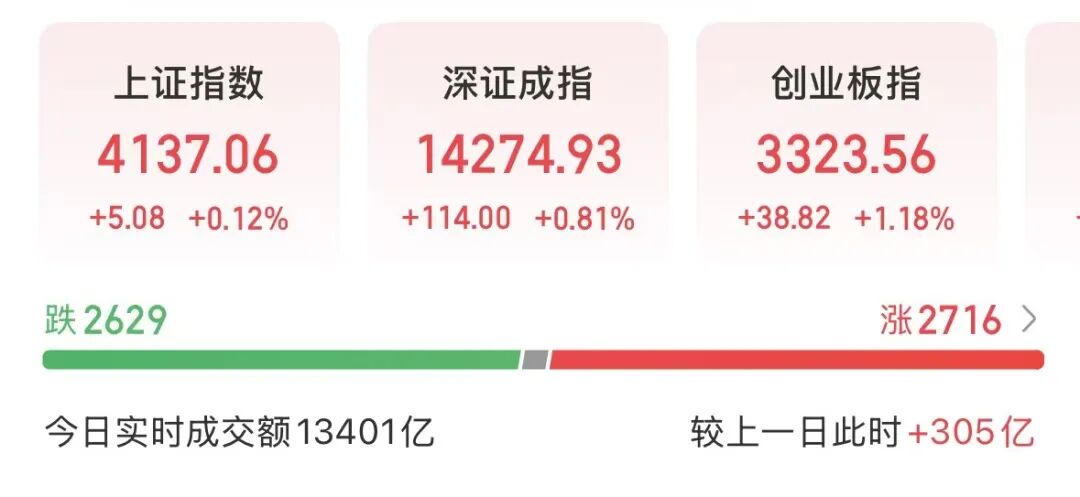
Market Overview - The Shanghai Composite Index experienced a slight increase of 0.12%, while the Shenzhen Component Index rose by 0.81%, and the ChiNext Index increased by 1.18% as of the midday close [1] - The total trading volume in the Shanghai and Shenzhen markets reached 1.34 trillion yuan, an increase of 30.5 billion yuan compared to the previous trading day, with over 2,700 stocks rising across the market [1] Sector Performance - The electric grid equipment sector saw significant gains, with companies like Siyi Electric (002028) and Sifang Co., Ltd. (601126) reaching new highs, and stocks such as Wangbian Electric (603191) and Shun Sodium Co., Ltd. (000533) hitting the daily limit [4] - The liquid cooling server concept also performed strongly, with stocks like Chuanrun Co., Ltd. (002272) and Dayuan Pump Industry (603757) hitting the daily limit. This surge was driven by Nvidia's liquid cooling supplier, Vertiv, reporting better-than-expected earnings and a strong outlook, leading to a 24% increase in its stock price [4] - The non-ferrous metals sector remained active, with companies like Xianglu Tungsten Industry (002842) and Zhangyuan Tungsten Industry (002378) seeing consecutive gains. The China Minmetals Import and Export Chamber announced a conference on rare earth and rare metal export policies scheduled for March 25, 2026 [5] Notable Stocks - CPO concept stocks gained traction, with Jingchen Co., Ltd. rising over 12% and Tianfu Communication (300394) increasing over 10%, reaching a new historical high [6] - The film and cinema sector faced a collective decline, with stocks like Huanrui Century (000892) and Hengdian Film (603103) hitting the daily limit down [7] - In the Hong Kong market, major tech stocks such as NetEase and Meituan fell over 3%, while Kuaishou and Alibaba dropped over 2% [7] Emerging Companies - The AI model company Zhiyu saw its stock price surge over 30%, with a market capitalization exceeding 170 billion HKD, following announcements of price increases and new product launches [8]

AI产品测评体验系列报告:多模态模型迎来Deepseek时刻,供给革命将重新定义内容创作范式
Huachuang Securities· 2026-02-12 04:16
Investment Rating - The report maintains a "Recommendation" rating for the industry, expecting the industry index to rise more than 5% over the next 3-6 months compared to the benchmark index [67]. Core Insights - The report highlights a significant transformation in the content creation paradigm due to advancements in multi-modal models, particularly with the release of new video generation models like Kuaishou's Keling 3.0 and ByteDance's Seedance 2.0, which enhance precision and controllability in video production [3][11]. - The supply-side revolution is expected to reshape the cost structure of content production, with a notable reduction in marginal costs due to improved capabilities in image and video generation [3][58]. - The report emphasizes the potential for AI video generation technology to catalyze downstream opportunities in content IP, content copyright, and AI application tools, as well as the demand for cloud services and computing power [3][58]. Summary by Sections Industry Basic Data - The industry comprises 138 listed companies with a total market value of approximately 22,562.85 billion and a circulating market value of about 20,757.76 billion [5]. Relative Index Performance - The absolute performance over 1 month, 6 months, and 12 months is 8.9%, 31.9%, and 42.7% respectively, while the relative performance is 9.6%, 16.8%, and 21.6% [6]. Model Updates - Keling 3.0 and Seedance 2.0 represent significant upgrades in video generation models, focusing on physical realism, narrative consistency, and enhanced understanding of complex text instructions [11][41]. - Keling 3.0 introduces integrated editing capabilities, allowing for controlled modifications to generated content without the need for complete regeneration [29][33]. - Seedance 2.0 enhances the precision of video production, addressing common issues such as consistency and complex action replication [41][50]. Investment Opportunities - The report identifies several investment opportunities in the content IP sector, including companies like Zhongwen Online, Yuedu Group, and Shanghai Film, as well as in content copyright and AI video production tools [58][59].


大模型行业点评:模型百花齐放,迭代日新月异
ZHESHANG SECURITIES· 2026-02-12 04:16
Investment Rating - The industry investment rating is "Positive" (maintained) [6] Core Insights - Domestic large models have been intensively released around the Spring Festival, initiating an AI arms race. Notable releases include DeepSeek's new model with a context processing capability of 1 million tokens, GLM-5 which ranks first globally in programming and agent testing, and ByteDance's Seedance 2.0 aimed at revolutionizing video creation [1][2] - The usability of agents is increasing, with large models transitioning from chat to collaboration. Claude Opus 4.5 can autonomously program for 5 hours, and AI coding agents are expected to double their task handling time every 4 months starting from 2024-2025, compared to a 7-month doubling period from 2019-2024 [2] - The demand for inference is expected to rise due to large-scale applications, with significant increases in token consumption for agent execution compared to dialogue scenarios. The cost of generating a 5-second 720P video is approximately 4 RMB, with Seedance costing about 2.3 RMB, indicating a substantial cost advantage over manual production [3] Summary by Sections Model Updates - MiniMax's M2.5 model is set to launch soon, currently in internal testing for the MiniMax Agent product. Other updates include GLM-5 from Zhizhu, which has achieved state-of-the-art capabilities in coding and agent functions, and DeepSeek's new model with a context window increased to 1 million tokens [7] Related Companies - Key companies mentioned include MiniMax, Zhizhu, Yunsai Zhilian, UCloud, Capital Online, Qingyun Technology, Wangsu Technology, and Nanxing Co. [4]


液冷概念多股涨停,港股科网股集体跳水,千亿大模型第一股盘中狂飙30%
21世纪经济报道· 2026-02-12 04:13
Market Overview - The Shanghai Composite Index experienced a slight increase of 0.12%, while the Shenzhen Component Index rose by 0.81%, and the ChiNext Index increased by 1.18% as of the midday close on February 12 [1] - The total trading volume in the Shanghai and Shenzhen markets reached 1.34 trillion yuan, an increase of 30.5 billion yuan compared to the previous trading day, with over 2,700 stocks rising across the market [1] Sector Performance - The electric grid equipment sector saw significant gains, with companies like Siyi Electric and Sifang Co. reaching new highs, and stocks such as Wangbian Electric and Shun Sodium hitting the daily limit [5] - The liquid cooling server concept performed strongly, with stocks like Chuanrun Co., Dayuan Pump Industry, and Ningbo Jingda hitting the daily limit. The surge was driven by Nvidia's liquid cooling supplier, Vantage Technology, which reported better-than-expected earnings and guidance, leading to a 24% increase in its stock price [5] - The non-ferrous metals sector was active, with companies like Xianglu Tungsten and Zhangyuan Tungsten seeing consecutive gains. The China Minmetals Import and Export Chamber announced a conference on rare earth and rare metal export policies scheduled for March 25, 2026 [5] Notable Stocks - The CPO concept saw a resurgence, with Jingchen Co. rising over 12% and Tianfu Communication increasing over 10%, both reaching new historical highs [6] - In contrast, the film and cinema sector faced a collective decline, with stocks like Huanrui Century and Hengdian Film experiencing limit-downs [6] - The commercial aerospace concept stock, Jili Rigging, faced a limit-down after the company denied false media claims regarding its involvement in significant aerospace projects [6] - In the Hong Kong market, the Hang Seng Index and Hang Seng Tech Index both fell, with major tech stocks like NetEase and Meituan dropping over 3% [6] - The AI model company, Zhipu Technology, saw a surge of over 30% in its stock price, with a market capitalization exceeding 170 billion HKD following announcements of price increases and new product launches [6]

港股午评:恒指跌0.89%险守27000点、科指跌1.68%,科网股,影视娱乐股调整,AI应用概念股走势分化,电力股拉升,中石化创新高!
Jin Rong Jie· 2026-02-12 04:10
Market Overview - The Hong Kong stock market experienced a collective decline, with the Hang Seng Index down 0.89% to 27,024.06 points, the Hang Seng Tech Index down 1.68% to 5,407.59 points, and the China Enterprises Index down 0.96% to 9,179.06 points [1] - Major technology stocks fell, including Alibaba down 2.12%, Tencent down 2.65%, and Meituan down 4.16% [1] Sector Performance - AI application stocks showed resilience, with Zhiyuan (智谱) surging over 33% after the release of its new flagship model GLM-5, which achieved state-of-the-art performance [2] - New energy and resource stocks were active, with CATL (宁德时代) rising over 4% due to a partnership with Changan Automobile to introduce sodium-ion batteries [2] - Precious metals and mining stocks also saw gains, with Zijin Mining (紫金矿业) up over 4% after a target price upgrade from Citigroup [2] Individual Stock Movements - Capital Airport (首都机场) fell over 3% due to a negative earnings forecast, with expected net losses for 2025 reaching 600 to 760 million yuan [3] - Budweiser APAC (百威亚太) dropped over 4% as its 2025 revenue is projected to decline by 7.7% [3] - Dongfeng Motor Group (东风集团股份) rose over 3% after meeting all conditions for privatization and the spin-off of its Lantu brand [3] Institutional Insights - Analysts noted that the market is in a phase of volume contraction, with a focus on structural opportunities in essential retail and tech hardware sectors [4] - Despite inflows from southbound funds, the overall trading volume in the Hong Kong market remains low, indicating a cautious market sentiment [4] - The Hang Seng Index is currently at a historical low valuation, with a PE ratio of only 12 times, suggesting potential for a rebound in quality stocks that have been oversold [4]
高光与重罚之间:程一笑摘掉快手的紧箍咒
阿尔法工场研究院· 2026-02-12 04:06
Core Viewpoint - Kuaishou is undergoing a painful self-reconstruction due to regulatory pressures and operational chaos, despite achieving significant milestones like becoming the official partner of the 2026 CCTV Spring Festival Gala [4][9]. Group 1: Company Background and Evolution - Kuaishou started as a simple GIF tool in 2011, focusing on user-generated content without complex algorithms or commercialization goals, leading to steady user growth [11]. - The turning point came in 2013 with the addition of Suhua, establishing a dual-core structure with Cheng Yixiao, which allowed Kuaishou to thrive in the lower-tier market through a decentralized algorithm [11][13]. - The dual-core system initially provided balance but became a hindrance as competition intensified, leading to slower decision-making and missed opportunities compared to rivals like Douyin [13][14]. Group 2: Challenges and Regulatory Issues - Kuaishou faced significant regulatory penalties in early 2026, totaling over 145 million yuan, highlighting its ongoing compliance issues and operational shortcomings [7][8]. - The company has been criticized for its content governance, which has led to a reputation for low-quality and vulgar content, impacting its brand image [17][18]. - The reliance on top influencers for growth has created vulnerabilities, as seen in the Xinba incident, where the platform's dependence on a few key figures led to significant operational risks [18][19]. Group 3: Strategic Reforms and Future Directions - Cheng Yixiao has prioritized value restoration and ecological reform, tightening content standards and supporting positive content while reducing reliance on top influencers [19][20]. - The collaboration with the Spring Festival Gala represents a significant step towards mainstream acceptance, but the accompanying regulatory fines indicate that deeper issues remain unresolved [20][22]. - Kuaishou is leveraging AI to enhance content quality and distribution efficiency, aiming to build a more robust operational framework that aligns with regulatory expectations [23][24]. Group 4: Governance and Compliance - The historical issues of Kuaishou stem from its rapid growth phase, where compliance and safety measures were neglected, leading to significant regulatory scrutiny [25][26]. - Despite efforts to improve compliance and governance under Cheng Yixiao, the company still faces challenges in establishing a stable and transparent operational system [26][30]. - The duality of Kuaishou's public image—celebrated for its cultural contributions while simultaneously penalized for compliance failures—reflects the ongoing struggle to balance growth with responsibility [30][32].
观众不只在电视上看冬奥,平台和赞助商的赚钱思路也变了
Xin Lang Cai Jing· 2026-02-12 03:52
Core Viewpoint - The traditional centralized model of Olympic broadcasting is evolving, with viewers shifting from television to mobile and interactive platforms, leading to changes in sponsorship and content delivery strategies [1][2][17]. Broadcasting Rights and Revenue - Broadcasting rights remain a crucial revenue source for the Olympics, with the Central Broadcasting Television Station (CCTV) and China Mobile Migu as the official broadcasters for the 2026 Winter Olympics [1][2]. - The partnership between CCTV and Migu highlights a clear copyright authorization chain, fostering competition in the market [5]. Content Delivery and User Engagement - Platforms like Migu are enhancing viewer experience by offering differentiated services such as smart viewing companions, real-time data visualization, and interactive features to attract audiences [5][6]. - Migu's business model includes ad-supported viewing options, with a subscription model allowing users to watch without ads for a fee [6][12]. Changes in Viewer Behavior - Non-rights holders like Kuaishou and Douyin are engaging audiences through social media interactions and content creation, despite lacking official broadcasting rights [13][14]. - The shift towards a multi-platform ecosystem indicates that Olympic viewership is no longer confined to traditional broadcasting, as attention is fragmented across various digital platforms [14][15]. Future Directions - The industry is moving beyond simple copyright competition to focus on building comprehensive content service systems that enhance user engagement and retention [14][17]. - The integration of AI technology is transforming viewer experiences from passive watching to immersive participation, suggesting a trend that may continue in future events [17].

港股大型科网股,集体下跌
Di Yi Cai Jing Zi Xun· 2026-02-12 03:43
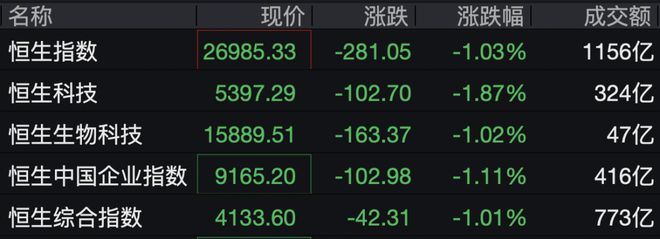
Group 1 - Major tech stocks in Hong Kong experienced a decline, with notable drops of approximately 4% for companies such as NetEase, Meituan, Bilibili, and Trip.com, while Baidu and Tencent fell over 3% [1][2] - The Hang Seng Index saw a broader market downturn, with a decline of 1% and the Hang Seng Tech Index dropping by 1.87% [2] - Specific stock performance included Kingdee International down by 4.98%, NetEase down by 4.15%, and Meituan down by 4.11%, among others [3]




港股大型科网股,集体下跌
第一财经· 2026-02-12 03:37
2月12日,港股早盘震荡下挫,截至发稿,恒指跌幅扩大至1%,恒生科技指数跌1.87%。 | 名称 | 现价 | 涨跌 | 涨跌幅 | 成交额 | | --- | --- | --- | --- | --- | | 恒生指数 | 26985.33 | -281.05 | -1.03% | 1156亿 | | 恒生科技 | 5397.29 | -102.70 | -1.87% | 324亿 | | 恒生生物科技 | | 15889.51 - -163.37 - -1.02% | | 47亿 | | 恒生中国企业指数 | 9165.20 | -102.98 | -1.11% | 416亿 | | 恒生综合指数 | 4133.60 | -42.31 | -1.01% | 773亿 | | 名称 | 现价 | 涨跌 | 涨跌幅 ^ | | --- | --- | --- | --- | | 金蝶国际 | 11.070 | -0.580 | -4.98% | | 网易-S | 186.900 | -8.100 | -4.15% | | 美团-W | 85.200 | -3.650 | -4.11% | | 哔哩哔哩-W ...

Seedance 2.0,凭什么刷屏?
Sou Hu Cai Jing· 2026-02-12 02:38
Core Insights - The launch of ByteDance's AI video generation model Seedance 2.0 has garnered significant attention in the tech and capital markets due to its advanced capabilities in video production, addressing long-standing issues of low usability and high costs in AI video generation [2][3][4] - The global AI-generated video market is projected to exceed $30 billion by 2026, with a compound annual growth rate of 40% [2] - Seedance 2.0's features, including automatic scene planning, character consistency across shots, and native audio-visual synchronization, represent a significant technological advancement in the industry [5][6] Industry Analysis - The average usability rate of AI video generation was previously around 20%, meaning creators often needed multiple attempts to obtain usable material, likened to a "gacha game" [4] - Seedance 2.0 has improved usability by allowing for the generation of multiple scenes at once, enhancing efficiency in video production [5][6] - The model's ability to maintain character consistency and dynamic stability across shots is a key competitive advantage, distinguishing it from other models [3][5] Competitive Landscape - The current leading AI video generation models in China include Seedance 2.0, Kuaishou's Keling 3.0, MiniMax's Hailuo 2.3, and Shengshu Technology's Vidu Q3, each with distinct technical paths and market strategies [9][10] - Seedance 2.0 is priced at 79 yuan per month, targeting both novice and professional creators, while Keling 3.0 has a wider pricing range aimed at professional users [10][11] - The introduction of Seedance 2.0 has intensified competition in the AI video generation sector, with a focus on enhancing product capabilities and marketing strategies [11][12] Future Outlook - The evolution of AI video generation models is expected to disrupt traditional content creation industries, particularly affecting video self-media, live-action short dramas, and the film industry [15][16][18] - The cost efficiency of AI-generated videos compared to traditional production methods is significant, with estimates suggesting that AI-generated content could cost as little as hundreds of yuan per minute compared to thousands for live-action productions [16] - The future competition in the AI video space will revolve around improving controllability of the generation process, transitioning from tools to intelligent agents, and developing a sustainable commercial ecosystem [21][22]