派能科技

Search documents
招股书失效18天火速再战港股 思格新能源“患”单一产品依赖症
Xin Jing Bao· 2025-09-12 21:28
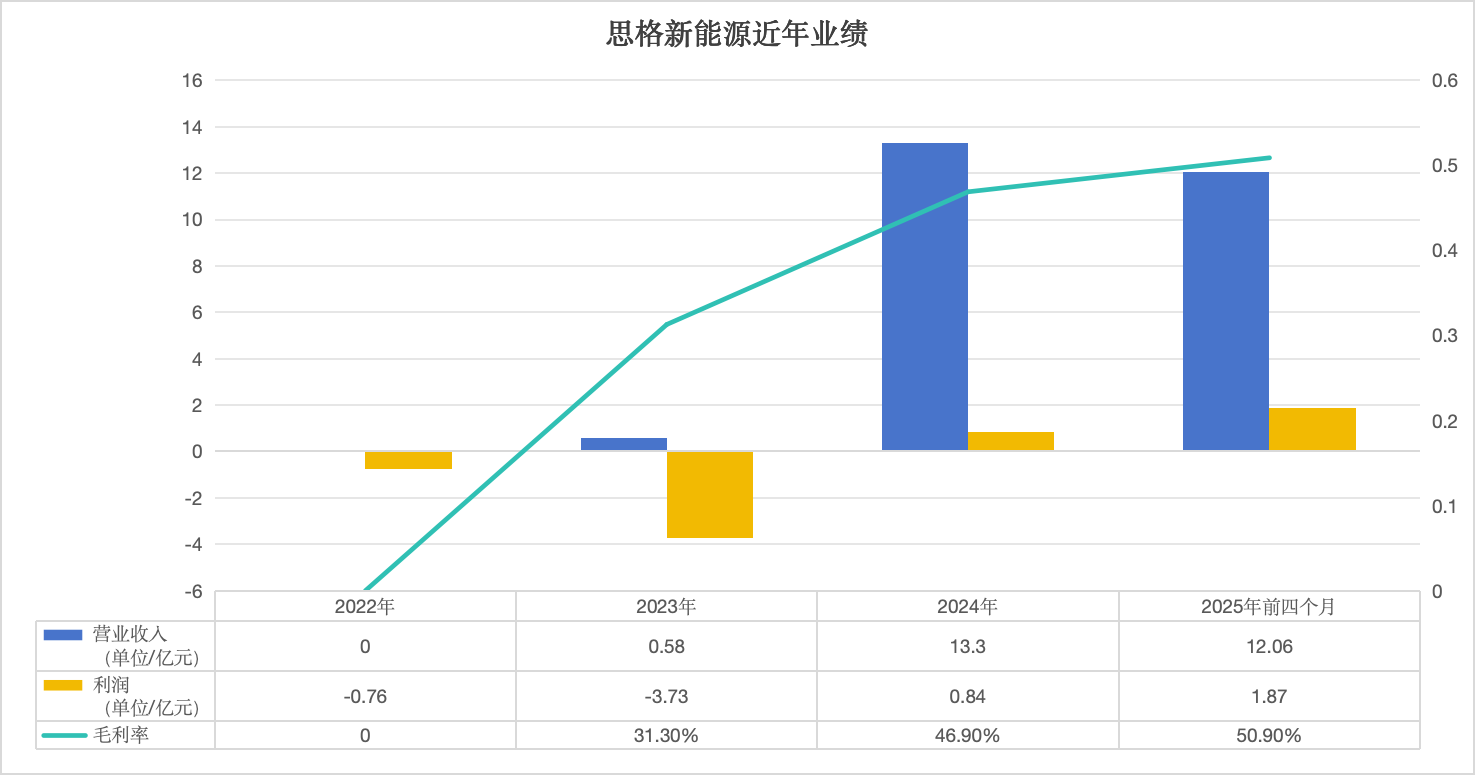
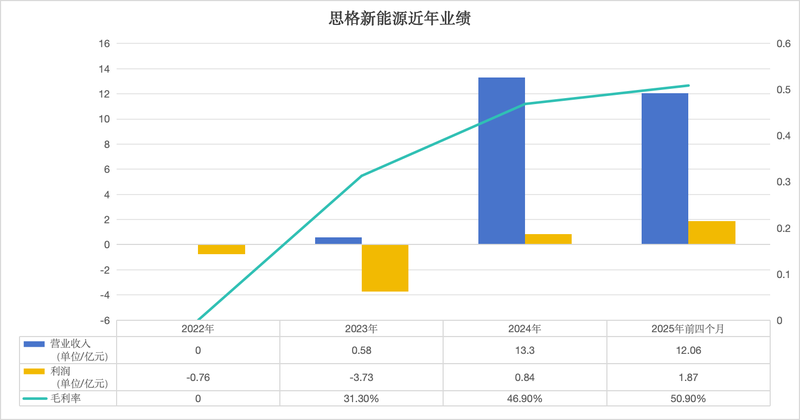
Core Viewpoint - Sige New Energy (Shanghai) Co., Ltd. is attempting to reapply for a Hong Kong IPO after its initial application expired 18 days prior, highlighting the challenges and strategies companies face in the volatile market environment [1][2]. Company Overview - Founded in May 2022 by former Huawei executive Xu Yingtong, Sige New Energy focuses on a niche within the energy storage sector, specifically stackable distributed solar-storage integrated solutions [1][4]. - The company generates over 90% of its revenue from its flagship product, the SigenStor, launched in June 2023, which is primarily used in residential applications [3][6]. Financial Performance - Sige New Energy reported revenues of 0 million in 2022, 0.58 million in 2023, and projected revenues of 13.30 million in 2024, with 12.06 million generated in the first four months of 2025 [5]. - The company achieved profitability in 2024 after two years of losses, with a profit of 1.87 million in the first four months of 2025 [7][10]. Market Position - Sige New Energy claims to be the global leader in stackable distributed solar-storage integrated solutions, with a projected market share of 28.6% in 2024 [3]. - The company faces competition from major players like Huawei (18% market share), Tesla (6.4%), and others, with its own market share in the broader distributed solar-storage sector at 1.3% [3]. Pricing and Sales Strategy - The average selling price of the SigenStor has decreased from 3.17 yuan per watt in 2023 to 2.54 yuan per watt in the first four months of 2025, attributed to higher sales rebates to distributors [6]. - Over 90% of the company's revenue comes from a distribution model, which is similar to Huawei's approach, allowing for quicker local market penetration [10]. Research and Development - Sige New Energy's R&D expenditure has significantly decreased from 331% of revenue in 2023 to 11.2% in the first four months of 2025, although this remains above the industry median [10]. - The company plans to use IPO proceeds to expand its R&D team, enhance marketing efforts, and increase production capacity [10].

招股书失效18天火速再战港股,思格新能源“患”单一产品依赖症
Xin Jing Bao· 2025-09-12 13:56
Core Viewpoint - Sige New Energy (Shanghai) Co., Ltd. is attempting to relaunch its IPO in Hong Kong after its initial prospectus expired, with a focus on its flagship product, the SigenStor, which accounts for over 90% of its revenue [1][5]. Group 1: Company Overview - Sige New Energy was founded in May 2022 and launched its flagship product, the SigenStor, in June 2023, primarily targeting residential applications [3]. - The company operates in a niche segment of the energy storage market, specifically in stackable distributed solar-storage integrated solutions, which represents approximately 0.7% of the overall energy storage system market [3]. - Sige New Energy claims to be the global leader in this niche, with a projected market share of 28.6% in 2024 [3]. Group 2: Financial Performance - The company reported revenues of 0, 0.58 billion, and 13.30 billion yuan for the years 2022, 2023, and 2024 respectively, with 12.06 billion yuan generated in the first four months of 2025 [5][7]. - The average selling price of the SigenStor has decreased from 3.17 yuan per watt in 2023 to 2.54 yuan per watt in the first four months of 2024, primarily due to higher sales rebates offered to distributors [5]. - Despite the price decline, the gross profit margin for the SigenStor reached 51.2% in the first four months of 2024, indicating improved profitability as sales volume increases [5]. Group 3: Market Strategy - The company relies heavily on a distribution model, with over 90% of its revenue coming from distributors, similar to the approach used by Huawei [8]. - Sige New Energy plans to expand its distributor network from 119 as of April 2024 to approximately 200 by 2029, which will test its channel management capabilities and product competitiveness [8]. - The European market is the largest revenue source for the company, contributing over 60%, followed by the Asia-Pacific region at around 20% [8]. Group 4: Leadership and R&D - The founder and actual controller, Xu Yingtong, has over 25 years of experience in the telecommunications, renewable energy, and AI sectors, having previously worked at Huawei [4]. - The company has seen a significant reduction in R&D spending, from 331% of revenue in 2023 to 21.1% in 2024, and further down to 11.2% in the first four months of 2025, although this remains above the industry median [8].
孚能科技上市5年累亏45亿 实控人变更后营收下滑存货上升
Xin Lang Cai Jing· 2025-09-12 06:28
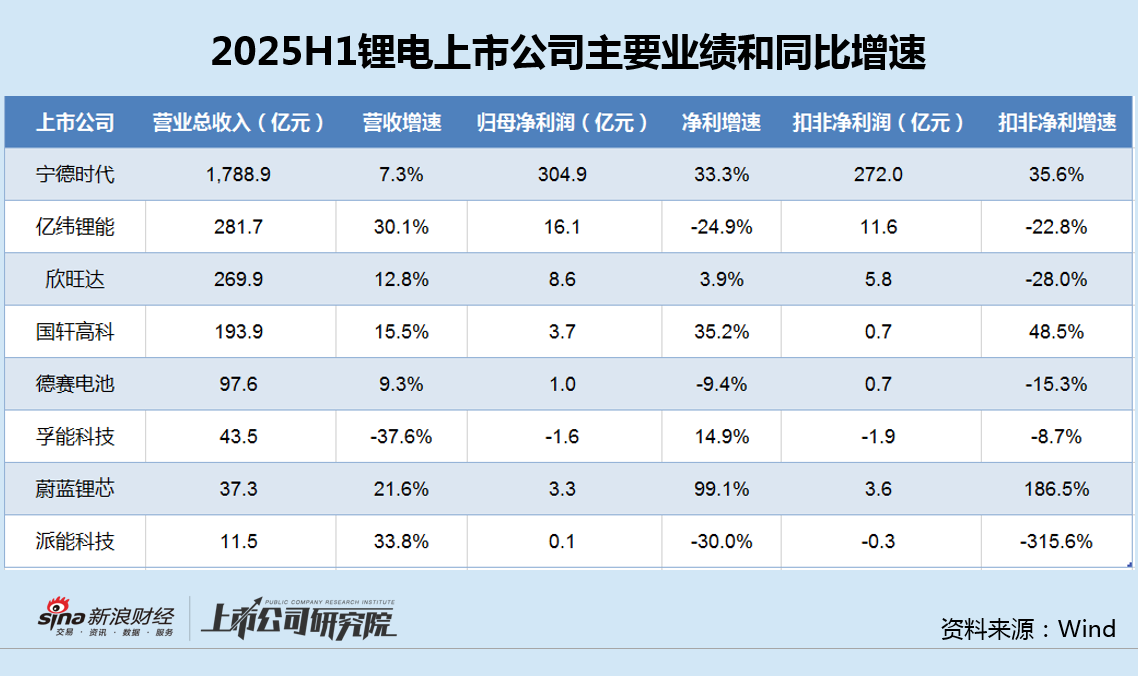
Core Viewpoint - The performance of lithium battery companies listed on the A-share market shows a significant divergence in net profits, with most companies experiencing revenue growth while net profits reveal a stark contrast, particularly for Funeng Technology, which continues to face operational challenges [1][4]. Group 1: Company Performance - Funeng Technology reported a revenue of 4.35 billion yuan in the first half of the year, a year-on-year decline of 37.6%, making it the only major lithium battery company to experience a revenue drop [1][3]. - The company's net profit attributable to shareholders was -160 million yuan, although this loss was reduced by 14.92% compared to the previous year, marking the fifth consecutive year of losses [1][4]. - In contrast, other companies like CATL and EVE Energy showed positive revenue growth, with CATL achieving 178.89 billion yuan in revenue, a 7.3% increase, and a net profit of 30.49 billion yuan, up 33.3% [3]. Group 2: Inventory and Production Issues - Funeng Technology's inventory increased to 3.565 billion yuan, a 58% year-on-year rise, with inventory turnover days extending to 149.27 days, up 71% [4][7]. - Despite the inventory buildup, the company is expanding production capacity, with a projected output of 20 GWh for 2023 and a capacity of 55 GWh by the end of the year [7]. - The company acknowledged that its new production capacity is still in the ramp-up phase, indicating potential underutilization of capacity [7]. Group 3: Ownership and Strategic Changes - In January 2023, Funeng Technology underwent a significant change in control, with the major shareholder shifting to Guangzhou Industrial Investment Holding Group, which is now the actual controller [7][8]. - Following this change, the company received support in terms of funding, financial coordination, and research collaboration, but faces challenges in balancing technological investment with profitability [8]. - The new shareholders have plans to reduce their stakes, indicating a potential shift in strategic focus as the company navigates its financial and operational hurdles [8].

锂电中报|派能科技核心业务利润转亏:毛利率与研发投入持续背离主要股东大比例质押后连续减持
Xin Lang Cai Jing· 2025-09-12 06:07
Core Viewpoint - The financial performance of the lithium battery company, Pylon Technologies, shows significant revenue growth but a concerning decline in net profit, indicating a two-tiered performance landscape within the industry [1]. Group 1: Financial Performance - Pylon Technologies achieved a revenue of 1.15 billion yuan in the first half of the year, representing a year-on-year growth of 33.8%, while the net profit dropped to 10 million yuan, a decrease of 30% [1]. - The company's gross profit margin fell to 18.44%, down from 37.28% in the same period last year, and the net profit margin decreased to 0.88%, down by 1 percentage point year-on-year [1]. - The trend over the last three semi-annual reports shows a continuous decline in both gross and net profit margins, raising concerns about the company's profitability [1]. Group 2: Research and Development - Pylon Technologies reported R&D expenses of 159 million yuan, a decrease of 17.25% year-on-year, which contradicts the company's claims of increasing R&D investment [1]. - Despite a general upward trend in R&D expense ratio over recent years, the simultaneous decline in gross profit margin raises questions about the effectiveness of the R&D investments [1]. Group 3: Accounts Receivable and Cash Flow - As of June 2025, Pylon Technologies had accounts receivable of 951 million yuan, showing a slight decrease, but the ratio of accounts receivable to profit was alarmingly high at 2164.36%, indicating potential bad debt risks [2]. - The company's inventory reached 1.094 billion yuan, a 51.94% increase compared to the beginning of the year, significantly outpacing the revenue growth of 33.75% [3]. - Operating cash flow for the first half of the year was 298 million yuan, a decline of 35.87% year-on-year, with a consistent downward trend observed in the last three semi-annual reports [3]. Group 4: Shareholder Actions - The second-largest shareholder, Pylon (Ningbo) Venture Capital Partnership, has pledged 90.34% of its shares and has repeatedly reduced its holdings in the company [3]. - In early August, this shareholder announced plans to further reduce its stake, potentially cashing out approximately 106 million yuan based on the stock price of 43.35 yuan per share at that time [3].

锂电中报|孚能科技上市5年累亏45亿 实控人变更后营收下滑存货上升
Xin Lang Zheng Quan· 2025-09-12 05:46
Core Viewpoint - The lithium battery listed companies in A-shares have reported their mid-year results, showing overall revenue growth but significant divergence in net profits among companies, with some facing substantial losses [1][3]. Group 1: Company Performance - Contemporary Amperex Technology Co., Ltd. (CATL) achieved a revenue of 178.89 billion yuan, a growth of 7.3%, and a net profit of 30.49 billion yuan, increasing by 33.3% [3]. - EVE Energy Co., Ltd. reported a revenue of 28.17 billion yuan, a growth of 30.1%, but a net profit decline of 24.9% to 1.61 billion yuan [3]. - Affected by market conditions, Funeng Technology Co., Ltd. saw its revenue drop to 4.35 billion yuan, a decrease of 37.6%, and a net loss of 160 million yuan, although the loss narrowed by 14.92% year-on-year [1][3]. Group 2: Inventory and Production Capacity - Funeng Technology's inventory increased to 3.565 billion yuan, up 58% year-on-year, with inventory turnover days rising to 149.27 days, an increase of 71% [4]. - Despite the revenue decline, Funeng Technology is expanding production capacity, with a projected output of 20 GWh for 2023 and a capacity of 55 GWh by the end of 2023 [7]. - The company acknowledged that its new production capacity is currently in the ramp-up phase, indicating potential underutilization of capacity [7]. Group 3: Ownership and Strategic Changes - In January 2023, Funeng Technology underwent a significant change in control, with Guangzhou Industrial Investment Holding Group becoming the new controlling shareholder [7]. - Following the change in control, Funeng Technology received support in funding, financial coordination, and R&D collaboration, but faces challenges in balancing technological investment with profitability [8]. - Shareholders, including the previous controlling entity, have announced plans to reduce their stakes in the company, indicating a shift in investment strategy [8].
锂电中报|欣旺达核心业务利润下滑 回款情况继续恶化欲赴港再融资
Xin Lang Zheng Quan· 2025-09-12 05:40
Core Viewpoint - The lithium battery companies listed in A-shares have shown revenue growth in the first half of the year, but there is a significant divergence in net profit performance among them [1]. Group 1: Financial Performance - A majority of companies reported revenue growth, with CATL achieving revenue of 1,788.9 billion yuan, a year-on-year increase of 7.3%, and a net profit of 304.9 billion yuan, up 33.3% [3]. - In contrast, companies like EVE Energy and Xinwangda experienced declines in net profit, with EVE's net profit down 24.9% and Xinwangda's down 28.0% [3][4]. - Xinwangda's revenue reached 269.9 billion yuan, a 12.8% increase, but its net profit was only 8.6 billion yuan, reflecting a modest growth of 3.9% [3]. Group 2: Profitability Challenges - Xinwangda's non-recurring net profit fell by 28.0% year-on-year, indicating a significant decline in core business profitability [4]. - The company's gross margin decreased to 15.79%, down 4.77 percentage points, and its net margin dropped to 0.91%, a substantial decline of 46.81% [4]. - The decline in profitability is attributed to the drop in revenue from energy storage batteries, which generated 76 billion yuan with a gross margin of only 9.8% [4]. Group 3: Cash Flow and Debt Situation - Xinwangda's operating cash flow decreased by 39.8% to 10.4 billion yuan, with a negative cash flow of 4.9 billion yuan in the second quarter [4]. - The company's accounts receivable reached 164 billion yuan, a 20.6% increase, with a collection period of 107 days, indicating significant cash flow pressure [5][8]. - The asset-liability ratio rose to 65.46%, up 5.18 percentage points, with interest-bearing debt increasing by 26.25% to 258.1 billion yuan [8]. Group 4: Strategic Moves and Market Position - Xinwangda has submitted an application for an IPO on the Hong Kong Stock Exchange, aiming to become the third lithium battery company to achieve dual listing [8]. - The company faced challenges with its previous plans to spin off its power battery segment due to significant losses exceeding 50 billion yuan [8]. - The overall capacity utilization rate for Xinwangda has declined, with consumer battery utilization dropping from 94.2% in 2022 to 84.3% in the first quarter of 2025 [8].

锂电中报|派能科技核心业务利润转亏:毛利率与研发投入持续背离 主要股东大比例质押后连续减持
Xin Lang Zheng Quan· 2025-09-12 05:36
Core Viewpoint - The lithium battery companies listed in A-shares have shown revenue growth in the first half of the year, but net profits exhibit a significant divergence, with some companies facing substantial profitability pressures [1][3]. Group 1: Company Performance - Pioneering Technology achieved a revenue of 1.15 billion yuan, a year-on-year increase of 33.8%, but its net profit dropped to 10 million yuan, a decline of 30.0% [1][3]. - The sales gross margin for Pioneering Technology was 18.44%, down from 37.28% in the same period last year, and the net profit margin was only 0.88%, continuing to decline [3][4]. - The company’s R&D expenses were 159 million yuan, a decrease of 17.25%, raising questions about the effectiveness of its R&D investments as gross margins have been declining [4]. Group 2: Financial Health - As of June 2025, Pioneering Technology's accounts receivable stood at 951 million yuan, with a concerning ratio of accounts receivable to profit at 2164.36%, indicating potential bad debt risks [7]. - The company's inventory reached 1.094 billion yuan, a 51.94% increase compared to the beginning of the period, significantly outpacing the revenue growth of 33.75% [7]. - Operating cash flow for the first half was 298 million yuan, a decline of 35.87%, with a continuous downward trend observed in recent periods [7]. Group 3: Shareholder Actions - The second-largest shareholder, Paili (Ningbo) Venture Capital Partnership, has pledged 90.34% of its shares and has repeatedly reduced its holdings, raising concerns about the company's future amid increasing competition and declining product prices [7]. - In early August, Paili Venture Capital announced plans to further reduce its stake in Pioneering Technology, potentially cashing out approximately 106 million yuan based on the stock price at that time [7].
储能新锐思格新能源二度冲关IPO 华为系团队领航 单一产品撑场能否突围巨鳄围堵
Sou Hu Cai Jing· 2025-09-11 18:35
Core Insights - The article highlights the rapid rise of Sige New Energy, a company founded by former Huawei executives, in the booming energy storage industry, currently preparing for a secondary IPO on the Hong Kong Stock Exchange [1] Company Overview - Sige New Energy's flagship product, the SigenStor, integrates multiple technologies including photovoltaic inverters and energy storage systems, and has quickly gained popularity since its market launch in 2023 [3] - The company reported a revenue surge from 58.3 million yuan in 2024 to 1.33 billion yuan, with a net profit of 83.84 million yuan; in the first four months of 2025, revenue reached 1.206 billion yuan, exceeding 90% of the total revenue for 2024 [3] - The founder, Xu Yingtong, has a strong background from Huawei, which has contributed to the company's technological edge and initial funding success, raising 540 million yuan in Series A financing within six months [3] Financial Performance - The SigenStor product accounted for 90.6% and 91.2% of the company's revenue in 2024 and the first four months of 2025, respectively, indicating a high dependency on a single product [4] - The average selling price of the SigenStor is 2.69 yuan per watt, positioning it in the high-end market, but requiring higher distributor rebates to maintain sales [4] Competitive Landscape - Sige New Energy faces significant competition in the global residential energy storage market, dominated by Huawei and BYD, with other players like Pylontech and DeYe also in the mix [4] - The emergence of similar products from competitors such as Airo Energy and Wotai Energy highlights the intense market competition, with some leading companies experiencing financial losses [4] Strategic Plans - To address competitive challenges, Sige New Energy plans to expand its R&D team by 2.7 times over the next four years and enhance its after-sales service network [5] - The company aims to use raised funds for developing commercial energy storage solutions, cloud platform construction, and capacity expansion to strengthen its competitive position [5] - Regulatory scrutiny regarding the company's relationship with Huawei has been noted, with ongoing concerns about shareholding and competition issues [5]
“0-1”爆发在即!资金提前布局
Ge Long Hui A P P· 2025-09-11 12:51
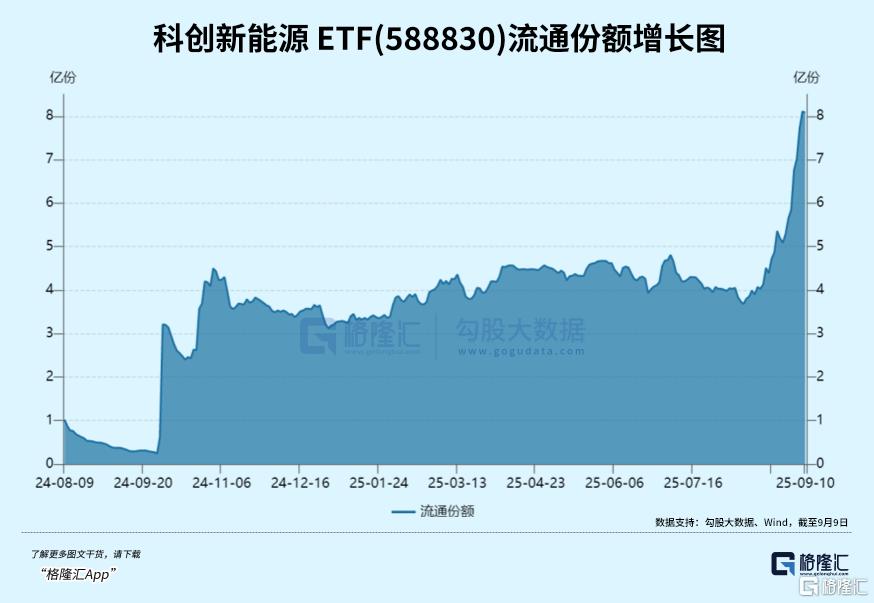
Group 1 - The A-share market has shown a strong recovery, with the Shanghai Composite Index rising by 1.65% and the ChiNext Index increasing by 5.15%, indicating renewed investor confidence after a brief adjustment [1] - Key sectors attracting significant investment include AI computing, CPO, PCB, servers, and semiconductors, which have experienced substantial price increases recently [1][2] - The new energy sector, particularly the battery and photovoltaic industries, has also performed well, with the Innovation Energy Index rising by 3.12% and the Shanghai Stock Exchange's new energy index increasing by 1.90% [2] Group 2 - The new energy sector has seen remarkable performance, with over 60 stocks in the battery industry doubling in price since April, and more than 220 stocks increasing by over 50% [3] - The Innovation Energy ETF has attracted significant capital inflow, with a net inflow of 6.61 billion yuan this year, indicating strong investor interest [3][5] - The "anti-involution" policy has positively impacted the industry, leading to significant price increases in upstream materials like polysilicon and lithium carbonate, with prices rising by 90% and over 60% respectively [5][6] Group 3 - The demand for energy storage has surged, with global battery storage installations reaching 86.7 GWh, a 54% year-on-year increase, and domestic installations growing by 120% [6][8] - The market is experiencing a "one cell hard to find" situation due to increased orders and production capacity in energy storage companies, indicating strong demand [8] - The solid-state battery industry is entering a large-scale production phase, with major companies planning to launch solid-state batteries by 2027, which is expected to accelerate the industry's growth [10][12] Group 4 - The current market conditions suggest a recovery in the new energy sector, with many leading companies still undervalued despite significant stock price increases [16] - Investment strategies should focus on core leading companies or high-quality stocks within the industry to maximize potential returns [16][17] - The Innovation Energy ETF is highlighted as a strategic investment option, focusing on key areas like photovoltaic, energy storage, and solid-state batteries, with a high concentration of solid-state battery stocks [17][19] Group 5 - The new energy sector is positioned at a critical intersection of cyclical and growth trends, with strong development momentum expected in the coming years [19][20] - The recent industry adjustments have solidified valuation foundations and enabled leading companies to achieve breakthroughs in overseas markets and high-value product development [19] - The shift from price competition to value competition within the industry is expected to enhance growth logic and sustain investor confidence in the long-term potential of the new energy sector [19]
“0-1”爆发在即!资金提前布局
格隆汇APP· 2025-09-11 12:40
Core Viewpoint - The A-share market has shown a strong recovery, with the ChiNext index returning to 3000 points, indicating renewed investor confidence in sectors with significant growth potential, particularly in AI computing and new energy industries [2][3]. Group 1: AI Computing and New Energy Sectors - The AI computing industry, including sectors like CPO, PCB, servers, and semiconductors, remains a hot investment area, with substantial recent gains despite brief corrections [2]. - The new energy sector, particularly the battery and photovoltaic industries, has also performed impressively, with many stocks in the battery chain doubling in price since April [4][6]. - The Innovation Energy ETF has seen significant inflows, with a net inflow of 661 million yuan this year, indicating strong investor interest [4]. Group 2: Policy and Market Drivers - The "anti-involution" policy initiated in June has positively impacted the new energy sector, particularly lithium and photovoltaic materials, leading to significant price increases [6][7]. - The demand for energy storage has surged, with global battery storage installations reaching 86.7 GWh, a 54% year-on-year increase, and domestic installations growing by 120% [7][9]. - The market is experiencing a "slow bull" trend, making it easier for the industry to attract investment [10]. Group 3: Solid-State Battery Developments - The solid-state battery sector is entering a phase of large-scale production, with major companies ramping up capacity and technological advancements [11][15]. - By 2027, small-scale production of solid-state batteries is expected, with significant market potential as the industry matures [17][19]. - The current growth in the new energy sector is supported by a recovery in profitability and a shift from price competition to value competition, enhancing long-term investor confidence [20][26]. Group 4: Investment Opportunities - The new energy sector is at a pivotal point, with strong growth potential driven by capacity optimization and technological advancements [25]. - Investors are encouraged to consider ETFs focused on the new energy sector, which provide exposure to leading companies while lowering entry barriers [24]. - The solid-state battery segment is highlighted as a key area for investment, with ETFs like the Innovation Energy ETF offering significant exposure to this emerging market [22][24].