Huawei

Search documents
又有很多自动驾驶工作中稿了ICCV 2025,我们发现了一些新趋势的变化...
自动驾驶之心· 2025-08-16 00:03
Core Insights - The article discusses the latest trends and research directions in the field of autonomous driving, highlighting the integration of multimodal large models and vision-language action generation as key areas of focus for both academia and industry [2][5]. Group 1: Research Directions - The research community is concentrating on several key areas, including the combination of MoE (Mixture of Experts) with autonomous driving, benchmark development for autonomous driving, and trajectory generation using diffusion models [2]. - The closed-loop simulation and world models are emerging as critical needs in autonomous driving, driven by the limitations of real-world open-loop testing. This approach aims to reduce costs and improve model iteration efficiency [5]. - There is a notable emphasis on performance improvement in object detection and OCC (Occupancy Classification and Counting), with many ongoing projects exploring specific pain points and challenges in these areas [5]. Group 2: Notable Projects and Publications - "ORION: A Holistic End-to-End Autonomous Driving Framework by Vision-Language Instructed Action Generation" is a significant project from Huazhong University of Science and Technology and Xiaomi, focusing on integrating vision and language for action generation in autonomous driving [5]. - "All-in-One Large Multimodal Model for Autonomous Driving" is another important work from Zhongshan University and Meituan, contributing to the development of comprehensive models for autonomous driving [6]. - "MCAM: Multimodal Causal Analysis Model for Ego-Vehicle-Level Driving Video Understanding" from Chongqing University aims to enhance understanding of driving scenarios through multimodal analysis [8]. Group 3: Simulation and Reconstruction - The project "Dream-to-Recon: Monocular 3D Reconstruction with Diffusion-Depth Distillation from Single Images" from TUM focuses on advanced reconstruction techniques for autonomous driving [14]. - "CoDa-4DGS: Dynamic Gaussian Splatting with Context and Deformation Awareness for Autonomous Driving" from Fraunhofer IVI and TU Munich is another notable work that addresses dynamic scene reconstruction [16]. Group 4: Trajectory Prediction and World Models - "Foresight in Motion: Reinforcing Trajectory Prediction with Reward Heuristics" from Hong Kong University of Science and Technology and Didi emphasizes the importance of trajectory prediction in autonomous driving [29]. - "World4Drive: End-to-End Autonomous Driving via Intention-aware Physical Latent World Model" from the Chinese Academy of Sciences focuses on developing a comprehensive world model for autonomous driving [32].

Does Apple risk falling behind on AI? #shorts #apple #artificialintelligence #china
Bloomberg Television· 2025-08-15 21:30
What made Apple so iconic in the early 2000s was really product design and then Tim Cook's ability to operate those products at enormous scale. They're still playing the scale game. I mean, they build and sell 230 million iPhones a year and probably be able double that number of products if you were to include everything from Air Tags and AirPods to iPads and MacBooks.But they're no longer redesigning products in super interesting ways. The Mac Binie is about as boring as you can get in terms of a product, ...


SemiAnalysis-华为 AI CloudMatrix 384:中国对标英伟达 GB200 NVL72 的答案
2025-08-15 01:24
Summary of Huawei's CloudMatrix 8 Conference Call Company and Industry - **Company**: Huawei - **Industry**: Semiconductor and AI Computing Key Points and Arguments Product Overview - Huawei introduced the **CloudMatrix 8**, a powerful domestic solution in China built using the **Ascend 10C** chip, competing directly with Nvidia's **GB200 NVL72** [3][4] - The CloudMatrix 8 architecture is noted for its engineering advantages at the system level, not just at the chip level, with innovations across accelerator, networking, optics, and software layers [4] Performance Metrics - The CloudMatrix 8 can deliver **300 PFLOPS** of dense BF16 compute, nearly double that of the **GB200 NVL72** [10] - Key specifications comparison: - **BF16 dense PFLOPS**: CloudMatrix 300 vs. GB200 180 - **HBM capacity**: CloudMatrix 49.2 TB vs. GB200 13.8 TB - **HBM bandwidth**: CloudMatrix 1.229 TB/s vs. GB200 576 TB/s - **All-in System Power**: CloudMatrix 559,378 W vs. GB200 145,000 W [10][53] Power Consumption and Efficiency - The CloudMatrix 8 consumes significantly more power, drawing approximately **500 kW**, which is over **3.9 times** that of the GB200 NVL72 [51] - Despite higher power consumption, Huawei's system is designed to leverage China's abundant energy resources, allowing for scaling without power constraints [13][54] Supply Chain and Production Challenges - Huawei's Ascend chips are primarily produced by TSMC, with significant reliance on foreign production for components like HBM and wafers [16][19] - The company has reportedly circumvented sanctions to acquire necessary components, including **$500 million** worth of 7nm wafers [17] - Domestic production capabilities are improving, with SMC ramping up capacity, but foreign reliance remains a critical issue [24][27] Strategic Implications - The advancements in Huawei's technology are seen as a response to U.S. export controls, highlighting the importance of AI competitiveness as a national security concern [9] - The CloudMatrix 8's design reflects a strategic focus on scaling up capabilities, leveraging domestic strengths in networking and infrastructure software [11][15] Market Positioning - Huawei's CloudMatrix 8 is positioned as a competitive alternative to Nvidia's offerings, with a focus on system-level performance rather than just chip performance [5][6] - The architecture's design allows for significant scaling, which is crucial for meeting the demands of AI workloads [28][30] Conclusion - Huawei's CloudMatrix 8 represents a significant advancement in China's AI computing capabilities, with a focus on system-level innovations and leveraging domestic resources, despite challenges in supply chain and power efficiency [54]

中国世界人工智能大会-中国全面投身人工智能领域,但存在 1.5 个泡沫正在形成-China's WAIC_ China All-in AI, but 1.5 Bubbles in the Making
2025-08-14 02:44
Summary of Key Points from the Conference Call Industry Overview - **Industry Focus**: The conference call primarily discusses the technology sector in China, particularly advancements in AI, robotics, and AI/AR glasses [1][2][3][4]. Core Insights and Arguments - **AI Investment in China**: The WAIC (World Artificial Intelligence Conference) indicates that China is heavily investing in AI, with over 800 participating firms and an exhibition area exceeding 70,000 square meters [1]. - **Potential Bubbles**: There are concerns about the emergence of "1.5 bubbles" in the AI sector: - **Humanoid Robots**: Over 90 new models were showcased, but there are significant technological constraints, high costs, and limited applications [1]. - **AI/AR Glasses**: Multiple companies are entering this space, but they lack differentiation and face technological challenges [1]. - **AI Chip Development**: Local AI chip development remains challenging. NVDA's CUDA and NV Switch/Link are seen as unmatched advantages. Huawei's Cloudmarix 384 Ascend 910C is noted for its inferencing capabilities but is not yet in mass production [2]. - **Robotics**: While humanoid robots are entertaining, semi-robots and robotic arms are viewed as more practical for industrial applications. The high cost of humanoid robots (~Rmb300K) limits consumer adoption [3]. - **AI/AR Glasses Market**: Despite the hype, AI/AR glasses are still considered niche products due to issues with weight, battery life, and LLM capabilities. Major players like Google, Xiaomi, and Huawei are launching similar products [4]. Additional Important Insights - **China Telecom's Innovations**: China Telecom is developing networks and software to facilitate the movement of computing power from the west to the east, aiming to become the official operator of a computing power trading platform [6]. - **Cost Considerations for Robotics**: The estimated price point for industrial customers to consider humanoid robots is between Rmb100K-150K, which is comparable to 1.5 to 2 years of an unskilled worker's salary [3]. - **Government Support**: A recent government policy paper supports the establishment of a computing power trading platform, which could enhance AI growth in China [6]. Conclusion - The technology sector in China is experiencing rapid growth, particularly in AI and robotics, but faces significant challenges that could hinder widespread adoption. The focus on practical applications and cost-effective solutions will be crucial for future developments in this space [1][2][3][4][6].

Bessent says Nvidia deal model could be used elsewhere #tech #politics
Bloomberg Television· 2025-08-13 16:08
There's one issue that came up this week that we'd love to hear from you about and that's Nvidia. Where did this agreement come from. Who came up with it.>> The the president. The the president as as I tell everyone, the the president is one of the most open-minded people I know. He does everything at first principles.Why do we do things this way. Why shouldn't we do it the other way. And you know, I I think that this is a very unique solution.Allows Nvidia to expand into China. It can make Nvidia chips the ...

Bessent Says Nvidia 15% Model Could Be Used Elsewhere
Bloomberg Television· 2025-08-13 12:17
There's one issue that came up this week that we'd love to hear from you about, and that's on video. Where did this agreement come from. You've been quite innovative.This administration, on trade issues. Where did this come from. Who came up with it.The President. The president. As I told everyone, the president is one of the most open minded people I know.He does everything at first principles. Why do we do things this way. Why shouldn't we do it the other way.And, you know, I think that this is a very uni ...

China Wants Homegrown AI Chips, Says Eurasia Group's Hsiao
Bloomberg Technology· 2025-08-12 19:02
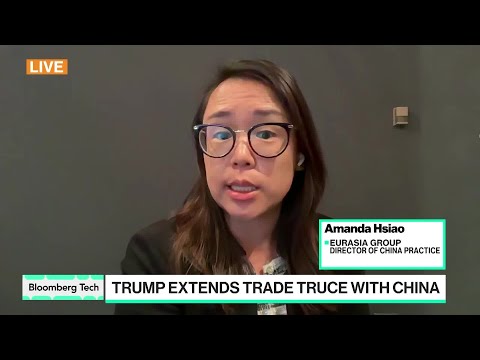
Back when we were stopping the flow of ships to China, It was America's national security concern about how China would use those chips. In the military context, the development 24 hours later after the president cut that deal, is China saying we have national security concerns and we want to champion our own domestic names. Who has the upper hand in this negotiation.Well, I think that for China, a lot of the signaling that it has been engaged in is largely performative. We know that the Chinese continue to ...
Nvidia H20 China Pushback
Bloomberg Television· 2025-08-12 12:45
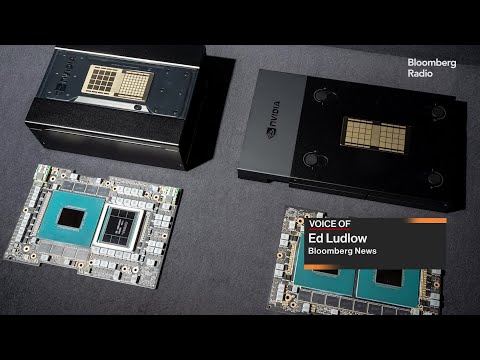
US-China Tech & Trade Dynamics - US and China are handling specific sectors and industries differently, particularly semiconductors [1] - The US President is reportedly willing to make ad hoc exceptions across the technology sector and in raw materials [2] - A potential "quid pro quo" involves the US seeking a revenue share from US chipmakers' China earnings in exchange for allowing them to do business there [3] - China desires access to certain American technologies and raw materials, potentially as bargaining chips [4] China's Semiconductor Strategy - China is reportedly advising firms against buying H series chips, indicating potential preference for domestic alternatives [5] - These advisories, issued in July, are non-binding guidance, which is normal for China regarding foreign technology with security concerns [6] - China's preference for national chips, like Huawei's accelerator, is driven by domestic pride and technological advancements beyond Nvidia's H-20 [7] - China aims for its technology companies to use national chips instead of the H-20 [8] Nvidia's Position and Market Impact - Nvidia's H-20, an AI accelerator based on the Hopper architecture, was specifically engineered for the Chinese market to comply with US export restrictions [9] - Nvidia had approximately $5 billion worth of H-20 inventory that it couldn't sell [10] - China is a crucial market for AI, and Nvidia wants to be its technology provider of choice [11] - If the US doesn't allow Nvidia to serve China, China may rely heavily on a domestic champion, resulting in lost revenue opportunity for Nvidia and America [12] - The potential loss of Nvidia's revenue from China is causing recalculations, with estimates suggesting a potential $7-8 billion in the next fiscal quarter [8]
Thurston: Tariff pause brings a wait-and-see attitude to Chinese markets
CNBC Television· 2025-08-12 11:34
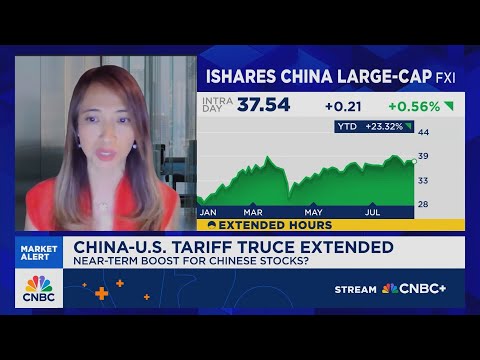
Market Expectations & Trade Negotiations - The market had largely priced in the complexities of US-China trade negotiations, leading to a muted reaction in Chinese equities [2] - The extension of trade negotiations implies that many details still need to be resolved, contributing to a "wait and see" attitude in the market [2][3] Consumption Trends in China - Despite deflationary pressures, new consumption themes are emerging in China, driven by both younger and older generations [4][5] - These themes include increased spending on jewelry, collectible toys, skincare, and travel, reflecting a desire for self-indulgence amid economic challenges [5] - The "new consumption" trend is expected to continue, influenced by generational shifts and current economic conditions [6] Electric Vehicle (EV) Market - China's EV market is a significant driver for its economy, with increasing exports [7] - The primary concern for Chinese EV producers is domestic competition, with many companies developing high-quality, advanced products [8] - Competition within the Chinese EV market is intensifying due to the emergence of high-quality products and enhanced user experiences [8]