Rivian Automotive

Search documents
LG 新能源和三星 SDI 计划在美国生产磷酸铁锂电池
鑫椤储能· 2025-05-30 07:16
Core Viewpoint - The article discusses the shift in the electric vehicle (EV) battery market from nickel-cobalt-manganese (NMC) batteries to more cost-effective lithium iron phosphate (LFP) batteries, driven by automakers like General Motors (GM) aiming to reduce costs and appeal to a broader consumer base [1][2]. Group 1: Transition to LFP Batteries - General Motors is actively transitioning to LFP batteries to lower EV costs, with major suppliers LG Energy Solution and Samsung SDI planning to establish LFP production in the U.S. [1] - If LG Energy Solution and Samsung SDI can expedite their efforts, their factories may become the first LFP battery plants in the U.S., potentially ahead of Ford's collaboration with CATL [1][2]. - Samsung SDI's $3.5 billion joint venture with GM in Indiana is set to produce prismatic battery cells by 2027, with facilities being repurposed from NMC to LFP production [2]. Group 2: Cost Implications and Market Position - GM's transition to LFP batteries is expected to reduce the cost of the Silverado EV by up to $6,000 compared to NMC battery packs [3]. - Currently, several EV models, including entry-level Tesla Model 3 and Model Y, Ford Mustang Mach-E, and Rivian R1T and R1S, already utilize LFP battery packs [3]. Group 3: Future Battery Development - GM is also exploring a new battery chemistry called lithium manganese rich (LMR), which reduces the use of expensive nickel and cobalt while increasing manganese content, aiming for over 400 miles (approximately 643.74 kilometers) of range at a cost comparable to LFP batteries [4].



Stellantis to End In-Car Technology Partnership With Amazon
ZACKS· 2025-05-29 13:50
Core Viewpoint - Stellantis N.V. is ending its collaboration with Amazon on the Stellantis SmartCockpit project, which aimed to enhance in-car software and services, while still maintaining a relationship with Amazon for cloud services and voice assistant integration [1][5]. Group 1: Project Overview - The Stellantis SmartCockpit project was initiated three years ago with the goal of generating $22.5 billion annually from software [1]. - The joint venture aimed to improve the driving experience through advanced vehicle software that personalizes settings and enhances competitiveness against software-centric competitors like Tesla [2]. Group 2: Challenges Faced - Stellantis encountered difficulties in implementing software across its 14 brands, a challenge also faced by other traditional automakers [3]. - Reports indicate that Amazon staff involved in the project have been reassigned or left the company [3]. Group 3: Future Directions - Despite ending the partnership with Amazon on SmartCockpit, Stellantis plans to continue with the broader SmartCockpit concept and shift to a Google Android-based system for future software interfaces [4]. - Stellantis will still utilize Amazon Web Services as its preferred cloud provider and maintain the availability of Amazon Alexa in its vehicles [5]. Group 4: Upcoming Projects - Upcoming software initiatives include STLA Autodrive, an automated driving system for speeds up to 37 mph, and an AI-driven project in collaboration with Mistral AI for an in-car assistant [6]. Group 5: Stock Performance - Stellantis stock has decreased by 54.4% over the past year, contrasting with a 16.4% decline in the industry [8].

Best Buy Says Tariffs May Lower Profits And Sales—Joining These Companies Warning Of Tariff Impacts
Forbes· 2025-05-29 13:18
Company Impact - Best Buy lowered full-year forecasts for profits and sales for fiscal year 2026 due to expected tariff impacts [1][2] - Abercrombie & Fitch cut its profit outlook for 2025, citing a 30% tariff on imports from China and a 10% tariff on other imports, estimating a $50 million hit to profits [2] - Macy's reduced its full-year earnings per share outlook, attributing it to tariffs and moderation in consumer discretionary spending [3] - Target expects sales decline throughout 2025, previously projecting 1% growth, due to weaker spending amid tariff uncertainty [3] - Diageo warned of a likely $150 million hit to annual profits in 2025, planning to offset half of this impact through unspecified actions [4] - Walmart's CEO indicated that higher tariffs would lead to higher prices, as the company cannot absorb all the pressure from narrow retail margins [5] - Ford expects tariffs to reduce earnings before interest and taxes by about $1.5 billion in 2025, suspending its full-year guidance [8] - General Motors lowered its earnings forecast for 2025 to between $10 billion and $12.5 billion, down from $13.7 billion to $15.7 billion, due to tariff impacts [11] Industry Trends - Companies across various sectors, including automotive, retail, and consumer goods, are withdrawing or lowering financial guidance due to tariff-related uncertainties [6][12] - The overall sentiment in the market reflects heightened caution, with many companies citing macroeconomic volatility and evolving trade policies as significant concerns [10][14] - The impact of tariffs is leading to increased operational costs and reduced consumer spending, affecting sales forecasts across multiple industries [9][15] - Airlines, including JetBlue and American Airlines, are pulling their full-year guidance due to macroeconomic uncertainty exacerbated by tariffs [12][16] - The uncertainty surrounding tariffs is causing companies like Snap and Logitech to decline issuing future guidance, reflecting a broader trend of caution in financial forecasting [13][16]



美国拟取消《通胀削减法案》(IRA)电动汽车补贴对中韩电池产业的影响
鑫椤锂电· 2025-05-29 08:08
Core Viewpoint - The article discusses the recent changes in the IRA (Inflation Reduction Act) proposals, focusing on the implications for electric vehicle subsidies and clean energy support, particularly affecting the battery industries in China and South Korea [3][4][6]. Policy Changes - The original IRA included a $7,500 tax credit for consumers purchasing eligible electric vehicles, contingent on the production of battery components and critical minerals in North America or free trade agreement countries, with restrictions on materials linked to Chinese supply chains [2]. - The new proposal aims to gradually eliminate electric vehicle subsidies by the end of 2025 or 2026, and to terminate hydrogen subsidies and clean energy tax credits by 2029 [3]. Impact on Chinese Battery Industry - Short-term impacts are limited, but long-term adjustments in the supply chain are anticipated, with significant export restrictions on key battery materials from China to the U.S. [8]. - China currently supplies 68% of natural graphite and 59% of synthetic graphite imported by the U.S., and strict enforcement of "decoupling" policies could significantly increase export costs for Chinese battery companies [8]. - Chinese battery manufacturers hold over 60% of the global market share and dominate processing of key resources like lithium and cobalt, facing challenges if the U.S. enforces a decoupling strategy [9]. - Chinese companies are accelerating overseas investments to mitigate trade barriers, with firms like CATL and Guoxuan High-Tech expanding their manufacturing presence in Europe [8]. Impact on South Korean Battery Industry - South Korean battery manufacturers, such as LG Energy Solution and SK On, are at risk of losing subsidy eligibility due to their reliance on Chinese supply chains, which could lead to significant profit reductions [11]. - For instance, LG Energy Solution could see a 30% decrease in profits if subsidies are removed, while SK On may shift from profit to loss [11]. - Investment plans in North America are being delayed, with companies considering lower-cost regions like Mexico or Europe for new facilities [13]. Industry and Policy Controversies - There is opposition from the U.S. clean energy sector, with companies like Siemens and Hyundai warning that subsidy cuts could lead to investment losses and job reductions [16]. - Environmental organizations criticize the subsidy reductions, predicting an increase in greenhouse gas emissions and higher household energy costs [16]. - The competitive landscape may shift, with Tesla potentially gaining an advantage due to its cost control and local supply chain strategies, while emerging brands like Rivian and Lucid could be marginalized [17]. - Despite policy barriers, there remain opportunities for collaboration between Chinese and South Korean companies in battery technology and resource procurement [17].

Rivian's Growth Story Screeches To A Halt
Forbes· 2025-05-28 18:20
Core Viewpoint - Rivian Automotive, Inc. is facing significant challenges, including high cash burn, declining market share, and overvaluation, which make it a risky investment despite recent stock price increases. Group 1: Financial Performance - Rivian's vehicle deliveries grew only 3% year-over-year from 50,122 in 2023 to 51,579 in 2024, indicating slowing growth [4] - The company produced 14,611 and delivered 8,640 vehicles in Q1 2025, exceeding previous guidance [5] - Rivian's total operating costs were 229% of revenue in 2023 and 194% in 2024, leading to substantial losses [16] Group 2: Market Position - Rivian's U.S. market share peaked at 5.0% in Q3 2023 but fell to 2.9% in Q1 2025, reflecting a loss of competitive edge [9] - The company’s deliveries in Q1 2025 dropped 37% year-over-year from 13,588 in Q1 2024 to 8,553 [8] Group 3: Cash Burn and Valuation - Since 2020, Rivian has burned $32.5 billion in free cash flow, which is 159% of its enterprise value [12] - Rivian's current stock price of $14 implies it must generate $124.4 billion in revenue by 2035, which is highly unlikely given industry competition [23][25] - The company has an economic book value of -$39 per share, suggesting that equity investors may not see any economic earnings under normal operations [33] Group 4: Investment Risks - Rivian's interest coverage ratio is currently -13.6, indicating severe financial strain [13] - The company is classified as a "Zombie Stock," with a cash burn rate that could lead to bankruptcy without further investment [10][11]

Abercrombie & Fitch Says Tariffs Will Cut Profits By $50 Million—Joining These Companies Warning Of Tariff Impacts
Forbes· 2025-05-28 15:10
Summary of Key Points Core Viewpoint - Numerous companies are lowering their profit forecasts for 2025 due to the impact of tariffs and economic uncertainty, indicating a broader trend of caution across various industries. Group 1: Retail Sector - Abercrombie & Fitch lowered its full-year profit forecast for 2025, citing a $50 million hit from tariffs, including a 30% tariff on imports from China and a 10% tariff on other imports [1][2] - Macy's also reduced its earnings per share outlook for the year, attributing it to tariffs, moderation in consumer spending, and increased competition [3] - Target expects sales to decline throughout 2025, previously projecting a 1% growth, due to weaker spending linked to tariff uncertainties [3] Group 2: Consumer Goods and Food & Beverage - Diageo warned of a $150 million hit to annual profits in 2025 but plans to offset half of this impact through unspecified actions [4] - PepsiCo lowered its earnings forecast for 2025, facing higher supply chain costs due to tariffs and a volatile consumer environment [15] - Kraft Heinz also lowered its outlook, citing a volatile operating environment influenced by tariffs and inflation [13] Group 3: Automotive Industry - Ford expects tariffs to reduce its earnings before interest and taxes by about $1.5 billion in 2025 and has suspended its full-year guidance [8] - General Motors lowered its earnings forecast to between $10 billion and $12.5 billion, down from $13.7 billion to $15.7 billion, due to the impact of tariffs [12] - Toyota estimated a $1.25 billion profit loss in April and March due to U.S. tariffs, forecasting a nearly 21% dip in operating income through 2025 [5] Group 4: Technology and Electronics - AMD anticipates a $1.5 billion revenue loss in 2025 due to restrictions on chip shipments to China [7] - Apple expects a $900 million hit to its bottom line in the second quarter due to tariffs, complicating future predictions [10] - Logitech withdrew its outlook for the 2026 fiscal year due to ongoing tariff uncertainties [17] Group 5: Airlines and Transportation - JetBlue and Alaska Airlines both pulled their full-year guidance for 2025 due to macroeconomic uncertainty [13][17] - Delta Airlines withdrew its full-year guidance, citing broad macro uncertainty [18] - United Airlines issued a second guidance featuring significantly lower earnings for 2025, reflecting the unpredictable economic environment [17] Group 6: Miscellaneous - Steve Madden withdrew its financial guidance for 2025, facing heightened uncertainty from new tariffs [6] - Rivian lowered its targets for vehicle deliveries and capital spending for 2025 due to significant uncertainty in the global economic landscape [6] - Snap declined to issue guidance for its second quarter, citing uncertainty in macroeconomic conditions affecting advertising demand [14]





Toyota Plans to Move Production of GR Corolla to Britain
ZACKS· 2025-05-28 14:31
Group 1 - Toyota Motor Corporation (TM) plans to shift some GR Corolla production to the United Kingdom to utilize excess capacity and reduce delivery times in North America [1][2] - The company will invest approximately $56 million to establish a dedicated production line in its Burnaston plant, aiming for an annual output of around 10,000 cars by mid-2026 [2] - The current production facility at Motomachi Plant is at full capacity, producing about 25,000 vehicles last year, including 8,000 GR Corollas, which is insufficient to meet the growing global demand for high-performance models [3] Group 2 - A recent trade agreement between the UK and the US will reduce tariffs on car imports from the UK from 25% to 10% for up to 100,000 vehicles annually, making the UK a more cost-effective export base compared to Japan [4] - TM's stock has decreased by 12.7% over the past year, while the industry has seen a decline of 16.8% [5]


Macy's Says Tariffs May Lower Profits This Year—Joining These Companies Warning Of Tariff Impacts
Forbes· 2025-05-28 14:05
Company Impact - Macy's lowered its full-year profit forecast for 2025 due to higher tariffs affecting its business [1] - Target expects sales to decline throughout 2025, previously projecting a 1% growth, citing weaker spending amid tariff uncertainty [2] - Diageo anticipates a $150 million hit to annual profits in 2025 but plans to offset half of this impact through unspecified actions [3] - Walmart warned that higher tariffs will lead to increased prices, unable to absorb all the pressure due to narrow retail margins [4] - Ford expects tariffs to reduce its earnings before interest and taxes by about $1.5 billion in 2025 and has suspended its full-year guidance [7] - General Motors lowered its earnings forecast for 2025 to between $10 billion and $12.5 billion, down from $13.7 billion to $15.7 billion, adjusting to the new trade policy environment [10] - Kraft Heinz lowered its full-year outlook due to a volatile operating environment influenced by tariffs and inflation [11] - PepsiCo lowered its earnings forecast for 2025, facing higher supply chain costs due to tariffs and a subdued consumer backdrop [13] Industry Trends - Companies across various sectors are withdrawing or adjusting their financial guidance for 2025 due to macroeconomic uncertainty driven by tariffs [5][8][12] - The automotive industry, including Toyota and Ford, is particularly affected, with significant expected declines in operating income and earnings [4][10] - The retail sector is experiencing heightened competition and promotional landscapes, leading to cautious outlooks from companies like Macy's and Target [2][1] - Airlines are also pulling their full-year guidance, citing economic uncertainty and volatility, with JetBlue and Alaska Airlines among those affected [11][15] - The overall sentiment in the market reflects a cautious approach as companies navigate the unpredictable tariff environment and its implications on profitability [9][16]
Polling Indicates Tesla's Popularity has Plunged: Should Investors Buy Rivian Stock Now?
The Motley Fool· 2025-05-25 22:34
Core Viewpoint - Rivian is positioned to potentially benefit from Tesla's declining brand reputation due to Elon Musk's political involvement, but it has struggled with sales growth and faces significant challenges ahead [2][5][12]. Group 1: Tesla's Brand and Market Position - Tesla has seen a significant decline in its brand reputation, dropping from 8th place in a 2021 poll to 95th in the latest survey, indicating a negative impact from Musk's political actions [5][6]. - The automotive industry is highly competitive, requiring substantial investment to scale production, as evidenced by Tesla's near-bankruptcy during its Model 3 production ramp-up [7][10]. Group 2: Rivian's Current Situation - Rivian delivered 50,122 vehicles in 2023, with only a slight increase to 51,579 in the following year, highlighting its struggles with growth [8]. - The company has adjusted its 2025 delivery guidance downwards, from 46,000-51,000 to 40,000-46,000, citing uncertainties in tariffs and trade policies affecting consumer demand [9]. - Rivian is set to launch the R2, a more affordable SUV starting at around $45,000, in the first half of next year, which is seen as critical for its future success [10]. Group 3: Financial Position and Future Outlook - Rivian has over $7.1 billion in cash and a joint venture with Volkswagen, providing it with near-term liquidity [12]. - However, if Rivian fails to generate sufficient sales volume, it may face continued fundraising and share dilution, which could negatively impact investment potential [12]. - The stock has decreased by 91% from its all-time high in 2021, reflecting investor concerns about its growth trajectory [12].

Better EV Stock: Rivian vs. Lucid
The Motley Fool· 2025-05-24 07:55
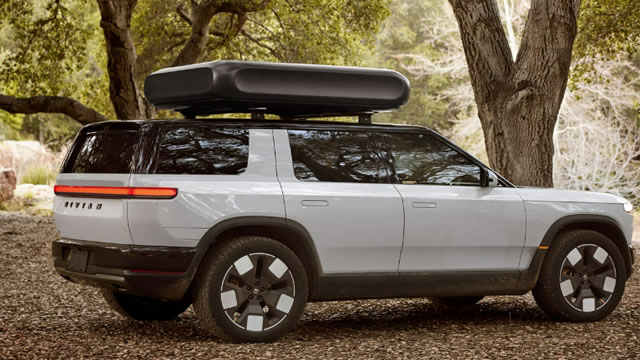
Core Viewpoint - Rivian and Lucid, once leading electric vehicle stocks, have significantly declined in value due to production challenges and financial losses, raising questions about their potential for recovery and investment viability [1][2]. Rivian Overview - Rivian offers three electric vehicle models: R1T pickup, R1S SUV, and an electric delivery van for Amazon [4]. - The company aimed to produce 50,000 vehicles in 2022 but only managed 24,337 due to supply chain issues, with production increasing to 57,232 in 2023 but dropping to 49,476 in 2024 [4][5]. - Rivian anticipates producing 40,000 to 46,000 vehicles in 2025, facing challenges such as higher tariffs and supply chain disruptions [6]. - Analysts project a 5% revenue increase to $5.24 billion in 2025, with expectations of narrowing net losses from $4.75 billion in 2024 to $3.38 billion in 2025 [7][8]. - Revenue is expected to surge 41% to $7.37 billion in 2026, contingent on the successful launch of the R2 SUV [9]. Lucid Overview - Lucid currently sells the Air sedan and the Gravity SUV, which launched in late 2024 after delays [10]. - The company significantly underperformed its delivery targets, with actual deliveries of 4,369 in 2022, 6,001 in 2023, and 10,241 in 2024 [11]. - For 2025, Lucid expects to produce about 20,000 vehicles, more than double its 2024 output, with revenue projected to rise 73% to $1.4 billion [12][13]. - Analysts forecast Lucid's revenue to nearly double to $2.73 billion in 2026, but the company still faces challenges with negative gross margins and a crowded luxury SUV market [14]. Investment Comparison - Rivian is viewed as a more attractive investment due to faster production ramp-up, lower losses per vehicle, and a cheaper stock valuation compared to Lucid [15].