
宝信软件

Search documents
金十图示:2025年08月01日(周五)中国科技互联网公司市值排名TOP 50一览




news flash· 2025-08-01 02:55
Core Insights - The article presents the market capitalization rankings of the top 50 Chinese technology and internet companies as of August 1, 2025, highlighting significant shifts in rankings and valuations [1]. Group 1: Market Capitalization Rankings - TSMC leads the list with a market capitalization of $125.32 billion [3]. - Tencent Holdings ranks second with a market capitalization of $64.22 billion [3]. - Alibaba has moved up to the third position with a market capitalization of $28.77 billion, showing a notable increase from its previous rank of 12 [3]. Group 2: Notable Companies and Changes - Xiaomi Group is ranked fourth with a market capitalization of $17.57 billion [3]. - Pinduoduo follows closely in fifth place with a market capitalization of $16.11 billion [3]. - Meituan and NetEase are ranked sixth and seventh, with market capitalizations of $9.46 billion and $8.25 billion, respectively [3][4]. Group 3: Additional Rankings - Semiconductor Manufacturing International Corporation (SMIC) is in eighth place with a market capitalization of $5.23 billion [4]. - JD.com is ranked tenth with a market capitalization of $4.54 billion [4]. - Kuaishou and Tencent Music are ranked 11th and 12th, with market capitalizations of $4.17 billion and $3.25 billion, respectively [4]. Group 4: Lower Rankings - Companies ranked from 25 to 50 include Kingdee International at $0.83 billion and Yuyuan at $0.40 billion, indicating a diverse range of valuations among the lower-ranked firms [5][6].


宝信软件法定代表人变更为田国兵
Jin Rong Jie· 2025-07-31 22:11
Group 1 - The legal representative of Shanghai Baoxin Software Co., Ltd. has changed from Xia Xuesong to Tian Guobing [1] - Shanghai Baoxin Software was established in 1994 and is located in Shanghai, primarily engaged in software and information technology services [1] - The company has a registered capital of 288,380.3858 thousand RMB and a paid-in capital of 288,380.3858 thousand RMB [1] Group 2 - Shanghai Baoxin Software has invested in 46 enterprises and participated in 5,000 bidding projects [1] - The company holds 338 trademark registrations and 1,204 patent registrations [1] - Additionally, Shanghai Baoxin Software possesses 66 administrative licenses [1]

金十图示:2025年07月31日(周四)中国科技互联网公司市值排名TOP 50一览


news flash· 2025-07-31 02:55
| 36 | | 阿里巴巴 | 2799.92 | | | --- | --- | --- | --- | --- | | 4 | | 小米集团-W | 1763.96 | | | 5 | | 拼多多 | 1603.06 | | | | 網易 | 网易 | 825.18 | 11 | | 7 | | 东方财富 | 520.85 | II | | 8 | | 中芯国际 | 516.85 | | | --- | --- | --- | --- | --- | | 9 | | 京东 | 457.68 | | | 10 | | 快手-W | 409.34 | | | II | | 腾讯音乐 | 326.82 | | | 12 | Bal Car | 目度 | 295.44 | | | 13 | | 理想汽车 | 283.13 | | | 14 | | 贝壳 | 221.36 | | | 15 | | 同花顺 | 218.78 | | | 16 | | 小鹏汽车 | 171.87 | | | 17 | | 中通快递 | 159.79 | | | 18 | | 科大讯飞 | 157.13 | | | 19 | | 蔚来 ...

金十图示:2025年07月30日(周三)中国科技互联网公司市值排名TOP 50一览
news flash· 2025-07-30 02:57
| 25 | | 金蝶国际 | 77.06 | 1 4 | | --- | --- | --- | --- | --- | | 26 | | 新东方 | 76.45 | 1 1 | | 27 | | 万国数据 | 75.02 | 11 | | 28 | | 用友网络 | 71.64 | 1 t | | 29 | | 巨人网络 | 65.55 | 1 t | | 30 | m | 美图公司 | 63.41 | 1 1 | | 31 | | 金山软件 | 62.27 | 2 t | | 32 | | 昆仑万维 | 62.24 | 2 1 | | 33 | | 中国软件 | 62.24 | -1 - | | 34 | | 好未来 | 62.22 | | | 35 | | 同程旅行 | 61.28 | 11 | | 36 | | 深信服 | 59.74 | 1 1 | | 37 | | 润和软件 | 59.69 | -2 1 | | 38 | | 恺英网络 | 56.34 | 11 | | 39 | | 拓维信息 | 55.83 | -1 | | 40 | | 柏楚电子 | 54.06 | | | 41 | 3) | ...

2025 WAIC 最全观察:从 L4 级智能体到会搬快递的机器人,AI 真的落地了!
智通财经网· 2025-07-29 15:37
Core Insights - The 2025 World Artificial Intelligence Conference (WAIC) showcased significant advancements in AI technology and commercial applications, particularly in the robotics sector, with record participation and exhibition space [1][2] - The AI sector has seen a notable rebound, with many companies experiencing gains of over 50%, while the least performing saw declines of 10%-20%, indicating a sustained market momentum influenced by WAIC and developments like GPT-5 [1][13] - The robotics industry is transitioning from technical demonstrations to practical applications, with a focus on enhancing autonomy and reducing reliance on human control [3][6] Conference Overview - The WAIC 2025 featured a large scale with numerous participants, emphasizing the latest technological advancements and commercial applications in AI [1] - The robotics exhibition area saw a 40% increase in space, with over 40 exhibitors for bipedal humanoid robots and a doubling of industrial robot manufacturers compared to the previous year [1] Exhibition Highlights and Technological Innovations - Major tech companies like Baidu and Alibaba dominated the H1 exhibition area, showcasing rapid advancements in edge model applications [2] - The H4 area focused on emerging technologies, particularly innovations in model-based systems engineering (MDSE), which could shorten complex industrial design cycles [2] Robotics Industry: From Technical Breakthroughs to Commercialization - In industrial applications, companies like Zhiyuan and Demar Technology have developed robots capable of autonomous sorting with a margin of error of less than 5 cm [3] - In commercial settings, robots from Galaxy General have demonstrated stable performance in supermarket sorting, operating for 8 hours without errors [4] - The expected shipment volume for leading manufacturers in 2025 is projected to reach up to 5,000 units, with a total exceeding 10,000 units across the industry [5] Large Models and AI Applications: From Quantity Competition to Effective Implementation - The competitive landscape for large models has shifted from a "hundred models war" to a more consolidated market, with core players continuously iterating their offerings [8] - Applications in various sectors, including healthcare and finance, are expanding, with significant advancements in AI diagnostics and automated financial analysis [9] Hardware Innovations and Corporate Developments - New smart hardware products, such as the Tik Note personal information terminal and the Kuaishou collaborative AR platform, are emerging, enhancing productivity and user interaction [10][11] - Companies like Kingsoft and SenseTime are iterating their products to transition towards autonomous intelligent systems [12] Market and Industry Ecosystem - The AI sector is experiencing a rebound, with many companies reporting revenue growth of over 10%, although AI revenue remains relatively small and has not yet reached an explosive growth phase [13] - The structure of participating companies is evolving, with a shift from model-focused firms to application-based companies, supported by local government initiatives in regions like the Yangtze River Delta [15] Summary and Outlook - WAIC 2025 highlighted the acceleration of AI from research to commercialization, with robotics moving towards practical applications and large models focusing on value creation [16] - Despite challenges such as homogeneity in intelligent agents and insufficient autonomy in robots, government support and active capital investment are driving the industry forward, indicating a promising future for AI [16]

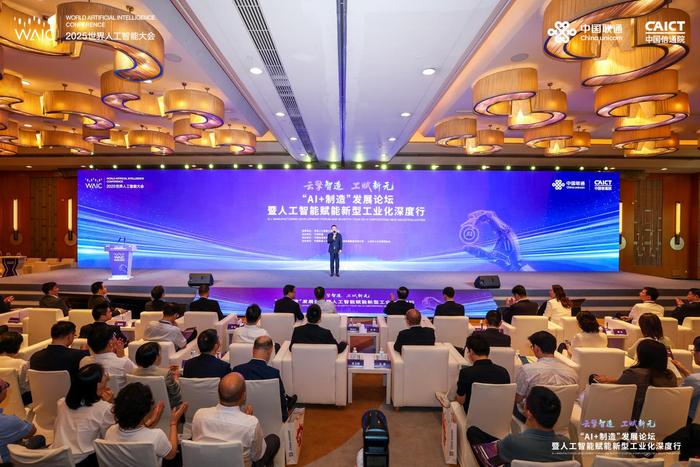
“AI+制造”发展论坛暨人工智能赋能新型工业化深度行成功举办
Guan Cha Zhe Wang· 2025-07-29 04:56
Core Insights - The "AI + Manufacturing" development forum and deep dive event into AI-enabled new industrialization was successfully held during the 2025 World Artificial Intelligence Conference, featuring key figures from government and industry [1][2][11] Group 1: Event Overview - The event was attended by representatives from various countries and over 300 participants from government, industry, academia, and research sectors [1] - Keynote speeches were delivered by prominent figures, including the Chief Scientist of the National Intelligent Control Technology Innovation Center and the Director of the Ministry of Industry and Information Technology's Science and Technology Department [1][11] Group 2: Objectives and Initiatives - The AI-enabled new industrialization initiative aims to enhance the intelligence level of the manufacturing sector through six main tasks, including policy promotion, platform empowerment, and service ecosystem development [2] - The initiative plans to achieve at least 100 supply-demand matches and create no less than 50 benchmark application scenarios to optimize resource supply and support the development of "AI + Manufacturing" in Shanghai [2] Group 3: Technological Developments - China Unicom unveiled its "UniAI·Smart City" strategy and the "Industrial Brain" platform, which includes an industrial data engine and eight industrial scenario intelligent agents [5] - The launch of key platforms such as Industrial Intelligent Cloud and Industrial Corpus Public Service Platform aims to provide integrated services for the manufacturing industry [7] Group 4: Financial Support - Eight major banks announced a joint credit scale of 400 billion yuan to support the "AI + Manufacturing" initiative, offering a diverse range of financial products tailored to different stages of development and enterprise needs [9] Group 5: Expert Insights and Future Vision - Industry experts shared insights on cutting-edge trends and applications in AI-enabled manufacturing, discussing the transformation of production methods and marketing models [11] - The forum set the stage for Shanghai's future in "AI + Manufacturing," emphasizing innovation-driven development and collaboration to accelerate the new industrialization process [16]

金十图示:2025年07月29日(周二)中国科技互联网公司市值排名TOP 50一览

news flash· 2025-07-29 02:54
Group 1 - The article presents the market capitalization rankings of the top 50 Chinese technology and internet companies as of July 29, 2025 [1] - Alibaba leads the list with a market capitalization of 2,913.7 billion [3] - Xiaomi and Pinduoduo follow, with market capitalizations of 1,823.48 billion and 1,657.58 billion respectively [3] Group 2 - Meituan ranks sixth with a market capitalization of 990.12 billion [3] - Semiconductor Manufacturing International Corporation (SMIC) is in eighth place with a market cap of 530.08 billion [4] - JD.com and Kuaishou rank tenth and eleventh, with market capitalizations of 478.87 billion and 388.76 billion respectively [4] Group 3 - The list includes various companies from different sectors, such as Baidu at 307.33 billion and NIO at 109.38 billion [4][5] - The rankings reflect the competitive landscape of the Chinese tech industry, showcasing the significant market presence of these companies [1] - The data is calculated based on the market capitalization in USD, converted using the day's exchange rate [6]

从“炫技”转向“干活”,轮子比双足更吃香......高盛总结了WAIC人形机器人最新趋势
硬AI· 2025-07-28 15:03
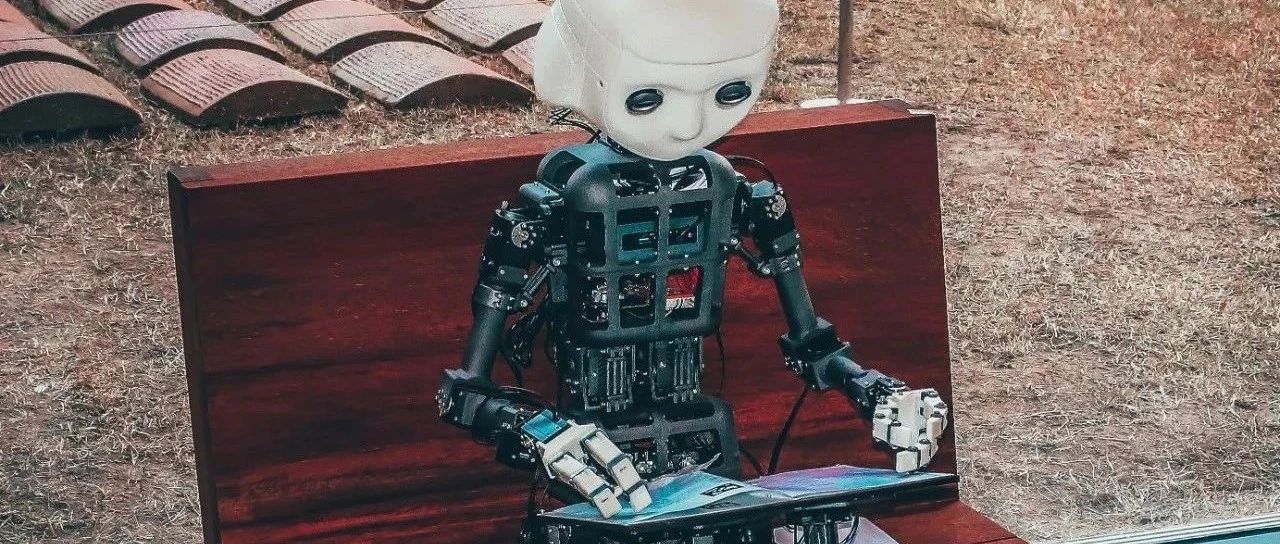
Core Insights - The 2025 WAIC indicates a shift towards practical commercialization in the robotics industry, with wheeled robots becoming mainstream due to their ease of deployment and cost-effectiveness [2][3][4] - Despite advancements in mobility, fine manipulation remains a significant challenge, hindering robots from fully replacing human labor [8][9] - The cost of robots is decreasing, but a clear turning point has not yet been reached, necessitating more definitive industry signals for sustainable stock performance [3][11] Group 1: Commercialization Trends - The WAIC showcased over 60 robotic products, a significant increase from 25 static prototypes last year, indicating a move towards real-world applications in various sectors [2][4] - The design trend is shifting towards wheeled bases (AGV-style) rather than complex bipedal designs, prioritizing immediate commercial viability over technical sophistication [4][5] - The event's scale and participation have grown, with a 35% increase in venue size and a 60% rise in exhibitors, reflecting heightened investment and government support in the robotics sector [4] Group 2: Application Scenarios - Robots are increasingly tailored for specific applications, moving away from a one-size-fits-all approach [6] - In industrial settings, robots are being developed for tasks such as power line inspections and quality control in harsh environments [6] - In consumer and service industries, robots are being designed for practical tasks like making ice cream, organizing rooms, and providing retail assistance [6][7] Group 3: Technical Challenges - Despite improvements in autonomous navigation and dynamic movement, the precision of robotic manipulation remains a critical limitation [9] - Demonstrations at WAIC revealed frequent operational failures, with task completion times significantly lagging behind human capabilities [9] - The integration of visual-language-action (VLA) models and reinforcement learning (RL) is seen as essential for enhancing robotic performance and achieving commercial success [9] Group 4: Cost and Data Considerations - The introduction of entry-level robots priced at 40,000 RMB marks a notable development, yet mainstream robots still range from 400,000 to 500,000 RMB [11] - High-quality real-world interaction data is crucial for training models, but the cost of data collection is high, leading companies to adopt mixed strategies for data sourcing [11]
从“炫技”转向“干活”,轮子比双足更吃香......高盛总结了WAIC人形机器人最新趋势
Hua Er Jie Jian Wen· 2025-07-28 10:02
Core Insights - The 2025 World Artificial Intelligence Conference (WAIC) signals a shift towards practical commercialization in the humanoid robotics sector, moving away from mere technological showcases to robots that can perform real tasks [1][2] - The trend of adopting wheeled chassis robots, similar to Automated Guided Vehicles (AGVs), is becoming mainstream, indicating a focus on immediate commercial viability rather than complex bipedal designs [2][3] - The number of showcased robotic products has significantly increased, with over 60 products presented compared to 25 static prototypes last year, demonstrating substantial progress in product development [2][4] Industry Trends - The WAIC has expanded in scale, with a 35% increase in venue size to 70,000 square meters and a 60% rise in the number of exhibitors to 800, reflecting enhanced industry investment and government support [2] - The design of working prototypes is increasingly converging towards wheeled solutions, which offer advantages in stability, cost, and energy consumption, making them easier to deploy in flat environments like factories and warehouses [2][3] Application Scenarios - Robots are now being designed for specific applications rather than being generic solutions, with a focus on addressing particular industry challenges [4] - Various sectors are seeing the introduction of robots, including manufacturing, logistics, retail, and healthcare, with specific examples of robots designed for tasks such as power inspection and patient interaction [6] Technical Challenges - Despite advancements in autonomous navigation and dynamic movement, the precision of robotic manipulation remains a significant challenge, with task success rates and operational speeds still lagging behind human capabilities [5] - The integration of visual-language-action (VLA) models and reinforcement learning (RL) is seen as crucial for enhancing the general capabilities and task performance of robots [5] Cost and Data Considerations - The cost of entry-level robots has decreased, with a new model priced at 40,000 RMB, but the overall cost reduction in the industry is not yet significant, with full-sized robots still priced between 400,000 to 500,000 RMB [6] - High-quality real-world interaction data is essential for training VLA models, but collecting such data is expensive, leading companies to adopt mixed strategies that combine real and synthetic data for model training [6]
金十图示:2025年07月28日(周一)中国科技互联网公司市值排名TOP 50一览



news flash· 2025-07-28 02:55
Core Insights - The article presents the market capitalization rankings of the top 50 Chinese technology and internet companies as of July 28, 2025, highlighting significant shifts in valuations and market positions [1]. Group 1: Market Capitalization Rankings - The top three companies by market capitalization are Alibaba with 1,000.00 billion, Tencent at 800.00 billion, and Baidu at 600.00 billion [3]. - Notable companies in the top 10 include JD.com at 478.29 billion and Kuaishou at 398.09 billion [3]. - The rankings show a decline in market value for several companies, with Tencent Music and Li Auto both experiencing a decrease of 1% [3]. Group 2: Changes in Valuation - Companies like Kingsoft and China Software have shown slight increases in their market capitalization, with Kingsoft rising by 1% to 62.09 billion [4]. - Conversely, companies such as New Oriental and Kingdee International have seen declines, with New Oriental at 76.34 billion and Kingdee at 76.33 billion, both down by 2% [4]. - The overall trend indicates a mixed performance among the top 50 companies, with some gaining value while others are losing [5]. Group 3: Additional Insights - The data reflects daily calculations of market capitalization based on the current exchange rates between USD and HKD [5]. - The rankings serve as a tool for investors to gauge the performance and market position of leading technology firms in China [5].
