
春秋航空

Search documents
航空机场板块11月28日涨0.26%,厦门空港领涨,主力资金净流出7280.69万元
Zheng Xing Xing Ye Ri Bao· 2025-11-28 09:08
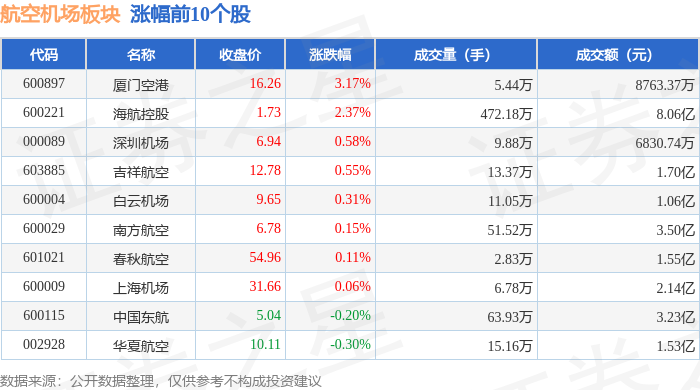
Core Insights - The aviation and airport sector experienced a slight increase of 0.26% on November 28, with Xiamen Airport leading the gains [1] - The Shanghai Composite Index closed at 3888.6, up 0.34%, while the Shenzhen Component Index closed at 12984.08, up 0.85% [1] Stock Performance - Xiamen Airport (600897) closed at 16.26, up 3.17% with a trading volume of 54,400 shares and a transaction value of 87.63 million yuan [1] - Hainan Airlines (600221) closed at 1.73, up 2.37% with a trading volume of 4.72 million shares and a transaction value of 806 million yuan [1] - Shenzhen Airport (000089) closed at 6.94, up 0.58% with a trading volume of 99,880 shares and a transaction value of 68.31 million yuan [1] - China Eastern Airlines (600115) closed at 5.04, down 0.20% with a trading volume of 639,300 shares and a transaction value of 323 million yuan [1][2] Capital Flow - The aviation and airport sector saw a net outflow of 72.81 million yuan from institutional investors, while retail investors contributed a net inflow of 103 million yuan [2] - The detailed capital flow indicates that Hainan Airlines had a net inflow of 96.67 million yuan from institutional investors, while retail investors had a net outflow of 51.95 million yuan [3] - Xiamen Airport experienced a net outflow of 1.69 million yuan from institutional investors, but a net inflow of 4.48 million yuan from retail investors [3]


青岛上合航空交通研究院科教共创中心成立
Zhong Guo Min Hang Wang· 2025-11-28 06:12
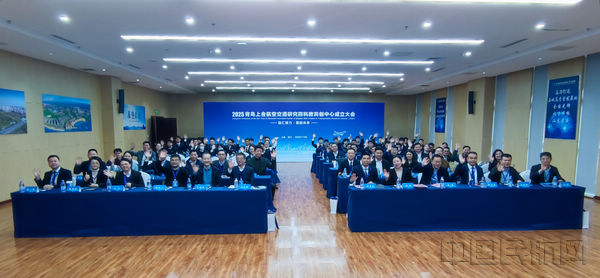
Core Insights - The establishment of the "Qingdao Shanghai Cooperation Organization Aviation Transportation Research Institute Co-creation Center" marks a significant step in integrating education and industry within the aviation sector, aligning with national strategies such as the "Belt and Road Initiative" and "产教融合" (industry-education integration) [1][3][5] Group 1: Event Overview - The signing and unveiling ceremony for the co-creation center and the ICAO TPP (International Civil Aviation Organization Training Partnership Program) qualification took place on November 26, with participation from various stakeholders including universities and aviation enterprises [1][3] - The co-creation center aims to serve as a collaborative innovation platform, integrating resources from government, industry, academia, and research to enhance aviation safety, talent development, and technology transfer [3][5] Group 2: TPP Qualification Impact - The TPP qualification signifies international recognition of China's civil aviation training quality, reflecting the industry's commitment to high-quality development and internal growth [5] - The deputy director of the Civil Aviation Qingdao Regulatory Bureau expressed expectations for the center to contribute to national aviation strategies, maintain safety standards, and drive innovation [5] Group 3: Future Development and Collaboration - Experts from various universities and aviation organizations discussed the future of aviation education and industry integration, focusing on topics such as low-altitude economy evolution and competency-based training advancements [8][9] - The Qingdao Aviation Training Center plans to leverage the TPP international network to establish a new training base, aiming to create a globally competitive aviation education and innovation hub [10]
锁座费“吸血”十年,消保委出手:该取消了!
猿大侠· 2025-11-28 04:11
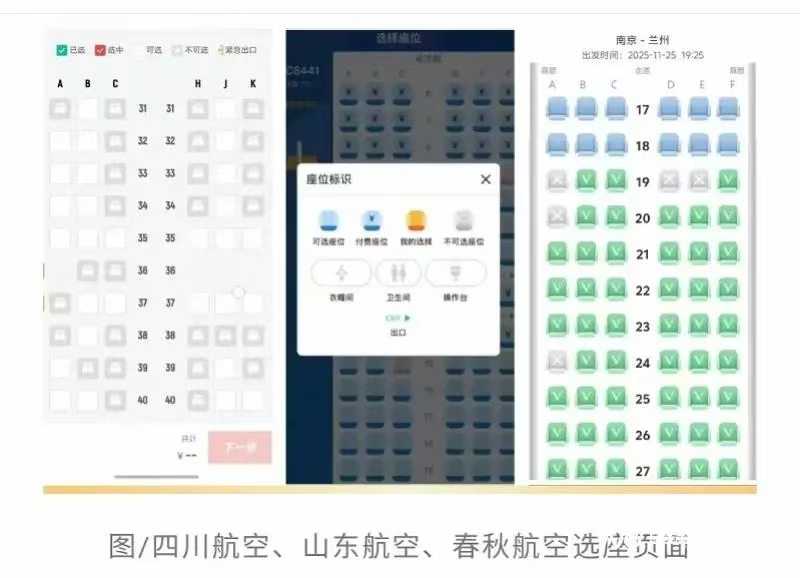
Core Viewpoint - The practice of "seat locking" by airlines, which requires passengers to pay extra fees or use mileage points to unlock preferred seating after purchasing tickets, has drawn widespread criticism from travelers and industry experts [1][5][13]. Group 1: Issues with Seat Locking - Airlines have been locking a significant number of seats, with reports indicating that only 40% of seats on certain flights are available for online selection, and only 14% of those are free [4][16]. - The majority of locked seats are in less desirable locations, forcing passengers to pay additional fees for better seating options [1][4]. - This practice is seen as a way for airlines to increase revenue at the expense of consumer rights, potentially violating various consumer protection laws [5][17]. Group 2: Historical Context and Regulatory Actions - The introduction of online seat selection began in 2009, initially providing convenience to passengers, but has since evolved into a revenue-generating scheme through paid seat selection [6][7]. - The practice of charging for seat selection was first noted in low-cost airlines abroad and has since become a common practice among domestic airlines in China [7][11]. - Regulatory bodies have previously penalized airlines for similar practices, with a notable case in 2016 where China United Airlines was fined for charging seat selection fees [9][10]. Group 3: Recent Developments and Consumer Protection - Recently, ten airlines were summoned for discussions regarding their seat locking practices, with a focus on protecting consumer rights and ensuring fair access to seating options [13][19]. - The Jiangsu Consumer Protection Committee highlighted four main issues with the current seat locking practices, including excessive locking of quality seats and lack of transparency in pricing [16][18]. - Airlines are required to submit corrective action reports within 15 working days to address these issues, or they may face further regulatory measures [19].

交运行业2026年度投资策略要点汇报
2025-11-28 01:42
Summary of Key Points from Conference Call Records Industry Overview - **Transportation Industry**: The report focuses on the transportation sector, particularly the aviation and shipping industries, with a positive outlook for 2026 [1][2][3]. Core Insights and Arguments Aviation Industry - **Optimistic Outlook**: The aviation sector is expected to perform well in 2026, with passenger load factors reaching historical highs (e.g., 87% for major airlines like China Southern and China Eastern, and over 90% for Spring Airlines) [3][4]. - **Profit Potential**: A 10% increase in ticket prices for airlines with revenues around 100 billion can lead to a profit increase of approximately 10 billion [1][3]. - **Supply Chain Constraints**: The global aircraft supply chain is anticipated to remain tight due to limited participants in the manufacturing market and challenges in scaling production [4]. - **Demand Drivers**: Increased consumer policies and travel demand are expected to significantly boost service consumption, particularly in cultural and tourism sectors [4]. Shipping Industry - **Market Segments to Watch**: Focus on cruise, bulk cargo, and container shipping markets, with cruise rates exceeding $100,000 per day, driven by oil production cycles and sanctions [5][6]. - **Capacity Constraints**: The shipping industry faces limited capacity growth due to low order backlogs since 2022, leading to a strong growth outlook [5][6]. - **Oil Tanker Market**: High percentage of aging vessels (20 years or older) necessitates increased scrapping, with every $10,000 rise in rates potentially adding over 1 billion in profits for companies like COSCO Shipping Energy [8]. - **Dry Bulk Market**: The Simandou iron ore project is expected to significantly increase transportation demand, with production projected to reach 20 million tons by 2026 and 80 million tons by 2028 [8]. Dividend Assets - **Return Expectations**: Dividend assets are projected to revert to mean returns around 10% in 2026, driven by 5% earnings growth and a 4-5% dividend yield [9][10]. - **Highway Sector Stability**: The highway sector is expected to maintain stable operations, with dividend yields projected between 4.5-5% for companies like Sichuan Chengyu and Shandong Highway, and potentially over 6% for Hong Kong-listed firms [10]. Port Sector - **Strategic Importance**: Ports are highlighted as strategic global assets, with companies like China Merchants Port showing upward momentum due to their current undervaluation [11]. Express Delivery Industry - **Market Adjustments**: The express delivery sector, particularly the Tongda system, is positioned for growth following adjustments and the "anti-involution" policy, which is expected to enhance industry quality and profitability [12]. Additional Important Insights - **Investment Recommendations**: Key companies to watch include major airlines (Air China, China Eastern, China Southern), and shipping firms like COSCO Shipping and China Merchants Energy, as well as express delivery leaders like YTO Express and ZTO Express [6][12]. - **Overall Investment Focus**: The report emphasizes the importance of sectors with upward performance potential, such as aviation, shipping, and express delivery, alongside dividend assets that are expected to recover in the economic recovery context [13].
飞机选座到底该不该收费?10家航司因“过度锁座”被约谈
第一财经· 2025-11-27 10:54
Core Viewpoint - The article discusses the recent concerns raised by the Jiangsu Consumer Protection Committee regarding the "seat locking" practices of ten major airlines, highlighting issues such as excessive locking of premium seats, opaque information, and the need for clearer consumer rights [3][4]. Group 1: Issues Identified - The Jiangsu Consumer Protection Committee identified four main issues with the airlines' seat locking practices, including excessive locking of premium seats, disguised fees for unlocking seats, and lack of transparency in the information provided to consumers [3][4]. - The investigation revealed that the seat locking rate for economy class across the ten airlines ranged from 19.9% to 62.1%, with an average of 38.7% [3][4]. Group 2: Reasons for Seat Locking - Airlines lock seats for several reasons, including the need for paid selection or mileage redemption, service assurance, and balancing passenger load [5][7]. - Some airlines do not clearly indicate whether locked seats are unavailable due to airline restrictions or prior selection by other passengers, leading to confusion among consumers [5]. Group 3: Historical Context and Compliance - The practice of charging for seat selection began around 2014, following trends set by international airlines, and has become a significant revenue source for many carriers [10]. - Current seat selection fees and other differentiated services have been reported to relevant civil aviation authorities, and the Civil Aviation Administration of China has allowed for such practices since March 2021 [10]. Group 4: Consumer Recommendations - Consumers suggest that airlines should clearly present seat selection options and associated costs at the time of booking to enhance transparency and consumer choice [11]. - Industry experts recommend that at least half of the seats should be available for free selection, particularly those that are typically preferred by passengers, such as window and aisle seats [11].

10家航司因“过度锁座”被约谈背后:飞机选座到底该不该收费?
Di Yi Cai Jing· 2025-11-27 10:24
Core Viewpoint - The Jiangsu Consumer Protection Committee has raised concerns regarding the practice of "seat locking" by ten major airlines, highlighting issues of transparency and fairness in the selection of seats during the ticket purchasing process [1][2]. Group 1: Issues Identified - The investigation revealed four main problems with seat locking, including excessive locking of premium seats, disguised fees for unlocking seats, and a lack of transparency in the information provided to consumers [1]. - The average seat locking rate among the ten airlines surveyed was found to be 38.7%, with rates ranging from 19.9% to 62.1% for economy class [1]. Group 2: Reasons for Seat Locking - Airlines lock seats for several reasons, including the need for paid selection or mileage redemption, service assurance, and balancing passenger load [2][4]. - Some airlines do not clearly indicate whether locked seats are unavailable due to airline restrictions or prior selection by other passengers, leading to confusion among consumers [2]. Group 3: Historical Context and Compliance - The practice of charging for seat selection began around 2014, following trends set by international airlines, with many domestic airlines now implementing similar fee structures [5][6]. - Current practices of seat selection fees and baggage fees have been reported to relevant civil aviation authorities and are considered compliant with regulations, reflecting a shift towards diversified service offerings in the airline industry [6]. Group 4: Consumer Recommendations - Consumers suggest that airlines should clearly present seat selection options and associated costs at the time of booking to enhance transparency and consumer choice [7]. - Industry experts recommend that at least half of the seats should remain available for free selection, particularly those that are window or aisle seats, to meet basic passenger needs [7].

今日1389只个股突破五日均线
Zheng Quan Shi Bao Wang· 2025-11-27 07:32
Market Overview - The Shanghai Composite Index closed at 3875.26 points, above the five-day moving average, with a change of 0.29% [1] - The total trading volume of A-shares reached 1,723.17 billion yuan [1] Stocks Performance - A total of 1,389 A-shares have surpassed the five-day moving average, with notable stocks showing significant deviation rates [1] - The stocks with the highest deviation rates include: - Mingguan New Materials (15.93%) - Tianyi New Materials (15.92%) - Liande Equipment (15.78%) [1] - Other stocks with smaller deviation rates that just crossed the five-day moving average include: - Beikang Technology - Spring Airlines - High-Explosive Mining [1] Notable Stocks - The top three stocks with the highest daily gains are: - Mingguan New Materials: +20.03% with a turnover rate of 10.50% [1] - Tianyi New Materials: +20.04% with a turnover rate of 12.35% [1] - Liande Equipment: +20.01% with a turnover rate of 19.65% [1] - Other significant gainers include: - Huazhi Technology: +20.00% [1] - Penghui Energy: +14.64% [1]




川航回应因“锁座”问题被约谈:将在约定日期向消保委反馈
Nan Fang Du Shi Bao· 2025-11-27 06:17
南都此前报道,不少消费者反映,在线选座时经济舱前排、靠窗、靠过道等较为便利舒适的座位常被单 独锁定,要么无法选择,要么需额外付费或用积分兑换。江苏省消保委随后组织开展了专项消费调查, 对十家航空公司进行了深入核查。 江苏省消保委表示,当前部分航空公司将本属常规服务范围的座位通过锁定方式进行收费的做法,涉嫌 侵害消费者的公平交易权与自主选择权。 近日,针对飞机"锁座"及有偿选座服务等问题,江苏省消保委约谈东方航空、南方航空、中国国航、海 南航空、厦门航空、深圳航空、山东航空、四川航空、春秋航空、吉祥航空等10家航空公司,持续引发 关注。11月27日,四川航空相关负责人向南都N视频记者表示,"航司牵头部门正结合此前与消保委沟 通的情况,有序推进相关工作,并将在约定日期向消保委做后续反馈。" 江苏省消保委就飞机票锁座问题的整改工作,向各航司提出两点明确要求,并于15个工作日内将整改情 况以书面形式进行提交。一是立即开展自查自纠,对现有选座规则进行全面梳理,重点解决"锁座范围 过度"问题,取消付费或者所谓"积分兑换"等形式的变相付费选座模式,确保免费可选座位数量合理、 分布均衡,仅保留出于"特殊旅客座位预留、保障应急 ...
十家航司被约谈 直指“锁座”乱象
Jing Ji Guan Cha Wang· 2025-11-27 05:00
飞机"锁座"及有偿选座服务问题近日引发社会广泛关注。江苏省消费者权益保护委员会(以下简称"江 苏省消保委")一纸调查,直指航司"锁座"乱象,将国内10家主流航空公司推到了风口浪尖。 11月21日,江苏省消保委线上约谈了东方航空、南方航空(600029)、中国国航(601111)等10家主流 航空公司。11月26日,通过公众号发布有关调查结果,详细列举了机票锁座服务市场中存在的诸多问 题,亮明对"锁座"现象长期存在的"零容忍"态度,并要求各公司在15个工作日内将整改情况以书面形式 提交。 专家认为,航司"锁座"行为锁的不仅是座位,还有旅客的知情权和公平交易权。"付费选座"等霸王条款 还可能涉嫌违反《消费者权益保护法》,侵害旅客的自主选择权,属于典型变相收费行为,让旅客暗吃 了不少"哑巴亏"。长此以往,"锁座"行为最终损害的是旅客对航司服务的信任,不利于航空服务业的高 质量发展。 近四成座位被锁 所谓飞机"锁座",是指航司将经济舱前排、靠窗、靠过道等较为便利舒适的座位单独锁定,要么无法选 择,要么需额外付费或用积分兑换。从范围来看,锁定范围高度集中于经济舱前排、靠窗及靠过道等消 费者偏好的优质座位,仅开放中间区域 ...



六部门发文提出2027年形成3个万亿级消费领域;江苏省消保委约谈10家航司丨消费早参
Mei Ri Jing Ji Xin Wen· 2025-11-27 03:15
NO.2 江苏省消保委约谈10家航司就飞机票锁座问题要求限期整改 NO.1 六部门发文提出2027年形成3个万亿级消费领域 日前,工业和信息化部等六部门联合印发《关于增强消费品供需适配性进一步促进消费的实施方案》, 其中提出,到2027年,消费品供给结构明显优化,形成3个万亿级消费领域和10个千亿级消费热点,打 造一批富有文化内涵、享誉全球的高品质消费品。方案聚焦以消费升级引领产业升级,以优质供给更好 满足多元需求,实现供需更高水平动态平衡,还提出到2030年,供给与消费良性互动、相互促进的高质 量发展格局基本形成,消费对经济增长的贡献率稳步提升。 点评:六部门联合印发的促消费方案,锚定供需适配核心,绘就清晰发展蓝图。这不仅能破解供需错配 痛点,更能激活消费增长新动能,推动形成供给与消费良性互动的发展格局,为经济高质量发展注入持 久动力。 点评:西北首家西安市内免税店的开业,是政策红利落地与城市消费升级的双赢之举,不仅填补西北业 态空白,更串联文旅与消费,助力海外消费回流,为西安建设国际消费中心城市注入强劲动力。 NO.4 广湛高铁正式启动试运行进入开通倒计时 11月26日上午,广湛高铁正式进入试运行阶段,线 ...