
ITC

Search documents
突发黑天鹅,闪崩暴跌!
中国基金报· 2026-01-01 16:10
Core Viewpoint - The Indian government has announced a new tax on cigarettes, leading to a significant drop in tobacco stocks, with major companies like ITC and Godfrey Phillips India experiencing sharp declines in their stock prices [2][3]. Group 1: Tax Impact on Tobacco Industry - The new excise duty on cigarettes will be implemented from February 1, with tax rates ranging from 2050 to 8500 rupees (approximately $22.82 to $94.60) per 1000 cigarettes based on length [6]. - Analysts predict that this tax increase could lead to a 22% to 28% rise in overall costs for cigarettes measuring 75 to 85 millimeters, potentially resulting in a price increase of 2 to 3 rupees per cigarette [6][7]. - The new tax will be added on top of the existing 40% Goods and Services Tax (GST), further increasing the financial burden on consumers [7]. Group 2: Market Reactions and Company Performance - ITC, a leading player in the tobacco sector, saw its stock drop by 9.7%, while Godfrey Phillips India experienced a 17% decline, contributing to a 3.2% drop in the fast-moving consumer goods index [3][6]. - The uncertainty surrounding the tax's impact has led to increased pressure on stock prices, with analysts noting that ITC may need to raise prices by at least 15% to offset the tax burden [7]. - The first major shareholder of ITC, British American Tobacco, is reportedly reducing its stake, adding to the company's challenges in navigating the new tax landscape [7]. Group 3: Government's Rationale and Broader Context - The Indian government aims to keep cigarettes "sufficiently expensive" as a means to curb usage and alleviate pressure on public health systems, with tobacco-related diseases costing the economy over 2.4 trillion rupees (approximately $267 billion) annually [8]. - The government has previously implemented measures to prevent tobacco products from becoming cheaper and more accessible, including new health and national security taxes on machinery used for tobacco production [8].


Sensex slips 43 pts; IT shares fall on profit-taking
Rediff· 2025-12-23 15:25
Market Performance - The BSE Sensex declined by 42.64 points or 0.05% to close at 85,524.84, ending a two-day gaining streak [2] - The index reached a high of 85,704.93 and a low of 85,342.99 during the trading session [2] - The NSE Nifty index saw a marginal increase of 4.75 points or 0.02%, closing at 26,177.15 [2] Sector Performance - Major laggards among Sensex firms included Infosys, Bharti Airtel, Adani Ports, Sun Pharma, Tech Mahindra, Eternal, Axis Bank, and Maruti [2] - Gainers in the market included ITC, UltraTech Cement, Tata Steel, and HDFC Bank [3] Investor Activity - Foreign Institutional Investors (FIIs) sold equities worth Rs 457.34 crore, while Domestic Institutional Investors (DIIs) purchased equities worth Rs 4,058.22 crore [6] - The market experienced broad-based profit-booking, with a lack of fresh positive triggers contributing to the flat session [7] Global Market Influence - Asian markets showed mixed results, with South Korea's Kospi, Japan's Nikkei 225, and Shanghai's SSE Composite indices closing positively, while Hong Kong's Hang Seng index ended lower [6] - Brent crude oil prices increased by 0.10% to $62.13 per barrel, indicating some support for financials and FMCG sectors [8] Future Outlook - Investors are preparing for the upcoming earnings season and are closely monitoring Federal Reserve policy expectations, with increasing probabilities of rate cuts for the January meeting [9]

Hungry IPOs Carve A Heft Slice Of Mutual Funds
Rediff· 2025-12-22 05:05
Core Insights - The ongoing surge in IPOs is significantly utilizing mutual fund liquidity, with six primary market issuances accounting for over ₹13,000 crore in net equity investments by mutual funds in November [3][4]. Group 1: Mutual Fund Activity - Groww led the inflows, attracting approximately ₹4,200 crore, while other companies like Lenskart Solutions, Pine Labs, and Physics Wallah each garnered over ₹1,000 crore in investments from mutual funds [4]. - Net equity investments by mutual funds reached ₹43,500 crore in November, indicating strong demand and liquidity in the market [4]. Group 2: IPO Market Dynamics - The robust appetite for IPOs from mutual funds, alongside strong demand from other investor segments, has facilitated record issuances, with over 100 mainboard IPOs launched this year, the highest in 25 years [5]. - The primary market activity is largely driven by retail inflows into mutual funds, as elevated valuations in the secondary market have redirected liquidity towards primary issuances [5]. Group 3: Sector Trends - Demand in the primary market is particularly strong for consumer technology and new-age businesses, which currently represent 20% of recent IPOs, a figure expected to rise above 30% in the next five years [7][8]. - At least 20 startups with private market valuations in the hundreds of millions of dollars are preparing to enter the market, indicating a growing trend in the consumertech sector [8]. Group 4: Secondary Market Activity - In the secondary market, Eternal topped the mutual fund buy list with ₹4,500 crore invested, followed by ICICI Bank, ITC, Mphasis, and HDFC Bank [9]. - Conversely, mutual funds reduced their exposure to public sector banks and pharmaceutical stocks, with State Bank of India and Reliance Industries among the most sold stocks [9].
Indian arms of MNCs find place in the sun
BusinessLine· 2025-12-08 02:02
Core Insights - Indian subsidiaries of multinational corporations (MNCs) are significantly contributing to their parent companies' revenues, with ITC accounting for over 25% of BAT Plc's revenue, Hindustan Unilever contributing 10-11% to Unilever's turnover, Whirlpool of India around 5% to Whirlpool Corp, and Colgate India 4-5% to its parent's global revenue [1][2] Group 1: Market Performance and Valuation - Indian arms of consumer MNCs command higher valuations compared to their parents, with price-to-earnings (PE) ratios at a premium of 2 to 4 times [2] - The market capitalizations of Indian subsidiaries as a percentage of their parents are also higher, indicating strong investor expectations [2][22] - Stock performance of Indian subsidiaries has outpaced that of their parent companies over a 10-year period, reflecting superior shareholder returns [5] Group 2: Growth Drivers in India - India's growth in the consumer products sector is driven by a youthful working-age population, rising real incomes, and rapid urbanization [8] - Real disposable income per capita is projected to rise by around 6%, positioning India for the highest per capita income growth among leading consumer product markets in the next five years [10] - The emergence of digital channels, including quick commerce and e-commerce, has significantly accelerated growth for consumer MNCs in India, with Q-commerce platforms accounting for approximately 35% of FMCG e-commerce sales [21] Group 3: Structural Changes and Opportunities - Progressive liberalization and reforms have made it easier for global companies to operate in India, enhancing the ease of doing business [16][17] - The introduction of simplified tax structures and improved infrastructure has allowed MNCs to adapt their products and pricing strategies more effectively to the local market [18] - Despite rapid growth, India remains an underpenetrated market in many sectors, with significant opportunities for premiumization and deeper category penetration [24][25]

South Korean brands surge into India via JVs, investments in soju, beauty, foods amid K-wave boom
The Economic Times· 2025-12-02 20:00
Core Insights - South Korea's Jinro has signed a distribution partnership in India with Monika Alcobev to capitalize on the growing Korean wave in the Indian market [1][4][6] - The K-beauty market in India is projected to grow significantly, from $0.4 billion in 2024 to $1.5 billion by 2030, with the buyer base expected to expand from 11.9 million to 27 million [5][6] Company Developments - Jinro, Korea's top-selling soju brand, reported global sales of 96.8 million cases last year and is entering the Indian market to tap into the influence of K-culture [4][6] - Cosmax is establishing a local corporation in Mumbai by the end of this year to develop color cosmetics targeting Gen Z consumers in India [1][6] - Lotte Wellfood plans to invest $300 million in India over the next three to five years to expand its capacity and supply chain following the merger of its Indian subsidiaries [4][6] Market Trends - The Korean wave is influencing Indian consumer choices across various categories, including alcohol, beauty, foods, and cigarettes [6] - The demand for soju, a low-alcohol vodka, is increasing as it becomes one of the fastest-growing premium spirit categories in India [4][6] - Major companies like ITC and Hindustan Unilever have already begun to capitalize on the Korean wave by introducing Korean-flavored food products [6]

Sensex, Nifty hit fresh highs in early trade
Rediff· 2025-12-01 05:25
Core Insights - Equity benchmark indices Sensex and Nifty reached all-time highs due to positive investor sentiment following India's GDP growth of 8.2% in Q2 FY26, marking the fastest growth in six quarters [1][4] Market Performance - The BSE Sensex increased by 452.35 points to a record high of 86,159.02, while the NSE Nifty rose by 122.85 points to a lifetime high of 26,325.80 [2][3] - Key gainers included Adani Ports, Bharat Electronics, Eternal, Tata Motors Passenger Vehicles, State Bank of India, and Kotak Mahindra Bank, while laggards were ITC, Bajaj Finance, Titan, and Tech Mahindra [4] Economic Context - The 8.2% GDP growth in July-September was attributed to front-loading of production ahead of GST rate cuts, which boosted consumption and mitigated the effects of high US tariffs [4] - Analysts suggest that new record highs for the Nifty may become the norm, supported by broad-based sectoral strength [5] Investment Activity - Foreign Institutional Investors (FIIs) sold equities worth ₹3,795.72 crore, while Domestic Institutional Investors (DIIs) purchased stocks worth ₹4,148.48 crore [6] - Brent crude oil prices increased by 1.62% to $63.39 per barrel, indicating potential implications for sectors sensitive to oil prices [6]
Prabhudas Lilladher hikes Nifty's 12-month target to 29,094 on 5 tailwinds. Picks HAL, ICICI and 16 more stocks to buy
The Economic Times· 2025-11-26 11:14
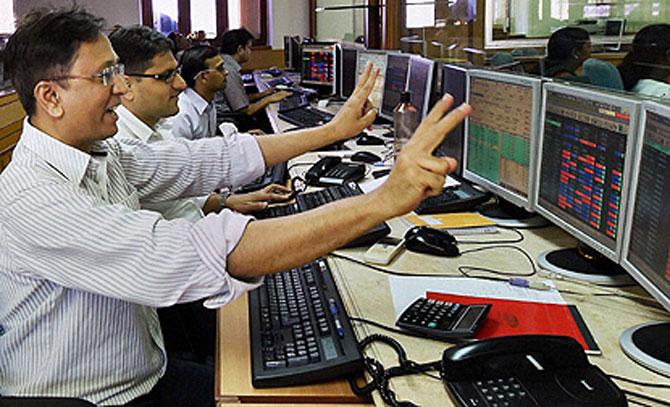
Core Viewpoint - Prabhudas Lilladher (PL) remains bullish on large-cap stocks, selecting 11 stocks to buy, while also identifying 7 mid and small-cap stocks, totaling 18 preferred picks [1][12]. Market Performance - Nifty has shown resilience over the past three months, trading at 26,175 with a gain of 290 points, needing to cover 90 points to surpass its lifetime high of 26,277 [2][14]. - The ongoing rally is attributed to strong corporate performance in 2QFY26, with sales, EBIDTA, and PAT growth of 8.1%, 16.3%, and 16.4% respectively, alongside an EPS upgrade for Nifty [3][14]. Economic Drivers - Economic momentum is expected to be driven by domestic demand, influenced by several factors: 1. Income tax rate cuts benefiting over 80% of individual taxpayers [6][14]. 2. Anticipated 100 basis points rate cut by the RBI to stimulate growth [6][7]. 3. Healthy rural incomes supported by a strong monsoon and robust harvests [9][14]. 4. Low inflation rates, with CPI at 1.7% for September and projected at 1% for the December quarter, enhancing real purchasing power [10][14]. 5. GST rationalization contributing to demand revival [11][14]. Banking Sector Outlook - Improvement in bank performance is expected, with Net Interest Margins (NIMs) having bottomed out and credit growth recovering from 9% to a projected 11-13% in the second half of the year [8][14]. - Benefits from lower interest rates are anticipated to reflect in liability repricing from 3Q26, with potential for an additional 25 basis points rate cut in FY26 [8][14]. Stock Recommendations - Preferred large-cap stocks include ITC, Larsen & Toubro (L&T), Mahindra & Mahindra (M&M), and others [12][14]. - Broader market picks include Ajanta Pharma, Fine Organic Industries, and Voltamp Transformers [12][14]. Government Capex Concerns - There is a potential cool-off in government capital expenditure, which has increased significantly since COVID, with a 40% rise in 1H capex possibly leading to a 10% year-over-year decline in 2H26 unless the government exceeds its capex allocation [12][14].
Day Trading Guide for November 25, 2025: Intraday supports, resistances for Nifty50 stocks
BusinessLine· 2025-11-25 12:44
Core Insights - The article provides intraday trading recommendations for Nifty Futures and major stocks, including specific entry and stop-loss levels based on technical analysis [1] Company Summaries - **HDFC Bank**: Support levels at ₹990 and ₹985; resistance levels at ₹1010 and ₹1025. Recommendation to go short only below ₹990 with a stop-loss at ₹992 [3] - **Infosys**: Support levels at ₹1540 and ₹1520; resistance levels at ₹1560 and ₹1585. Recommendation to go short only below ₹1540 with a stop-loss at ₹1545 [3] - **ITC**: Support levels at ₹402 and ₹399; resistance levels at ₹407 and ₹410. Recommendation to take fresh shorts below ₹402 with a stop-loss at ₹403 [3] - **ONGC**: Support levels at ₹243 and ₹240; resistance levels at ₹248 and ₹250. Recommendation to go short on a rise at ₹247 with a stop-loss at ₹248 [3] - **Reliance Industries**: Support levels at ₹1530 and ₹1515; resistance levels at ₹1555 and ₹1590. Recommendation to go short only below ₹1530 with a stop-loss at ₹1535 [3] - **State Bank of India (SBI)**: Support levels at ₹964 and ₹960; resistance levels at ₹978 and ₹986. Recommendation to go long on dips at ₹965 with a stop-loss at ₹963 [3] - **Tata Consultancy Services (TCS)**: Support levels at ₹3125 and ₹3085; resistance levels at ₹3155 and ₹3185. Recommendation to go short on a break below ₹3125 with a stop-loss at ₹3135 [3] - **Nifty 50 Futures**: Support levels at ₹25900 and ₹25800; resistance levels at ₹26040 and ₹26180. Recommendation to go short on a rise at ₹25990 and ₹26020 with a stop-loss at ₹26090 [3]

Sensex, Nifty settle with modest gains
Rediff· 2025-11-14 11:32
Equity benchmark indices Sensex and Nifty reversed early losses to end modestly higher on Friday as investors turned to buying blue-chip stocks at beaten down prices.Illustration: Uttam GhoshThe 30-share BSE Sensex benchmark began the trade on a negative note by declining 449.35 points, or 0.53 per cent to 84,029.32.The NSE Nifty started the day off lower by 138.35 points or 0.53 per cent to 25,740.80.However, both the benchmark indices showed some recovery at the fag end before closing the session with gai ...

Sensex drops 50 pts, Nifty below 25,900 as Bihar election results spark street caution; IT, metal stock tumble
The Economic Times· 2025-11-14 03:58
Market Overview - The S&P BSE Sensex decreased by 0.5% to 84,317, down 420 points, while the NSE Nifty 50 fell by 0.4%, or 110 points, to 25,768 at the open [1] - By 9:51 AM, BSE Sensex was trading 350 points or 0.44% lower at 84,111, and Nifty50 dropped 111 points to 25,769 [1] - Tata Motors, Infosys, Tata Steel, ITC, Tech Mahindra, and Maruti were the main contributors to the losses, each falling between 1-3% [1] Company Performance - Tata Motors (Commercial Vehicles) shares fell over 3% after reporting a consolidated net loss of ₹867 crore for Q2, contrasting with a net profit of ₹498 crore in the same quarter last year [2] - The market reaction to the election results is expected to be temporary, with long-term trends driven by fundamentals and earnings growth [6] Institutional Investment - Foreign Institutional Investors (FIIs) sold equities worth over ₹384 crore on November 13, while Domestic Institutional Investors (DIIs) were net buyers amounting to ₹3,092 crore [8] Global Market Impact - Wall Street experienced significant declines, with the S&P 500 falling 1.66%, the Nasdaq dropping 2.29%, and the Dow Jones Industrial Average decreasing by 1.65% [9] - Gold prices retreated by 1% after reaching a three-week high, with spot gold down 1.1% at $4,151.86 per ounce [10] - Oil prices remained steady after a previous 4% drop, with Brent crude futures rising by 0.5% to $63.01 per barrel [11]
