Maruti Suzuki

Search documents
Sensex gains over 540 pts intraday, realty & banking stocks lift market sentiment, TCS declines post Q2 results
BusinessLine· 2025-10-10 07:36
Market Overview - The equity markets experienced a significant rally, with broad-based gains across sectors such as realty, PSU banking, pharmaceuticals, and healthcare, driven by renewed foreign inflows and positive earnings expectations [1][2] - The Sensex rose by 448.26 points (0.55%) to 82,620.36, while Nifty 50 increased by 134.00 points (0.53%) to 25,315.80, nearing its intraday high [1] Sector Performance - Smallcap stocks outperformed midcap stocks, with most sectoral indices showing positive performance, except for IT and metal sectors [2] - Realty, PSU Bank, pharma, and healthcare sectors saw gains of nearly 2%, while the metal index declined by about 1% [2] Top Gainers and Losers - Major gainers in Nifty 50 included Cipla, State Bank of India, Axis Bank, Maruti Suzuki, and Bajaj Auto, while Tata Steel, TCS, JSW Steel, Tech Mahindra, and Hindalco were among the top laggards [3] - TCS, Tata Elxsi, and GM Breweries traded negatively following their Q2 results [3] Stock Performance Highlights - A total of 3,032 stocks were traded on the National Stock Exchange, with 1,862 advancing, 1,075 declining, and 95 remaining unchanged [3] - 68 stocks reached their 52-week highs, while 42 stocks hit their 52-week lows [4] - Stocks like Tata Communications, Yes Bank, Voltas, IRB, Prestige, and BSE surged by 3-10% in the midcap segment, whereas SAIL, Tata Elxsi, National Aluminium, Muthoot Finance, Motilal OFS, and NMDC fell by 2-3% [4] Smallcap Stock Movements - Smallcap stocks such as Reliance Power, Redington, PGEL, Aegis Vopak, Sagility, and Natco Pharma gained between 3-8%, while Hindustan Copper, Manappuram Finance, Aster DM Healthcare, PNB Housing, and Shyam Metalics saw declines of 2-5% [5]


Market Wrap: Sensex rises 224 points, Nifty above 24,850 as banks, consumer stocks drive second straight gain
The Economic Times· 2025-10-03 10:15
Market Performance - India's frontline indices Nifty and BSE Sensex ended positively, with Nifty closing at 24,894.25, up 57.95 points or 0.23%, and Sensex at 81,207.17, rising 223.86 points or 0.28% [1][12] - The Nifty breadth was slightly bearish, with 26 stocks in the green and 24 in the red [2][12] - Among the top gainers were Tata Steel, Axis Bank, and Larsen & Toubro, while the top losers included Max Healthcare Institute, Tech Mahindra, and Maruti Suzuki [12] Sector Performance - Out of 17 Nifty sectoral indices, 14 finished in the green, with Nifty Metal, Nifty PSU Bank, and Nifty Consumer Durables closing up by 1.8%, 1.12%, and 1.09% respectively [5][12] - Nifty Auto fell marginally by 0.06%, while Nifty Realty and Nifty Healthcare were down by 0.12% and 0.22% respectively [2][12] Technical Analysis - Technical Analyst Vatsal Bhuva noted that the Nifty index showed strength after closing above its short-term resistance, with crucial support near the 100-day EMA at 24,750 [6][12] - Heavy put writing at 24,800 indicates a support base, while the highest open interest concentration at 25,000 highlights a strong resistance zone, suggesting a mildly bullish trading range of 24,750–25,100 [6][12] Global Market Influence - Asian markets were largely positive, with Japan's Nikkei 225 gaining 1.8%, while China's Shanghai Composite and FTSE Straits Times Index rose by 0.5% and 0.4% respectively [7][12] - European markets also showed positive action, with Germany's DAX, Spain's IBEX, and French CAC 40 rallying between 0.8% and 0.1% [7][12] Currency and Commodities - The Indian rupee closed slightly weaker at 88.7725 against the U.S. dollar, remaining close to its all-time low of 88.80 [8][9][12] - Crude oil prices increased after four consecutive declines, with US WTI oil contracts trading at $60.88, up by $0.40 or 0.66%, and Brent oil futures at $64.51, higher by $0.40 or 0.62% [10][12]

India proposes relaxing fuel efficiency norms for small cars boosting Suzuki shares
Reuters· 2025-09-26 08:15
Core Viewpoint - India has proposed relaxing stringent fuel efficiency norms for small cars, which has positively impacted the shares of small carmaker Maruti Suzuki [1] Industry Summary - The new draft rules for fuel efficiency were made public late on Thursday, indicating a shift in regulatory approach towards small cars [1] - The proposed changes are expected to benefit small car manufacturers, particularly Maruti Suzuki, which is a key player in this segment [1]


印度股市出现复苏迹象
日经中文网· 2025-09-24 08:00
Core Insights - The Indian government's policies are restoring market confidence, with the SENSEX index rising by 3.5% in September, indicating a potential recovery in the stock market [1][3] - The SENSEX index closed at 82,626 points on September 19, just 4% away from its historical high of 85,836 points set in September 2024 [3] - There are signs of reduced selling pressure from foreign investors, with net purchases of $189 million recorded in the third week of September [6] Group 1: Government Policies and Market Response - The government's large-scale tax cuts are expected to boost consumer spending, contributing to GDP growth [8] - The reduction in the Goods and Services Tax (GST) on various products, particularly in the automotive sector, is a significant aspect of the tax reform [6][9] - The market's positive response is also linked to the resumption of trade negotiations with the U.S. and the potential for lower tariffs [9] Group 2: Economic Forecasts and Investment Sentiment - DBS Group Research has raised its GDP growth forecast for India from 6.3% to 6.7% for the fiscal year ending March 2026 [8] - Morgan Stanley predicts a 50% chance that the SENSEX index will reach 89,000 points by June 2026, with a 30% probability of hitting 100,000 points [9] - The expectation of a potential interest rate cut by the Reserve Bank of India is also contributing to positive market sentiment [9]
NSE/BSE, Top Gainers & Top Losers Today 23 September 2025: Axis Bank, Bajaj Finance, Maruti, SBI, Kotak Bank
BusinessLine· 2025-09-23 13:34
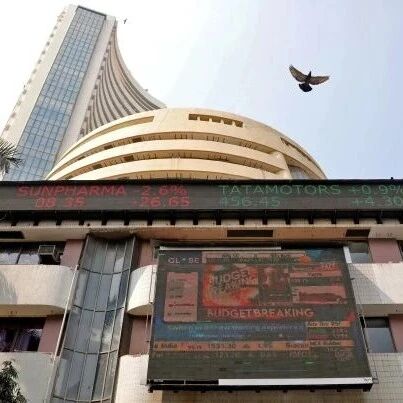
Market Overview - Indian equity markets experienced a volatile session, with the Nifty 50 decreasing by 32.85 points, or 0.13%, to close at 25,169.50, and the BSE Sensex falling by 57.87 points, or 0.07%, to 82,102.10, reflecting cautious investor sentiment amid currency weakness and mixed sectoral performance [1]. Currency Impact - The Indian rupee reached a record low of 88.62 against the U.S. dollar before settling at 88.75, driven by concerns over a recent U.S. visa fee hike and ongoing outflows from foreign institutional investors. A weaker currency raises concerns about import-led inflation but is also seen as beneficial for India's IT and metals exporters in the long term [2]. Top Gainers - Axis Bank led the market gains, increasing by 2.32% to ₹1,170.75. Bajaj Finance followed with a 1.95% rise, closing at ₹1,025.65. Other notable gainers included Maruti Suzuki, which climbed 1.83% to ₹16,097.95, State Bank of India, up 1.81% to ₹870.50, and Kotak Mahindra Bank, which rose 1.31% to ₹2,047.85 [3]. Top Losers - Trent was the biggest loser, declining by 2.34% to ₹4,892.00. Tech Mahindra fell 2.15% to ₹1,471.90. Hindustan Unilever and UltraTech Cement both saw a drop of 1.94%, ending at ₹2,521.55 and ₹12,400.70, respectively. Asian Paints also declined by 1.42% to ₹2,447.50 [4].

美联储降息提振,基金经理看好印度股市
Hua Er Jie Jian Wen· 2025-09-18 05:49
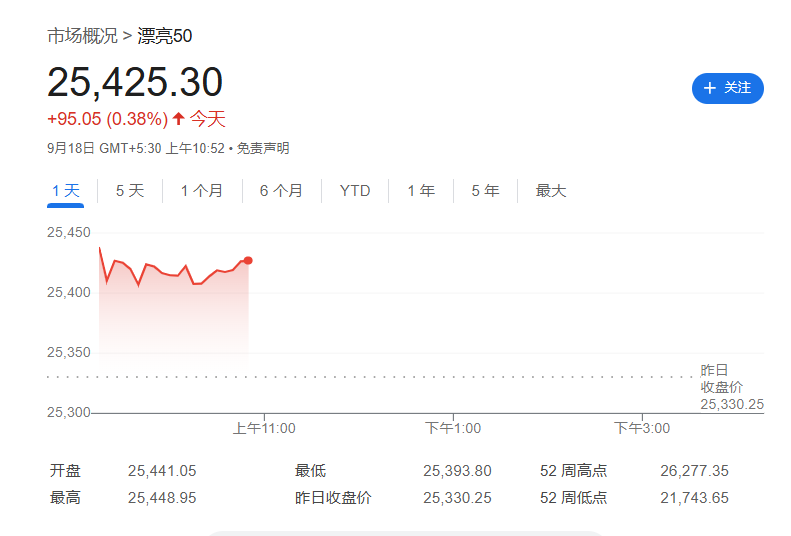
Group 1: Market Sentiment and Trends - The Indian market is experiencing a potential turning point after a prolonged correction, fueled by the recent interest rate cut by the Federal Reserve on September 18, which has sparked optimism in the local stock market [1] - Fund managers' attitudes have significantly reversed, with more Asian equity fund managers now overweighting the Indian market compared to those underweighting it, contrasting sharply with August's sentiment [1] - Despite the improved market sentiment, challenges remain as global fund managers have not yet returned in large numbers after net selling over $4 billion in Indian stocks in August [1] Group 2: Valuation and Economic Factors - HSBC Research suggests that the Indian stock market is undervalued, identifying two potential catalysts: a possible reduction of the current 50% tariffs imposed by the U.S. and the implementation of structural reforms following recent consumer support measures [3] - The report emphasizes that domestic capital inflows alone are insufficient to support the market, highlighting the critical need for foreign investor participation [3] Group 3: Shadow Banking Concerns - In contrast to the optimistic stock market sentiment, India's shadow banking sector is facing challenges, including weak credit demand and rising asset quality risks, particularly in the real estate and auto loan sectors [4] Group 4: Technical Signals and Stock Dynamics - Technical charts are showing positive signals, with the Nifty PSU Bank Index confirming a classic "head and shoulders bottom" reversal pattern, trading at its highest level in over a year, indicating potential further gains [5] - Analysts are adjusting stock ratings, with DAM Capital upgrading Maruti Suzuki to "Buy," while ICICI Securities and BOB Capital Markets have initiated "Buy" ratings for Indiqube Spaces and Tata Steel, respectively [5]
Infosys, Paytm and BSE among key stocks bought and sold by mutual funds in August. Check full list
The Economic Times· 2025-09-15 06:22
Core Insights - Mutual funds have shown significant activity in various segments, with notable additions and reductions across large-cap, mid-cap, and small-cap stocks. Large-Cap Segment - Key additions by mutual funds included Eternal (Rs 7,200 crore), Infosys (Rs 5,000 crore), and HDFC Bank (Rs 3,100 crore) [6] - Major reductions were observed in Maruti Suzuki (Rs 3,100 crore), Avenue Super (Rs 2,900 crore), and NTPC (Rs 2,700 crore) [6] - Consistent additions over three months included State Bank of India, Bajaj Finance, Kotak Mahindra Bank, Axis Bank, and Titan Company, while reductions were seen in Coal India, Grasim Industries, TVS Motor Co, LTIMindtree, and Solar Industries [6] Mid-Cap Segment - Significant additions included Bank Of Maharashtra, Escorts Kubota, Blue Star, Gujarat Fluorochem, and Global Health, while key reductions were in ACC, Exide Industries, KPIT Tech, Metro Brands, and Gland Pharma [4][6] - Notable buying was seen in One 97, L&T Finance, Thermax, Tata Communications, and Coforge, with selling occurring in Exide Industries, Muthoot Finance, HDFC AMC, JK Cements, and LIC Housing Finance [6] Small-Cap Segment - Important additions by mutual funds included Bluestone Jewellery (Rs 4,000 crore), Medi Assist Health (Rs 3,000 crore), and Thirumalai Chem (Rs 2,000 crore) [5] - Key reductions were in Aditya Birla Fashion (Rs 4,000 crore), JK Tyre & Industries (Rs 1,000 crore), and Senco Gold (Rs 1,000 crore) [5] - New entries in the small-cap segment included Thirumalai Chemicals, Suven Life Sciences, PSP Projects, Foseco India, and Epack Durable, while exits included Thomas Cook, Sarda Energy, Faze Three, and Hindware Home Interiors [5] Overall Trends - The total cash and equivalents held by mutual funds decreased from Rs 1.85 lakh crore (5.46%) in July to Rs 1.76 lakh crore (5.23%) in August [6] - Significant buying was noted in Clean Science, Home First Finance, Syrma SGS Tech, Krishna Institute, and KFin Technologies, while the highest selling was in Hitachi Energy, BSE, PNB Housing, and Aditya Birla Fashion [5][6]

GST reforms set to reignite consumption growth, spur corporate profitability
The Economic Times· 2025-09-15 01:00
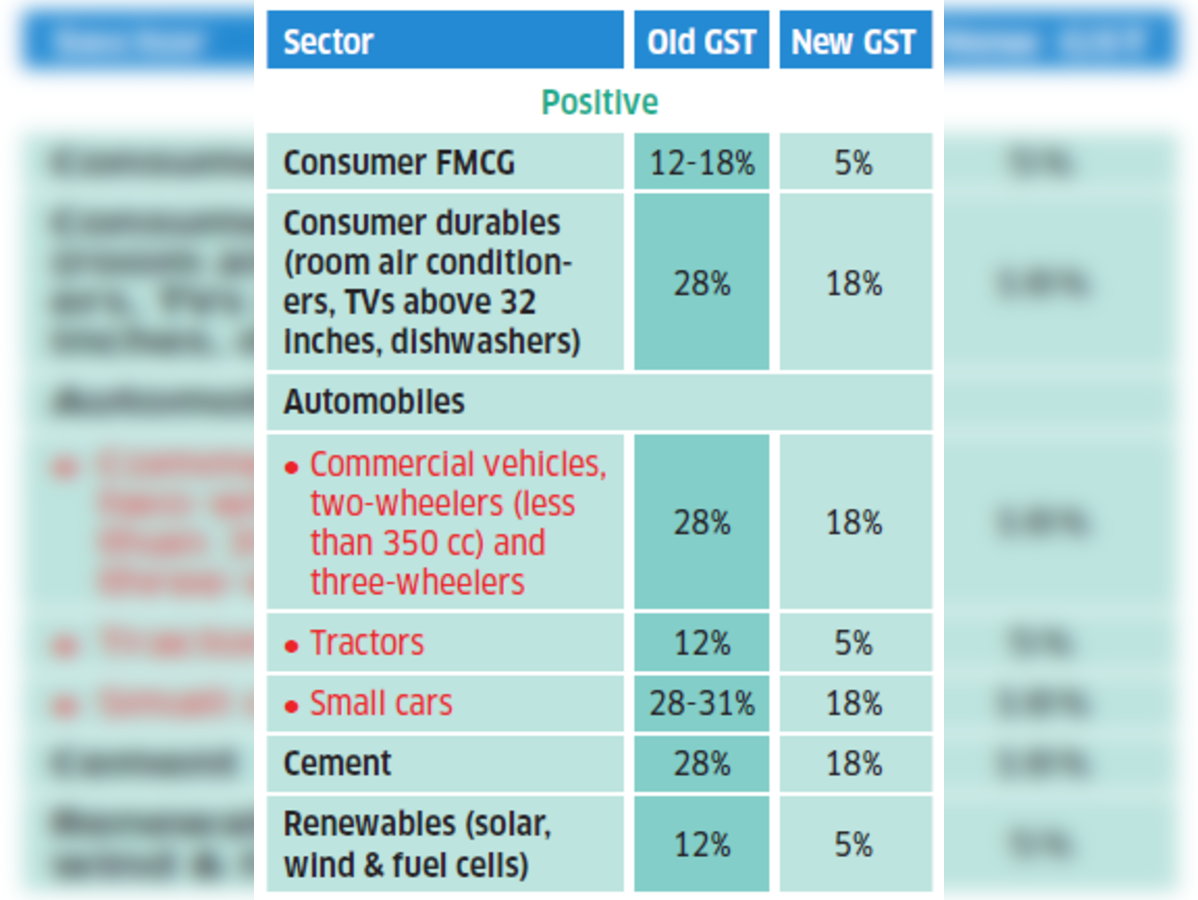
Consumption Sector - The recent GST reforms are expected to boost affordability and consumption across rural and urban markets, with around 90% of items moved from higher to lower tax slabs [1][38] - Experts anticipate a premiumisation effect among low- and middle-income households, as savings on essential goods will redirect purchasing power towards high-value consumption [2][38] - The consumption sector is projected to recover over the next 12-15 months, with private consumption growth expected to rise by 40-50 basis points in the second half of the current financial year [4][41] Corporate Profitability - Lower prices from GST reforms will create volume acceleration for producers, supporting profit margins and leading to an anticipated overall profitability increase of 1-1.5% relative to 2024-25 earnings [5][41] - The reforms are expected to stimulate demand for first-time buyers and replacement purchases, particularly during the festive season, with an industry expectation of a 10-15% improvement in demand for room air conditioners [22][41] Sector-Specific Impacts - Key beneficiaries in the consumer FMCG sector include Britannia Industries, Colgate Palmolive (India), Nestle India, and Emami due to reduced GST on essentials from 12-18% to 5% [11][15][41] - In the consumer durables sector, companies like LG, Daikin, Blue Star, and Dixon Technologies will benefit from reduced GST on room air conditioners and dishwashers from 28% to 18% [18][41] - The automobile sector, including Maruti Suzuki, TVS Motor, Hero MotoCorp, and Bajaj Auto, will see positive impacts from reduced GST rates on commercial vehicles and small cars [23][41] Infrastructure and Housing - The cement industry is expected to benefit from a reduction in GST from 28% to 9%, potentially lowering cement prices by Rs.25-30 per bag, which will support infrastructure and housing sectors [24][41] - Cost-efficient firms like Prism Johnson and Heidelberg Cement are positioned to enhance net realizations and margins over the medium to long term due to these reforms [25][41] Renewable Energy - The renewable energy sector will benefit from a reduction in GST on equipment from 12% to 5%, with key beneficiaries including Tata Power, JSW Energy, and Vikram Solar [26][41] - This reduction is expected to lower capital costs for solar and wind power projects, improving the internal rate of return and supporting government initiatives around renewable energy transition [31][41] Banking and Financial Services - Banks such as HDFC Bank, ICICI Bank, and IDFC First Bank are expected to benefit from increased demand for credit due to a pick-up in consumption and economic activities [32][41] - Non-Banking Financial Companies (NBFCs) focused on retail loans will also benefit from rising demand for consumer durables and vehicles [32][41] Insurance and Textiles - The insurance sector will face mixed impacts, with a reduction in GST on life and health insurance to nil, improving affordability but potentially diluting margins due to loss of input tax credit [33][41] - The textile industry will see a reduction in GST on fabrics and home textiles from 12% to 5%, benefiting companies like Sanathan Textiles and Grasim Industries [30][36][41] Oil and Gas - The oil exploration sector will be adversely impacted by an increase in GST from 12% to 18%, affecting companies like ONGC and Oil India [37][41] - The increase in costs for exploration and production is expected to dent cash flows significantly, with estimates of Rs.2,500-3,000 crore in losses for ONGC [40][41]

铃木豪掷80亿美元押注印度,莫迪站台“Make in India”
Jing Ji Guan Cha Bao· 2025-08-27 02:00
Core Insights - Suzuki plans to invest 700 billion rupees (approximately 8 billion USD) in India over the next five to six years to expand production, launch new models, and enhance electrification efforts [1] - The launch of the e-Vitara electric vehicle marks Suzuki's commitment to the Indian market, positioning it as a global hub for electric vehicle production [1][3] - The Indian government's "Make in India" initiative provides policy support for Suzuki's investment, aiming to transition India from a manufacturing powerhouse to a green manufacturing leader [2] Investment and Production - The investment will focus on expanding production capacity and localizing the supply chain, with a target of achieving about 80% localization in battery production through partnerships with Toshiba and Denso [2] - The Hansalpur factory in Gujarat is set to have an annual production capacity of 1 million units, becoming a key base for Suzuki's electric vehicle supply [1][3] Market Positioning and Competition - The e-Vitara targets the mid-size SUV segment, competing with local and multinational brands such as Tata, Mahindra, and Hyundai [1] - Despite being a leader in the traditional fuel vehicle market, Maruti Suzuki faces challenges in the electric vehicle sector, with Tata holding over 80% of the local EV market share [2] Strategic Implications - Suzuki's investment reflects a strategic shift towards green manufacturing, responding to both local market demands and global electric vehicle industry trends [3] - The company's approach to establishing a low-cost production base in India, combined with political backing, aims to strengthen its position in the competitive electric vehicle landscape [3]
俄乌和谈进程开启,全球股市上涨,印度“一马当先”
Hua Er Jie Jian Wen· 2025-08-18 06:52
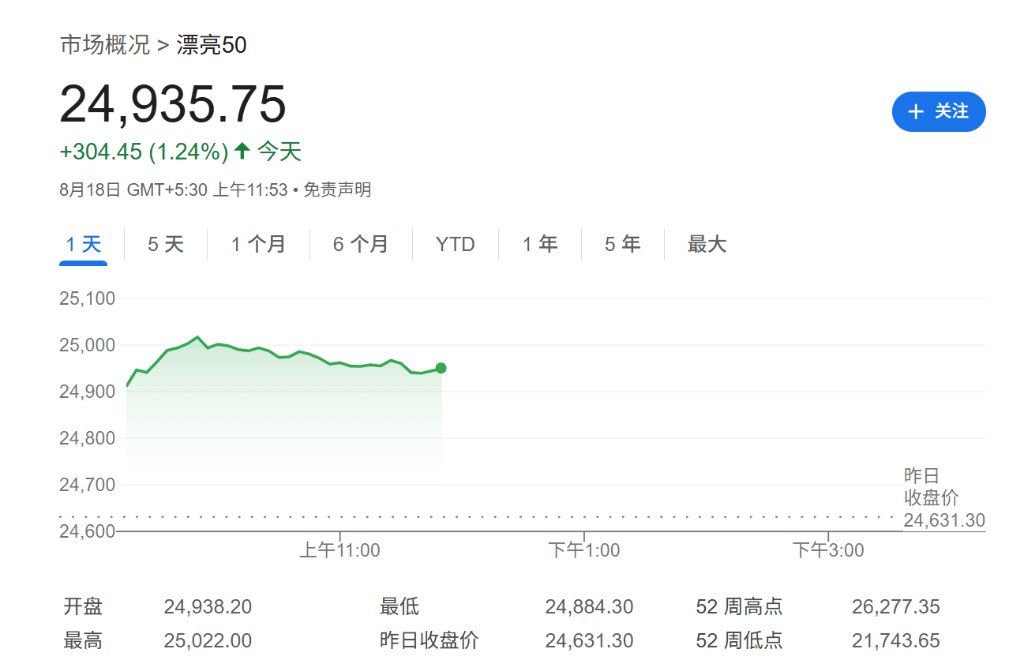
Group 1 - The core point of the news is the positive developments in U.S.-Russia relations, particularly regarding the meeting between Trump and Putin, which has led to increased investor optimism in Asian markets, especially in India [1][5] - The upcoming meeting between Trump and Ukrainian President Zelensky is anticipated to provide further insights into the peace process and market direction [4][5] - The Indian government has proposed a significant reduction in the Goods and Services Tax (GST), which is expected to boost the economy and consumer demand, leading to a notable increase in the Nifty 50 index [1][6][7] Group 2 - The proposed GST reform will simplify the tax structure from four rates to two, benefiting consumers and small businesses, and is expected to have a limited impact on government revenue [6][7] - Analysts predict that the tax cuts will enhance overall demand and improve profit outlooks for various sectors, including daily consumer goods, automobiles, and retail [7] - The positive sentiment in the Indian market is further supported by diplomatic engagements, such as the upcoming visit of Chinese officials, which adds to the growth narrative [7]