Siemens

Search documents
Silicon Motion Named a Clarivate Top 100 Global Innovator 2026
Prnewswire· 2026-01-28 17:16
Core Insights - Silicon Motion Technology Corporation has been recognized as a Top 100 Global Innovator for 2026, highlighting its leadership in NAND flash controller innovation [1][2] - The recognition emphasizes the company's commitment to innovation, particularly in AI storage technologies, and its robust intellectual property strategy [2][3] Company Overview - Silicon Motion is the global leader in supplying NAND flash controllers for solid-state storage devices, shipping more SSD controllers than any other supplier worldwide [7] - The company also leads in providing eMMC and UFS embedded storage controllers for smartphones, IoT products, and automotive applications [7] Innovation Metrics - Clarivate evaluates organizations based on metrics such as patent influence, success, globalization, and technical distinctiveness, with Silicon Motion showing strong performance in patent volume and 'Grant Rate' [2][3] - The Top 100 Global Innovators collectively contribute 16% of the world's highest-strength AI inventions, indicating a significant role in shaping future innovations [3] Market Position - Silicon Motion delivers customized, high-performance solutions for hyperscale data centers, industrial systems, and automotive SSDs, focusing on high performance, low power, and reliability [8] - The company's customer base includes major NAND flash vendors, data center providers, and leading OEMs, relying on its controller technologies for innovative storage solutions [9]




Chip stocks rally after bumper earnings and a report of a game-changing China approval for Nvidia
CNBC· 2026-01-28 11:36
Core Insights - Nvidia's strategic partnership with Siemens aims to develop industrial and physical AI solutions, enhancing AI-driven innovation in industrial workflows [1] - Strong earnings reports from ASML and SK Hynix have positively impacted chip stocks, with Nvidia's shares also experiencing a rise [2][4] - China has approved major domestic tech companies to purchase Nvidia's H200 chips, marking a significant development in Nvidia's market position in China [3] Group 1: Nvidia's Market Position - The approval for ByteDance, Alibaba, and Tencent to buy Nvidia's H200 system is crucial for Nvidia's operations in China, a key market [3] - Earlier this year, the U.S. authorized H200 sales, but China had been encouraging its companies to seek domestic alternatives [3] Group 2: Industry Performance - The VanEck Semiconductor ETF increased by over 3% in premarket trading, reflecting positive sentiment in the semiconductor sector [2] - ASML reported strong fourth-quarter earnings with orders exceeding analyst expectations, and its 2026 sales forecast was also above estimates [2] - SK Hynix shares rose more than 5% after announcing record full-year profits for 2025 [2]


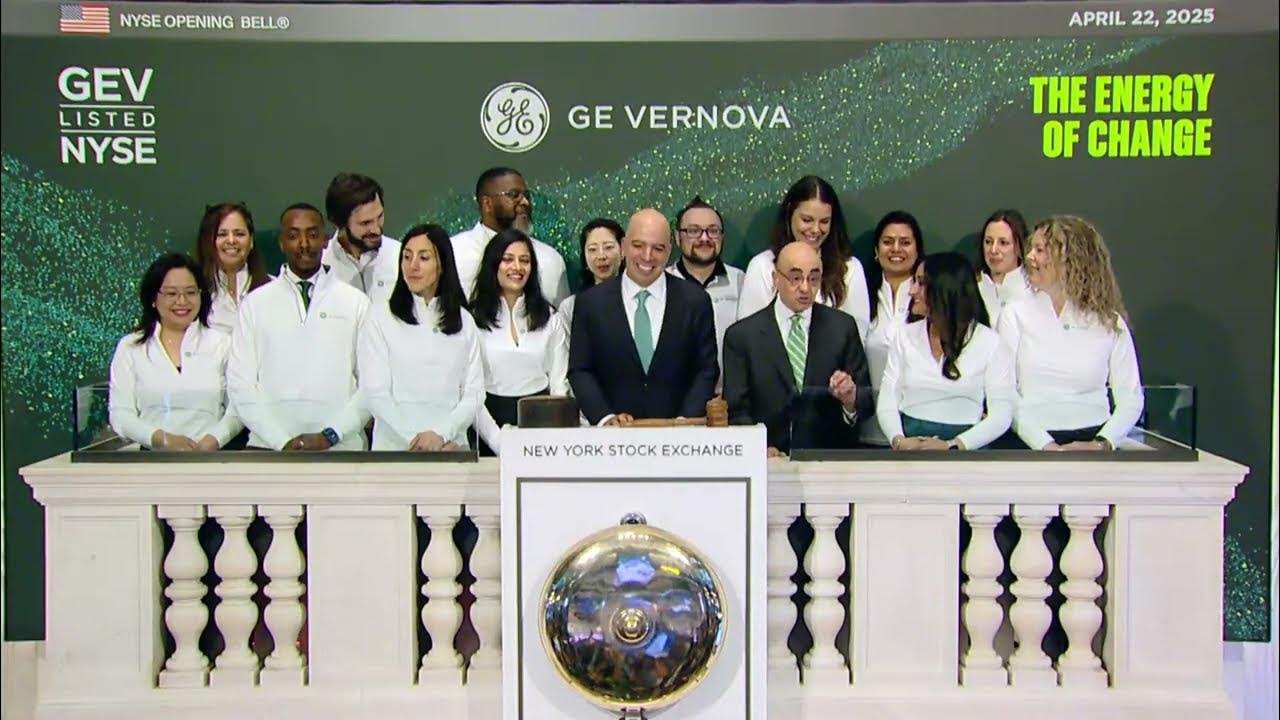
GE Vernova (NYSE:GEV) Quarterly Earnings Preview
Financial Modeling Prep· 2026-01-28 02:00
Core Viewpoint - GE Vernova (NYSE:GEV) is set to release its quarterly earnings on January 28, 2026, with a focus on advanced technology and services in the energy sector, particularly in power generation and renewable energy [1] Earnings Expectations - Wall Street estimates GEV's earnings per share (EPS) to be $3.03, reflecting a significant year-over-year growth of 75.14% [2] - Despite the anticipated EPS growth, GEV's revenue is projected to decline by 4.91% to $10.04 billion due to challenges in the energy sector [3][6] Financial Metrics - GEV has a high price-to-earnings (P/E) ratio of approximately 110.94, indicating a premium valuation by investors [5][6] - The price-to-sales ratio is about 5.01, and the enterprise value to sales ratio is approximately 4.79, reflecting the market's valuation of the company relative to its sales [5] - The current ratio of 1.03 suggests a modest level of short-term financial health [5] Analyst Revisions - Analysts have revised the consensus EPS estimate downward by 3.4% over the past month, which can impact investor reactions to the stock [4]

Snowflake Launches Energy Solutions for the AI Data Cloud to Accelerate Shift to a Lower-Carbon Future
Businesswire· 2026-01-27 14:01
Core Insights - Snowflake has launched new Energy Solutions aimed at unifying IT, OT, and business data to support predictive maintenance, grid optimization, and emissions reduction in the energy sector [1][2] - The solutions are designed to help power, utilities, and oil and gas companies modernize their operations and improve efficiency while moving towards a lower-carbon future [1][2] - Industry leaders such as ExxonMobil, Siemens, and PG&E are already utilizing Snowflake's platform to enhance operational resilience and navigate market volatility [1][2] Company Developments - Snowflake's Energy Solutions integrate governance capabilities, partner-developed solutions, and critical datasets into a single offering tailored for the energy sector [1] - The company has introduced over 30 new partner-built solutions that run natively on the AI Data Cloud, enhancing capabilities in areas like geospatial analysis and grid planning [1][2] - Snowflake's partnership with SAP allows energy companies to combine finance and supply chain data with operational data, improving insights for grid operations and asset planning [1] Industry Impact - The new solutions support critical energy use cases such as grid planning, asset health, and operational forecasting, indicating strong momentum in the energy sector [1][2] - Snowflake's platform enables energy companies to unify data and apply AI across various operations, leading to faster decision-making and improved sustainability outcomes [1][2] - The integration of advanced analytics and AI capabilities is seen as essential for energy companies to manage decentralized assets and optimize energy production [2]


Financial Neutrality in 2026: Why Crypto Is No Longer Optional
Yahoo Finance· 2026-01-26 13:58
Individual Level - Ordinary households are using crypto-exchanges as a "financial VPN" to move money and protect savings from unpredictable political actions [1] - Cryptocurrency has become a practical infrastructure for families to maintain purchasing power amid economic instability and hyperinflation [36][39] - In countries like Venezuela and Iran, crypto serves as a lifeline for families facing financial turmoil, allowing them to bypass local economic failures [38][39] Corporate Level - Corporations in developed markets are increasingly adopting cryptocurrency to bypass traditional banking systems and enhance financial resilience [26] - Retail businesses are experiencing higher conversion rates and average order values through crypto transactions, with significant growth in luxury sectors [27][28] - Companies like Sony Honda are integrating blockchain technology into their products, creating decentralized ecosystems that enhance user experience and financial independence [30][32] Sovereign Level - Nations are rethinking financial security in light of "strategic instability," where traditional financial systems are weaponized for geopolitical control [2][7] - Venezuela's economic isolation serves as a case study for how dependence on foreign-controlled infrastructure undermines national resilience [11][13] - Iran has developed a parallel financial system using cryptocurrency to support imports and trade, demonstrating a more systemic integration compared to Venezuela [21][24] Financial Neutrality - The concept of "financial neutrality" is emerging, allowing states, corporations, and individuals to store and transfer value independently of politically controlled financial infrastructure [5] - The rise of financial neutrality marks a shift towards viewing digital assets as strategic hedges against asset freezes and sanctions [19] - The ability to transact freely is increasingly recognized as a fundamental human right, essential for financial autonomy and freedom [40][42]
Financial Neutrality in 2026: Why Crypto Is No Longer Optional
Yahoo Finance· 2026-01-26 13:58
Individual Level - Ordinary households are using crypto-exchanges as a "financial VPN" to move money and protect savings from unpredictable political actions [1] - Cryptocurrency has become a practical infrastructure for families to maintain purchasing power amid economic instability and hyperinflation [36][39] - In countries like Venezuela and Iran, crypto serves as a lifeline for families facing financial turmoil, allowing them to bypass local economic failures [38][39] Corporate Level - Corporations in developed markets are increasingly adopting cryptocurrency to bypass traditional banking systems and enhance financial resilience [26] - Retail businesses are experiencing higher conversion rates and average order values through crypto transactions, with significant growth in sectors like luxury fashion and electronics [27][28] - Companies like Sony Honda are integrating blockchain technology into their products, creating decentralized ecosystems that enhance user experience and financial independence [30][32] Sovereign Level - Nations are rethinking financial security in light of "strategic instability," with a focus on maintaining operational continuity through alternative financial systems [2] - The U.S. dollar and SWIFT network are being used as tools of geopolitical control, prompting countries to seek financial neutrality [7] - Venezuela's economic isolation serves as a case study for how dependence on foreign-controlled infrastructure can undermine national resilience [11][13] Financial Neutrality - The concept of "financial neutrality" is emerging, allowing states, corporations, and individuals to store and transfer value independently of politically controlled financial systems [5] - Digital assets are increasingly viewed as strategic hedges against asset freezes and sanctions, with countries like El Salvador leading the way in integrating Bitcoin into national reserves [20][19] - Iran's use of cryptocurrency has become integral to its economic operations, contrasting with Venezuela's more superficial adoption of blockchain technology [21][25]


2026年全球医疗健康行业私募股权报告(英文版)
Sou Hu Cai Jing· 2026-01-25 02:40
Core Insights - The global healthcare private equity market is experiencing a significant recovery and record growth, with total deal value expected to exceed $191 billion in 2025, marking a historical high [11][12][16] - The market shows clear regional differentiation, with Europe leading in biopharma and healthcare services, North America maintaining stability despite policy impacts, and Asia-Pacific demonstrating broad growth resilience [11][25][27] Market Performance - In 2025, healthcare private equity saw a record performance with disclosed deal value surpassing $191 billion and 445 buyouts, making it the second-highest annual total on record [11][12] - The exit value surged from $54 billion in 2024 to an expected $156 billion in 2025, driven by an increase in large deals [15][16] Regional Analysis - Europe experienced a doubling of deal value to approximately $59 billion, primarily driven by biopharma and healthcare provider deals [25] - North America faced a temporary pullback in the second quarter but still achieved a healthy year with an expected exit activity of $90 billion, significantly higher than 2024 [26] - Asia-Pacific set a record for deal value, exceeding 2021's high by over 30%, with notable growth in biopharma, medtech, and healthcare IT [27][28] Sector Trends - Biopharma remains a cornerstone of investment, with deal value rising from $55 billion in 2024 to an estimated $80 billion in 2025, accounting for about 30% of overall deal volume [33] - Provider and related services deal value increased by 57% to an estimated $62 billion, driven by technology-enabled assets and healthcare IT [38] - Medtech is emerging as a new growth engine, with investors focusing on revenue growth and margin expansion [39] Investment Strategies - The investment logic in healthcare IT is shifting towards revenue and profit expansion through refined pricing and generative AI applications, with the "60 rule" becoming a new performance benchmark [3] - Investors are adopting a "barbell strategy" in pharma services, focusing on high-quality assets with scale advantages and potential operational improvements [3]

Nvidia CEO Jensen Huang Could Owe $8B Under California's 5% Billionaire Tax — But Says 'I Haven't Thought About It Even Once'
Yahoo Finance· 2026-01-23 16:46
Core Insights - A proposed wealth tax in California could lead billionaires to reconsider their residency and companies to rethink their operational locations [1][2] - Nvidia CEO Jensen Huang stated he has not considered the tax, despite its potential cost of nearly $8 billion, emphasizing the importance of Silicon Valley's talent pool [1] - The "2026 Billionaire Tax Act" proposes a one-time 5% tax on California residents with net worths above $1 billion, potentially affecting around 200 billionaires and generating significant revenue [2] Talent and Location Decisions - Venture capitalist Peter Thiel is contemplating spending more time outside California and possibly opening an office elsewhere [3] - Google co-founder Larry Page is also considering leaving California by the end of the year, according to sources [3] - Nvidia executives, including CFO Colette Kress and EVP Jay Puri, would be impacted by the tax, as they recently crossed the $1 billion net worth threshold due to stock performance [4] Industrial AI and Manufacturing Context - Siemens CEO Roland Busch highlighted that AI is already being integrated into manufacturing processes, utilizing digital twins and simulation tools for system design and testing [5]
Are You Looking for a Top Momentum Pick? Why Siemens AG (SIEGY) is a Great Choice
ZACKS· 2026-01-22 18:00
Core Viewpoint - Momentum investing focuses on following a stock's recent price trends, aiming to buy high and sell higher, with the expectation that established trends will continue [1] Company Overview: Siemens AG (SIEGY) - Siemens AG currently holds a Momentum Style Score of B and a Zacks Rank of 2 (Buy), indicating a favorable outlook for the stock [3][4] - The stock has shown a price increase of 5.26% over the past quarter and 39.2% over the last year, significantly outperforming the S&P 500, which increased by 2.42% and 14.97% respectively during the same periods [7] Price Performance - Over the past week, SIEGY shares rose by 2.26%, while the Zacks Industrial Services industry saw a 1.79% increase [6] - The monthly price change for SIEGY is 6.62%, compared to the industry's performance of 6.01% [6] Trading Volume - The average 20-day trading volume for SIEGY is 142,635 shares, which serves as a baseline for assessing price movements [8] Earnings Outlook - In the last two months, three earnings estimates for SIEGY have been revised upwards, with no downward revisions, leading to an increase in the consensus estimate from $6.36 to $6.43 [10] - For the next fiscal year, two estimates have also moved upwards without any downward revisions [10] Conclusion - Given the positive momentum indicators and earnings outlook, Siemens AG is positioned as a strong buy candidate for investors seeking short-term opportunities [12]


Nvidia's Jensen Huang says AI robotics is a 'once-in-a-generation' opportunity for Europe
CNBC· 2026-01-21 13:05
Core Insights - Nvidia's CEO Jensen Huang emphasized that AI robotics represents a "once-in-a-generation" opportunity for Europe, leveraging its strong industrial manufacturing base [1] - Huang noted that this opportunity allows Europe to "leap past" the software era dominated by the U.S. [2] Rise of AI Robotics - There is a growing focus on autonomous robotics within the industrial and tech sectors, driven by advancements in AI [3] - Major European companies like Siemens, Mercedes-Benz Group, Volvo, and Schaeffler have initiated robotics projects and partnerships in the past year [3] - Big Tech firms are also heavily investing in robotics, with Tesla's CEO stating that 80% of the company's value will derive from its Optimus humanoid robots, and Nvidia forming partnerships with Alphabet for physical AI [4] Energy Supply Concerns - To capitalize on AI opportunities, Europe must improve its energy supply to support necessary infrastructure investments [5][8] - High energy costs in Europe are a significant challenge, as highlighted by Microsoft’s CEO, who stated that energy costs will influence the success of countries in the AI race [5] - Huang pointed out that Europe is facing limited energy access while hyperscalers aim to deploy AI infrastructure [8] Infrastructure Buildout - Huang described the current AI infrastructure development as the "largest infrastructure buildout in human history," with hundreds of billions already invested and trillions needed for future expansion [9]