
Spotify Technology S.A.

Search documents
云红利倒计时启动 SAP(SAP.US)万亿市值迎战AI生死局
智通财经网· 2025-09-24 07:09
Core Insights - SAP is facing a critical transformation phase under CEO Christian Klein, who previously led a successful cloud transition but now must pivot towards AI applications as the cloud growth benefits are set to diminish by 2027 [1][2][3] - The company is experiencing customer dissatisfaction due to high cloud transition costs and a loss of market share in several new products outside its core business [2][4] - SAP's future growth hinges on convincing existing customers to adopt new AI products, but many are still struggling with the complexities and costs of cloud migration [4][5] Company Challenges - SAP's cloud business revenue is projected to reach nearly €22 billion (approximately $26 billion) this year, nearly doubling since 2019, but the company faces significant challenges ahead [2][4] - Internal concerns exist regarding SAP's ability to effectively promote new AI products, with some executives doubting the company's strategy [2][4][7] - Approximately 60% of customers have yet to initiate their cloud migration, with large enterprises facing multi-year, multi-million dollar transitions [4][5] Customer Sentiment - Many customers are still grappling with the previous cloud transformation, finding the upgrade process expensive and complex [3][5] - Some clients express frustration with SAP's AI products, indicating a need for more proactive support and clearer value propositions [3][6] - There is a growing trend among customers to diversify their software providers to reduce dependency on SAP, despite retaining core SAP products [6][7] Market Position - SAP's market position is critical for the European tech industry, being the only company in the DAX30 index with a market cap exceeding €200 billion, significantly outpacing its closest competitor Siemens [2] - Analysts predict that while SAP's cloud and software sales will continue to grow in the coming years, the growth rate will slow post-2027, necessitating a shift in strategy to maintain momentum [4][8] AI Integration Efforts - SAP aims to integrate AI across all its products, but many customers are still adjusting to the previous cloud changes, complicating the adoption of new AI solutions [3][8] - The company has launched 240 generative AI use cases, with plans to expand to 400 by the end of 2025, indicating a commitment to innovation despite current challenges [8][9] - Analysts note that the application of AI in enterprises is still in its early stages, with many companies preferring AI platforms from cloud service providers like Microsoft and Amazon [9]

The AI Threat to Europes Most Valuable Software Company
MINT· 2025-09-24 04:21
Core Insights - SAP's CEO Christian Klein has successfully transitioned the company towards cloud services, making it the most valuable software company in Europe, but faces challenges as cloud sales are expected to decline after 2027 [3][5][10] Group 1: Company Performance and Strategy - SAP's cloud sales are projected to reach nearly €22 billion ($26 billion) this year, nearly triple the levels of 2019 [5] - The company has invested approximately $30 billion in acquisitions to catch up in the cloud market, but integration has been challenging [13] - SAP's market cap has surpassed that of its US rival Salesforce, highlighting its dominance in the European software market [6][10] Group 2: Future Challenges - The surge in cloud sales is expected to decline after 2027, as SAP will begin to roll back support for older software, necessitating a shift to new services [4][15] - Analysts predict that while cloud and software sales will continue to grow for the next few years, growth rates will slow after 2027, with an average outlook of above 10% through 2030 [15] - Approximately 60% of SAP's customers have not yet begun their cloud transition, indicating a significant challenge in customer migration [16] Group 3: Customer Sentiment and Market Position - Many customers express frustration with the complexity and cost of cloud upgrades, which can take years and millions of dollars [8][16] - SAP is reportedly losing market share in newer product categories outside its core business, with competitors like Microsoft gaining ground [24][25] - Customers are increasingly adopting a "best of breed" approach, selecting applications from multiple providers rather than relying solely on SAP [19][22] Group 4: AI Integration and Future Growth - SAP is targeting artificial intelligence as a key area for future growth, but faces competition from major tech companies [4][31] - Only 34,000 out of SAP's 400,000 customers are currently using its AI products, indicating a need for improved customer engagement and education [29] - Analysts note a lack of interest from customers in investing in SAP's AI solutions, attributed to complex licensing and unclear benefits [31][33]


Tesla Stock Has Soared 27% This Month. Here's Why This Analyst Sees Shares Hitting Record Highs
Investors· 2025-09-23 20:15
Group 1 - The weight-loss industry is valued at $186 billion, indicating significant market potential and growth opportunities [1] - Tesla's stock is trading near its highest level since January, with an analyst raising the price target to $500, suggesting a 17% upside [1] - CEO Elon Musk was seen speaking with President Donald Trump, which may have implications for Tesla's business and market perception [1] Group 2 - Nvidia, Tesla, and Apple are highlighted as major winners in the stock market, reflecting strong performance ahead of key inflation data [2] - The stock market is experiencing rallies to new highs, influenced by Fed rate cuts and positive news surrounding Nvidia and Tesla [4] - Tesla's 'Robotaxis' service has been cleared to expand to Arizona, indicating growth in its autonomous vehicle segment [4]

AI颠覆文娱?互联网大平台率先受益,“体验式”、“体育”资产价值凸显
智通财经网· 2025-09-22 22:58
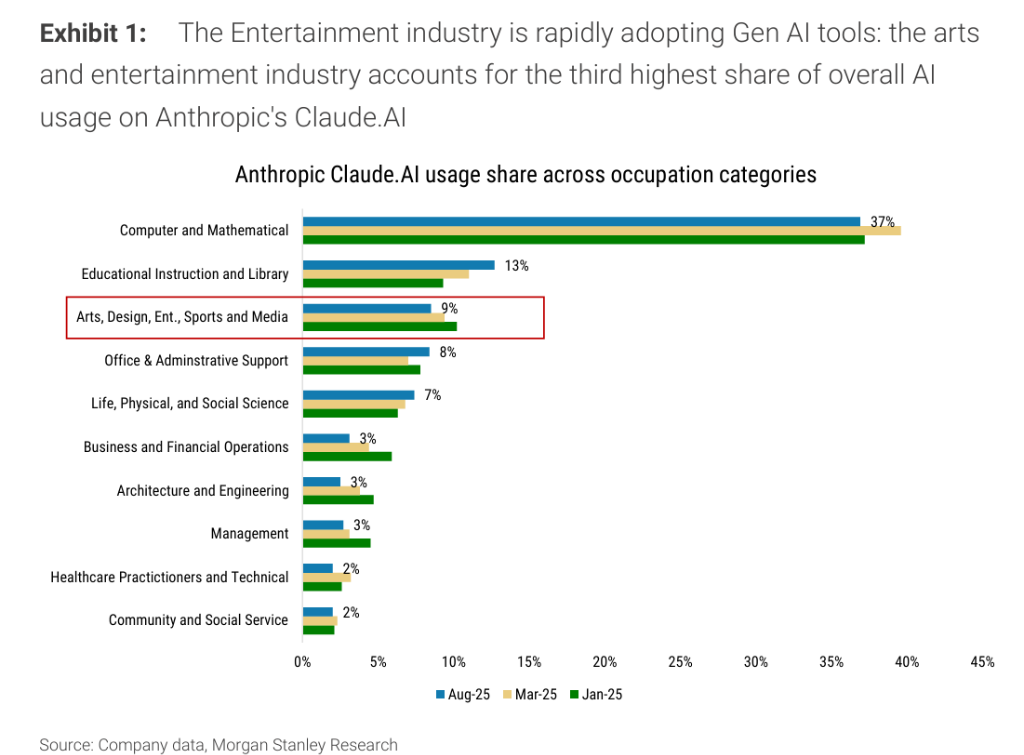
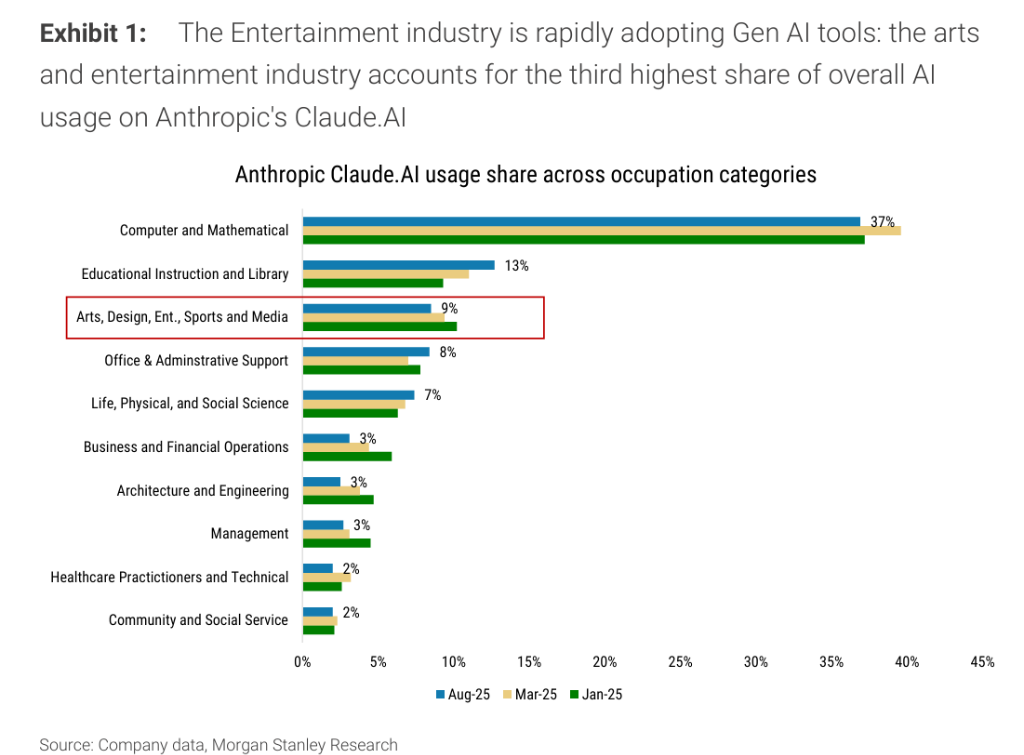
Group 1 - The penetration of generative AI in the entertainment and media industry is accelerating, indicating a current reality rather than a distant future [1] - Major tech and media companies like Netflix, Spotify, Meta, and Google are showcasing clear growth prospects through AI-driven personalized recommendations, content cost optimization, and improved advertising monetization efficiency [1] - The application of AI in content creation is deepening, exemplified by projects like OpenAI-supported animated film "Critterz" and Netflix's use of AI to reduce visual effects costs [1] Group 2 - Companies with unique, irreplaceable experiential assets, such as theme parks and live entertainment (e.g., Disney, Live Nation), and those with top-tier sports event rights (e.g., F1 owner FWONK, UFC parent TKO) are becoming more attractive [4] - Traditional media companies face dual challenges: protecting their intellectual property (IP) from AI-related infringement risks and leveraging AI to enhance content creation efficiency and global distribution capabilities [4] Group 3 - Generative AI is fundamentally changing the cost structure and production models in content creation, with large media companies expected to reduce overall program production costs by about 10%, and original script content production costs potentially improving by 10-30% [5] - AMC Networks has partnered with AI company Runway to achieve "incremental production savings," while Netflix has utilized AI technology for special effects in its Argentine series "El Eternaut" [5] Group 4 - The first AI-produced animated feature film "Critterz" has a target budget of under $30 million and a production cycle of just 9 months, significantly lower than traditional animated films [7] - AI tools like ElevenLabs' Eleven Music can generate complete songs from text, leading to a surge in content volume, with Spotify surpassing 100 million tracks [7] - However, music platform Deezer reports that nearly 30% of new tracks are entirely AI-generated, with 70% of plays deemed fraudulent for royalty exploitation [7] Group 5 - In an era of abundant digital content due to AI, experiential and sports assets are becoming increasingly valuable [9] - As AI provides more customized digital experiences, the demand for shared, live public experiences is expected to rise, benefiting companies with unique experiential assets like Disney and Live Nation [10] - The value of global top-tier sports event IP is anticipated to increase due to its scarcity, live nature, and unpredictability, creating favorable conditions for global sports asset holders like Formula 1 and TKO Group Holdings [10] Group 6 - Despite the potential of AI technology, copyright disputes and labor relations tensions are critical challenges that must be addressed for broader application in the entertainment industry [11] - Protecting IP is a top priority for traditional media companies, as evidenced by lawsuits from Warner Bros, Disney, and Universal against AI company Midjourney for unauthorized use of classic IP characters [11] - Netflix has released its first "AI Usage Guidelines" for production partners, requiring disclosure of AI use in content creation and strict legal and ethical reviews [11]




AI颠覆文娱?大摩:互联网大平台率先受益,“体验式”、“体育”资产价值凸显
美股IPO· 2025-09-22 22:31
Core Insights - Large media companies are leveraging AI to optimize content recommendations, reduce production costs, and enhance advertising efficiency, with an expected reduction of approximately 10% in program production expenses [1][2] - Unique, irreplaceable experiential assets such as theme parks and live entertainment, as well as scarce top-tier sports event rights, are becoming increasingly valuable in this context [1][4] Group 1: AI Impact on Content Creation - The penetration of generative AI in the entertainment and media industry is accelerating, indicating a current reality rather than a distant future [5] - AI is fundamentally changing the cost structure and production models in content creation, with large media companies expected to reduce overall program production costs by about 10%, and original script content costs potentially improving by 10-30% [7] - Examples include AMC Networks collaborating with AI company Runway to achieve "incremental production savings" and Netflix utilizing AI for special effects in its Argentine series "El Eternaut" [7][8] Group 2: Content Innovation and Challenges - The first AI-produced animated feature film, "Critterz," has a budget of under $30 million and a production cycle of just nine months, significantly lower than traditional animated films [10] - In the music sector, AI tools like ElevenLabs' Eleven Music can generate complete songs from text, leading to a surge in content on platforms like Spotify, which now has over 100 million tracks [10] - However, this has raised concerns, with reports indicating that nearly 30% of new tracks on Deezer are entirely AI-generated, and 70% of plays are suspected to be fraudulent [10] Group 3: Value of Experiential Assets - The value of live "experiential" assets and global "sports" assets is becoming more pronounced as AI provides increasingly customized digital experiences [12] - Companies owning unique experiential assets, such as Disney and Live Nation, are likely to benefit from this trend, as the demand for real-world shared experiences increases [12] - The scarcity and unpredictability of top-tier sports event IPs are enhancing their value in the "attention economy," benefiting global sports asset holders like Formula One and UFC [12] Group 4: Copyright and Labor Relations - Despite the potential of AI, copyright disputes and labor relations tensions are critical challenges that must be addressed for widespread application in the entertainment industry [13] - Protecting intellectual property (IP) is a top priority for traditional media companies, as evidenced by lawsuits from Warner Bros., Disney, and Universal against AI company Midjourney for unauthorized use of classic IP characters [13] - The impact of AI on creative roles is becoming a focal point in labor negotiations, particularly in light of the 2023 Hollywood strike and upcoming contract discussions in 2026 [13]


Stock Market Today: Dow Up As Nvidia Pops; EV Play Skids On Warren Buffett Move (Live Coverage)
Investors· 2025-09-22 20:18
Group 1 - Futures for the Dow Jones Industrial Average and other major stock indexes traded lower, with the Dow down 0.4% ahead of the opening bell [1] - Tesla stock advanced nearly 8% last week and received a price target hike, indicating a further 17% upside potential [2][1] - Tesla's stock has soared 28% this month, contributing to its strong performance in the market [2][1] Group 2 - Tesla's 'Robotaxis' service has been cleared to expand into Arizona, indicating growth in its service offerings [4] - The stock market is experiencing rallies to new highs, influenced by factors such as Fed rate cuts and news related to Nvidia [4] - Micron's stock has risen significantly ahead of earnings, driven by booming demand in the AI sector [4]
AI颠覆文娱?互联网大平台率先受益,“体验式”、“体育”资产价值凸显
Hua Er Jie Jian Wen· 2025-09-22 12:50
Core Insights - The penetration of generative AI in the entertainment and media industry is accelerating, presenting clear growth prospects for major tech and media companies like Netflix, Spotify, Meta, and Google through AI-driven personalization, content cost optimization, and advertising efficiency improvements [1] - Companies with unique, irreplaceable experiential assets, such as theme parks and live entertainment (e.g., Disney, Live Nation), and those owning top-tier sports event rights (e.g., F1, UFC) are becoming more attractive in this evolving landscape [4][10] Group 1: Cost Efficiency and Production Innovation - Generative AI is fundamentally changing the cost structure and production models in content creation, with large media companies expected to reduce overall production costs by approximately 10%, and original script content costs potentially improving by 10-30% [5] - Specific examples include AMC Networks collaborating with AI company Runway for production savings and Netflix utilizing AI for special effects in low-budget series [5][7] Group 2: Content Creation and Market Dynamics - The first AI-produced animated feature, "Critterz," has a budget of under $30 million and a production timeline of just nine months, significantly shorter and cheaper than traditional animated films [7] - In the music sector, AI tools are generating complete songs from text, leading to a surge in content on platforms like Spotify, which now hosts over 100 million tracks, with nearly 30% of new tracks on Deezer being entirely AI-generated [7] Group 3: Value of Experiential and Sports Assets - The value of experiential assets and global sports properties is increasing as AI enriches digital content, making unique real-world experiences more desirable [9][10] - The demand for shared public experiences is expected to rise, benefiting companies with unique experiential assets like Disney and Live Nation, while top-tier sports IPs will gain further value due to their scarcity and unpredictability in the attention economy [10] Group 4: Copyright and Labor Relations Challenges - Copyright disputes and labor relations tensions are critical issues that must be addressed for the widespread application of AI in the entertainment industry [11] - Major media companies are prioritizing the protection of intellectual property, as evidenced by lawsuits against AI companies for unauthorized use of classic IP characters [11] - The impact of AI on creative roles is becoming a focal point in labor negotiations, particularly in light of the recent Hollywood strikes and upcoming contract discussions [11]
The Music Global Industry ETF & the Battle to Reform Concert Tickets
Youtube· 2025-09-21 15:01
Industry Overview - The music industry has shown significant growth, with a 26.5% increase in the music global industry ETF this year, outperforming major indices [13][15] - Global music revenues are projected to reach $200 billion by 2035, with paid streaming subscribers expected to double from 800 million to 1.6 billion [16] Ticketing Concerns - Ticketmaster and Live Nation face allegations of unfair practices, with the FTC suing Ticketmaster for violations of the Bots Act, potentially leading to penalties of around $53,000 per infraction [5][6] - The issue of ticket affordability is highlighted, with examples such as Taylor Swift's tickets selling for $24 at face value but reaching up to $2,000 in the secondary market [4][10] Streaming and Content - Streaming services like Spotify are becoming increasingly prioritized as consumers seek affordable entertainment options, with Spotify's stock rising 100% over the last 12 months [15][21] - Music is considered undervalued and undermonetized, with a significant demand for streaming services, which are growing at rates of 10-15% in the U.S. and up to 50% in some markets [21][22] AI Impact - The music industry is currently facing challenges related to AI, with two bills in Congress addressing copyright issues and the use of AI to replicate artists' voices [25][26] - While AI poses some risks, it also presents opportunities for creating new music, with the potential for significant benefits if managed with consent and proper compensation [29][30]

Stock Market Week Ahead: Get Ready For Buy Points And Econ Data
Investors· 2025-09-19 20:58
Market Overview - The Nasdaq and S&P 500 have experienced a third consecutive weekly advance, with the Nasdaq up more than 5% for September and on track for its sixth consecutive monthly gain, while the S&P 500 has added 3% for the month, aiming for a fifth straight up month [1][2]. Company Earnings and Performance - Micron Technology is set to report its fiscal fourth-quarter results, with analysts predicting an adjusted earnings per share (EPS) of $2.79, a 136% increase year-over-year, and sales expected to rise 44% to $11.13 billion. For the fiscal first quarter, earnings are projected at $3.01 per share, up 68%, with sales of $11.84 billion, a 36% increase [5][6]. - The stock of Micron has surged 37% in September, reaching a record high, and has a year-to-date gain of 94%, driven by strong demand for high-bandwidth memory products for AI applications [5][10]. Economic Indicators - The core PCE price index, a key inflation gauge, is expected to show a modest increase of 0.22%, raising the 12-month core inflation rate to 3% from 2.9%. Personal consumption expenditures are anticipated to rise by 0.4%, while personal income is expected to grow by 0.3% [4][5]. Stocks to Watch - Notable stocks near buy points include Spotify, Millrose Properties, Vistra, Nvidia, and Howmet Aerospace, with Spotify and Howmet already showing early entries. Vistra has gained 52% this year and is testing a buy point, while Nvidia has increased by 31% since January amid geopolitical tensions [3][6].

S&P 500, Nasdaq Rally To More Record Highs; Palantir, Spotify Hit Early Buy Points
Investors· 2025-09-18 22:01
Group 1 - Major stock indexes, including the Dow Jones Industrial Average, S&P 500, and Nasdaq composite, reached record highs, driven by the Federal Reserve's first interest-rate cut of the year and expectations for further cuts in October and December [1][2] - The Dow finished the day up 0.3%, equivalent to a gain of 124 points, indicating positive market sentiment [1] - Notable companies such as Palantir and Spotify are highlighted as leading stocks in the current market environment, with Palantir's software purchases potentially increasing due to external factors [4]
