赛诺菲

Search documents
直通进博会| 进博会新风向:创新药械加速落地 医药险融合成焦点
Xin Hua Cai Jing· 2025-11-08 11:57
Core Insights - The China International Import Expo (CIIE) serves as a significant platform for high-level opening-up, showcasing cutting-edge medical innovations from top global healthcare companies, with a focus on the integration of medical insurance and pharmaceutical industries [1][4][8] Group 1: Innovation in Pharmaceuticals and Medical Devices - The CIIE has accelerated the entry of innovative drugs and medical devices into the Chinese market, with 43 innovative drugs and 45 innovative medical devices approved in the first half of the year, representing year-on-year increases of 59% and 87% respectively [2] - Sanofi's product "Dupixent" exemplifies the CIIE's impact, having transitioned from debut to market approval and inclusion in the national medical insurance directory [2] - Merck showcased around 30 approved drugs and vaccines at the CIIE, including several innovative drugs making their debut in China [2][3] Group 2: Medical Insurance Integration - The integration of commercial health insurance (商保) into the medical payment system is evolving, with the National Medical Insurance Administration introducing a commercial insurance innovative drug directory [4] - The shift towards a multi-channel payment system is crucial for meeting the growing medical needs as innovative drugs proliferate [4][7] - The health insurance market is entering a new development phase, with a focus on group health insurance as a potential growth area, currently accounting for 15% to 20% of the market compared to over 50% in overseas markets [7] Group 3: Future Prospects and Challenges - Despite progress in multi-channel payment mechanisms, challenges remain, with the innovative drug market projected to reach 162 billion yuan in 2024, and commercial insurance expected to cover only 12.4 billion yuan, or 7.7% of the market [7] - The CIIE has witnessed the participation of China Pacific Insurance for the first time, highlighting the trend of integrating medical insurance with pharmaceutical innovations [7] - The development of group health insurance is seen as a key opportunity, with initiatives underway to enhance coverage for employees' out-of-pocket medical expenses [7][8]
强供应链能力与专业医疗服务资源抢眼,京东健康成进博会“香饽饽”
2 1 Shi Ji Jing Ji Bao Dao· 2025-11-08 11:23
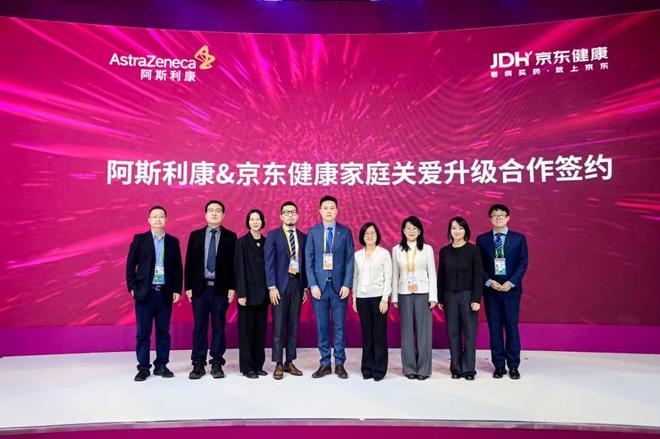
Core Insights - The eighth China International Import Expo (CIIE) showcased significant developments in the pharmaceutical and health sectors, with JD Health forming strategic partnerships with various international brands to enhance health management services [1][3][4] Group 1: Strategic Collaborations - JD Health has established or deepened collaborations with major pharmaceutical and healthcare brands such as Eli Lilly, Novo Nordisk, Bayer, and AstraZeneca, focusing on chronic disease management and women's health [1] - The company has successfully launched new products on its platform, including innovative drugs and nutritional supplements, leveraging its extensive user base and data analytics capabilities to enhance market reach [3][4] Group 2: Supply Chain and Digital Capabilities - JD Health's "super pharmaceutical supply chain" supports efficient distribution and quality assurance of imported products, while also providing professional medical consultations through online and offline channels [1] - The rapid launch of new drugs, such as the targeted therapy for lung cancer, demonstrates JD Health's robust supply chain and digital capabilities, allowing for quick market entry and patient access [3] Group 3: Chronic Disease Management - Chronic diseases pose a significant health threat in China, with over 80% of deaths attributed to major chronic conditions, prompting a national strategy for chronic disease management [6] - JD Health's collaboration with AstraZeneca focuses on managing chronic diseases, providing patients with accessible home health management solutions [6][7] Group 4: AI and Technology Integration - The integration of AI technology in chronic disease management is a key focus, with JD Health collaborating with companies like Omron and Abbott to enhance health data connectivity and create a comprehensive smart health management ecosystem [8] - JD Health has developed various AI-driven services, including virtual doctors and nutritionists, to support patient care and health monitoring [7][8] Group 5: Ecosystem Development - The CIIE has evolved into a hub for global health ecosystem collaboration, with JD Health facilitating a shift from product-focused interactions to comprehensive value chain partnerships [10][11] - By offering a unified platform for pharmaceutical companies, JD Health reduces the complexity and costs associated with market entry, enabling efficient access to both online and offline markets [11]

第八届进博会丨进博“加速度” “进博宝宝”从展品变商品推动1型糖尿病防治迈向“生态共建”
Xin Hua Wang· 2025-11-08 05:23
Core Viewpoint - Sanofi's Teriparatide has transitioned from an exhibit to a commercial product, marking a significant advancement in the treatment of Type 1 diabetes in China, with its official approval by the National Medical Products Administration in September [1] Group 1: Product Development and Approval - Teriparatide is an innovative drug aimed at delaying the progression of Type 1 diabetes [1] - The drug's journey included its debut at the China International Import Expo and a pilot program in Boao, leading to its market approval [1] Group 2: Ecosystem Establishment - The "China Type 1 Diabetes Diagnosis and Treatment Ecosystem" was officially established at this year's expo [1] - Partners within the ecosystem will focus on enhancing clinical research, early screening models, comprehensive disease management, and digital integration to advance Type 1 diabetes prevention and treatment [1]

新华网财经观察丨“全勤生”的进博之约
Xin Hua Wang· 2025-11-08 03:55
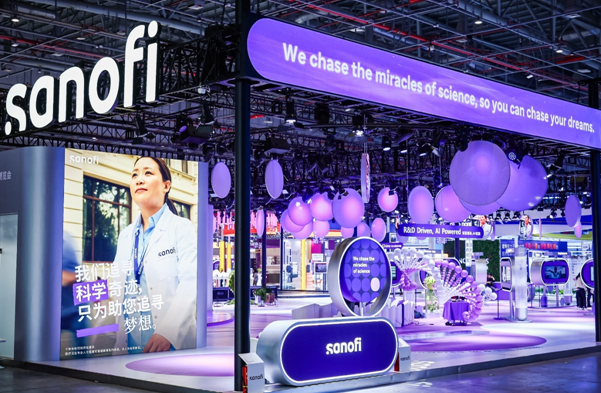
Core Points - The 8th China International Import Expo (CIIE) is being held in Shanghai from November 5 to 10, with participation from 155 countries and regions, showcasing 4,108 foreign enterprises [2] - 170 companies and 27 institutions have been consistent participants over the years, demonstrating their commitment to the Chinese market and the benefits of China's ongoing opening-up [2][3] - The expo has evolved beyond a simple trade fair to become a platform for foreign companies to showcase their strength and long-term commitment in China, reflecting their confidence in the Chinese market [2] Group 1: Company Participation and Perspectives - Qualcomm's booth emphasizes collaboration with Chinese partners, showcasing the integration of 5G and AI technologies, highlighting ongoing innovation [5] - Siemens views the expo as a platform for deep interaction between China and the world, aiming to integrate AI into industrial applications to enhance digitalization and decarbonization efforts in China [8] - Sanofi has consistently participated in the expo, seeing it as a bridge for cooperation and a testament to China's expanding openness [6] Group 2: Innovation and Market Dynamics - ABB's local R&D efforts in China have led to significant innovations, showcasing the country's potential as a hub for global innovation [11] - Varian Medical's participation illustrates the expo's role as an accelerator for global innovation, enabling rapid market entry for advanced technologies in China [12] - Bayer emphasizes China's role as a core market for global innovation, with the expo facilitating faster access for innovative products [13] Group 3: Economic Environment and Future Outlook - The 14th Five-Year Plan emphasizes expanding institutional openness and maintaining a multilateral trade system, which is expected to attract more foreign investment [14] - General Electric acknowledges improvements in China's business environment and the increasing openness to foreign investment, reinforcing confidence in long-term development in China [16] - AstraZeneca's ongoing commitment to the Chinese market reflects the company's strategy to leverage opportunities and enhance health outcomes in China [17]

集中签约采购再创新高 一批优质企业投资落地 进博会上新合作新订单目不暇接
Jie Fang Ri Bao· 2025-11-08 02:08
Group 1 - The eighth China International Import Expo (CIIE) in Shanghai has seen a significant number of investment and procurement projects signed, showcasing new collaborations and orders [1] - Shanghai state-owned enterprises signed 12 projects with a total transaction amount of approximately 2.99 billion yuan, reflecting an increase in procurement efforts across various sectors including bulk commodities, biomedicine, high-end equipment, and intelligent systems [2] - Since the first CIIE, Shanghai state-owned enterprises have organized 177,000 professional attendees and achieved a cumulative intended procurement amount of 22.2 billion USD with companies from over 20 countries and regions [2] Group 2 - The Shanghai Medical Security Bureau signed procurement intentions for selected drugs and high-value medical consumables, with a total intended procurement amount of approximately 2.07 billion yuan [4] - The procurement includes products from foreign enterprises that were selected in the national centralized procurement process, with companies like Sanofi and Abbott participating [4] - The city is exploring centralized procurement for high-value medical consumables, aiming to reduce medical costs for the public [4] Group 3 - The Hongkou division of the Shanghai trading group achieved a record high in procurement orders amounting to 1.88 billion USD, with significant contributions from companies like Shiseido and Panasonic [5] - The Jing'an district's procurement orders have consistently ranked first in the city for seven consecutive years, accounting for a quarter of the total procurement orders at this year's CIIE [5] - Major companies including Cargill, L'Oréal, and Calvin Klein signed procurement and cooperation agreements during the event [5] Group 4 - The Yangpu division of the Shanghai trading group reported a new high in intended transaction amounts, with notable procurement in food products and high-end consumer goods reflecting market consumption upgrades [6] - Strategic cooperation agreements were signed with companies like Synopsys and Amcor, indicating a focus on innovation and sustainable development in the industry [6]




Novavax Q3 Earnings & Revenues Beat Estimates, '25 Sales View Raised
ZACKS· 2025-11-07 17:31
Core Insights - Novavax reported a narrower loss of 62 cents per share in Q3 2025, compared to the Zacks Consensus Estimate of a loss of $1.08 per share and a loss of 79 cents per share in the same quarter last year [1][7] - Quarterly revenues reached $70 million, down 18% year-over-year, but exceeded the Zacks Consensus Estimate of $40 million [2][7] - The company raised its 2025 revenue guidance to between $1.04 billion and $1.06 billion, up from the previous estimate of $1.00 billion to $1.05 billion [10] Financial Performance - Novavax's product sales were $13 million, a significant decrease from $41.5 million in the prior year, with no revenue generated from its COVID vaccine Nuvaxovid during the quarter [3] - Licensing, royalties, and other revenues totaled $57 million, including a $48 million milestone payment from Sanofi, marking a 33% increase year-over-year [4] - Research and development (R&D) expenses were $98 million, up 12.6% year-over-year, while selling, general, and administrative (SG&A) expenses decreased by 55% to $32 million [8] Cash Position - As of September 30, 2025, Novavax had $778 million in cash and cash equivalents, an increase from $628 million as of June 30, 2025 [9] Strategic Developments - Novavax completed the transition of the COVID vaccine's commercial leadership to Sanofi for the 2025-2026 vaccination season [4] - The company amended its collaboration and license agreement with Sanofi to expand the use of its Matrix-M adjuvant in pandemic influenza vaccine candidates [11][12] - Novavax received an additional $50 million in milestone payments due to the transfer of marketing authorization for Nuvaxovid to Sanofi in the U.S. and EU [13][14] Market Performance - Shares of Novavax have declined by 5.6% year-to-date, contrasting with an 11.4% rise in the industry [5]


八位全勤生,八年进博会:跨国药械企业经历的巨变
Di Yi Cai Jing· 2025-11-07 13:05
Group 1: Core Insights - The approval speed of new drugs in China has significantly increased, with multinational companies benefiting from reforms in the drug review and approval system [1][3] - The integration of policies such as centralized procurement and national negotiations has reshaped the market landscape for multinational companies operating in China [1][14] - Multinational pharmaceutical companies are increasingly localizing their production and investment in China, responding to the growing demand for innovative biopharmaceuticals [7][9] Group 2: Recent Developments - Sanofi's innovative drug, Kybella, received approval from the National Medical Products Administration in just six months, highlighting the expedited review process for urgently needed treatments [3][4] - Roche introduced over 40 products at the China International Import Expo, emphasizing its commitment to bringing innovative drugs to the Chinese market [3][7] - Novo Nordisk's Wegovy, the first GLP-1RA weekly formulation for long-term weight management, has shown promising clinical results, with about one-third of patients losing over 20% of their body weight [4][5] Group 3: Investment and Local Production - Sanofi has initiated a €1 billion investment project in Beijing to enhance local insulin production capabilities, reflecting its commitment to the Chinese market [7] - Roche announced a ¥2.04 billion investment to establish a biopharmaceutical production base in Shanghai, strengthening its supply chain and local production [7] - Bayer is expanding its local manufacturing and innovation efforts in China, with the opening of a new innovation center in Beijing [8] Group 4: Policy and Market Dynamics - The Chinese government has implemented policies to encourage foreign investment in the medical device sector, creating a favorable environment for multinational companies [9][10] - The introduction of segmented production trials for biopharmaceuticals aims to improve production efficiency and align with global practices [8][14] - The dynamic adjustment of the medical insurance catalog in China presents significant market opportunities for innovative drugs [14] Group 5: AI and Technological Integration - China is emerging as a global hub for AI innovation in healthcare, with a high acceptance rate among medical professionals and patients for AI applications [16][17] - Philips has positioned AI at the core of its strategy, recognizing its potential to reshape the future of healthcare [17] - Multinational medical device companies are actively collaborating with local innovators to accelerate the development and application of new technologies in China [17]
Dupixent® (dupilumab) Pivotal Trial Met All Primary and Secondary Endpoints, Reducing Signs and Symptoms of Allergic Fungal Rhinosinusitis (AFRS); sBLA Accepted for FDA Priority Review
Globenewswire· 2025-11-07 13:00
Core Insights - Dupixent (dupilumab) has shown significant efficacy in reducing key nasal signs and symptoms in patients aged 6 years and older with allergic fungal rhinosinusitis (AFRS) compared to placebo, as demonstrated in the LIBERTY-AFRS-AIMS Phase 3 trial [1][2][4] - The U.S. FDA has accepted Dupixent's supplemental Biologics License Application (sBLA) for priority review, with a target action date of February 28, 2026, which could make it the first and only approved treatment specifically for AFRS [2][4] - If approved, this would mark Dupixent's ninth FDA-approved indication, expanding its use in various atopic and type 2 inflammatory diseases [2][10] Company Overview - Regeneron Pharmaceuticals, Inc. and Sanofi are jointly developing Dupixent, which is a fully human monoclonal antibody targeting IL-4 and IL-13 pathways, key drivers of type 2 inflammation [9][14] - Dupixent has been approved in over 60 countries for multiple indications, treating more than 1,000,000 patients globally [10][28] - The companies are also exploring Dupixent's efficacy in other type 2 inflammatory diseases, indicating a broad potential market for the drug [15][28] Clinical Trial Details - The LIBERTY-AFRS-AIMS trial was a randomized, double-blind, placebo-controlled study involving 62 patients, which demonstrated significant improvements in sinus opacification, nasal congestion, and nasal polyp size [4][8][11] - Primary endpoint results showed a 50.0% improvement in sinus opacification scores for Dupixent compared to 9.8% for placebo at 52 weeks [5][11] - Secondary endpoints included a 66.7% improvement in patient-reported nasal congestion at 24 weeks and a 60.8% reduction in nasal polyp size at the same time point [11][12] Safety Profile - The safety profile of Dupixent in the trial was consistent with its known profile in other approved indications, with overall adverse event rates of 70% for Dupixent and 79% for placebo [6][7] - Serious adverse events were reported in 0% of Dupixent patients compared to 7% in the placebo group, indicating a favorable safety profile [6][11] Market Implications - The potential approval of Dupixent for AFRS could significantly impact treatment options for patients suffering from this chronic condition, which currently has limited effective therapies [3][4] - The drug's ability to reduce the need for systemic corticosteroids and surgery by 92% highlights its potential to improve patient quality of life and reduce healthcare costs associated with surgical interventions [11][12]


Press Release: ACAAI: Sanofi and Regeneron’s Dupixent pivotal study met all primary and secondary endpoints, reducing signs and symptoms of allergic fungal rhinosinusitis; sBLA accepted for FDA priority review
Globenewswire· 2025-11-07 13:00
Core Insights - The pivotal LIBERTY-AFRS-AIMS phase 3 study of Dupixent (dupilumab) showed significant improvements in allergic fungal rhinosinusitis (AFRS) symptoms, meeting all primary and secondary endpoints [1][5][6] - The FDA has accepted the supplemental biologics license application (sBLA) for Dupixent in treating AFRS, which could become its ninth approved indication [2][5] Study Results - The study demonstrated a 50.0% improvement in sinus opacification scores for Dupixent compared to 9.8% for placebo at 52 weeks, with a significant reduction observed at 24 weeks [6] - Patient-reported nasal congestion improved by 66.7% at 24 weeks and 80.6% at 52 weeks in the Dupixent group compared to 25.3% and 11.1% in the placebo group, respectively [6][13] - Nasal polyp size reduced by 60.8% at 24 weeks and 62.5% at 52 weeks in the Dupixent group compared to 15.2% and 3.6% in the placebo group [13] Safety Profile - The overall rates of adverse events were 70% for Dupixent and 79% for placebo, with serious adverse events reported in 0% of Dupixent patients compared to 7% for placebo [7] - Common treatment-emergent adverse events included COVID-19 and nosebleeds, with similar rates between Dupixent and placebo [7] Background on AFRS - AFRS is a chronic type 2 inflammatory disease of the sinuses caused by allergic hypersensitivity to fungi, primarily affecting individuals in warm, humid climates [3][5] - Current treatment options are limited, often involving surgery and prolonged systemic steroids, with a high rate of disease recurrence [3][4] Dupixent Overview - Dupixent is a fully human monoclonal antibody that inhibits IL4 and IL13 signaling pathways, showing significant clinical benefits in various type 2 inflammatory diseases [10][11] - The drug has received regulatory approvals in over 60 countries for multiple indications, with more than one million patients treated globally [11][12]


直击进博会 | 创新药迎来历史性一刻
盐财经· 2025-11-07 09:48
Core Viewpoint - The China International Import Expo (CIIE) is significantly accelerating the speed at which innovative drugs enter the Chinese market, transforming the landscape for multinational pharmaceutical companies and benefiting countless patients [3][8]. Group 1: Innovative Drug Launches - A groundbreaking drug for delaying the progression of type 1 diabetes, Trelagliptin, made its Asian debut at the CIIE and received approval for market entry in September [10]. - Sanofi's innovative cardiovascular drugs and Gilead Sciences' long-acting HIV prevention drug, Lenacapavir, were showcased at the CIIE, indicating a trend of faster access to top-tier medications for Chinese patients [6][18]. - The "CIIE speed" is exemplified by Sanofi's drug Dupixent, which received approval in China ahead of the U.S. FDA, showcasing a record time for innovative drugs to benefit Chinese patients [11]. Group 2: Market Strategy and Investment - Multinational pharmaceutical companies are shifting from merely introducing products to deeper, full-industry chain strategies in China, with Sanofi establishing China as an independent strategic market unit [20][22]. - Novartis has conducted over 100 clinical trials in China and aims for 90% of new drug registrations to align with global timelines within the next two years [28]. - Gilead Sciences is focusing on synchronizing its research and development projects in China with global efforts, emphasizing the importance of the Chinese market [23][26]. Group 3: CIIE's Spillover Effect - The CIIE is not only expediting drug launches but also creating a "spillover effect" that enhances the overall healthcare landscape in China, allowing for broader access to innovative treatments [15][17]. - Since its inception, Novartis has had over 40 innovative drugs and indications approved in China, accounting for 40% of its total approvals in the country since 1987 [15]. - The CIIE serves as a high-level open platform that fosters consensus, innovation, and collaboration among pharmaceutical companies, ultimately changing the lives of Chinese patients [17].