科大讯飞

Search documents
特斯拉将开始向公众销售人形机器人,机器人ETF(562500)近1周涨幅排名可比基金首位
Mei Ri Jing Ji Xin Wen· 2026-01-23 02:44
Core Viewpoint - The Robot ETF has shown significant performance and growth, with notable increases in both stock prices and trading volume, driven by positive market sentiment and developments in robotics technology [1][2]. Group 1: ETF Performance - As of January 22, 2026, the Robot ETF has increased by 0.72%, with constituent stocks such as Haozhi Electromechanical rising by 4.86% and Weichuang Electric by 3.96% [1]. - Over the past week, the Robot ETF has accumulated a total increase of 2.86%, ranking 1st among comparable funds [1]. - The ETF's trading volume has been robust, with an average daily transaction of 1.634 billion yuan over the past month, leading the comparable funds [1]. Group 2: Fund Flows and Leverage - The net financing amount for the Robot ETF reached 27.8652 million yuan in the previous trading day, with the latest financing balance at 1.107 billion yuan [1]. - The ETF has seen a significant growth in scale, with an increase of 248 million yuan over the past week, ranking 1st among comparable funds [1]. - The number of shares for the Robot ETF has grown by 91.5 million shares in the past week, also ranking 1st among comparable funds [1]. Group 3: Risk and Recovery - The maximum drawdown for the Robot ETF this year is 1.25%, with a relative benchmark drawdown of 0.04%, indicating a strong recovery capability with a repair time of just 1 day, the fastest among comparable funds [2]. Group 4: Fee Structure and Tracking Accuracy - The management fee for the Robot ETF is 0.50%, and the custody fee is 0.10%, both of which are the lowest among comparable funds [3]. - The tracking error for the Robot ETF over the past three years is 0.024%, indicating the highest tracking precision among comparable funds [3]. Group 5: Index Composition - The Robot ETF closely tracks the CSI Robot Index, which includes companies involved in system solutions, digital workshops, automation equipment manufacturing, and other robotics-related sectors [3]. - As of December 31, 2025, the top ten weighted stocks in the CSI Robot Index account for 52.83% of the index, including companies like iFlytek, Huichuan Technology, and Top Group [3].


苹果计划将Siri重塑为内置聊天机器人,科创综指ETF天弘(589860)录得两连阳,机构:AI大模型正推动多行业应用加速商业落地
2 1 Shi Ji Jing Ji Bao Dao· 2026-01-23 01:29
Group 1 - The A-share market saw all three major indices rise collectively, with the Shanghai Stock Exchange Science and Technology Innovation Board Composite Index increasing by 0.14% [1] - The Tianhong ETF tracking the Science and Technology Innovation Board Index recorded a slight increase, achieving two consecutive days of gains, with a trading volume of nearly 30 million yuan [1] - Key stocks in the Tianhong ETF included Tengjing Technology, Mingwei Electronics, and Qingyun Technology, all reaching the daily limit, while other stocks like Godewei and Aotwei saw significant increases of nearly 20% and over 14%, respectively [1] Group 2 - The Robot ETF closely tracks the China Securities Robot Index, with a focus on manufacturing and information transmission, software, and IT services [2] - Major holdings in the Robot ETF include Huichuan Technology, iFlytek, and Stone Technology, and it is supported by two off-market connection funds [2] - The AI industry is experiencing rapid commercialization, with applications in various sectors such as AI search, marketing, office work, and education, indicating a significant technological impact on industry development [2]

东盟人工智能行业研究全球竞争下的发展胜势
Tou Bao Yan Jiu Yuan· 2026-01-23 00:35
Investment Rating - The report does not explicitly state an investment rating for the ASEAN artificial intelligence industry Core Insights - The ASEAN AI market is expected to grow significantly, with the digital economy projected to reach $295 billion by 2025, growing at a compound annual growth rate (CAGR) of 16% [7] - ASEAN countries are accelerating the establishment of a regional AI ecosystem, enhancing cooperation with countries like China, the US, and Japan, which diversifies the global AI industry landscape [7] - The development of AI in ASEAN is expected to contribute significantly to GDP growth, although challenges such as technological infrastructure, talent shortages, and regulatory coordination remain [7] Summary by Sections Current Status and Outlook of the ASEAN AI Industry - The global AI market is projected to reach $1.8 trillion by 2030, with ASEAN actively participating in this growth [7] - The digital economy in Southeast Asia has seen a CAGR of 27% since 2021, with expectations of reaching $295 billion by 2025 [9] Development Level - As of 2024, there are significant disparities in AI development levels among ASEAN countries, with Singapore and Malaysia leading, while many others face challenges such as weak technological foundations and talent shortages [9] Policy and Regulations - ASEAN countries are rapidly launching national AI strategies and regulations, aiming for policy integration to strengthen the regional AI development foundation [13] Advantages of Each Country - Singapore and Malaysia focus on fintech and large models, while Thailand and the Philippines apply AI in tourism and services, and countries like Vietnam and Indonesia emphasize AI in industrial and agricultural sectors [14] Local Challenges - The influx of foreign capital and technology, particularly from Chinese tech companies, is driving rapid growth in the digital startup ecosystem in ASEAN [18] Future Development Trends - The ASEAN digital economy is expected to reach $1 trillion by 2030, with the potential for the digital industry to expand to $2 trillion once the ASEAN Digital Economy Framework Agreement (DEFA) is in effect [27] Important Conditions for Promoting Cooperation - Successful development of the China-ASEAN AI industry requires collaboration in digital infrastructure, policy support, governance concepts, and talent cultivation [48]
2025年CDSS品牌推荐数据驱动精准辅助,循证决策提升诊疗质量
Tou Bao Yan Jiu Yuan· 2026-01-23 00:35
Investment Rating - The report does not explicitly state an investment rating for the CDSS industry Core Insights - The Clinical Decision Support System (CDSS) is evolving from basic rule-based systems to intelligent, scenario-based solutions that integrate artificial intelligence and clinical knowledge, enhancing diagnostic accuracy and treatment standardization [5][7] - The market for CDSS in China is projected to grow from 540 million yuan in 2020 to 900 million yuan in 2024, with a compound annual growth rate (CAGR) of 13.4%, and is expected to reach 2.01 billion yuan by 2029, with a CAGR of 18.5% [8] - The penetration rate of CDSS in China is around 20%, significantly lower than the 74% in the United States, indicating substantial growth potential in the Chinese market [9] Market Background - CDSS is defined as an information tool that integrates medical knowledge and patient data to provide intelligent assistance to healthcare professionals, aimed at improving the quality and safety of clinical decisions [6] - The evolution of CDSS has gone through three main stages: rule-based systems, integration with hospital information systems, and the current phase that incorporates artificial intelligence and multi-source data [7] Market Status - The CDSS market in China is expected to see significant growth, particularly in specialized CDSS, which is projected to grow from 20 million yuan in 2020 to 190 million yuan in 2024, with a CAGR of 80.3% [8] - The demand for CDSS is primarily focused on improving medical quality and efficiency, with high agreement across different economic regions on the need for optimized business processes [10] Market Competition - The competitive landscape of the CDSS market in China features established IT vendors, emerging tech companies, and cross-industry giants, each leveraging their strengths to capture market share [15] - Key competitive dimensions include system performance, technological innovation, and market positioning, with a focus on understanding the differentiated needs of healthcare institutions [12][13][14] Recommended Brands - The report highlights ten leading brands in the CDSS market, including Weining Health, Chuangye Huikang, and Neusoft Group, each recognized for their unique contributions to the industry [16][18][19][20][21][22][23][24][25][26] Development Trends - The CDSS industry is transitioning towards data and knowledge-driven systems, utilizing machine learning to enhance decision-making capabilities [28] - There is a trend towards diversified solutions tailored to specific clinical scenarios, including specialized CDSS for various diseases and lightweight versions for grassroots healthcare [29] - The deployment model is shifting from traditional localized systems to cloud-based solutions, reducing costs and enabling rapid updates [30]
宇树、智元竞逐人形机器人赛道
Zhong Guo Jing Ying Bao· 2026-01-22 16:25
Core Insights - The 2026 Spring Festival Gala will feature a diverse range of robots, with multiple leading companies competing, including Yushu Technology, iFlytek, Siasun, and UBTECH, each showcasing their unique programs and technologies [1][2] - The human-shaped robot market is experiencing significant growth, with 2025 being termed the "year of mass production" for humanoid robots, and substantial investments in the sector [2][3] - Chinese companies dominate the global humanoid robot market, with ZhiYuan leading in both shipment volume and market share [3] Company Developments - Yushu Technology showcased its boxing skills of the Unitree G1 robot at CES, while also releasing various models at competitive prices [5] - ZhiYuan introduced a comprehensive product matrix at CES, including a language model-driven simulation platform, enhancing its capabilities in various applications [4][5] - Yushu's focus on hardware and immediate commercialization contrasts with ZhiYuan's AI-driven, long-term strategy, affecting their market positioning and investor appeal [6] Market Trends - The humanoid robot market is projected to grow exponentially, with global shipments expected to reach 2.6 million units by 2035 [7] - In 2025, the Chinese robot industry saw approximately 200 financing events totaling over 40 billion yuan, with humanoid robots receiving over 30 billion yuan in funding [2] - Major companies like Xiaopeng Motors and Tesla are planning to scale up humanoid robot production significantly by 2026, indicating a competitive landscape [7]
特别会夸人,情绪价值拉满,被AI极度宠溺的儿童:“它更懂我”!家长:孩子无法容忍不同的观点;专家:3岁前最好不接触
Mei Ri Jing Ji Xin Wen· 2026-01-22 13:02
Core Viewpoint - The article discusses the growing presence of AI in children's lives, highlighting both the benefits and the hidden risks associated with AI interactions, particularly in early childhood development. Group 1: AI's Role in Children's Lives - AI products, such as smart speakers, have become common in households, providing children with a seemingly endless source of information and interaction [1][4] - Parents initially view AI as a helpful tool for education, but concerns about children's addiction to AI and its impact on their development are emerging [1][3] Group 2: Risks of Over-Reliance on AI - Over-dependence on AI may lead to confusion in reality perception, diminished social skills, and weakened critical thinking abilities in children [4][10] - Children may start to trust AI over their parents, leading to potential conflicts and a skewed understanding of authority [6][10] Group 3: Parental Concerns and Responses - Parents express anxiety about balancing the use of AI, fearing that too much reliance may hinder their children's ability to think independently [3][7] - Some parents have begun to uninstall AI applications after noticing negative behavioral changes in their children, such as an inability to accept differing opinions [7][12] Group 4: Recommendations for AI Interaction - Experts suggest that parents should limit children's exposure to AI, especially for those under three years old, and ensure that usage does not exceed one-tenth of daily activities for children aged three to six [10][12] - Parents are encouraged to engage children in real-world experiences to counterbalance AI interactions, fostering genuine social skills and critical thinking [10][12] Group 5: Industry Response and Safety Measures - Companies like Baidu and Xiaomi are implementing stricter content filtering and data management for children's AI interactions, including features like "child mode" [17][18] - Legal experts advocate for a dual standard of age and cognitive ability in content classification, emphasizing the need for parental consent in data handling and real-time monitoring of children's interactions with AI [18]


东盟人工智能行业研究:全球竞争下的发展胜势
Tou Bao Yan Jiu Yuan· 2026-01-22 12:24
Investment Rating - The report does not explicitly state an investment rating for the ASEAN artificial intelligence industry Core Insights - The ASEAN AI market is expected to grow significantly, with the digital economy projected to reach $295 billion by 2025, growing at a compound annual growth rate (CAGR) of 16% [7] - ASEAN countries are accelerating the establishment of a regional AI ecosystem, enhancing cooperation with countries like China, the US, and Japan, which diversifies the global AI industry landscape [7] - The development of AI in ASEAN is expected to contribute significantly to GDP growth, although challenges such as technological infrastructure, talent shortages, and regulatory coordination remain [7] Summary by Sections Current Status and Outlook of the ASEAN AI Industry - The global AI market is projected to reach $1.8 trillion by 2030, with ASEAN actively participating in this growth [7] - The digital economy in Southeast Asia is expected to grow at a CAGR of 27% since 2021, reaching $295 billion by 2025 [9] Development Level - As of 2024, there are significant disparities in AI development levels among ASEAN countries, with Singapore and Malaysia leading, while many others face challenges such as weak technological foundations and talent shortages [9] Policy and Regulations - ASEAN countries are rapidly launching national AI strategies and regulations, aiming for policy integration to strengthen the regional AI development foundation [13] Advantages of Each Country - Singapore and Malaysia focus on fintech and large models, while Thailand and the Philippines apply AI in tourism and services, and countries like Vietnam and Indonesia emphasize AI in industrial and agricultural sectors [14] Local Challenges - The influx of foreign capital and technology, particularly from Chinese tech companies, is driving rapid growth in the digital startup ecosystem in ASEAN [18] Company Introductions - Leading AI companies in ASEAN exhibit strong localization characteristics, deeply integrating with national advantage industries such as finance and public services [22] Development Characteristics - ASEAN's diverse internal market and open cooperation framework are accelerating AI industry development and enhancing its role in global AI governance [23]
2025年CDSS品牌推荐:数据驱动精准辅助,循证决策提升诊疗质量
Tou Bao Yan Jiu Yuan· 2026-01-22 12:24
Investment Rating - The report does not explicitly state an investment rating for the CDSS industry Core Insights - The Clinical Decision Support System (CDSS) is evolving from basic rule-based systems to intelligent, scenario-based solutions that integrate artificial intelligence and clinical knowledge, enhancing diagnostic accuracy and treatment standardization [5] - The market for CDSS in China is projected to grow from 540 million yuan in 2020 to 900 million yuan in 2024, with a compound annual growth rate (CAGR) of 13.4%, and is expected to reach 2.01 billion yuan by 2029, with a CAGR of 18.5% [8] - The penetration rate of CDSS in China is around 20%, significantly lower than the 74% in the United States, indicating substantial growth potential in the Chinese market [9] Market Background - CDSS is defined as an information tool that integrates medical knowledge and patient data to provide intelligent assistance to healthcare professionals, aimed at improving the quality and safety of clinical decisions [6] - The evolution of CDSS has gone through three main stages: rule-based systems, integration with hospital information systems, and the current phase that incorporates artificial intelligence and multi-source data [7] Market Status - The CDSS market in China is expected to see significant growth, particularly in specialized CDSS, which is projected to grow from 20 million yuan in 2020 to 190 million yuan in 2024, with a CAGR of 80.3% [8] - The demand for CDSS is primarily focused on enhancing medical quality and efficiency, with a high consensus across different economic regions on the need to optimize business processes and improve healthcare quality [10] Market Competition - The competitive landscape of the CDSS market in China is characterized by leading traditional IT vendors, emerging tech companies focusing on AI and big data, and cross-industry giants entering the market [15] - Key competitive dimensions include system performance and data advantages, technological innovation, and market positioning [12][13][14] Recommended Brands - The report highlights ten recommended brands in the CDSS market, including: 1. Weining Health 2. Chuangye Huikang 3. Neusoft Group 4. Yidu Tech 5. Senyi Intelligent 6. Huimei Technology 7. iFlytek 8. Baidu Lingyi Zhihui 9. Alibaba Health 10. Ping An Smart Healthcare [16][18][20][22][24][26] Development Trends - The CDSS industry is moving towards data and knowledge-driven upgrades, with a focus on utilizing machine learning to analyze clinical data and build dynamic medical knowledge graphs [28] - There is a trend towards diversified scenarios and solutions, with CDSS being tailored for specific diseases and integrated into new healthcare models [29] - Deployment and operational models are shifting towards cloud-based solutions, reducing costs and enabling rapid updates of algorithms and knowledge bases [30]
具身智能2026前瞻:在资本热浪中上岸“价值闭环”
3 6 Ke· 2026-01-22 11:43
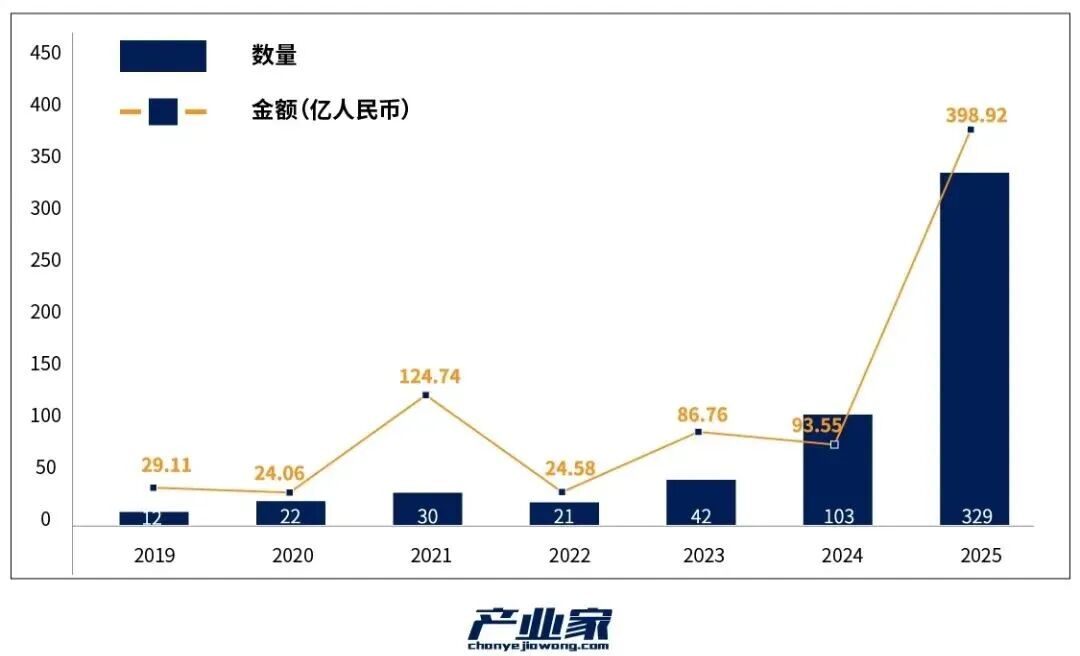
2026年并不是具身智能走向终局的一年,而是决定分化方向的一年。谁能够在这一年真正进入现实世界,并建立起可持续演化的能力闭环,谁 才有资格参与下一阶段关于"通用"的讨论。 2026年,具身智能正被推到了一个新的临界点。 在过去一年里,一级市场资本汹涌而至,融资额不断刷新着具身智能领域的历史纪录。 根据IT桔子数据显示,2025年具身智能领域,共发生329起融资事件,同比2024增长219.42%;融资金额更是高达398.9亿元,同比增长3倍之多。 从一月份春晚宇树H1登上春晚,到三月份具身智能写入政府工作报告,4月份机器人马拉松开幕,再到7月份,智元+宇树中标中国移动1.24亿元采购,开 启商业订单规模化;最后到国产机器人在CES展会炸场……具身智能在2025,画出了一道特殊的宏观图景。 站在当下来看,具身智能领域,钱、算力和硬件似乎都已就位,但在这个领域,钱究竟流向了哪里?是谁在这场竞赛中拿走了最多筹码? 更重要的是,当"手"和"脚"已经初步成型,当模型开始走进工厂、仓库与产线,当下的具身智能,究竟已经能做什么?又有哪些能力,依然是金钱、算力 和工程堆叠都暂时无法攻克的"无人区"?2026年能否被攻克? 根 ...
电子纸平板市场“价值回归”,汉王科技2025年销量份额同比增速达69.57%
Huan Qiu Wang· 2026-01-22 10:32
【环球网科技综合报道】1月22日消息,中国电子纸平板市场历经Kindle退潮、学习本市场波动及彩色化技术洗牌后,迎来"价值回归",消费趋于 理性,用户更注重产品真实使用价值。近日,行业权威咨询机构洛图科技(RUNTO)发布的《年报 | 2025年中国电子纸平板市场的产品和品牌结 构分析》显示:2025年市场的整体特征是"需求去泡沫化"。市场核心驱动力从早期的脉冲式增长,转向由自律人群驱动的稳固内生性增长。用户 对"深度阅读"和"专业办公"的需求重新成为主导。 洛图科技指出,2025年线上全渠道阅读器市场销量达64.7万台,同比增长33.4%,是驱动市场回暖的核心引擎。而汉王科技在该赛道的份额从2024 年的14.3%大幅跃升至2025年的24.7%,增幅位居全行业第一。此外,其年度销量份额同比增速高达69.57%,位居行业首位。特别是在第四季度收 官阶段,汉王连续三个月蝉联电商平台销量冠军,12月的市场份额更是冲高至27.0%。 洛图科技认为,2025年是中国电子纸产业高质量发展关键节点,汉王电纸书通过在阅读器市场的复兴尝试和在办公AI生态的深耕,或开启下一个 长增长周期。 报告显示,2025年线上市场销量排 ...