Arista Networks

Search documents
摩根士丹利:电信与网络设备-2025 年第二季度CIO调查要点:整体平稳,但存在部分风险
摩根· 2025-07-11 02:23
Investment Rating - The industry view for Telecom & Networking Equipment is rated as In-Line [5]. Core Insights - The Q2 2025 CIO Survey indicates a largely stable spending environment, with Communications growth expectations at +2.9%, a slight deceleration from previous quarters but still above 2024 expectations [4][8]. - Networking equipment has seen a decline in prioritization among CIOs, now ranking 8th, but remains a relatively defensible sector [9][25]. - AI continues to be the top priority for CIOs, with a significant portion of AI investments coming from new budget allocations rather than reallocations [11]. Summary by Sections Spending Expectations - Overall IT budgets are expected to grow by +3.6% in 2025, reflecting a deceleration from earlier expectations [4][14]. - Networking equipment is anticipated to see a spending increase from 3.7% of CIOs, down from 4.0% in Q1 2025 [9]. Communications Sector - Communications growth expectations remain stable at +2.9%, with no significant step back from earlier expectations [8]. - The sector has shown resilience despite broader IT spending challenges, maintaining growth expectations above those of 2024 [4][8]. Networking Equipment - Networking equipment ranks 8th in priority for CIOs, indicating a slight decline from the previous quarter but an improvement year-over-year [9]. - The sector is viewed as relatively defensible, with 3.7% of CIOs expecting the largest spending increase in 2025 [9][25]. AI and Cloud Trends - 60% of CIOs expect to launch AI projects in production by 2025, with 56% of AI investments funded by new budget dollars [11]. - Public cloud usage is projected to rise significantly, with CIOs expecting 68% of workloads to be in the public cloud by the end of 2027, up from 44% today [11][30].
金十图示:2025年07月10日(周四)全球主要科技与互联网公司市值变化
news flash· 2025-07-10 03:04
Core Insights - The article provides a snapshot of the market capitalization changes of major global technology and internet companies as of July 10, 2025, highlighting both increases and decreases in value across various firms [1]. Market Capitalization Changes - 台棋电 (Taiwan Semiconductor Manufacturing Company) reached a market cap of $120.24 billion, increasing by 1.75% [3]. - 特斯拉 (Tesla) saw a slight decrease of 0.65%, with a market cap of $95.92 billion [3]. - 甲骨文 (Oracle) increased by 0.56%, bringing its market cap to $66.23 billion [3]. - 腾讯 (Tencent) experienced a decrease of 0.83%, with a market cap of $58.29 billion [3]. - 奈飞 (Netflix) increased by 1.02%, reaching a market cap of $54.82 billion [3]. - SAP saw a rise of 1.03%, with a market cap of $36.38 billion [3]. - 阿里巴巴 (Alibaba) decreased significantly by 3.85%, with a market cap of $26.01 billion [3]. - AMD increased by 0.43%, reaching a market cap of $22.44 billion [3]. - 美团 (Meituan) had a market cap of $9.28 billion, with a slight increase of 0.08% [5]. - 京东 (JD.com) decreased by 3.36%, with a market cap of $4.71 billion [7]. Notable Performers - SK Hynix showed a strong performance with a 3.73% increase, reaching a market cap of $14.65 billion [4]. - Strategy (MicroStrategy) had a notable increase of 4.65%, with a market cap of $11.15 billion [5]. - Coinbase experienced a significant rise of 5.36%, reaching a market cap of $9.03 billion [5]. - Delta Electronics (Thailand) increased by 7.42%, with a market cap of $4.30 billion [8]. Summary of Other Companies - Adobe increased by 2.32%, with a market cap of $16.21 billion [4]. - Intel saw a decrease of 0.64%, with a market cap of $10.28 billion [5]. - Robinhood increased by 3.58%, reaching a market cap of $8.05 billion [6]. - FICO experienced a decline of 6.54%, with a market cap of $4.14 billion [8].


金十图示:2025年07月03日(周四)全球主要科技与互联网公司市值变化
news flash· 2025-07-03 03:01
Market Capitalization Changes - Major technology and internet companies experienced varied market capitalization changes as of July 3, 2025, with notable increases for companies like Tesla and 台棋电, which rose by 4.97% and 3.97% respectively [3][4] - Oracle saw a significant increase of 5.03%, while Tencent and Netflix experienced slight declines of 1.19% and 0.68% respectively [3][4] Company Performance Highlights - Tesla's market cap reached $1,016.6 billion, reflecting a strong performance [3] - Oracle's market cap stood at $645.9 billion, indicating robust growth [3] - Tencent's market cap was $579.0 billion, showing a slight decrease [3] - Netflix's market cap was $546.7 billion, also reflecting a minor decline [3] Sector Trends - The technology sector showed resilience with companies like AMD and 德州仪器 reporting increases of 1.77% and 2.44% respectively [3][4] - Companies such as Adobe and Intel faced declines of 3.48% and 4.25%, indicating challenges within certain segments of the tech industry [4][5] Emerging Companies - Newer players like Palantir and ServiceNow showed positive growth, with market caps of $311.7 billion and $209.1 billion respectively [3][4] - Companies like Robinhood and Coinbase also reported increases, with market caps of $864 million and $902 million respectively [5][6] Overall Market Sentiment - The overall market sentiment appears mixed, with some companies thriving while others struggle, reflecting a diverse landscape within the technology and internet sectors [3][4][5]

Wix Acquires Base44 to Boost AI-Driven Intent-Based Software Development
ZACKS· 2025-06-19 14:01
Core Insights - Wix.com Ltd. has acquired Base44 for approximately $80 million, enhancing its AI capabilities and redefining application development through no-code solutions [1][6][9] - The acquisition aligns with the growing trend of intent-driven software creation, known as "vibe coding," which allows users to develop applications through natural language interactions [2][3] Acquisition Details - Base44's platform enables users to create scalable applications via a chat-based interface, streamlining the software development process [3][4] - The deal includes performance-based earn-out payments extending through 2029, with Wix planning to invest around $25 million in retention bonuses for Base44 employees in 2025 [6][7] Strategic Integration - The integration of Base44 into Wix's AI ecosystem significantly expands its portfolio of intelligent creation tools, positioning Wix as a comprehensive digital creation platform [5][9] - Base44 will continue to operate as a distinct business unit within Wix, maintaining its product identity while leveraging Wix's resources for growth [7] Market Position and Growth Strategy - Wix is focusing on strategic AI investments, with WIX Studio now boasting over 2 million accounts, primarily from new partners [8] - The company has launched Wixel, a visual design platform that simplifies content creation, further supporting its mission to empower creators [9][10] Financial Outlook - Wix anticipates that the acquisition will have an inconsequential impact on 2025 bookings and revenues, emphasizing the long-term potential of the deal [7] - The company remains cautious about its full-year outlook amid macroeconomic uncertainties, particularly for its Business Solutions unit [11]


AI 网络之战-性能如何重塑竞争格局
2025-06-19 09:46
Summary of AI Networking Conference Call Industry Overview - The conference call primarily discusses the AI networking industry, focusing on the competitive landscape involving key players like NVIDIA, Broadcom, Arista, Cisco, Marvell, and Credo Technologies. Key Points and Arguments NVIDIA's Strategic Dominance - NVIDIA's acquisition of Mellanox for $7 billion in 2019 was a strategic move to integrate high-performance networking with its GPU capabilities, enabling a 90% market share in AI training interconnects [5][31][32] - The integration of InfiniBand and NVLink technologies allows for sub-microsecond latency and efficient GPU-to-GPU communication, redefining performance metrics from "bandwidth per dollar" to "training time per model" [5][31][32] - NVIDIA's networking revenue reached $5 billion, showing a 64% sequential growth, highlighting the success of its integrated approach [31] Challenges for Traditional Players - Broadcom and Arista are struggling with architectural mismatches as their Ethernet-based systems are not optimized for AI workloads, which require low latency and high bandwidth [6][39][43] - Broadcom's Jericho3-AI and Arista's EOS have introduced AI-specific products, but both face limitations due to the inherent constraints of Ethernet technology [6][39][43] Future Disruptions - Potential threats to NVIDIA's dominance include the shift to co-packaged optics, the emergence of open interconnect standards like CXL and UCIe, and new AI architectures that may require different networking solutions [7][90][92] - The optical transition could fundamentally change AI networking economics by eliminating copper interconnects, which are becoming a bottleneck due to increasing bandwidth demands [57][90][92] Customer Perspectives - Hyperscale cloud providers prefer vendor diversity for negotiating leverage but are increasingly adopting NVIDIA's integrated solutions due to performance requirements [83][84] - AI-native companies prioritize training performance and often favor integrated solutions, while traditional enterprises focus on compatibility with existing infrastructure [85][87] Competitive Landscape - The competition is characterized by a tension between performance and operational familiarity, with NVIDIA leading in performance while traditional players like Broadcom and Arista maintain operational consistency [72][84] - The success of open standards could enable a more modular approach to networking, allowing for interoperability between different vendors' components [94] Strategic Implications - The current hierarchy favors organizations that prioritize performance and can accept vendor concentration, but future shifts may reward different strategic choices [104] - Companies that can anticipate the next set of requirements, such as optical networking or alternative architectures, will likely succeed in the evolving AI networking landscape [112][113] Other Important Content - The call emphasizes the importance of software integration in AI networking, with NVIDIA's CUDA and NCCL providing a competitive edge that is difficult for others to replicate [30][78] - Cisco's struggle in adapting to AI networking requirements highlights how existing architectural assumptions can become constraints in the face of new technological demands [60][66] This summary encapsulates the critical insights from the conference call, providing a comprehensive overview of the current state and future directions of the AI networking industry.

摩根士丹利:下一代光学技术-光路交换、光电共封装和线性驱动可插拔光模块
摩根· 2025-06-17 06:17
Investment Rating - The industry investment rating is In-Line [5]. Core Insights - The optical transceiver market, valued at approximately $8 billion, is experiencing significant growth driven by the demand for high-speed AI networks. However, traditional architectures face challenges such as power drain, reliability, and cost. Newer architectures like Linear Pluggable Optics (LPO), Co-Packaged Optics (CPO), and Optical Circuit Switching (OCS) are emerging as solutions, each with unique advantages and challenges [3][8][13]. Summary by Sections Optical Technologies Overview - The report discusses the need for advanced optical technologies due to increasing power and reliability demands in AI networks. It highlights the linear adoption of these technologies, particularly LPO, CPO, and OCS, while noting the challenges associated with their implementation [3][4]. Market Growth and Dynamics - The datacomm optical components market is projected to grow at approximately 10% over the next five years, indicating a robust demand for higher-speed transceivers that connect servers and switches [13]. Adoption Challenges - LPO is identified as the most likely to see near-term adoption due to its similarity to traditional architectures, which allows for a larger ecosystem of providers. However, there are concerns that hyperscalers may prefer more permanent solutions than LPO, which is often viewed as a transitional technology [4][8]. OCS and CPO Insights - OCS and CPO are considered more complex solutions, with adoption expected to be further off due to significant rearchitecting and investment requirements. The report notes that while there is interest from major players like Google and Oracle, the transition to these technologies will take years [5][9]. Beneficiaries of Technology Adoption - The report identifies potential beneficiaries of these technologies, with ANET likely to benefit from LPO adoption, while LITE and COHR may see more advantages from OCS if it gains traction [3][8]. Technical Advantages and Challenges - LPO offers lower power consumption and cost efficiency by eliminating the need for Digital Signal Processors (DSPs), but it has limitations in transmission lengths and interoperability. CPO promises lower power consumption and reduced latency but faces challenges in yield and ecosystem development. OCS provides reliability and efficiency but requires sophisticated control software and is less suited for dynamic traffic flows [49][41][32][42][50].
聊一聊目前主流的AI Networking方案
傅里叶的猫· 2025-06-16 13:04
Core Viewpoint - The article discusses the evolving landscape of AI networking, highlighting the challenges and opportunities presented by AI workloads that require fundamentally different networking architectures compared to traditional applications [2][3][6]. Group 1: AI Networking Challenges - AI workloads create unique demands on networking, requiring more resources and a different architecture than traditional data center networks, which are not designed for the collective communication patterns of AI [2][3]. - The performance requirements for AI training are extreme, with latency needs in microseconds rather than milliseconds, making traditional networking solutions inadequate [5][6]. - The bandwidth requirements for AI are exponentially increasing, creating a mismatch between AI demands and traditional network capabilities, which presents opportunities for companies that can adapt [6]. Group 2: Key Players in AI Networking - NVIDIA's acquisition of Mellanox Technologies for $7 billion was a strategic move to enhance its AI workload infrastructure by integrating high-performance networking capabilities [7][9]. - NVIDIA's AI networking solutions leverage three key innovations: NVLink for GPU-to-GPU communication, InfiniBand for low-latency cluster communication, and SHARP for reducing communication rounds in AI operations [11][12]. - Broadcom's dominance in the Ethernet switch market is challenged by the need for lower latency in AI workloads, leading to the development of Jericho3-AI, a solution designed specifically for AI [13][14]. Group 3: Competitive Dynamics - The competition between NVIDIA, Broadcom, and Arista highlights the tension between performance optimization and operational familiarity, with traditional network solutions struggling to meet the demands of AI workloads [16][24]. - Marvell and Credo Technologies play crucial supporting roles in AI networking, with Marvell focusing on DPU designs and Credo on optical signal processing technologies that could transform AI networking economics [17][19]. - Cisco's traditional networking solutions face challenges in adapting to AI workloads due to architectural mismatches, as their designs prioritize flexibility and security over the low latency required for AI [21][22]. Group 4: Future Disruptions - Potential disruptions in AI networking include the transition to optical interconnects, which could alleviate the limitations of copper interconnects, and the emergence of alternative AI architectures that may favor different networking solutions [30][31]. - The success of open standards like UCIe and CXL could enable interoperability among different vendor components, potentially reshaping the competitive landscape [31]. - The article emphasizes that companies must anticipate shifts in AI networking demands to remain competitive, as current optimizations may become constraints in the future [35][36].
Cisco Expands AI Portfolio for Data Centers: Why the Stock is a Hold
ZACKS· 2025-06-12 16:41
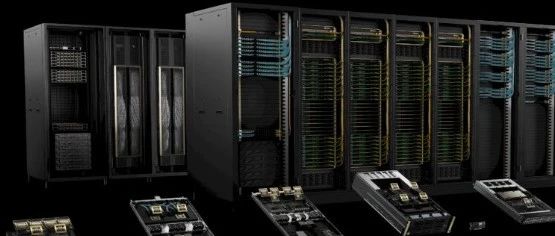
Core Insights - Cisco Systems (CSCO) is expanding its AI portfolio for data centers with new solutions, including the Unified Nexus Dashboard and Cisco Intelligent Packet Flow, while leveraging its collaboration with NVIDIA to enhance its AI infrastructure capabilities [1][9][10] - Cisco has secured over $1 billion in AI infrastructure orders for fiscal 2025, indicating strong demand and growth potential [1][8] - The company's security revenues surged by 54% year-over-year in Q3, reflecting robust demand for its security solutions [3][12] AI Portfolio Expansion - The Unified Nexus Dashboard will consolidate services across various networks into a single interface, set to be released in July 2025 [2] - Cisco Intelligent Packet Flow utilizes real-time telemetry for proactive issue detection, available from June 10 [2] - New 400G BiDi optics are expected to launch in the second half of 2025, further enhancing Cisco's data center offerings [2] Financial Performance - Total product orders increased by 20% year-over-year, with networking product orders growing by double digits [3] - Cisco's guidance for fiscal 2025 anticipates revenues between $56.5 billion and $56.7 billion, an increase from previous estimates [13] - The Zacks Consensus Estimate for fiscal 2025 revenues is $56.59 billion, indicating a year-over-year growth of 5.18% [14] Stock Performance - Cisco shares have appreciated by 8.4% year-to-date, although this is below the Zacks Computer & Technology sector's return of 14.3% [4] - The stock is currently trading at a premium, with a forward price/sales ratio of 4.32, higher than the industry average [15] Strategic Collaborations - The partnership with NVIDIA aims to create AI-ready data center networks, enhancing Cisco's security and infrastructure capabilities [9][10] - Cisco's integration of its solutions with NVIDIA's technology is expected to simplify and secure AI infrastructure deployment [9][10] Security Business Growth - Cisco's security business is experiencing significant growth, with strong demand for solutions like Secure Access and Hypershield [12] - The introduction of Agentic AI across security and collaboration platforms is a key strategy for improving customer experience [11]

金十图示:2025年06月12日(周四)全球主要科技与互联网公司市值变化
news flash· 2025-06-12 03:02
Group 1 - The market capitalization of major global technology and internet companies has shown varied changes as of June 12, 2025, with notable fluctuations in stock prices [1][3][4] - TSMC leads with a market cap of $111.04 billion, reflecting a 0.77% increase, while Tesla follows closely at $105.14 billion with a slight increase of 0.1% [3] - Companies like Netflix and Palantir have experienced positive growth, with Netflix up by 1.35% to $519.1 billion and Palantir up by 2.7% to $32.18 billion [3][4] Group 2 - Alibaba's market cap stands at $28.69 billion, showing a decrease of 1.27%, while other companies like Adobe and Qualcomm have seen slight increases of 0.77% and 0.22% respectively [4][5] - Intel has faced a significant decline of 6.46%, bringing its market cap down to $90.2 billion, indicating potential challenges in the semiconductor sector [5][6] - Companies such as Shopify and Spotify have shown resilience with increases of 3.49% and 2.28%, respectively, suggesting strong performance in the e-commerce and streaming sectors [4][5]

ANSS, Turbotech Team Up to Fuel a Hydrogen-Powered Future in Aviation
ZACKS· 2025-06-11 14:36
Core Insights - ANSYS, Inc.'s advanced simulation tools have been utilized by Turbotech to successfully demonstrate the world's first viable hydrogen-fueled turboprop engine as part of the BeautHyFuel project [1][9] - The BeautHyFuel project is a collaboration involving Turbotech, Elixir Aircraft, and partners like Safran, Air Liquide, and Daher, focusing on hydrogen propulsion for light aircraft with an emphasis on safety and environmental sustainability [2] - Turbotech's scalable design approach, supported by ANSYS simulation tools, addresses challenges in hydrogen turbine designs, facilitating a smoother transition to hydrogen propulsion [3] Simulation Technology - ANSYS simulation tools, particularly Ansys Fluent, have enabled Turbotech to conduct high-fidelity combustion modeling, providing insights into flame dynamics and material behavior, which significantly reduced the need for physical prototypes [4] - After 30 hours of continuous hydrogen combustion testing, the nozzles exhibited nearly identical structural integrity, confirming the engine's resilience and low emissions levels [5] - ANSYS has maintained a long-standing partnership with Turbotech, providing premium simulation tools and technical support throughout the development phases [6][7] Market Position and Financials - ANSYS holds a strong position in the high-end design simulation software market, with its tools widely adopted by leading manufacturing companies, allowing for significant cost reductions through virtual prototyping [8] - The global simulation market is projected to grow from $15 billion in 2025 to $33.62 billion in 2032, with a CAGR of 12.5% [9] - As of March 31, 2025, ANSYS reported deferred revenues and backlog of $1.63 billion, an 18.9% year-over-year increase, alongside a 4% growth in subscription lease revenues [9][10] Collaborations and Innovations - ANSYS's collaborations with technology suppliers and hardware vendors enhance its growth prospects, including an expanded partnership with TSMC for AI-assisted workflows [11] - The company's diverse product lineup and collaborations continue to attract and retain customers, positioning it well for future growth [11]