
Circle

Search documents
Dubai Bans Privacy Tokens Under New DFSA Crypto Framework
Yahoo Finance· 2026-01-12 11:48
Core Insights - Dubai's financial free zone has effectively banned privacy tokens such as Monero and Zcash due to new regulations requiring transaction transparency [1] - The Dubai Financial Services Authority (DFSA) has shifted to a firm-led suitability assessment model for crypto tokens, eliminating its previous list of recognized tokens [2] - Privacy-enhancing technologies are explicitly identified as negative indicators in the DFSA's supervisory guidelines, making them incompatible with know-your-customer requirements [3] Regulatory Framework Shift - The previous system included a list of recognized tokens like Bitcoin and Ethereum, while the updated framework places the responsibility on licensed entities to conduct suitability assessments [4] - Trading history and market liquidity are now part of the evaluation criteria, with approved fiat-backed tokens like Circle's USDC and Ripple's RLUSD remaining available [5] Global Regulatory Alignment - The DFSA's actions align with mainland Dubai's policies, as VARA had already banned privacy tokens in February 2023 [6] - The restrictions reflect a global trend in regulation, with the European Union's MiCA regulation also prohibiting anonymous crypto transfers starting in 2027 [7]
Coinbase pushes back against banks to keep rewarding users for holding stablecoins
Yahoo Finance· 2026-01-12 09:27
Core Viewpoint - Coinbase is advocating for the preservation of its ability to offer rewards for holding stablecoins as Congress advances a comprehensive crypto bill, with specific concerns regarding yield-bearing stablecoin accounts becoming a contentious issue [1][2]. Group 1: Coinbase's Yield Program - Coinbase's yield program allows users to earn 3.5% rewards on USDC, a dollar-backed stablecoin, by sharing interest generated from USDC reserves, contributing $355 million in revenue in Q3 [3]. - The revenue from the yield program is crucial for Coinbase, especially during periods of reduced trading volume [3]. Group 2: Legislative Challenges - A proposal from some banks seeks to restrict stablecoin yield programs to regulated financial institutions, arguing that such rewards divert deposits from traditional banks and could negatively impact small businesses and community lending [4]. - Coinbase and other crypto firms argue that these restrictions would hinder competition and undermine existing regulations established by the GENIUS Act [4]. Group 3: Industry Response and Market Sentiment - Coinbase's chief policy officer highlighted that banks earn approximately $360 billion annually from deposits at the Federal Reserve and transaction fees, suggesting that stablecoin rewards introduce competition in the payments sector [5]. - Research from Cornell University indicates that stablecoin adoption does not significantly reduce bank lending, with rewards needing to reach around 6% to impact deposits meaningfully [5]. - Despite bipartisan support for the bill, disagreements over stablecoin rewards are causing tensions, with market predictions indicating a 68% to 70% chance of the bill passing this year [5]. Group 4: Potential Compromises - Some lawmakers are considering a compromise that would permit only licensed banking firms to offer rewards, with several crypto firms having received conditional approvals to operate as federally chartered trust banks [6]. - However, even if this compromise is reached, companies may still find alternative methods to incentivize users [6].
传Coinbase强硬施压,13亿美元稳定币奖励收入恐遭法案“腰斩”
Xin Lang Cai Jing· 2026-01-12 09:24
Core Viewpoint - Coinbase is pressuring U.S. lawmakers to retain its ability to offer rewards to users holding stablecoins, fearing that proposed restrictive clauses in an upcoming cryptocurrency bill could severely threaten this business model [2][9]. Regulatory Environment - The upcoming Digital Asset Market Structure Bill is set to enter the revision phase in the Senate, with potential changes that could impact Coinbase's reward system [2][3]. - Current regulatory proposals aim to limit reward issuance to regulated financial institutions, which some in the banking sector support, citing concerns over traditional bank deposit outflows [3][10]. - Coinbase has applied for a national trust license, which would allow it to offer user rewards within a regulatory framework if approved [3][10]. Financial Implications - Coinbase's revenue from rewards is critical, as it shares interest income from user-held USDC with its users, providing a stable income stream during market downturns [4][11]. - The company has a 3.5% reward program through "Coinbase One" to encourage USDC retention, with projections estimating total stablecoin revenue could reach $1.3 billion by 2025 [12]. Legislative Challenges - The ongoing debate over stablecoin rewards is eroding bipartisan support for the market structure bill, with Coinbase warning that it may withdraw support, potentially delaying or derailing the legislation [6][13]. - The GENIUS Act prohibits stablecoin issuers from paying interest on "purely holding tokens," but does not prevent third-party partners like Coinbase from offering rewards [13]. Industry Dynamics - The conflict between the banking sector and the cryptocurrency industry has created a challenging environment for lawmakers, who are under pressure to legislate while facing difficult compromises [14]. - A potential compromise could allow only licensed banks or entities defined as financial institutions to offer rewards on stablecoin balances [14]. - Recent approvals for several crypto companies to become national trust banks have faced backlash from the banking industry, which fears these developments could destabilize the financial system [14].


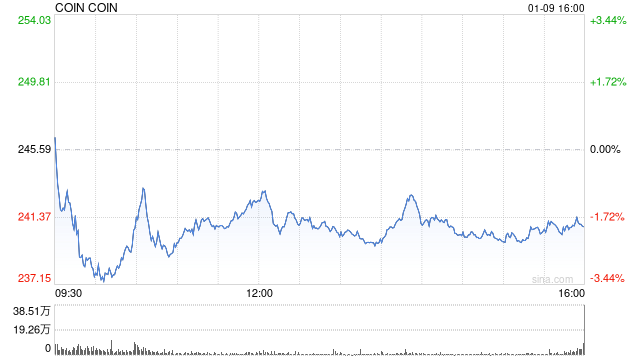
传Coinbase(COIN.US)强硬施压,13亿美元稳定币奖励收入恐遭法案“腰斩”
Zhi Tong Cai Jing· 2026-01-12 03:42
Core Viewpoint - Coinbase is exerting pressure on U.S. lawmakers to retain its ability to offer rewards to users holding stablecoins, fearing that proposed restrictive clauses in an upcoming cryptocurrency bill could jeopardize this business model [1][2]. Group 1: Regulatory Concerns - The upcoming Digital Asset Market Structure Bill may include provisions that could redefine Coinbase's rewards as "deposits," which would eliminate its interest income from stablecoin holdings [1][3]. - Current regulatory proposals aim to limit the issuance of rewards to regulated financial institutions, which some in the banking sector support, citing concerns over potential deposit outflows from traditional banks [1][5]. Group 2: Financial Implications - Coinbase's rewards program, such as the 3.5% incentive for holding USDC, is crucial for maintaining user engagement and generating revenue, with projections estimating stablecoin income could reach $1.3 billion by 2025 [3]. - The potential withdrawal of support for the bill by Coinbase could significantly impact its revenue model and the competitive landscape of the cryptocurrency industry [2][4]. Group 3: Political Dynamics - The cryptocurrency industry has become a major political donor, with Coinbase contributing $1 million to Donald Trump's inauguration, highlighting its influence in the political arena [2]. - The ongoing debate over stablecoin rewards is causing friction within bipartisan support for the legislation, with concerns that it could delay or derail the bill entirely [4][5]. Group 4: Industry Responses - Coinbase has applied for a national trust charter, which would allow it to offer user rewards within a regulatory framework, while other crypto firms are seeking exceptions to maintain their reward models without licenses [2][5]. - The banking sector has expressed strong opposition to cryptocurrency exchanges offering rewards, arguing that it undermines community lending and deposit stability [5].
Wall Street Brunch: Bak Earnings, CPI And Credit Card Crackdowns
Seeking Alpha· 2026-01-11 19:28
Group 1: Earnings Season - Major banks are set to report Q4 earnings this week, with JPMorgan leading the way on Tuesday, followed by BofA, Wells Fargo, Citi on Wednesday, and Goldman Sachs, Morgan Stanley, BlackRock on Thursday [3] - Analysts expect JPMorgan's Q4 EPS to be $4.98 on $46.25 billion in revenue, which includes $25 billion of net interest income [4] Group 2: Economic Indicators - The December Consumer Price Index (CPI) is anticipated to show a 0.3% month-on-month increase, with headline inflation remaining at 2.7% year-on-year and core CPI rising to 2.7% from 2.6% [6] - Wells Fargo economists predict that shutdown distortions from the November report will unwind, with core goods expected to rise sharply due to holiday-related markdowns [7] Group 3: Credit Card Interest Rate Proposal - President Trump proposed a one-year cap on credit card interest rates at 10%, effective January 20, aiming to protect consumers from high rates [8] - Major banking groups opposed the proposal, arguing it could push consumers towards less regulated and more costly alternatives [8] Group 4: Dividend Payouts - AT&T and Verizon are set to go ex-dividend on Monday, with payouts scheduled for February 2, while Comcast and Abbott Labs will follow with their own ex-dividend dates [9] Group 5: Short Selling Performance - U.S. short sellers faced approximately $217 billion in year-to-date mark-to-market losses, resulting in a return of -14.75%, contrasting with a gain of over 16% for the S&P 500 [10] - Notable underperformers among shorted stocks include Nvidia, Alphabet, Tesla, Palantir, and Micron, while winners included MicroStrategy, The Trade Desk, Charter Communications, Circle Internet, and UnitedHealth [10]



Wall Street Brunch: Bank Earnings, CPI And Credit Card Crackdowns
Seeking Alpha· 2026-01-11 19:28
Group 1: Earnings Season and Expectations - Major banks are set to report Q4 earnings this week, with JPMorgan leading the way on Tuesday, followed by BofA, Wells Fargo, Citi on Wednesday, and Goldman Sachs, Morgan Stanley, BlackRock on Thursday [3] - Analysts expect JPMorgan's Q4 EPS to be $4.98 on $46.25 billion in revenue, which includes $25 billion of net interest income [4] - The performance of JPMorgan's earnings report could influence sector rotation, with potential for equal-weighted indexes to perform well if earnings dispersion is indicated [4] Group 2: Economic Indicators - The December Consumer Price Index (CPI) is anticipated to show a 0.3% month-on-month increase, with headline inflation expected to remain at 2.7% year-on-year and core CPI rising to 2.7% from 2.6% [6] - Economists predict that distortions from the November report due to shutdowns will unwind, with core goods expected to rise sharply in December due to holiday-related markdowns [7] Group 3: Credit Card Interest Rate Proposal - President Trump proposed a one-year cap on credit card interest rates at 10%, effective January 20, aiming to protect consumers from high rates [8] - Major banking groups opposed the proposal, arguing it could push consumers towards less regulated and more costly alternatives [8] Group 4: Dividend Payouts - AT&T and Verizon are set to go ex-dividend on Monday, with payouts scheduled for February 2, while Comcast and Abbott Labs will follow with their own ex-dividend dates [9] Group 5: Short Selling Performance - U.S. short sellers experienced approximately $217 billion in year-to-date mark-to-market losses, with a return of -14.75%, contrasting with a gain of over 16% for the S&P 500 [10] - Notable underperformers among shorted stocks include Nvidia, Alphabet, Tesla, Palantir, and Micron, while MicroStrategy, The Trade Desk, Charter Communications, Circle Internet, and UnitedHealth showed positive results [10]

Stablecoins Power $500K-$2.5M Property Deals Across UK, France, and Malta: Report
Yahoo Finance· 2026-01-11 14:48
Core Insights - The use of stablecoins for property transactions in Europe has increased significantly, with transactions ranging from $500,000 to $2.5 million, indicating a growing trend among wealthy crypto holders to utilize digital assets for real estate purchases [1][2] - Brighty, a Lithuania-licensed crypto payments app, has facilitated over 100 property deals, allowing high-net-worth clients to bypass traditional banking systems for faster transactions [1][2] Group 1: Market Trends - There is a notable shift in the preference for euro-pegged stablecoins over USDC for real estate transactions, driven by the desire to avoid conversion costs when purchasing properties in Europe [4][5] - Brighty has reported an increase in average transaction sizes for euro-backed stablecoins, rising from €15,785 in Q3 to €59,894 in Q4, as wealthy individuals opt for Circle's EURC instead of USDC [4] Group 2: Industry Dynamics - The demand for crypto-enabled property transactions is growing as traditional banks remain hesitant to process such deals, creating opportunities for specialized platforms like Brighty [6] - Brighty serves between 100 and 150 affluent customers, with an average monthly spending of $50,000, highlighting the platform's appeal among high-net-worth individuals [2]
Russian patents office green-lights Tether’s tokenisation trademark request
Yahoo Finance· 2026-01-11 14:46
Core Insights - Tether has received trademark approval for its Hadron tokenisation platform from Russia's patents office, Rospatent, indicating its intent to enter the Russian crypto market [1][2][3] Group 1: Trademark Approval - Tether's application for the Hadron trademark was submitted in October 2025 and approved in January 2026, granting exclusive rights until October 3, 2035 [1][3] - The trademark encompasses blockchain financial services, cryptocurrency trading, crypto payment processing, and related consultancy services [3] Group 2: Market Context - The Russian crypto and private blockchain market is rapidly growing, primarily dominated by large domestic banks and companies [2] - The Russian private blockchain-powered token industry is valued at approximately $13 billion, indicating significant market potential [6] Group 3: Regulatory Environment - Tether's past actions in Russia include freezing $28 million worth of USDT on the Garantex exchange, which was influenced by the US Secret Service, highlighting regulatory challenges [4] - The Russian central bank has issued warnings regarding the use of cryptocurrencies that are subject to sanctions, which may include USDT [5][6] Group 4: Industry Developments - Tokenisation is gaining traction in Russia, with banks and firms issuing tokens linked to precious metals, real estate, and commodities [6][7]
Brighty:富裕投资者通过加密资产买入欧洲房产
Xin Lang Cai Jing· 2026-01-11 00:39
加密支付应用 Brighty 联合创始人 Nikolay Denisenko 表示,过去一年已有数百名高净值投资者使用加密 货币在欧洲购房。该平台已撮合100 余笔交易,主要集中在英国、法国、马耳他、塞浦路斯和安道尔, 单笔金额约 50 万–250 万美元。此前高净值客户多使用 Circle 发行的 USDC,目前为避免兑换成本,越 来越多客户转向锚定欧元的稳定币(如 EURC)。(CoinDesk) (来源:吴说) ...
Jim Cramer on Circle Internet: “On Paper, This One’s a Standout”
Yahoo Finance· 2026-01-10 19:24
Group 1 - Circle Internet Group (NYSE:CRCL) is a stablecoin issuer that has seen significant stock price fluctuations since its IPO, initially priced at $31 and reaching nearly $300 within weeks before falling back to around $80 [1][2] - The stock gained 160% from its IPO price, opening at $69 and surging to $299 shortly after, but has since experienced a substantial decline [1] - The company operates a financial platform that facilitates money movement and application development using digital assets [2] Group 2 - While Circle Internet Group shows potential as an investment, there are AI stocks that may offer greater upside potential and lower downside risk [3]
