
中国人民银行

Search documents
【行业动态】中国人民银行发布一次性信用修复政策 “免申即享”,助力个人重塑信用
Sou Hu Cai Jing· 2025-12-23 18:28
Core Viewpoint - The People's Bank of China has announced a one-time credit repair policy aimed at supporting individuals with damaged credit who are actively repaying their debts, allowing certain overdue information to be excluded from personal credit reports [1][3]. Group 1: Policy Details - The policy applies to overdue information from January 1, 2020, to December 31, 2025, for individual overdue amounts not exceeding 10,000 yuan, provided that debts are fully repaid by March 31, 2026 [3]. - If individuals repay their overdue debts by November 30, 2025, the overdue information will not be displayed from January 1, 2026; if repaid between December 1, 2025, and March 31, 2026, the information will be updated to reflect normal repayment status by the end of the following month [3][4]. - The policy does not differentiate between types of loans, such as credit cards, mortgages, or consumer loans, as long as the relevant conditions are met [3][4]. Group 2: Implementation Measures - The People's Bank of China has introduced three measures to ensure the policy is effectively communicated and reaches eligible individuals [6]. - A three-month grace period has been established, allowing individuals to repay overdue debts within this timeframe to qualify for the policy, extending to after the Spring Festival until March 31, 2026 [6]. - An additional two free credit report inquiries will be provided in the first half of 2026 to accommodate increased demand for credit report checks following the policy's implementation [6]. Group 3: Changes in Credit Reporting - The retention period for overdue information in the credit reporting system is five years, after which it will no longer be displayed [8]. - Following the policy's implementation, the "repayment status" for eligible overdue information will change from overdue to normal, and the overdue amount will be adjusted from a non-zero value to zero [8].


三个层面助力一次性信用修复
Chang Jiang Shang Bao· 2025-12-23 07:09
Core Viewpoint - The People's Bank of China has implemented a one-time credit repair policy to support individuals with damaged credit who have actively repaid their debts, aiming to facilitate economic recovery post-COVID-19 [1] Group 1: Policy Implementation - The one-time credit repair policy is designed to help individuals who have experienced financial difficulties due to the pandemic and have since repaid their debts, allowing them to rebuild their credit more efficiently [1] - The policy is expected to have a positive impact on three levels: individuals, financial institutions, and the broader economy [2] Group 2: Individual Impact - The policy provides a corrective opportunity for previously untrustworthy individuals, helping them improve their credit status and stimulating economic activity [2] Group 3: Financial Institutions Impact - Financial institutions will benefit from the policy as it allows for more accurate identification of individual credit statuses, enhancing the quality of inclusive financial services [2] Group 4: Economic and Social Impact - The policy aims to strengthen individuals' commitment to fulfilling their financial obligations in future economic activities, reinforcing the foundational role of the credit system in promoting trust and accountability within society [2] Group 5: Technical Details - Under the new policy, overdue information for personal debts of up to 10,000 RMB incurred between January 1, 2020, and December 31, 2025, will not be displayed if the debt is fully repaid by March 31, 2026 [3] - The People's Bank of China will automatically process eligible overdue information without requiring individuals to apply or submit documentation, ensuring a seamless experience [3][4] Group 6: Accessibility - The policy is completely free and operates on an "automatic enjoyment" basis, meaning individuals do not need to apply or engage third parties, and any solicitation for payment related to this policy is considered fraudulent [4]
中国人民银行发布一次性信用修复政策 “免申即享”助力个人重塑信用
Ren Min Ri Bao· 2025-12-23 06:17
为支持信用受损但积极还款的个人高效便捷重塑信用,中国人民银行12月22日对外发布一次性信用修复 政策有关安排,符合相关条件的逾期信息将不会在个人信用报告中予以展示。 提供容错纠正机会,避免因一次失误而长期受限 根据政策安排,对于2020年1月1日至2025年12月31日期间,单笔金额不超过1万元的个人逾期信息,个 人于2026年3月31日(含)前足额偿还逾期债务的,金融信用信息基础数据库(即央行征信系统)将不予展 示。其中: 个人于2025年11月30日(含)前足额偿还逾期债务的,央行征信系统自2026年1月1日起不予展示相关逾期 信息; 邹澜表示,政策出台后,将在3个层面发挥作用:个人层面,为曾经失信的个人提供容错纠正机会,有 助于社会公众有效改善信用状况,激发微观主体活力;金融机构层面,有助于更加精准地识别个人信用 状况,进一步提升普惠金融服务质效;经济社会层面,有利于强化个人在后续经济活动中的履约守信意 识,有效发挥征信系统"守信激励、失信惩戒"的基础性作用,构建崇信向善的诚信社会。 个人无需申请、操作、提交证明材料,央行征信系统自动识别 中国人民银行征信管理局局长任咏梅介绍,人民银行制定3项措施,让政 ...
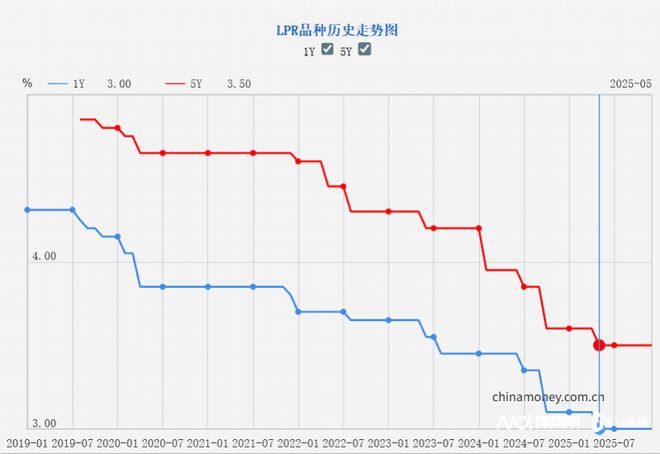
LPR报价七个月不变,专家:新一轮降息降准或春节前落地
Nan Fang Du Shi Bao· 2025-12-23 05:56
Group 1 - The People's Bank of China (PBOC) has maintained the Loan Prime Rate (LPR) at 3.0% for the 1-year term and 3.5% for the 5-year term since June, indicating a stable monetary policy environment [1][3] - The central economic work conference has set the tone for next year's monetary policy, emphasizing the need for a moderately accommodative approach to support economic stability and reasonable price recovery [4][5] - Analysts predict that the window for interest rate cuts may open in the first quarter of 2026, with potential reductions in both interest rates and reserve requirements [3][5] Group 2 - The PBOC's recent meeting highlighted the importance of maintaining ample liquidity and supporting the real economy through various monetary policy tools, while ensuring a stable RMB exchange rate [4][6] - The expected policy rate cuts could lead to a decrease in LPR, further stimulating internal financing demand and countering external economic pressures [6][5] - The shift from investment-driven to consumption-driven economic growth is reflected in the declining loan growth rates, indicating a transition towards high-quality development [6][5]
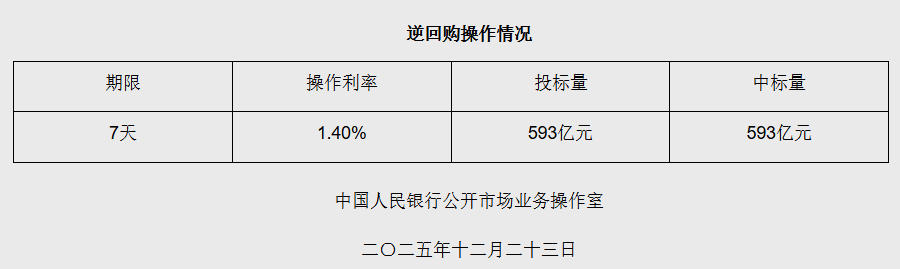
12月23日央行开展593亿元7天期逆回购操作
Zhong Guo Xin Wen Wang· 2025-12-23 01:42
12月23日央行开展593亿元7天期逆回购操作 中新网12月23日电 据央行网站消息,2025年12月23日中国人民银行以固定利率、数量招标方式开展了593亿元7天期逆回购操 作。具体情况如下: 广告等商务合作,请点击这里 中新经纬版权所有,未经书面授权,任何单位及个人不得转载、摘编或以其它方式使用。 关注中新经纬微信公众号(微信搜索"中新经纬"或"jwview"),看更多精彩财经资讯。 图源:央行网站截图 来源:中国新闻网 编辑:郭晋嘉 本文为转载内容,授权事宜请联系原著作权人 | 期限 CONTRACTOR | 操作利率 | 投标量 | 中标量 | | --- | --- | --- | --- | | 7天 | CARDER STORES OF 1.40% | 593亿元 | 593亿元 | ...
央行发布一次性信用修复政策 个人信用修复需满足四个条件
Sou Hu Cai Jing· 2025-12-23 01:42
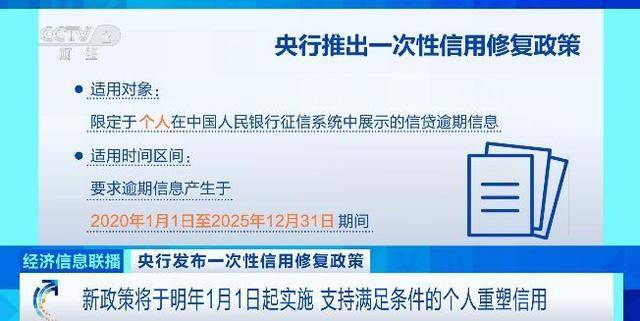
(央视财经《经济信息联播》)22日,中国人民银行出台一次性信用修复政策,支持信用受损但积极还 款的个人高效便捷重塑信用。新政策将于明年1月1日起实施。 适用前提:为个人在2026年3月31日前(含3月31日)足额偿还逾期债务。 符合上述条件的逾期信息,将作不予展示处理,在政策实施后,个人信用报告中的"还款状态"将由逾期 标识调整为正常标识。 中国人民银行副行长 邹澜:目前央行征信系统已经成为我国一项重要的金融基础设施,日均对外提供 查询服务达到两千万笔。 本次信用修复政策主要有四个方面的适用条件: 适用对象:限定于个人在中国人民银行征信系统中展示的信贷逾期信息 适用时间区间:要求逾期信息产生于2020年1月1日至2025年12月31日期间 适用金额:为单笔逾期金额不超过1万元 央行表示,这项政策是精准修复,绝非"征信洗白",核心是解决群众"信用困境",绝非债务豁免,只有 全额结清逾期债务,才能享受信用记录调整的政策红利,债务偿还的核心责任并未免除;"守信激励、 失信惩戒"始终是我国信用体系的重要原则,这条"底线"也从未动摇。 中国人民银行副行长 邹澜:在个人层面,政策为曾经失信的个人提供容错纠正的机会,有助于 ...
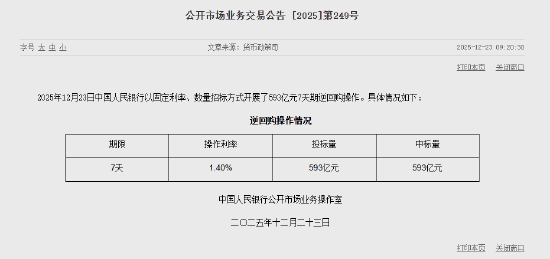
央行今日开展593亿元7天期逆回购操作
Xin Lang Cai Jing· 2025-12-23 01:28
12月23日金融一线消息,中国人民银行以固定利率、数量招标方式开展了593亿元7天期逆回购操作。 12月23日金融一线消息,中国人民银行以固定利率、数量招标方式开展了593亿元7天期逆回购操作。 | 公开市场业务交易公告 [2025]第249号 | | | | | --- | --- | --- | --- | | 字号 本 中 中 | 文章未说:因而政府司 | 2025-12-23 09:20:30 | | | 打印本页 关闭窗口 | | | | | 2026年12月20日中国人民银行以固定利率、数量招标方式开展了633亿元7天期逆回购操作。具体情况如下: | | | | | 逆回购提作情况 | | | | | 期障 | 操作利率 | 投标量 | 中标量 | | 7天 | 1.40% | 593亿元 | 593亿元 | | 中国人民银行公开市场业务操作室 | | | | | 二〇二五年十二月二十三日 | | | | | 打印本页 关闭新日 | | | | 责任编辑:秦艺 责任编辑:秦艺 ...
鲍韶山:为什么西方鼓吹人民币加速升值,效果可能适得其反?
Sou Hu Cai Jing· 2025-12-23 00:44
Core Viewpoint - The article argues that calls for the rapid appreciation of the Renminbi (RMB) by Western institutions, including the IMF, may have adverse effects on Western economies and could lead to increased social instability. Instead of pushing for a quick appreciation, Western advocates should appreciate China's strategy of maintaining RMB stability [1][6][10]. Group 1: RMB Appreciation Pressure - Western economies, particularly the U.S., have long pressured China to appreciate its currency, viewing it as a solution to trade imbalances. This perspective is rooted in neoclassical economic theory, which suggests that RMB appreciation would make Chinese exports more expensive and reduce trade surpluses [1][6]. - The IMF's annual report suggests measures to promote RMB appreciation and reduce China's current account surplus, indicating ongoing pressure for a more market-oriented exchange rate [5][9]. Group 2: Foreign Value Added (FVA) Mechanism - China's export model is deeply integrated into global value chains, with a significant portion of export value derived from imported intermediate goods. This creates a paradox where RMB appreciation could lower the cost of these imports, potentially enhancing the competitiveness of Chinese exporters [7][8]. - The OECD's TiVA database shows that in key export sectors like electronics (35-42%), machinery (30-37%), and chemicals (25-41%), FVA remains high, indicating reliance on imported inputs [7]. Group 3: Asymmetric Impact on the U.S. Economy - The article highlights that while RMB appreciation may provide a buffer for Chinese exporters, the U.S. economy lacks similar protections, leading to increased input costs without offsetting benefits. This dynamic could exacerbate inflation and widen the trade deficit for U.S. companies [11][12]. - U.S. manufacturing, which relies heavily on domestic content (85-90%), faces challenges as imported intermediate goods become more expensive without equivalent cost relief [11][12]. Group 4: RMB Internationalization and Strategic Implications - The ongoing internationalization of the RMB adds a strategic dimension to the appreciation paradox, allowing China to insulate key markets from exchange rate fluctuations while enhancing its competitiveness. By 2025, RMB settlements in cross-border transactions are expected to exceed 50% [16][19]. - The increasing use of RMB in trade with countries in the Global South provides a buffer against the adverse effects of appreciation, allowing Chinese exporters to maintain stable income while insulating buyers from price increases [22][23]. Group 5: Conclusion on RMB Appreciation Calls - The article concludes that calls for rapid RMB appreciation may inadvertently strengthen China's export position rather than achieve the intended rebalancing of trade. The structural differences between the Chinese and U.S. economies amplify the risks of adverse effects on Western interests [24].
央行发布一次性信用修复政策 支持符合条件的人群重塑个人信用
Zhong Guo Zheng Quan Bao· 2025-12-22 23:47
Core Viewpoint - The People's Bank of China (PBOC) has announced a one-time credit repair policy effective from January 1, 2026, aimed at helping individuals with overdue debts to restore their credit ratings without the need for application, thereby enhancing the efficiency of credit restoration for those who have actively repaid their debts [1][2]. Group 1: Policy Details - The one-time credit repair policy will not display overdue information in personal credit reports for eligible individuals who meet specific criteria, including overdue information generated between January 1, 2020, and December 31, 2025, with a single overdue amount not exceeding 10,000 yuan [2]. - Individuals must fully repay their overdue debts by March 31, 2026, to qualify for the policy, with adjustments to credit information occurring based on the repayment date [2][3]. - The policy includes a three-month grace period, allowing individuals to repay overdue debts within this timeframe to still benefit from the credit repair [3]. Group 2: Expected Impact - The policy is expected to provide individuals with a chance to correct past credit issues, thereby improving their credit status and stimulating economic activity at the micro level [4]. - Financial institutions will benefit from more accurate identification of individual credit statuses, enhancing the quality of inclusive financial services [4]. - The policy aims to strengthen the awareness of creditworthiness among individuals in future economic activities, reinforcing the foundational role of the credit system in promoting trust and accountability in society [4]. Group 3: Industry Development - The PBOC is focusing on optimizing the credit market layout during a transformative period for the credit industry, emphasizing risk prevention, strong regulation, and high-quality development [5]. - The PBOC will adhere to principles of serving the public, a dual approach of government and market, and a balance between development and safety in its future initiatives [5]. - The PBOC aims to enhance the role of credit in building a social credit system, providing diverse product offerings, convenient credit services, and robust rights protection to support financial services for the real economy and mitigate financial risks [5].
一次性信用修复政策助力个人重塑信用
Xin Lang Cai Jing· 2025-12-22 23:27
(来源:嘉兴日报) 根据相关安排,政策适用对象限定于个人在中国人民银行征信系统中展示的信贷逾期信息;适用时间区 间要求逾期信息产生于2020年1月1日至2025年12月31日期间;适用金额为单笔逾期金额不超过1万元; 适用前提是个人在2026年3月31日(含)前足额偿还逾期债务。符合上述条件的逾期信息,将不会在个 人信用报告中予以展示。 中国人民银行相关人士介绍,一次性信用修复政策实行"免申即享",个人无需申请和操作,也无需提交 证明材料,由中国人民银行征信系统自2026年1月1日起对符合条件的逾期信息进行自动识别和统一处 理。个人若要确认逾期信息调整情况,可通过线上、线下方式查询信用报告进行了解。作为配套措施, 中国人民银行明确2026年上半年将额外增加2次线下免费查询个人信用报告的机会。 中国人民银行提醒公众,一次性信用修复政策不收取任何费用、不需要第三方代理,任何以该政策名义 索要钱财、索取信息的都是诈骗行为。 转自:嘉兴日报 新华社北京12月22日电(记者吴雨 任军)12月22日,中国人民银行对外发布一次性信用修复政策有关 安排,符合相关条件的逾期信息,将不会在个人信用报告中予以展示。个人无需申请和操 ...