
LPR报价

Search documents
2026年1月LPR报价保持不变,二季度有望跟进政策利率下调
Dong Fang Jin Cheng· 2026-01-20 02:56
Group 1: LPR Pricing and Economic Indicators - The LPR for 1-year and 5-year periods remains unchanged at 3.0% and 3.5% respectively as of January 2026, consistent with market expectations[1] - The stability in LPR pricing is attributed to unchanged policy rates and stable market interest rates, particularly in the interbank lending market[2] - Economic growth is projected to rebound to approximately 4.7% year-on-year in Q1 2026, despite challenges in the real estate market and weakened investment and consumption[3] Group 2: Future Monetary Policy Outlook - There is potential for a comprehensive policy rate cut in Q2 2026, which may lead to a decrease in LPR pricing to stimulate consumption and investment[3] - The 2026 inflation rate is expected to remain low, allowing for a moderately accommodative monetary policy, including potential interest rate cuts[4] - The Federal Reserve's anticipated rate cuts in 2026 may reduce constraints on domestic monetary policy adjustments[5] - Regulatory measures may be implemented to significantly lower the 5-year LPR to address high residential mortgage rates and stimulate housing demand[5]
东方金诚:2026年1月LPR报价保持不变,二季度有望跟进政策利率下调
Jin Rong Jie· 2026-01-20 02:44
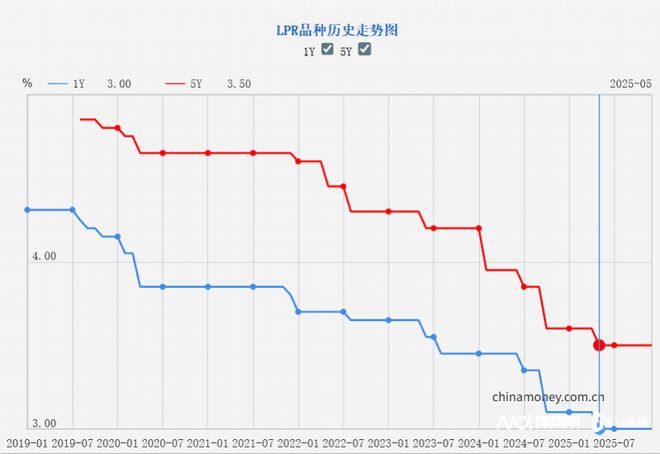
Core Viewpoint - The People's Bank of China has maintained the Loan Prime Rate (LPR) unchanged for both 1-year and 5-year terms at 3.0% and 3.5% respectively, reflecting market expectations and stable monetary policy conditions [1] Group 1: LPR and Monetary Policy - The LPR quotes for January remained stable due to unchanged policy rates and stable medium to long-term market interest rates, indicating a lack of incentive for banks to lower LPR spreads [1] - Since June 2025, the LPR has not changed, primarily driven by strong export performance and rapid development in high-tech manufacturing sectors, allowing the macro economy to withstand external pressures [1] Group 2: Economic Outlook - Despite a downward trend in economic growth due to real estate market adjustments and weakened investment and consumption, employment remains stable and inflation is showing signs of recovery [2] - GDP growth is expected to rebound to approximately 4.7% year-on-year in Q1 2026, with monetary policy likely to remain stable in the short term [2] - There is potential for comprehensive policy rate cuts if economic pressures increase in Q2 2026, which could lead to a reduction in LPR and lower loan rates for businesses and households [2] Group 3: Real Estate Market Stability - Efforts will be made to stabilize the real estate market, with expectations that regulatory measures may lead to significant reductions in the 5-year LPR, combined with fiscal subsidies to lower residential mortgage rates [3]
2026宏观经济日历
陈兴宏观研究· 2026-01-02 03:40
Core Viewpoint - The article provides a macroeconomic calendar for 2026, detailing important economic data releases and meetings that could impact market conditions and investment strategies [1]. Domestic Data - PMI data is scheduled for release on January 31, February 4, March 31, April 30, May 31, June 30, July 31, August 31, September 30, October 31, November 30, and December 31 [1]. - Foreign trade data will be released on March 14, February 10, February 14, June 9, February 14, and December 10 [1]. - Financial data is expected to be published between 16:00 and 19:00 on January 12, February 13, March 13, April 13, May 12, June 12, July 13, August 14, September 11, October 12, November 13, and December 11 [1]. - Price data will be available on January 9:30, February 11, March 9, April 10, May 11, June 10, July 9, August 9, September 14, October 9, November 9, and December 9 [1]. - Industrial enterprise profit data is set for release on January 9:30, February 271, March 271, April 271, May 271, June 271, July 271, August 271, September 271, October 271, November 271, and December 271 [1]. Overseas Data - U.S. non-farm employment data will be released on January 9, February 6, March 6, April 3, May 8, June 5, July 2, August 4, September 21, October 6, November 4, and December 4 [1]. - U.S. CPI data is scheduled for January 13, February 11, March 11, April 10, May 12, June 10, July 14, August 12, September 11, October 14, November 10, and December 10 [1]. - U.S. GDP data will be available on April 29, with no specific dates for other months [1]. - The Federal Reserve's interest rate meeting is set for April 29, September 19, and November 1 [1]. Important Meetings - The Central Economic Work Conference is expected to occur in mid-December [1]. - The Political Bureau meeting focused on economic research is scheduled for the end of each month [1]. - The Boao Forum for Asia Annual Conference will take place from April 24 to April 27 [1].


债市 关注期限利差变化
Qi Huo Ri Bao· 2025-12-25 16:21
Group 1 - The bond market experienced fluctuations in December, with weak performance particularly in the ultra-long end, and the year-end allocation market has not yet emerged [1] - As of December 24, the 10-year and 30-year government bond yields were reported at 1.8370% and 2.22%, respectively, reflecting increases of 0.8 and 4 basis points since the end of November [1] - The yield spread between the 30-year and 10-year government bonds has generally trended upward since September 2024, with significant fluctuations observed [1][2] Group 2 - The relationship between yield spreads and economic cycles indicates that a strengthening economic outlook and monetary easing can support the recovery of yield spreads [2] - The demand for ultra-long government bonds has changed, with a weakening trading volume observed, despite the expectation of a rebound in yields in 2025 [2] - Factors supporting the further widening of the yield spread include changes in asset allocation by insurance institutions and reduced demand from banks for ultra-long bonds [2][3] Group 3 - The current global liquidity environment remains loose, and the domestic economic and policy landscape is stabilizing, leading to continued pressure on the bond market in the short term [3] - The short-term volatility of the 30-year government bond is expected to increase, with the possibility of further widening of the yield spread against the 10-year bond [3]
LPR报价七个月不变,专家:新一轮降息降准或春节前落地
Nan Fang Du Shi Bao· 2025-12-23 05:56
Group 1 - The People's Bank of China (PBOC) has maintained the Loan Prime Rate (LPR) at 3.0% for the 1-year term and 3.5% for the 5-year term since June, indicating a stable monetary policy environment [1][3] - The central economic work conference has set the tone for next year's monetary policy, emphasizing the need for a moderately accommodative approach to support economic stability and reasonable price recovery [4][5] - Analysts predict that the window for interest rate cuts may open in the first quarter of 2026, with potential reductions in both interest rates and reserve requirements [3][5] Group 2 - The PBOC's recent meeting highlighted the importance of maintaining ample liquidity and supporting the real economy through various monetary policy tools, while ensuring a stable RMB exchange rate [4][6] - The expected policy rate cuts could lead to a decrease in LPR, further stimulating internal financing demand and countering external economic pressures [6][5] - The shift from investment-driven to consumption-driven economic growth is reflected in the declining loan growth rates, indicating a transition towards high-quality development [6][5]
国债期货预计震荡整理
Bao Cheng Qi Huo· 2025-12-22 10:08
Group 1: Report Industry Investment Rating - No information provided Group 2: Core Viewpoints - Today, Treasury bond futures fluctuated and pulled back. Currently, there is pressure above and support below Treasury bond futures, with weak driving forces, so they are expected to maintain a fluctuating consolidation. On the one hand, the problem of insufficient effective domestic demand still exists, and the monetary policy environment next year is expected to be loose, with interest rate cuts and reserve requirement ratio cuts still anticipated. Coupled with the weak implied interest rate cut expectations in the current market interest rates, Treasury bond futures have strong support. On the other hand, in the short term, macroeconomic data shows strong resilience, and the urgency for a comprehensive interest rate cut in the short term is not high. Coupled with fewer uncertainties and disturbances in the recent internal and external environment, Treasury bond futures lack upward drivers. In general, Treasury bond futures will mainly fluctuate and consolidate in the short term [4] Group 3: Summary by Relevant Catalogs Industry News and Related Charts - On December 22, the People's Bank of China authorized the National Interbank Funding Center to announce the latest LPR quotation. The 1-year LPR was reported at 3.0%, the same as last month; the 5-year and above LPR was reported at 3.5%, also the same as last month. Thus, the LPR quotations for both tenors have remained unchanged for 7 consecutive months. On December 22, the central bank conducted 6.73 billion yuan of 7-day reverse repurchase operations today, with an operating interest rate of 1.40%, the same as before [6]
12月LPR报价保持不变,解读来了
Sou Hu Cai Jing· 2025-12-22 03:14
Core Viewpoint - The LPR (Loan Prime Rate) has remained unchanged for seven consecutive months, with the 1-year rate at 3.0% and the 5-year rate at 3.5%, reflecting stable market liquidity and a low-interest environment [1][2] Group 1: LPR Quotation Stability - The LPR rates for December remained stable due to the unchanged policy rates, indicating no significant changes in the pricing basis for LPR [1] - The slight increase in financing costs for commercial banks in the money market has reduced the incentive for banks to lower the LPR [1] Group 2: Economic Context and Future Projections - The resilience of the macro economy, supported by strong exports and rapid development in new productivity sectors, has alleviated the urgency for aggressive counter-cyclical adjustments [2] - The Central Economic Work Conference has indicated a continuation of moderately loose monetary policy into 2026, with potential for interest rate cuts in the first quarter of 2026 to stimulate domestic financing demand [2] - The current low inflation levels provide ample space for monetary policy adjustments, including potential interest rate cuts, especially in light of the Federal Reserve's recent rate reductions [2]
11月LPR报价保持不变符合市场预期,年底前有可能下调
Dong Fang Jin Cheng· 2025-11-20 03:21
Group 1: LPR Pricing and Market Expectations - The LPR rates for November remain unchanged at 3.0% for the 1-year term and 3.5% for the 5-year term, consistent with market expectations[1] - The stability in LPR pricing is attributed to the unchanged policy interest rates since the last announcement on October 20, indicating no significant changes in the pricing basis[2] - The lack of motivation for banks to lower LPR rates is due to historically low net interest margins, despite a slight decrease in financing costs in the money market[2] Group 2: Economic Outlook and Policy Implications - Recent economic indicators show a decline in domestic investment, consumption, and industrial production, with export growth turning negative, raising concerns about economic momentum[3] - To stabilize economic performance in Q4 2023 and Q1 2024, it is anticipated that monetary policy may shift towards a new round of interest rate cuts and reserve requirement ratio reductions by year-end[3] - The low current price levels provide sufficient room for monetary policy to adopt a moderately accommodative stance, including potential interest rate cuts[3] Group 3: Housing Market Policies - There is an expectation for stronger policies to stabilize the housing market, potentially leading to a reduction in the 5-year LPR to lower residential mortgage rates significantly[4] - This move is seen as crucial for alleviating high actual mortgage rates and stimulating housing market demand[4]
LPR维持不变,专家预计未来或有5基点至10基点降幅|快讯
Hua Xia Shi Bao· 2025-10-20 02:57
Core Viewpoint - The latest LPR (Loan Prime Rate) quotes remain unchanged for both the 1-year and 5-year terms, indicating stability in the monetary policy environment and aligning with market expectations [2][3] Group 1: LPR Stability - The 1-year LPR is quoted at 3.0% and the 5-year LPR at 3.5%, unchanged from the previous month, marking five consecutive months of stability since a decline in May [2] - Analysts suggest that the stability in LPR is due to the unchanged policy rates, particularly the central bank's 7-day reverse repurchase rate, which has remained stable throughout October [2] Group 2: Market Conditions - Recent increases in major medium to long-term market interest rates, including the AAA-rated 1-year interbank certificates of deposit, have led to a slight rise in commercial banks' financing costs [2] - The current environment of historically low net interest margins for commercial banks reduces the incentive for banks to actively lower LPR quotes [2] Group 3: Future Expectations - Analysts predict potential downward adjustments in policy rates and LPR quotes by the end of the year, driven by efforts to boost domestic demand and stabilize the real estate market [2] - The recent decision by the Federal Reserve to resume interest rate cuts may further ease external constraints on China's monetary policy, increasing the likelihood of new rounds of rate cuts and reserve requirement ratio reductions by the central bank [2][3]

9月LPR维持不变:1年期3%,5年期以上3.5%|快讯
Hua Xia Shi Bao· 2025-09-22 06:57
Core Viewpoint - The People's Bank of China has maintained the LPR rates for both 1-year and 5-year terms at 3.0% and 3.5% respectively for four consecutive months, aligning with market expectations [2] Group 1: LPR Rates - The 1-year LPR remains at 3.0% and the 5-year LPR at 3.5%, unchanged for four months [2] - The stability in policy rates, particularly the central bank's 7-day reverse repurchase rate, indicates no changes in the pricing basis for LPR this month [2] Group 2: Future Expectations - Industry experts anticipate a potential new round of interest rate cuts and reserve requirement ratio reductions in the fourth quarter, which may lead to a decrease in LPR rates [2] - A significant reduction in loan rates for enterprises and residents is expected, aimed at stimulating internal financing demand and promoting consumption and investment [2] - There is an expectation for stronger policies to stabilize the real estate market, potentially leading to a more substantial decrease in residential mortgage rates through targeted adjustments to the 5-year LPR [2]