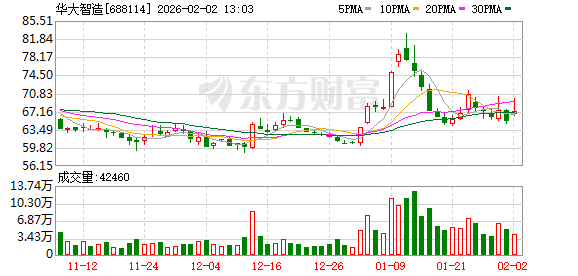
华大智造

Search documents
整合时空组学与纳米孔测序两大平台,华大智造拟溢价收购实控人旗下未盈利资产
Bei Jing Shang Bao· 2026-02-03 11:03
Core Viewpoint - BGI Genomics (688114) plans to acquire 100% equity of two companies, Shenzhen BGI Sanjian Qifa Technology Co., Ltd. and Hangzhou BGI Xufeng Technology Co., Ltd., for a total of 366 million yuan, integrating cutting-edge technologies in spatial omics and nanopore sequencing into its business [2][4]. Group 1: Acquisition Details - The total transaction price for the acquisition is 366 million yuan, with BGI Sanjian Qifa valued at 158 million yuan and BGI Xufeng at 208 million yuan [4]. - BGI Genomics will also inject 70 million yuan and 60 million yuan into BGI Sanjian Qifa and BGI Xufeng, respectively, to support their operations and business expansion [4]. - A loan of 70 million yuan will be provided to BGI Xufeng at an interest rate of 2.5% for three years to repay debts [4]. Group 2: Financial Performance and Projections - Both BGI Sanjian Qifa and BGI Xufeng are currently in the R&D phase and have not yet achieved profitability, with projected revenues of 607.43 million yuan and 279.96 million yuan for BGI Sanjian Qifa in 2024 and 2025, respectively [6]. - BGI Xufeng is expected to generate revenues of 440.23 million yuan and 661.38 million yuan in the same periods, with significant net losses reported [6]. - Profitability is anticipated for BGI Sanjian Qifa and BGI Xufeng by 2026 and 2028, respectively, with performance commitments set for net profits during these years [7][11]. Group 3: Strategic Implications - The acquisition will enable BGI Genomics to create a comprehensive technology chain covering short-read, long-read, and spatial omics technologies, positioning it uniquely in the global market [6][8]. - The integration of these technologies is expected to enhance BGI Genomics' competitive edge and profitability in the long term, potentially serving as a new growth engine [7][8]. - The strategic alignment of BGI Sanjian Qifa's spatial omics with BGI Genomics' existing platforms is anticipated to attract new customers and meet complex research needs [8]. Group 4: Valuation and Market Considerations - The valuation of BGI Sanjian Qifa shows a high appreciation rate of 2460.66%, while BGI Xufeng has a valuation increase of 296.55% [9][10]. - The assessment of these companies considers not only tangible assets but also intangible resources such as brand, technology, and customer relationships [10]. - The transaction is viewed as having a strong cost advantage compared to industry peers, with dynamic price-to-sales ratios around 3 times lower than comparable companies in their respective fields [10].


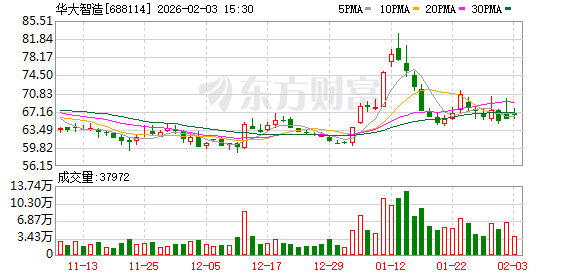
华大智造电话会详解双业务收购:现阶段为基于战略价值与性价比的双重最优
Jin Rong Jie· 2026-02-03 09:51
2月2日,深圳华大智造科技股份有限公司(以下简称"华大智造",股票代码:688114)召开投资者电话 会议,就公司近期推进的对深圳华大三箭齐发科技有限责任公司(以下简称"三箭齐发")和杭州华大序 风科技有限公司(以下简称"华大序风")的收购计划进行深入解读。本次收购总金额达3.66亿元,标志 着华大智造将推进时空组学与纳米孔测序两大前沿技术平台的整合,成为全球唯一覆盖"全读长测序 +空间组学"全链条产品矩阵的生命科技企业。 根据华大智造投资者关系活动记录表披露的内容,公司管理层在会上主要对此次交易的必要性、对价合 理性以及双方整合后对上市公司的长期利好进行了说明,以下为纪要中披露的两个核心问题: 问1:公司选择在时空组学、纳米孔测序业务发展阶段完成本次收购,核心考量是什么? 责任编辑:安东 答:本次收购完成后,公司将从技术产品、市场渠道、运营管理三大维度共同推进标的公司业务与现有 主业的深度协同整合,实现资源共享及优势互补。 在技术与产品层面,公司目前已实现装机量的高度突破,根据招投标公开信息整理,公司2025年中国区 公开招标市场占率已达70%左右。参考业内可比公司试剂收入占比的发展路径,智造也将迈入发展新 ...
华大智造回应收购战略考量:整合打造“全读长测序+空间组学”全球唯一技术链
Hua Xia Shi Bao· 2026-02-03 09:05
Core Viewpoint - The acquisition of Shenzhen Huada Zhi Zao Technology Co., Ltd. (Huada Zhi Zao) of Shenzhen Huada Sanjian Qifa Technology Co., Ltd. and Hangzhou Huada Xufeng Technology Co., Ltd. for a total amount of 366 million yuan marks a strategic move to integrate cutting-edge technologies in spatial omics and nanopore sequencing, positioning the company as a unique player in the life sciences sector with a comprehensive product matrix covering "full-length sequencing + spatial omics" [1][2][3] Financial Considerations - The acquisition is deemed strategically valuable and cost-effective, with the target companies still in the incubation stage and not yet profitable, allowing for a valuation that reflects their actual business value [1][2] - The dynamic price-to-sales (PS) ratios of the target companies are around 3 times, significantly lower than comparable companies in their respective fields, indicating a favorable acquisition price [1] Long-term Strategic Layout - The integration of spatial omics with the existing DNBSEQ platform and nanopore sequencing will create a complete solution that enhances technical synergy and fulfills complex research needs, thereby increasing customer loyalty [2][3] - The acquisition will internalize core technologies, R&D teams, and intellectual property, establishing a unique technological barrier that supports long-term growth [3] Integration and Synergy Plans - Post-acquisition, the company plans to enhance collaboration across technology products, market channels, and operational management to achieve resource sharing and complementary advantages [4] - The company has achieved a 70% market share in the public tender market in China by 2025, which will support the growth of reagent consumption driven by installed instruments [5] Market and Channel Development - The target companies' customer bases align well with the existing product offerings, facilitating rapid business expansion and enhancing the company's market presence in various fields, including clinical applications and agricultural research [6] - The company has established a global marketing network covering over 110 countries and regions, which will enable quick integration and support for the target companies [6] Operational Management - The integration will leverage the high connectivity of the entire research, production, and sales chain, maximizing synergy and reinforcing the company's competitive edge in life science instruments and solutions [7] - The established supply chain and production capabilities will facilitate the production of the target companies' products, ensuring quality and cost-effectiveness [7]
华金证券:AI医疗健康应用前景广阔 国内AI医疗市场有望高速增长
智通财经网· 2026-02-03 02:27
Group 1 - The core viewpoint is that AI has penetrated the entire healthcare industry chain, with significant growth driven by technological advancements and policy support [1][2] - AI applications in healthcare vary in maturity, with smart healthcare, particularly in medical imaging, being one of the most developed areas [2] - The global market for AI solutions in healthcare is projected to grow from $13.7 billion in 2022 to $155.3 billion by 2030, with a CAGR of 35.5% [2] Group 2 - Recent policies from multiple government departments are promoting the application of AI in healthcare, with the National Medical Products Administration prioritizing "AI medical devices" as a key development area [2] - AI medical products are being rapidly implemented, with companies like Mindray and United Imaging set to release advanced AI models in the coming years [4] - The performance of the Shenwan Pharmaceutical Index has been mixed, with a recent decline of 3.68%, underperforming the CSI 300 Index [3]
创新链系列:中国创新药研发景气度渐趋改善,早研产业链或显著受益
Changjiang Securities· 2026-02-02 15:09
Investment Rating - The investment rating for the healthcare industry is "Positive" and maintained [14] Core Insights - The funding levels for Chinese innovative pharmaceutical companies are increasing, leading to a gradual improvement in the research and development (R&D) investment sentiment within the industry. This is expected to usher in a new cycle of prosperity for the innovative drug industry chain [5][12] - The trend of external business development (BD) is likely to benefit the domestic early-stage research industry significantly, as new business models allow early-stage projects to become tradable and monetizable assets, enhancing R&D investment returns [13] Summary by Sections Innovative Chain Development Review - Before 2020, multiple factors converged to initiate a significant rise in China's innovative drug sector, leading to the rapid development of the innovative chain, including CXO and life sciences services [10][30] - From 2020 to the first half of 2022, the global public health crisis accelerated capital inflow into the biopharmaceutical sector, resulting in high demand and a leap in the innovative chain segment, which also triggered a wave of IPOs and substantial supply-side expansion [10][39] - The second half of 2022 to 2024 saw a transition from a heated to a cooling phase, with a significant shift in supply-demand dynamics leading to industry internal competition and pressure on revenues and profit margins [10][54][57] Improvement in R&D Investment Sentiment - Starting from 2025, the R&D investment sentiment in China's innovative drug sector is expected to improve, with companies experiencing increased funding levels. The total amount raised through IPOs and additional offerings in 2025 is projected to reach 201.5 billion yuan, a 145% year-on-year increase [11][62] - The potential milestone payments from external BD are expected to reach 880.5 billion yuan in 2025, marking a 185.9% year-on-year increase, indicating a robust funding environment for innovative drug companies [11] Benefits to Early-stage Research Industry - The new external BD business model enhances the R&D investment return rates for Chinese innovative drug companies, thereby increasing their willingness to invest in R&D [11][13] - The early-stage research industry, including drug discovery CROs and clinical trial services, is expected to benefit significantly from the external BD trend, with leading companies in these segments poised for rapid growth [13]



3.66亿,华大智造公布收购华大序风和华大时空
Xin Lang Cai Jing· 2026-02-02 10:51
Core Viewpoint - BGI Genomics plans to acquire two companies for 366 million yuan, integrating spatiotemporal omics and nanopore sequencing assets to establish a comprehensive technology chain of "short-read long + long-read long + spatial omics," becoming the only life science company globally to cover these three major technologies, while also strengthening its "AI + life sciences + brain-computer interface" layout [1][7][12] Transaction Details - BGI Genomics intends to acquire 100% equity of Shenzhen BGI Sanjianqifa Technology Co., Ltd. and Hangzhou BGI Xufeng Technology Co., Ltd. through cash transactions, with a total transaction price of 365.7 million yuan, comprising 158 million yuan for Sanjianqifa and 207.7 million yuan for Xufeng [3][10][12] - Following the acquisition of Sanjianqifa, BGI Genomics plans to increase its capital by 70 million yuan, with 22.15 million yuan allocated to registered capital and 47.85 million yuan to capital reserves [3][11] - After the acquisition of Xufeng, BGI Genomics plans to increase its capital by 60 million yuan, with 14.44 million yuan allocated to registered capital and 45.56 million yuan to capital reserves [4][11] Strategic Implications - The acquisition allows BGI Genomics to consolidate second-generation sequencing, long-read nanopore sequencing, and spatiotemporal omics technologies, completing a full technology chain and positioning itself as one of the few life science tool companies globally to cover this complete matrix [5][12] - This integration enhances the company's ability to provide independent and comprehensive solutions in upstream tools, broadening research and clinical application scenarios, and reshaping industry competition logic, transitioning from a single technology leader to a platform-based ecosystem leader [5][12]

3.66亿,华大智造公布收购华大序风和华大时空
仪器信息网· 2026-02-02 09:02
Core Viewpoint - BGI Genomics plans to acquire two companies for 366 million yuan, integrating spatiotemporal omics and nanopore sequencing assets to establish a comprehensive technology chain of "short-read long + long-read long + spatial omics," becoming the only life science enterprise globally to cover these three major technologies, while also strengthening its layout in "AI + life sciences + brain-computer interfaces" [1][6]. Transaction Details - BGI Genomics intends to acquire 100% equity of Shenzhen BGI Sanjian Qifa Technology Co., Ltd. and Hangzhou BGI Xufeng Technology Co., Ltd. through cash, with a total transaction price of 365.7 million yuan, where the equity of Sanjian Qifa is priced at 158 million yuan and that of BGI Xufeng at 207.7 million yuan [2][4]. Capital Increase Plans - After the acquisition of Sanjian Qifa, BGI Genomics plans to increase its capital by 70 million yuan, with 22.15 million yuan allocated to registered capital and 47.84 million yuan to capital reserves, ensuring that the funds are used for daily operations, business expansion, and payment for intellectual property rights [4][5]. - Following the acquisition of BGI Xufeng, BGI Genomics plans to increase its capital by 60 million yuan, with 14.44 million yuan allocated to registered capital and 45.56 million yuan to capital reserves, also ensuring that the funds are used for similar purposes [5]. Strategic Implications - The acquisition allows BGI Genomics to consolidate second-generation sequencing, nanopore long-read sequencing, and spatiotemporal omics technologies, completing a full technology chain from short-read to long-read and from sequence analysis to spatial dimensions, positioning the company among the few globally that cover this complete matrix in life science tools [6]. - This integration enhances the company's ability to provide autonomous and controllable upstream tools and one-stop solutions, broadening research and clinical application scenarios, and reshaping industry competition logic, facilitating a transition from single-point technology leadership to platform-based ecological dominance [6].

华为云发布“行业AI梦工厂”智慧医疗专区!规模最大的医疗设备ETF(159873)获资金逆势布局,实时净申购1100万份
Sou Hu Cai Jing· 2026-02-02 07:01
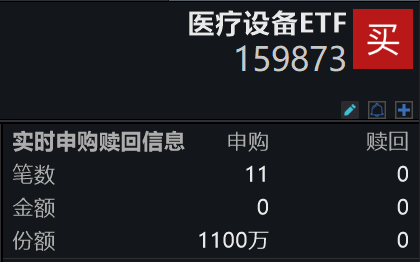
Group 1: ETF Performance - As of February 2, 2026, the Medical Equipment ETF (159873) had a turnover of 5.82% with a transaction volume of 14.6087 million yuan, while the tracked index, the CSI All Share Healthcare Equipment and Services Index (H30178), fell by 1.44% [1] - The Medical Equipment ETF (159873) saw a net subscription of 11 million shares during the trading session [2] - The Biopharmaceutical ETF (159859) had a turnover of 3.87% with a transaction volume of 142 million yuan, and the corresponding index, the National Biopharmaceutical Index (399441), decreased by 2.18% [2] Group 2: Fund Flows - The Medical Equipment ETF (159873) experienced a net inflow of 4.2585 million yuan, with a total of 22.8076 million yuan net inflow over the last five trading days [2] - The Biopharmaceutical ETF (159859) achieved a new high in scale at 3.705 billion yuan and a new high in shares at 9.396 billion shares as of January 30 [3] - The Biopharmaceutical ETF (159859) has seen continuous net inflows over the past ten days, totaling 425 million yuan [3] Group 3: Sector Insights - The Medical Equipment ETF (159873) has a high content of brain-computer interface technology, accounting for over 17%, indicating strong technological attributes [3] - The overall industry landscape for medical devices is improving, with leading companies showing performance recovery in Q3, suggesting potential for future capital inflows [6] - The innovative drug sector is expected to see a recovery phase, with a focus on domestic innovation and increased global participation, indicating a positive outlook for investment opportunities [7]
华大智造杨梦:AI落地关键是“人如何与智能体协作”
2 1 Shi Ji Jing Ji Bao Dao· 2026-02-02 05:05
Core Insights - The article emphasizes that artificial intelligence (AI) has reached a critical turning point, particularly in the life sciences sector, where it is driving significant innovations in gene sequencing, laboratory automation, and biomanufacturing [2][3] - The integration of AI into life sciences is transforming traditional laboratory processes, enabling faster and more efficient workflows, and enhancing the potential of "AI + life sciences" [2][3] Group 1: AI Advancements in Life Sciences - AI has enabled a reduction in sequencing cycle time from 2-2.5 minutes to 75 seconds, achieving a time reduction of approximately 40%-50% [3] - The development cycle for targeted primer design has been shortened from 2-3 weeks to 4-5 days, with costs decreasing by 60%-70% and efficiency increasing by 2-3 times [3] - AI's application in life sciences is seen as a means to overcome the bottleneck between data and algorithms, facilitating the faster implementation of laboratory hardware and software [2][3] Group 2: Technological Innovations - The company has developed a self-luminous semiconductor rapid sequencing instrument that replaces traditional laser systems with smartphone camera sensors, enhancing portability and cost-effectiveness [7][8] - This new sequencing instrument is designed to be an entry-level tool, making it suitable for small laboratories, community hospitals, and educational institutions [7][8] - AI technology is deeply integrated into the product's core modules, enhancing performance and user experience through intelligent software upgrades [11][12] Group 3: Future Trends and Challenges - The future of sequencing technology is expected to evolve towards a model where samples lead directly to insights, with clinical applications achieving "sample in, diagnosis out" and research achieving "sample in, results out" [9][10] - The integration of AI in clinical settings will focus on full-process quality control and intelligent reporting, which are critical for ensuring reliability and compliance [9][10] - Challenges include the need for a paradigm shift in human-machine collaboration and addressing ethical concerns related to AI applications in clinical settings [13][14]

21专访|华大智造杨梦:AI落地关键是“人如何与智能体协作”
2 1 Shi Ji Jing Ji Bao Dao· 2026-02-02 05:03
Core Insights - The CEO of Nvidia, Jensen Huang, stated that AI technology has reached a critical "threshold," indicating a consensus in the industry that AI is entering a new phase, particularly in generative AI and large language models by 2025 [2] - Significant breakthroughs in AI technology have been observed across various industries, especially in life sciences, where AI is driving paradigm shifts through innovations in gene sequencing, laboratory automation, and biomanufacturing [2] Group 1: AI Advancements in Life Sciences - The integration of AI with gene sequencing and laboratory automation is transforming traditional laboratory practices, as highlighted by Yang Meng, Senior Vice President of BGI Genomics [2] - AI has improved sequencing efficiency, reducing single-cycle time from 2-2.5 minutes to 75 seconds, a decrease of approximately 40%-50%, and cutting the development cycle for targeted primers from 2-3 weeks to 4-5 days, lowering costs by 60%-70% [3] - The application of AI in protein design and automated characterization has significantly compressed the iteration cycle from months to weeks, enhancing overall efficiency [3] Group 2: AI and Sequence Analysis - The similarity between genomic sequences and natural language data structures has led to the exploration of using Transformer models, initially successful in natural language processing, for DNA sequence encoding [4] - However, the complexity of life systems and the constraints of physical and chemical laws mean that direct applications of natural language processing techniques to biological sequences are limited [5] - Yang Meng emphasizes the need for models that incorporate first principles of physical chemistry to better understand biological evolution and mechanisms [5] Group 3: Future Directions and Challenges - The future of sequencing technology is expected to evolve towards a model where samples lead directly to insights, with clinical applications achieving "sample in, diagnosis out" and research achieving "sample in, results out" [10] - Achieving this goal requires automation and task orchestration technologies, with AI enhancing quality control and traceability throughout the experimental process [10] - Key challenges include transforming human-machine collaboration paradigms and addressing ethical concerns regarding AI's role in clinical applications, particularly in ensuring traceability and safety [14][15] Group 4: Product Innovations - The development of a leading self-luminous semiconductor rapid sequencing instrument exemplifies AI's full-chain empowerment, enhancing portability and cost-effectiveness for small laboratories and educational institutions [8][9] - This instrument replaces traditional laser systems with smartphone camera sensors, significantly reducing size and cost, making it accessible for various applications [8] - The design logic of the sequencing instrument focuses on ease of use and flexibility, essential for widespread adoption in clinical settings [9] Group 5: Cross-Disciplinary Integration - The integration of AI with life sciences is seen as a critical area for future development, requiring collaboration between researchers from different disciplines to overcome existing barriers [18][19] - The current technological landscape allows for breaking down these barriers, enabling life science researchers to utilize computational tools effectively while helping computer scientists understand the complexities of biological systems [19]