瑞华泰

Search documents
太空光伏-万亿蓝海市场-产业趋势明确
2026-01-26 02:49
Summary of Key Points from Conference Call Industry Overview - The conference call discusses the space photovoltaic industry, highlighting the rapid growth and development of low Earth orbit (LEO) satellite technology and its implications for the market [1][2][3]. Core Insights and Arguments - **Starlink's Growth**: Starlink has launched over 7,000 LEO satellites, leading to rapid revenue growth and the initiation of direct terminal connections [1][2]. - **China's Satellite Plans**: By the end of 2025, China plans to submit over 200,000 satellites to the International Telecommunication Union, indicating a significant increase in satellite deployment [2]. - **Global Launch Projections**: It is estimated that from 2030 to 2035, global LEO satellite launches will peak at over 18,000, potentially exceeding 20,000 when considering other constellations [1][3]. - **Space Data Centers**: The development of space data centers is driven by advantages such as solar energy utilization, passive radiation cooling, and modular deployment, which lower operational costs [3]. - **Future Data Center Plans**: Elon Musk plans to establish 100GW of data centers annually over the next 4-5 years, with significant contributions from companies like NVIDIA, Google, and Amazon [1][3]. Technological Developments - **Current Technology Trends**: The leading technology is the multi-junction solar cell, which is efficient but costly. The market for this technology is approximately 3 billion RMB [4]. - **Emerging Technologies**: The silicon technology route is expected to gain market share due to cost advantages, while perovskite technology may become the ultimate solution due to its lower production costs and higher efficiency [5]. - **Flexible Solar Wings**: The demand for flexible solar wings is increasing due to the economic considerations of LEO satellites, which require lightweight and compact designs [6]. Supply Chain and Material Considerations - **Material Challenges**: The production of space-grade materials, such as PM films, requires attention to atomic oxygen erosion, necessitating protective layers [7]. - **Supplier Landscape**: Key suppliers for CPI films are from South Korea and Japan, while domestic companies in China are still developing their capabilities [8]. - **Silver Paste Issues**: Silver paste used in solar arrays faces challenges from atomic oxygen erosion, requiring corrosion-resistant treatments [9]. Market Expectations - **Future Market Size**: In an optimistic scenario, the demand for 100GW of space computing capacity is expected to be established within three years, with significant market potential in the battery segment valued at approximately 500 million to 600 million RMB per unit [14]. - **Impact of Perovskite Technology**: If perovskite becomes the dominant technology, it could create a market space of around 50 billion RMB, driving demand across the supply chain [14]. Industry Players and Strategic Moves - **Company Strategies**: Companies like Mingyang Electric and Junda Co. are making strategic moves into the multi-junction battery sector, while others focus on perovskite and heterojunction technologies [15]. - **SpaceX's IPO Impact**: SpaceX's planned IPO is expected to provide capital support for space photovoltaic construction, benefiting equipment manufacturers and domestic suppliers [16]. Conclusion - The space photovoltaic industry is poised for significant growth driven by advancements in satellite technology, emerging materials, and strategic corporate investments, with a strong emphasis on cost reduction and efficiency improvements across the supply chain.
商业航天28股封板,巨头密集砸钱入局
2 1 Shi Ji Jing Ji Bao Dao· 2026-01-23 10:53
Core Insights - The commercial space sector in China has seen significant growth since 2025, with 50 commercial launches accounting for 54% of total space launches that year [1] - The commercial space index (886078.TI) surged by 73.13% in 2025, indicating a strong market performance [1] - The traditional dominance of state-owned enterprises in the space sector is being challenged as private capital and venture capitalists increasingly enter the market [1][10] Investment Trends - Corporate venture capital (CVC) investments in commercial space have nearly doubled from 19 events in 2023 to 35 in 2025, reflecting a growing interest in the sector [3] - CVC investments are characterized by a trend towards earlier and smaller investments, with 9 seed and angel round investments and 16 A-round investments in 2025 [5] - The geographical distribution of CVC investments shows Beijing leading with 8 events, followed by Jiangsu with 6 and Guangdong with 4 [7] Notable Investments - The largest disclosed investment in 2025 was a 300 million yuan (approximately 43 million USD) Pre-A round for Shaanxi Xingyi Space Technology Co., backed by a consortium of 8 investors [7] - Beijing Lizheng Technology Co., which provides drone control solutions, also secured 300 million yuan in a C+ round from 7 institutions [7] Industry Expansion - CVC investments are expanding beyond traditional rocket and launch services to include areas such as engines, aerospace electronics, and downstream applications [8] - Notable investments include Shenzhen Xiandeng Aerospace Technology Co., which focuses on ground support for rockets, and Hunan Lanyue Electromechanical Technology Co., which manufactures satellite components [8] Investment Institutions - The investment landscape includes three main types of institutions: state-owned enterprises and national capital platforms, local state-owned capital, and industry leaders' investment platforms [9] - Examples include China Electronics Technology Group's investment arm and local funds like Shenzhen Innovation Capital [9] Cross-Industry Involvement - Increasingly, non-space industry giants from sectors like automotive, oil, and AI are investing in commercial space, indicating a shift in investment dynamics [12] - Companies like Huichuan Technology, a leader in industrial automation, have made significant investments in the space sector, reflecting a broader trend of cross-industry capital flow [13] Market Dynamics - The commercial space industry is evolving into a competitive landscape focused on large-scale delivery and system capabilities, with leading firms gaining market share through technological and operational advantages [15] - The entry of diverse capital sources is expected to enhance the growth potential of the commercial space sector, making it more integrated into the broader industrial ecosystem [10][15]



商业航天28股封板,巨头密集砸钱入局
21世纪经济报道· 2026-01-23 10:46
Core Viewpoint - The commercial aerospace sector in China has seen significant growth since 2025, with a notable increase in investment activities and market participation from various industries, indicating a shift towards commercialization and diversification in funding sources [1][10]. Investment Trends - The number of CVC investment events in commercial aerospace has increased from 19 in 2023 to 35 in 2025, nearly doubling within two years [3][5]. - CVC investments are showing a trend towards earlier and smaller investments, with 9 seed and angel round investments and 16 A-round investments in 2025, compared to only 15 such investments in 2024 [5][10]. Geographic Distribution - Beijing leads in CVC investment events with 8 occurrences, followed by Jiangsu with 6 and Guangdong with 4, all from Shenzhen [8]. Notable Investments - Shaanxi Xingyi Space Technology Co., a commercial aerospace service provider, received 300 million yuan in a Pre-A round, marking the largest CVC investment in commercial aerospace for 2025 [9]. - Beijing Lizheng Technology Co., which provides drone control solutions, also secured 300 million yuan in a C+ round from several investment firms, including a private equity fund under SAIC Group [9]. Investment Focus - CVC investments are expanding beyond traditional rocket and launch services to include areas such as engines, aerospace electronics, and downstream applications [9][10]. - The investment landscape includes three main types of investors: state-owned enterprises and national capital platforms, local state-owned capital, and industry leaders' investment platforms [10]. Cross-Industry Participation - Increasingly, non-aerospace industries such as automotive, energy, and AI are entering the commercial aerospace sector, indicating a broader interest in aerospace technologies and applications [11][12]. - For example, Huichuan Technology, a leader in industrial automation, has made multiple investments in commercial aerospace, reflecting a trend of cross-industry investment [12]. Market Dynamics - The commercial aerospace industry is transitioning into a competitive phase focused on large-scale delivery and system capabilities, where leading companies can leverage their technological and operational advantages for market share [13]. - The perception of commercial aerospace is evolving from a high-risk frontier technology to a long-term investment opportunity that can be integrated into existing industrial frameworks [14].
涨不停!商业航天再刷屏,中国卫星等28股封板
2 1 Shi Ji Jing Ji Bao Dao· 2026-01-23 10:14
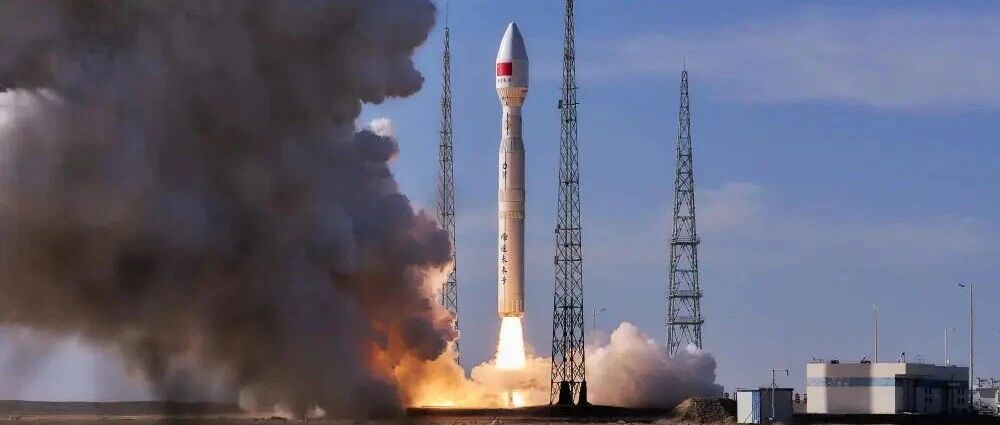
Core Viewpoint - The commercial aerospace sector is experiencing significant activity, with multiple stocks reaching their daily limit up, driven by the news of Blue Arrow Aerospace's IPO progress on the STAR Market [1] Market Performance - On January 23, the market saw a late rally, with the Shenzhen Component Index rebounding after a dip, and both the ChiNext Index and Shenzhen Component Index rising over 0.5%. The North Star 50 Index surged more than 3% [1] Sector Highlights - The commercial aerospace concept stocks were notably active, with 28 stocks hitting the daily limit up. Key stocks included Ruihua Tai, Qianzhao Optoelectronics, Feiwo Technology, Zhenlei Technology, and Dongfang Risen, among others [1] IPO News - On January 22, the Shanghai Stock Exchange announced that Blue Arrow Aerospace's IPO status on the STAR Market has changed to "inquiry stage." The company aims to become the first commercial rocket stock on the STAR Market by the end of 2025 [1] - Blue Arrow Aerospace is currently in a loss position and plans to adopt the fifth set of listing standards for the STAR Market, which has now expanded to include the commercial aerospace sector [1]
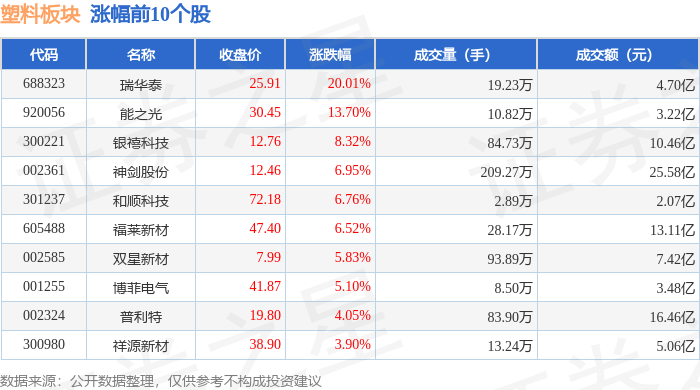
塑料板块1月23日涨1.68%,瑞华泰领涨,主力资金净流出1.37亿元
Zheng Xing Xing Ye Ri Bao· 2026-01-23 09:04
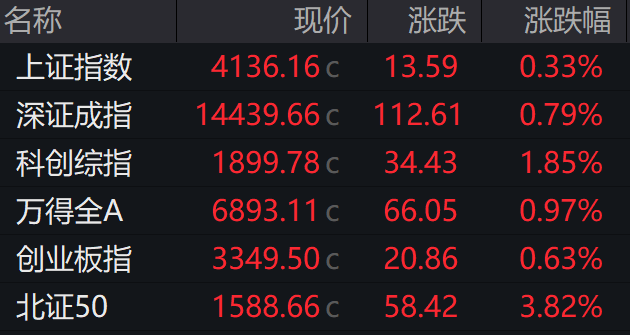
Group 1 - The plastic sector experienced a rise of 1.68% on January 23, with Ruihua Tai leading the gains [1] - The Shanghai Composite Index closed at 4136.16, up 0.33%, while the Shenzhen Component Index closed at 14439.66, up 0.79% [1] - Ruihua Tai's stock price increased by 20.01% to 25.91, with a trading volume of 192,300 shares and a transaction value of 470 million [1] Group 2 - The plastic sector saw a net outflow of 137 million from institutional investors and 308 million from retail investors, while retail investors had a net inflow of 446 million [2] - The stock "Puli Te" had a net inflow of 1.47 million from institutional investors, but a net outflow of 1.61 million from retail investors [3] - "Nengzhiguang" had a significant net inflow of 673.1 million from institutional investors, indicating strong interest [3]


今日1091只个股突破五日均线
Zheng Quan Shi Bao Wang· 2026-01-23 07:49
Group 1 - The Shanghai Composite Index closed at 4136.16 points, above the five-day moving average, with a gain of 0.33% [1] - The total trading volume of A-shares reached 31,181.08 billion yuan [1] - A total of 1,091 A-shares have prices that surpassed the five-day moving average, with notable stocks including Dongfang Risheng, Jinko Solar, and Xinke Mobile, showing divergence rates of 16.59%, 15.85%, and 15.78% respectively [1] Group 2 - The top stocks with significant divergence rates from the five-day moving average include: - Dongfang Risheng (300118) with a price increase of 20.00% and a divergence rate of 16.59% [1] - Jinko Solar (688223) also increased by 20.00% with a divergence rate of 15.85% [1] - Xinke Mobile (688387) rose by 18.41% with a divergence rate of 15.78% [1] - Other notable stocks with divergence rates include: - Jiejia Weichuang (300724) at 20.00% increase and 15.34% divergence [1] - Ruichuang Micro (688002) with a 20.00% increase and 14.83% divergence [1]


1月23日沪深两市涨停分析
Xin Lang Cai Jing· 2026-01-23 07:38
创业板指放量上涨0.63%,成交额超三万亿,全市场超百股涨停,光伏、商业航天概念集体爆发。锋龙股份18连板,江化微5连板,一图看懂>> 钧达股份 2天2板 公司与尚翼光电达成战略合作,双方将围绕钙钛矿电池技术在太空能源的应用展开合作 美辰股份 公司为全球光伏组件设备龙头;表示与印度能源巨头Adani集团旗下太阳能光伏制造公 司AdaniSolar签署2GW光伏组件高效自动化生产线合作协议 福斯特 公司为全球光伏封装材料EVA胶膜和PO胶膜的龙头 正泰电源 公司开发110kW左右功率的光伏并网逆变器,主要应用于工商业屋顶光伏项目配套使 用;公告收购正泰电源,标的主要从事光伏逆变器、储能变换器及系统集成的研产销, 核心产品包括组串式光伏逆变器、集中式光伏逆变器、光伏储能监控等 鹿山新材 1、国内领先的高性能热熔粘接材料企业之一;公司主营光伏封装胶膜、油气管道防腐 热熔胶等; 2、在固态锂电池电芯内部关键材料方面,公司开发了固态锂电池用硅碳负 极功能粘结材料(PAA) 鲁阳节能 光热发电带动保温材料;中国陶瓷纤维龙头;主要从事陶瓷纤维、可溶纤维、氧化铝纤 维、轻质莫来石砖等耐火保温产品的研产销及施工业务;纳米气凝胶 ...

超3900只个股上涨
第一财经· 2026-01-23 07:37
Market Overview - The Shanghai Composite Index closed at 4136.16 points, up 0.33% [3] - The Shenzhen Component Index closed at 14439.66 points, up 0.79% [3] - The ChiNext Index closed at 3349.5 points, up 0.63% [3] - The STAR Market Index closed at 1899.78 points, up 1.85% [3] Sector Performance - The photovoltaic industry chain surged, with significant gains in space photovoltaic stocks [4] - The commercial aerospace concept stocks also saw a strong rally, while basic metals experienced a wave of涨停 [4] - AI applications and robotics themes were active, whereas the computing hardware industry chain adjusted, with CPO direction leading the decline [4] Key Sector Gains - Photovoltaic equipment rose by 10.07% with a net inflow of 9.103 billion [5] - BC batteries increased by 8.56% with a net inflow of 7.459 billion [5] - Zinc metal gained 5.01% with a net inflow of 0.933 billion [5] - Lead metal rose by 4.97% with a net inflow of 0.537 billion [5] - Silicon energy increased by 4.85% with a net inflow of 2.835 billion [5] Notable Stocks - Liancheng CNC surged by 29.99% to 47.16 [6] - Optech rose by 29.98% to 17.21 [6] - Laplace increased by 20.01% to 55.54 [6] - Maiwei shares rose by 20.00% to 324.36 [6] - JinkoSolar increased by 20.00% to 6.90 [6] Commercial Aerospace Stocks - Ruihua Tai rose by 20.01% to 25.91 [7] - Qianhe Optoelectronics increased by 20.01% to 39.17 [7] - Deen Precision rose by 20.00% to 31.32 [7] - Multiple stocks in this sector saw gains of 20% or more [7] Capital Flow - Main capital inflows were observed in power equipment, non-ferrous metals, national defense, and machinery sectors [10] - Notable inflows included Longi Green Energy with 2.692 billion, Aerospace Electronics with 1.886 billion, and Goldwind Technology with 1.832 billion [11] - Significant outflows were seen in stocks like New Yisheng with 3.414 billion, TBEA with 3.218 billion, and Zhongji Xuchuang with 3.045 billion [12] Institutional Insights - CITIC Construction pointed out that high silver prices are driving industrial transformation, marking the beginning of the "copper" era in photovoltaic metalization [13] - Huachuang Securities highlighted the significant potential in China's commercial aviation engine market, suggesting focus on three key industry chains [13] - CITIC Securities expects stable sales for the liquor industry during the 2026 Spring Festival, indicating opportunities for bottom-fishing in the sector [14]



科创板收盘播报:科创50指数涨0.78% 通信设备股表现强势
Xin Hua Cai Jing· 2026-01-23 07:26
Group 1 - The Sci-Tech Innovation 50 Index opened lower on January 23, followed by a narrow adjustment, and eventually closed with a slight increase of 0.78% at 1553.71 points, with a total trading volume of approximately 110.8 billion yuan [1] - The overall Sci-Tech Innovation Index rose by 1.85% to 1899.78 points, with a total trading volume of about 334.9 billion yuan [1] - On January 23, 600 stocks in the Sci-Tech Innovation Board saw an average increase of 2.28% and an average turnover rate of 3.87%, with a total trading volume of 334.9 billion yuan and an average fluctuation of 4.77% [1] Group 2 - In terms of individual stock performance, stocks such as Ruihua Technology, Laplace, Zhenlei Technology, and Jinko Solar reached their daily limit, showing significant gains [1] - Conversely, Jucheng Co. experienced a decline of 7.87%, marking the largest drop among the stocks [1] - In trading volume, Lanke Technology led with a total of 12.04 billion yuan, while ST Pava had the lowest trading volume at 1.258 million yuan [2] Group 3 - Regarding turnover rates, Aerospace Huanyu had the highest turnover rate at 22.28%, while Bairen Medical recorded the lowest at 0.18% [3]


收盘|深证成指涨0.79%,光伏、商业航天概念爆发
Di Yi Cai Jing· 2026-01-23 07:24
商业航天概念再度活跃,瑞华泰、德恩精工、乾照光电、飞沃科技、睿创微纳等多股20%涨停,润贝航科、西部材料、金风科技、中国卫星等超20股涨停。 沪深两市成交额3.09万亿,较上一个交易日放量3935亿。 1月23日,上证指数报收4136.16点,涨0.33%;深成指报收14439.66点,涨0.79%;创业板指报收3349.5点,涨0.63%;科创综指报1899.78点,涨1.85%。 | 名称 | 现价 涨跌 涨跌幅 | | --- | --- | | 上证指数 | 4136.16c 13.59 0.33% | | 深证成指 | 14439.66 c 112.61 0.79% | | 科创综指 | 1899.78 c 34.43 = 1.85% | | 万得全A | 6893.11 c 66.05 0.97% | | 创业板指 | 3349.50 c 20.86 0 0.63% | | 北证50 | 1588.66 c 58.42 3.82% | 盘面上,光伏产业链爆发,太空光伏方向领涨;商业航天概念股再度大涨,基本金属板块掀涨停潮,AI应用、机器人题材活跃。算力硬件产业链调整,CPO 方向领跌。 | 板块名 ...