
宝洁公司

Search documents
中金 • 全球研究 | 美国科技、制造、消费产业调研反馈
中金点睛· 2025-10-28 23:50
Group 1: AI Applications and Trends - The penetration and trust in AI applications among companies are increasing, with significant contributions to cost reduction and efficiency improvement. Typical applications include coding, customer service, and business process assistance [3] - Early adopters of AI are transitioning from trial phases to large-scale deployments, with cloud vendors and large model developers focusing on vertical industry transformations to enhance user engagement and value [3][15] - AI applications are becoming more specialized, with startups emerging around professional scenarios such as law, finance, and healthcare, creating industry-specific solutions that form closed commercial models [3][18] Group 2: Reindustrialization in the U.S. - The reindustrialization process in the U.S. is seen as a long-term decision, with gradual rather than abrupt growth in manufacturing output. Current investments are primarily in brownfield expansions and modernization [4][20] - Factors affecting the pace of reindustrialization include labor costs and supply chain support, with U.S. average labor costs being approximately five times that of China [4][23] - The demand for data centers is strong, while investments in logistics and consumer goods manufacturing remain stable, indicating a cautious approach in sectors like automotive [4][22] Group 3: Consumer Market Dynamics - The U.S. consumer market is experiencing a downgrade trend, particularly among low-income groups affected by inflation, leading to a shift in purchasing behavior towards essential goods [6][41] - Companies are employing strategies such as product innovation, supply chain optimization, and flexible pricing to maintain resilience in the face of consumer demand challenges [6][42] - The impact of tariffs has not fully translated to consumers yet, with companies adopting selective price increases rather than broad-based hikes [6][44] Group 4: Manufacturing and Labor Market Challenges - The U.S. manufacturing sector is undergoing structural changes, with a focus on rebuilding complete supply chains and improving efficiency through technology [20][23] - Labor shortages and high costs are significant challenges, with skilled labor being particularly scarce, impacting the speed of capacity ramp-up [30][31] - Automation and AI are increasingly being integrated into manufacturing processes to enhance productivity and reduce reliance on skilled labor [34][35] Group 5: AI in Manufacturing - AI technology is deeply penetrating the U.S. manufacturing sector, from design and development to production and operations, becoming a key factor in addressing labor cost pressures [34] - Companies are leveraging AI to optimize production data and enhance operational efficiency, with examples of AI applications in various manufacturing processes [34][35] - The integration of AI in manufacturing faces challenges related to data quality, cost, and ecosystem collaboration, which need to be addressed for further advancement [35]


Jim Cramer Calls Procter & Gamble “The Best of the Best”
Yahoo Finance· 2025-10-28 16:02
Group 1 - Procter & Gamble (NYSE: PG) is highlighted as a top investment opportunity, particularly due to its strong performance in a challenging market environment [1] - The company reported a robust quarter, with CFO Andre Schulten providing insights into its resilient performance during the earnings call [1] - Procter & Gamble is recognized as a leading consumer packaged goods company, producing a wide range of branded products including personal care, health care, grooming, home care, and baby and family products [2] Group 2 - There is a comparison made between Procter & Gamble and certain AI stocks, suggesting that while PG is a solid investment, some AI stocks may offer greater upside potential and less downside risk [3]

Worried About a Stock Market Sell-Off? Consider These 5 Dow Jones Dividend Stocks For 2026.
Yahoo Finance· 2025-10-28 13:37
Group 1 - The S&P 500 has increased by 14.5% year to date and over 35% from its April lows, raising questions about the sustainability of the market rally [1] - Investors seeking reliable dividend stocks may find opportunities in the Dow Jones Industrial Average, which consists of 30 industry-leading companies [1] Group 2 - Procter & Gamble (P&G) and Coca-Cola are highlighted as strong dividend stocks, with P&G having a 21.8 forward price-to-earnings (P/E) ratio compared to a 10-year median of 25.7, and Coca-Cola at 23.9 versus a median of 27.7 [6] - Both companies have maintained impressive dividend growth, with P&G raising its dividend for 69 consecutive years and Coca-Cola for 63 years, qualifying them as Dividend Kings [5] Group 3 - McDonald's is noted for its recession-resistant business model, providing affordable food options even amid inflationary pressures [7] - Chevron continues to increase its dividend payouts despite low oil prices, indicating strong financial management [8] - Visa is positioned to return significant cash to shareholders without relying on a booming economy [8]


大中华区业绩回暖!宝洁2026财年一季度营收净利双增
Nan Fang Du Shi Bao· 2025-10-28 09:32
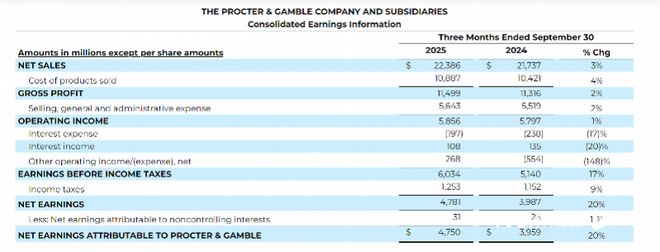
Core Insights - Procter & Gamble (P&G) reported a 3% year-over-year increase in net sales for Q1 of fiscal year 2026, reaching $22.4 billion, and a 20% increase in net income to $4.75 billion [1][2] - The company's gross margin decreased from 52.1% to 51.4% compared to the same period last year [1] - Organic sales growth was 2%, driven by a 1% contribution from pricing and a 1% contribution from product mix, while volume remained flat [1] Financial Performance - Net sales for the Fabric & Home Care segment grew by 1% to $7.793 billion, but net profit declined by 3% to $1.579 billion [3] - The Baby, Feminine & Family Care segment saw a 1% increase in net sales to $5.171 billion, with net profit rising by 4% to $1.105 billion [3] - The Beauty segment reported a 6% increase in net sales to $4.143 billion and a 5% increase in net profit to $0.879 billion [3] - The Health Care segment's net sales grew by 2% to $3.220 billion, while net profit fell by 3% to $0.718 billion [3] - The Grooming segment experienced a 5% increase in net sales to $1.817 billion and a 9% increase in net profit to $0.463 billion [3] Regional Performance - P&G's Greater China region showed signs of recovery, with organic sales growth of 5% in Q1 of fiscal year 2026, following a 5% decline in the previous fiscal year [4] - Notable growth was reported in the SK-II and Pampers brands, with SK-II achieving a 12% growth [4] Strategic Initiatives - The company plans to reduce up to 7,000 non-manufacturing jobs, representing 15% of its non-manufacturing workforce, to enhance organizational agility and capability [5] - P&G is implementing a robust innovation plan to strengthen core brand propositions and improve consumer satisfaction [5] - The company aims to increase productivity across all operational areas, reduce costs, and expand profit margins [5]
Reckitt Benckiser Group PLC (OTC:RBGLY) Maintains Hold Rating Amid Strategic Turnaround
Financial Modeling Prep· 2025-10-27 23:03
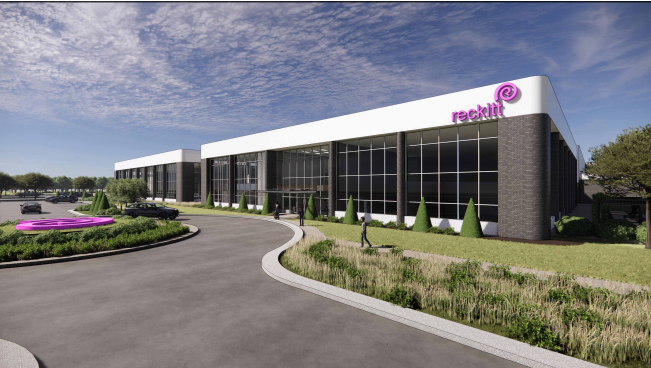
Core Insights - Reckitt Benckiser Group PLC is undergoing a strategic turnaround focused on growth and improved execution in the consumer goods sector, competing with Procter & Gamble and Unilever [1] Financial Performance - Deutsche Bank maintains a "Hold" rating for Reckitt Benckiser with a stock price of $15.74 and raised its price target to 5,700 GBp, indicating a cautiously optimistic outlook [2][6] - RBC Capital Markets increased its price target from £60 to £64, maintaining an outperform rating, supported by Reckitt's consistent mid-single-digit growth and the "Fuel for Growth" plan [3][6] - Reckitt's shares are currently valued at approximately 18 times earnings for 2026, compared to around 20 times for the broader European consumer sector, despite a 17% increase in share price this year [4][6] Growth Prospects - Emerging markets for Reckitt are expected to achieve double-digit organic growth in 2025, contributing positively to the company's outlook [4] - The divestment of the Essential Home and Mead Johnson Nutrition units is anticipated to enhance management's focus on core operations [5]

小摩上调宝洁目标价至165美元
Ge Long Hui· 2025-10-27 05:04
Group 1 - Morgan Stanley raised Procter & Gamble's target price from $163 to $165 [1]
3 Stocks with a Bright Future — and Growing High-Yield Dividends to Match
Medium· 2025-10-26 12:52
Core Insights - The article emphasizes the importance of dividend growth stocks for long-term wealth building, highlighting three specific stocks that combine growth potential with increasing dividend income [2][3]. Group 1: Johnson & Johnson (NYSE: JNJ) - JNJ has raised dividends for 63 consecutive years, showcasing resilience and reliable income [7]. - The company operates in three segments: pharmaceuticals (45% of revenue), medical devices, and consumer health, providing diversification against cyclical risks [8]. - In Q3 2025, JNJ reported a revenue growth of 6.8% year-over-year to $24 billion, with earnings per share rising 15.7% to $2.80, driven by new drug approvals and innovation [9]. - JNJ holds a AAA credit rating, indicating strong financial health, with a payout ratio near 50%, allowing for dividend growth [10]. - The annual dividend is $5.20 per share, with a yield of approximately 3.05% and a recent increase of 4.8% [12]. Group 2: Procter & Gamble (NYSE: PG) - PG has a record of 69 consecutive years of dividend increases, reflecting strong management and commitment to shareholder value [16]. - The company’s diverse portfolio includes brands in fabric care, baby care, grooming, oral care, and personal health, which helps cushion earnings during economic cycles [17]. - In fiscal 2025, PG achieved 2% organic sales growth and 4% core earnings per share growth, aided by innovation and supply chain improvements [18]. - PG maintains a payout ratio of around 62%, with a dividend yield of approximately 2.5% and consistent annual hikes of 5-6% [19]. Group 3: Realty Income Corporation (NYSE: O) - Realty Income is known for 664 consecutive monthly dividends and over 30 years of dividend growth, providing predictable income [24]. - The REIT focuses on retail and commercial properties under triple-net leases, ensuring steady demand from tenants [25]. - Recent quarterly earnings showed a 5% increase in funds from operations, supported by strategic acquisitions and rent escalations [26]. - Realty Income's dividend yield is around 4.5%, backed by consistent FFO growth [28]. Group 4: Investment Strategy and Mindset - The article advocates for a long-term investment mindset, emphasizing the importance of patience and the compounding effect of reinvesting dividends [33][35]. - It suggests a three-step research process for building a dividend growth portfolio, focusing on dividend history, financial health, and competitive advantages [35].



Unilever Stock Proves Consumer Staples Can Still Grow Volume (NYSE:UL)
Seeking Alpha· 2025-10-26 03:45
Core Insights - Unilever has reported its Q3 figures, indicating performance amidst market-wide turbulence earlier in the year [1] Financial Performance - The latest Q3 figures show Unilever's resilience and ability to outperform during challenging market conditions [1] Analyst Perspective - The analysis emphasizes a value-oriented approach to investment, suggesting that valuation is more indicative of long-term opportunities or risks rather than short- to mid-term timing [1]

Unilever Proves Consumer Staples Can Still Grow Volume
Seeking Alpha· 2025-10-26 03:45
Core Insights - Unilever has reported its Q3 figures, indicating performance amidst market-wide turbulence in the initial months of the year [1]. Financial Performance - The latest Q3 figures show Unilever's resilience and ability to outperform during challenging market conditions [1]. Analyst Perspective - The analysis emphasizes a value-oriented approach to investment, suggesting that valuation is more indicative of long-term opportunities or risks rather than short- to mid-term timing [1].

美股市场速览:市场再创新高,大盘成长领先
Guoxin Securities· 2025-10-26 01:04
Market Performance - The S&P 500 index increased by 2.4% this week, while the Nasdaq rose by 3.9%[1] - Large-cap growth stocks (Russell 1000 Growth) outperformed with a gain of 3.2%, compared to small-cap value (Russell 2000 Value) at +2.5%[1] - The technology hardware and equipment sector led the gains with an increase of 3.9%[1] Fund Flows - Estimated fund flow for S&P 500 components was +$65.6 billion this week, down from +$91.7 billion last week[2] - Semiconductor products and equipment saw the highest inflow at +$22.9 billion, while media and entertainment experienced the largest outflow at -$13.2 billion[2] Earnings Forecast - The forward 12-month EPS estimate for S&P 500 components was revised up by 0.4% this week, consistent with the previous week[3] - The automotive sector saw a significant upward revision of 9.0% in earnings expectations, while durable goods and apparel experienced a downward revision of -0.5%[3] Risk Factors - Key risks include uncertainties in economic fundamentals, international political situations, U.S. fiscal policies, and Federal Reserve monetary policies[3]




