
生物科技和生命科学

Search documents
美股市场速览:盘带头回撤,资金加速流出
Guoxin Securities· 2026-02-01 09:13
Market Performance - S&P 500 increased by 0.3% while Nasdaq decreased by 0.2% this week[1] - Small-cap stocks led the decline with Russell 2000 value down by 1.0% and Russell 2000 growth down by 3.1%[1] - 13 sectors saw gains, while 10 sectors experienced losses, with telecommunications leading at +9.0%[1] Fund Flows - Estimated fund flow for S&P 500 components was -$84.1 million this week, down from +$5.6 million last week[2] - Major inflows were seen in technology hardware (+$40.3 million) and media & entertainment (+$39.5 million)[2] - Significant outflows occurred in software & services (-$106.0 million) and healthcare equipment & services (-$57.7 million)[2] Earnings Forecast - S&P 500's forward 12-month EPS expectation increased by 0.8% this week, up from 0.2% last week[3] - 21 sectors had upward revisions, with technology hardware & equipment seeing the largest increase at +5.6%[3] - Energy sector saw a downward revision of -2.7%[3] Risks - Economic fundamentals, international political situations, U.S. fiscal policies, and Federal Reserve monetary policies present uncertainties[3]




制药、生物科技和生命科学行业A股上市公司S维度绩效对比分析:2024年度 vs 2023年度(上)
Jin Rong Jie· 2026-01-30 02:27
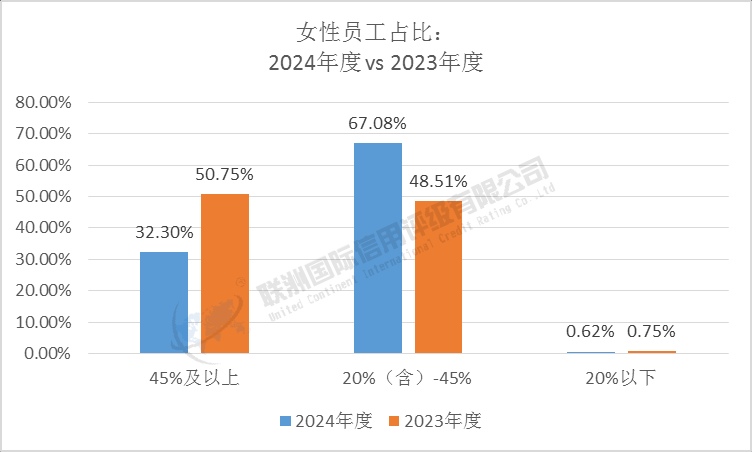
Background - The concept of ESG (Environmental, Social, and Governance) is becoming mainstream, with a focus on the "S" (Social) dimension, emphasizing human-centric values and the expectations of various stakeholders [1] - The pharmaceutical, biotechnology, and life sciences industries play a crucial role in national economic development and social construction, making ESG governance a critical issue for these sectors [1] S (Social) Performance Analysis - As of May 5, 2025, 161 companies in the A-share pharmaceutical, biotechnology, and life sciences sector have disclosed their 2024 ESG reports, compared to 134 companies for 2023 [2] Employee Rights - Employee rights are central to the social dimension of ESG, impacting a company's ESG rating, financing ability, and long-term competitiveness [3] - Protecting employee rights enhances satisfaction, reduces turnover, and improves productivity, which can lead to higher ESG ratings and better brand image [3] Employee Structure Comparison - In 2024, the proportion of companies with female employees above 45% decreased by 36.35% compared to 2023, while those with female employee ratios between 20% and 45% increased by 38.29% [4] Senior Female Employee Proportion - The proportion of companies with senior female employees at 30% or above dropped by 44.50% in 2024 compared to 2023, indicating a lack of focus on gender equality and support for women's career advancement [4] Employment of Disabled Individuals - The percentage of companies employing disabled individuals decreased by 6.50% in 2024, reflecting insufficient long-term planning and support for this demographic [6][8] Employee Benefits - The proportion of companies providing complete paid leave benefits dropped by 30.82% in 2024, indicating a significant reduction in employee welfare amidst economic pressures [10] - In 2024, 31.68% of companies offered generous holiday benefits, a decrease of 46.27% from 2023 [13] Employee Health Management - In 2024, 49.07% of companies prioritized employee health management, an increase of 31.50% from 2023, indicating a growing recognition of health management as a fundamental ESG practice [15] Labor Rights - The percentage of companies with 100% labor contract signing and social insurance coverage increased by 9.84% in 2024, showing a heightened focus on labor rights protection [17] Employee Training and Development - In 2024, 31.68% of companies provided over 40 hours of training per employee, a 57.21% increase from 2023, reflecting a commitment to employee development [19] Social Responsibility - The industry saw a decline in charitable donations and participation in disaster relief in 2024 compared to 2023, indicating a shift away from "pseudo-charity" practices towards more sustainable social responsibility initiatives [20][23]

美股市场速览:大盘趋势淡化,资金持续流入半导体
Guoxin Securities· 2026-01-03 13:09
Investment Rating - The report maintains a "weaker than the market" rating for the U.S. stock market [4] Core Insights - The overall market trend is fading, with continued capital inflow into the semiconductor sector [2] - The S&P 500 index decreased by 1.0% this week, while the Nasdaq fell by 1.5% [1] - Energy sector showed the best performance with a gain of 3.3%, while the automotive sector saw the largest decline at -7.0% [1] Summary by Sections 2.1 Investment Returns - Energy sector recorded a weekly return of 3.3%, while the automotive sector experienced a decline of 7.0% [13] - The capital goods sector increased by 1.1%, and the semiconductor products and equipment sector had a slight gain of 0.2% [13] 2.2 Capital Flows - The estimated net capital inflow for the semiconductor products and equipment sector was $2.061 billion this week [15] - The automotive sector faced significant outflows, with a net capital outflow of $2.562 billion [15] - The capital goods sector saw a net inflow of $394 million [15] 2.3 Earnings Forecast - The earnings per share (EPS) forecast for the semiconductor products and equipment sector was adjusted upward by 0.5% this week [16] - The automotive sector's EPS forecast was increased by 0.7% [16] - Overall, the EPS expectations for all 24 sectors have risen [3] 2.4 Valuation Levels - The report does not provide specific valuation levels in the provided content [18]



美股市场速览:市场再创新高,大盘成长领先
Guoxin Securities· 2025-10-26 01:04
Market Performance - The S&P 500 index increased by 2.4% this week, while the Nasdaq rose by 3.9%[1] - Large-cap growth stocks (Russell 1000 Growth) outperformed with a gain of 3.2%, compared to small-cap value (Russell 2000 Value) at +2.5%[1] - The technology hardware and equipment sector led the gains with an increase of 3.9%[1] Fund Flows - Estimated fund flow for S&P 500 components was +$65.6 billion this week, down from +$91.7 billion last week[2] - Semiconductor products and equipment saw the highest inflow at +$22.9 billion, while media and entertainment experienced the largest outflow at -$13.2 billion[2] Earnings Forecast - The forward 12-month EPS estimate for S&P 500 components was revised up by 0.4% this week, consistent with the previous week[3] - The automotive sector saw a significant upward revision of 9.0% in earnings expectations, while durable goods and apparel experienced a downward revision of -0.5%[3] Risk Factors - Key risks include uncertainties in economic fundamentals, international political situations, U.S. fiscal policies, and Federal Reserve monetary policies[3]
制药、生物科技和生命科学行业A股上市公司E维度与评级分析:基于2024年度数据-ESG-金融界
Jin Rong Jie· 2025-09-06 11:06
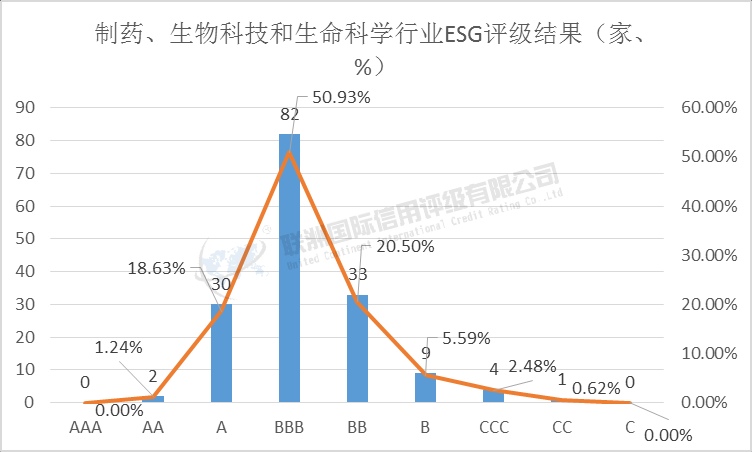
Core Viewpoint - The implementation of ESG principles has become a mandatory requirement for companies in the pharmaceutical, biotechnology, and life sciences sectors in China, especially in the context of achieving carbon neutrality and high-quality development goals [1][23]. Group 1: ESG Reporting and Ratings - As of May 5, 2025, 161 companies in the A-share pharmaceutical, biotechnology, and life sciences sectors have actively disclosed their 2024 ESG reports, indicating a growing trend in ESG practices [2]. - The overall ESG practice level in the pharmaceutical, biotechnology, and life sciences sectors is relatively good, with most companies rated at the BBB level, reflecting a positive distribution of ratings [2][23]. - The clarity of environmental management goals is positively correlated with ESG ratings, with 100% of AA and A-rated companies having clear environmental management goals [5][11]. Group 2: Energy Efficiency and Environmental Policies - Companies that prioritize ESG initiatives are increasingly implementing comprehensive energy-saving and renewable energy policies, which are positively correlated with higher ESG ratings [7][8]. - The effectiveness of energy-saving and emission reduction measures is directly proportional to ESG ratings, with higher-rated companies showing better implementation results [19]. Group 3: Environmental Management Certifications - The proportion of companies with ISO 14001 environmental management system certification increases with higher ESG ratings, indicating a correlation between certification and ESG performance [10][11]. - The relationship between green factory certification and ESG ratings is less clear, as many companies with lower ratings have not obtained such certifications, suggesting a need for improvement in this area [13]. Group 4: Environmental Information Disclosure - The quality of environmental information disclosure is crucial for ESG ratings, with companies that provide comprehensive and high-quality disclosures achieving better ratings [15][23]. - Companies with low environmental disclosure quality tend to have lower ESG ratings, highlighting the importance of transparency in environmental performance [15]. Group 5: Biodiversity and Environmental Investment - The emphasis on biodiversity protection is positively correlated with ESG ratings, with higher-rated companies showing a greater commitment to biodiversity initiatives [21][22]. - Environmental investment levels do not show a strong correlation with ESG ratings, indicating that many companies in the sector have low investment in environmental protection [17][23].
美股市场速览:回调后再度发动,中小盘明显占优
Guoxin Securities· 2025-08-24 09:03
Investment Rating - The report maintains a "Weaker than Market" rating for the U.S. stock market [1] Core Insights - After a pullback, the U.S. stock market has shown significant recovery, with small-cap stocks outperforming [3] - The S&P 500 index increased by 0.3%, while the Nasdaq decreased by 0.6% [3] - Among 18 sectors, 12 experienced gains, with notable increases in banking (+3.2%), automotive (+2.9%), and energy (+2.8%) sectors [3] Price Trends - Small-cap value stocks (Russell 2000 Value) rose by 4.1%, outperforming small-cap growth (Russell 2000 Growth +2.6%) and large-cap value (Russell 1000 Value +1.7%) [3] - The report highlights that 18 sectors saw price increases, while 6 sectors faced declines, with the largest declines in food and staples retailing (-2.0%) and software and services (-1.9%) [3] Fund Flows - The estimated fund flow for S&P 500 constituents was +1.7 billion USD this week, a significant decrease from +75.8 billion USD the previous week [4] - Notable inflows were observed in automotive (+11.0 million USD), diversified financials (+4.6 million USD), and banking (+3.8 million USD) sectors [4] - Conversely, significant outflows were recorded in software and services (-29.9 million USD) and semiconductor products and equipment (-7.7 million USD) [4] Earnings Forecast - The report indicates a 0.3% upward revision in the 12-month forward EPS expectations for S&P 500 constituents, following a 0.2% increase the previous week [5] - 21 sectors saw upward revisions in earnings expectations, with the semiconductor sector leading with a +1.2% increase [5]

美股市场速览:市场再创新高,中小盘表现强势
Guoxin Securities· 2025-08-17 04:46
Investment Rating - The report maintains a "Underperform" rating for the U.S. stock market [1] Core Insights - The U.S. stock market continues to reach new highs, with small-cap stocks showing strong performance [3] - The S&P 500 index increased by 0.9%, while the Nasdaq rose by 0.8% [3] - 18 out of 24 sectors experienced gains, with notable increases in pharmaceuticals, biotechnology, and life sciences (+5.5%) and healthcare equipment and services (+4.2%) [3] Price Trends - The report highlights that small-cap value stocks (Russell 2000 Value) outperformed small-cap growth stocks, with a rise of 3.4% compared to 2.8% [3] - The sectors with the largest gains include pharmaceuticals and biotechnology (+5.5%), healthcare equipment and services (+4.2%), and durable goods and apparel (+3.6%) [3] - Conversely, sectors that declined include food and staples retailing (-2.4%) and commercial and professional services (-1.4%) [3] Fund Flows - Estimated fund flows for S&P 500 constituents showed a significant increase to +$7.58 billion this week, up from +$1.70 billion last week [4] - The healthcare equipment and services sector saw the highest inflow at +$2.76 billion, followed by media and entertainment (+$1.31 billion) and pharmaceuticals (+$1.09 billion) [4] - Notably, the software and services sector experienced an outflow of -$476 million [4] Earnings Forecast - The report indicates a 0.2% upward adjustment in the 12-month forward EPS expectations for S&P 500 constituents [5] - 22 sectors saw an increase in earnings expectations, with semiconductor products and equipment leading at +0.6% [5] - The energy sector was the only one to experience a downward revision, with a decrease of -0.3% [5] Global Asset Overview - The S&P 500 index closed at 6,450, reflecting a 0.9% increase for the week and a 16.1% increase year-to-date [11] - The Russell 2000 index, representing small-cap stocks, rose by 3.1% this week, indicating strong performance in this segment [11] Sector Observations - The healthcare sector recorded a price return of 5.0% this week, outperforming other sectors [16] - The materials sector also performed well, with a 1.8% increase, while the energy sector lagged with only a 0.5% increase [16] - The report notes that the pharmaceutical and biotechnology sector had the highest price return at 5.5% [16]
美股市场速览:资金大量回流,科技板块领先
Guoxin Securities· 2025-05-18 08:39
Investment Rating - The report maintains a neutral investment rating for the U.S. stock market [1] Core Insights - The U.S. stock market is experiencing a steady recovery, led by the technology sector, with the S&P 500 rising by 5.3% and the Nasdaq increasing by 7.2% [3] - Significant capital inflows have been observed, particularly in the semiconductor and automotive sectors, indicating strong investor interest [4] - Earnings expectations for the S&P 500 constituents have been slightly adjusted upwards, with traditional industries showing the most significant upward revisions [5] Summary by Sections Price Trends - The S&P 500 increased by 5.3% and the Nasdaq by 7.2% this week, with the automotive and semiconductor sectors leading the gains at +16.2% and +13.3% respectively [3] Capital Flows - Estimated capital inflows for the S&P 500 constituents reached +$25.71 billion this week, a significant increase from the previous week's +$2.99 billion [4] - The semiconductor sector saw the highest inflow at +$9.17 billion, followed by automotive at +$6.59 billion [18] Earnings Forecasts - The dynamic F12M EPS expectations for the S&P 500 were adjusted up by 0.1%, with 19 sectors seeing upward revisions, particularly real estate (+0.7%) and materials (+0.5%) [5]
