罗氏

Search documents
Prothena Down 40% Year to Date: What Lies Ahead for the Stock?
ZACKS· 2025-09-11 15:05
Core Insights - Prothena Corporation's shares have decreased by 40% year-to-date, contrasting with a 6.6% gain in the industry, primarily due to pipeline setbacks [1][8] - The company is working to advance other pipeline projects after halting the development of birtamimab, but challenges persist [1] Pipeline Updates - Prothena provided an update on PRX012, a candidate for early symptomatic Alzheimer's disease, showing promising results in a phase I program [3][4] - PRX012 demonstrated a mean reduction in amyloid PET to 27.47 centiloids at the 400 mg dose level after 12 months, which is favorable compared to FDA-approved anti-Aβ antibodies [4] - However, PRX012 exhibited higher overall ARIA-E rates, raising concerns about its suitability for the studied patient population [5] - The company plans to seek partnerships to advance PRX012 and its preclinical PRX012-TfR antibody, which may reduce ARIA risks and enhance amyloid clearance [6][8] Recent Developments - Novo Nordisk will advance coramitug, an amyloid depleter antibody, into a phase III program for ATTR amyloidosis with cardiomyopathy in 2025, which Prothena initially developed [9] - Prothena is eligible for up to $1.2 billion in milestone payments from Novo Nordisk, having already earned $100 million [10] Setbacks and Workforce Changes - The discontinuation of birtamimab's development was announced in May 2025 after it failed to meet primary endpoints in a late-stage study [11] - Following this, Prothena implemented a 63% workforce reduction to streamline costs and support ongoing programs [12] Partnered Programs - Roche is advancing prasinezumab into phase III development for early-stage Parkinson's disease, with initiation expected by the end of 2025 [13][14] - Prothena will receive double-digit teen royalties on net sales of prasinezumab [14] - Bristol Myers is conducting phase II and phase I trials for potential Alzheimer's treatments, with Prothena collaborating on several early-stage programs [15][16] Overall Outlook - Despite progress in partnered programs, setbacks in wholly owned programs present significant challenges for Prothena [17]



Nancy T. Chang, Proven Biotechnology Leader, Joins Immix Biopharma Board of Directors
Globenewswire· 2025-09-11 13:15
Core Insights - Immix Biopharma, Inc. has appointed Nancy T. Chang to its Board of Directors, who is a notable biotechnology leader and former CEO of Tanox, Inc. [1][2] - Dr. Chang's leadership at Tanox led to the development of several FDA-approved drugs, generating over $5 billion in sales [2] - Immix Biopharma is focused on developing cell therapies for AL Amyloidosis and other serious diseases, with its lead candidate being NXC-201, a CAR-T cell therapy [3] Company Overview - Immix Biopharma, Inc. is a clinical-stage biopharmaceutical company listed on Nasdaq under the ticker IMMX [3] - The company is developing NXC-201, which is currently being evaluated in a U.S. multi-center study for relapsed/refractory AL Amyloidosis [3] - NXC-201 has received Regenerative Medicine Advanced Therapy (RMAT) designation from the FDA and Orphan Drug Designation (ODD) from both the FDA and EMA [3] Product Development - The NEXICART-2 study for NXC-201 has met its primary endpoint at interim results presented at ASCO 2025 [3] - The therapy features a "digital filter" designed to eliminate non-specific activation [3]


速递|纽约时报:传特朗普考虑对华药品实施打击
GLP1减重宝典· 2025-09-11 08:15
整理 | GLP1减重宝典内容团队 特朗普政府一直在讨论对中国药品实施严格限制,若该政策落地,可能颠覆美国制药行业,影响从仿制药到尖端疗法等各类药物的可及性。 潜在打压措施的核心是一份拟议的行政命令,威胁切断中国研发的实验性治疗药物的输送渠道。大型制药公司一直在收购中国研发的癌症、肥 胖症、心脏病和克罗恩病药物的专利权。 这项行政命令草案(《纽约时报》已获得副本)的出台前景,引发了两个立场截然对立且各自涉及数十亿美元利益的集团展开激烈的幕后游说活 动。 据四位了解游说内情并要求匿名讨论私下谈话的人士透露,与白宫关系密切的知名投资者和企业高管——包括科技亿万富翁彼得·蒂尔、谷歌 联合创始人谢尔盖·布林、科赫家族以及特朗普总统女婿贾里德·库什纳所运营投资公司的员工都主张采取果断打压措施,他们认为中国生物技 术对美国构成了生存威胁。 这些投资者面临资金风险,因为他们持有难以变现的美国初创企业投资,这些企业一直难以跟上中国蓬勃发展的生物技术行业步伐。 另一方则是包括辉瑞和阿斯利康在内的全球大型制药企业。近年来它们在中国大肆收购低价实验药物,冷落了正在研发同类药物的美国小型生 物技术公司。 民主党和共和党均认为美国在药 ...


生物医药“苏州军团”强势领跑
Su Zhou Ri Bao· 2025-09-11 00:24
Core Insights - The Suzhou biopharmaceutical industry is experiencing a surge in innovation, with significant regulatory approvals and investments, positioning itself as a leader in the sector [1][2][4] Industry Developments - The approval of the world's first dual-target weight loss drug by Innovent Biologics and the simultaneous regulatory green light for Ascentage Pharma's innovative drug in the US and Europe highlight the rapid advancements in Suzhou's biopharmaceutical sector [1] - The establishment of the China (Jiangsu) Free Trade Zone Biopharmaceutical Industry Chain Open Innovation Development Plan is expected to further enhance the growth of the biopharmaceutical industry in Suzhou [1] Investment and Growth - As of July 2023, there are 261 foreign-funded biopharmaceutical enterprises in Suzhou, with a total output value exceeding 880 billion yuan, reflecting a year-on-year growth of 3.4% [2] - Roche Diagnostics has made a significant investment of approximately 480 million USD in Suzhou, marking its largest single investment in China, which underscores the importance of the Suzhou base for its global operations [2] Local Innovation - Suzhou has seen the addition of four new biopharmaceutical companies listed this year, bringing the total to 38, which is expected to exceed 40 by year-end [3] - A total of 64 companies are participating in the application for the seventh batch of national "specialized, refined, distinctive, and innovative" small giant enterprises, with expectations to surpass 100 by year-end [3] Product Innovation - From January to July 2023, Suzhou introduced six new Class I innovative drugs, accounting for 14% of the national total, and five new innovative medical devices, representing 10.6% of the national total [4] - The launch of Innovent Biologics' injection, a dual receptor agonist for weight loss, breaks the long-standing monopoly of multinational pharmaceutical companies in the GLP-1 weight loss market [5] Global Collaboration - Suzhou's biopharmaceutical companies are increasingly engaging in high-value overseas licensing agreements, with notable collaborations exceeding 10 billion USD [6] - The global registration of a Bcl-2 selective inhibitor by Ascentage Pharma, approved by both the FDA and EMA, signifies the international recognition of Suzhou's clinical trial standards [6] Technological Advancements - The successful use of a medical device developed by Suzhou's Peijia Medical in a complex surgery in Ethiopia exemplifies the global impact of Suzhou's innovative medical solutions [7] - The Suzhou government is actively drafting development plans for the biomanufacturing industry, aiming to enhance project attraction and support [8]
2025上半年中国医药进入“出海”快车道
Huan Qiu Wang· 2025-09-10 07:03
Core Insights - The global pharmaceutical industry's competitive landscape is undergoing significant changes, with Chinese biopharmaceutical companies achieving a total of $48.5 billion in licensing and strategic cooperation deals in the first half of 2025, surpassing the total for 2024 and marking a historic high in both deal value and number of transactions [1][3][5] - The shift from "follow-on innovation" to "source innovation" indicates a structural change in the industry, with multinational pharmaceutical companies increasingly relying on Chinese firms for early-stage investments in cutting-edge assets [1][4] Group 1 - The number of transactions involving Chinese companies has reached a record high, with 61 deals in the first half of 2025, reflecting a robust trend rather than a temporary market fluctuation [1][3] - American companies represent 61% of multinational firms collaborating with Chinese enterprises, indicating a growing preference for early-stage partnerships rather than just acquiring mature products [1][3] Group 2 - The focus of transactions has shifted towards advanced technologies, with bispecific and trispecific antibodies leading the way, surpassing small molecules and traditional monoclonal antibodies [3][4] - The primary areas of collaboration remain oncology and immune diseases, while metabolic diseases, exemplified by GLP-1, are emerging as new growth areas for partnerships between Chinese and Western firms [3][4] Group 3 - The rapid internationalization of Chinese pharmaceuticals is driven by a dual engine of innovation and capital, supported by favorable policies and the establishment of world-class biopharmaceutical clusters in cities like Beijing, Shanghai, and Suzhou [5] - International capital is increasingly investing in Chinese innovation, enhancing the global competitiveness and brand recognition of Chinese companies [5]


全球制药业洞察 | 礼来或超越诺和诺德,占千亿美元减肥药市场的半壁江山
彭博Bloomberg· 2025-09-10 06:05
Core Viewpoint - The global weight loss drug market is projected to reach at least $100 billion by 2030, growing sixfold from 2024, with Eli Lilly expected to surpass Novo Nordisk in market share by 2025 [3][4][6]. Market Overview - The weight loss drug sales are anticipated to grow significantly from 2024 to 2030, reaching at least $100 billion, which is 7% higher than previous analyses [4]. - The analysis includes a broader range of drugs and adjusts treatment duration and epidemiological assumptions, expanding the target patient population [4]. - By 2030, the estimated number of treated patients is approximately 24 million in the U.S. and 22 million in Europe [4]. Competitive Landscape - Eli Lilly is expected to increase its market share from 43% to 53% by 2030, while Novo Nordisk's share is projected to decline from 57% to 33% [6]. - The market will see the entry of up to 24 new weight loss drugs by the end of 2030, compared to only six currently available [6]. Drug Class Insights - GLP-1 injection formulations are expected to dominate the market, with sales projected to reach approximately $81 billion from 2024 to 2030 [8][11]. - The sales peak for Eli Lilly's Zepbound/Mounjaro is expected to reach $40 billion, while Novo Nordisk's Wegovy is projected to peak at $20 billion [8][11]. Future Projections - By 2035, the weight loss drug market could grow to $167 billion, with a peak of $171 billion expected by 2036 [4]. - New GLP-1 injection drugs are anticipated to launch starting in 2026, with significant sales potential for drugs like Novo Nordisk's Cagrisema and Eli Lilly's Retatrutide [11].


生物医疗-一图胜千言-A picture is worth a thousand words
2025-09-08 06:23
Summary of Key Points from the Conference Call Industry Overview - The conference call focuses on the **Biopharma** industry in **North America** with a comprehensive analysis of the **US drug market** as per **IQVIA Rx** data [1][6]. Core Insights - The **Total Prescription Year-over-Year (YoY) growth** for the week ending **August 29, 2025**, was reported at **+1.7%**, a decrease from **+2.3%** the previous week and **+2.6%** over the past 12 weeks [1][2]. - The **rolling 4-week TRx YoY** change was **+2.3%**, while the **rolling 12-week TRx YoY** was **+2.6%** [2]. - The **Extended Unit (EUTRx)** weekly YoY growth was **+2.0%**, indicating stronger performance compared to the overall TRx YoY [2]. Company-Specific Developments - **Bristol Myers Squibb (BMY)**: The drug **Cobenfy** for schizophrenia was approved on **September 26, 2024**. The current weekly scripts are approximately **2,210**, up from **2,160** the previous week. To meet the 2025 consensus expectations, Cobenfy needs to achieve **~129K TRx** at a net price of **~$1,200** [3]. - **Vertex Pharmaceuticals (VRTX)**: The drug **Journavx** for acute pain was approved on **January 30, 2025**. Current scripts are around **7,280**, with hospital scripts making up about **35%** of total scripts. To achieve projected sales of **$78 million**, approximately **349K total scripts** are needed [4]. - **Gilead Sciences (GILD)**: The drug **Yeztugo** was approved on **June 18, 2025**. The latest total TRx is approximately **470**, up from **390** the previous week. Projections for achieving consensus estimates for the second half of 2025 are discussed, with a focus on gross-to-net pricing adjustments [5]. Market Trends and Comparisons - A comparison of launches between **GILD's Yeztugo**, **Descovy**, and **Apretude** is provided, highlighting the uptake among different patient groups and the anticipated growth trajectory [5][9]. - The **GLP-1 franchise** from **Eli Lilly** shows significant growth, with **Mounjaro** and **Zepbound** experiencing **+66%** and **+233%** YoY growth respectively [20][23]. Additional Insights - The call includes a detailed analysis of **key products** and their respective YoY performance, with notable declines in some established drugs like **Humira** (-39%) and growth in others like **Skyrizi** (+44%) [20]. - The **COVID vaccine** tracking and **biosimilar adoption** analysis are also mentioned, indicating ongoing trends in the pharmaceutical landscape [12][28]. Conclusion - The conference call provides a comprehensive overview of the current state of the biopharma industry in North America, highlighting both challenges and opportunities for key players in the market. The data reflects a mixed performance across various drugs, with some experiencing significant growth while others face declines.


7万杜氏肌营养不良症患者待救治:规范激素治疗可延命超10年,首款新药拟入医保谈判
Mei Ri Jing Ji Xin Wen· 2025-09-07 11:47
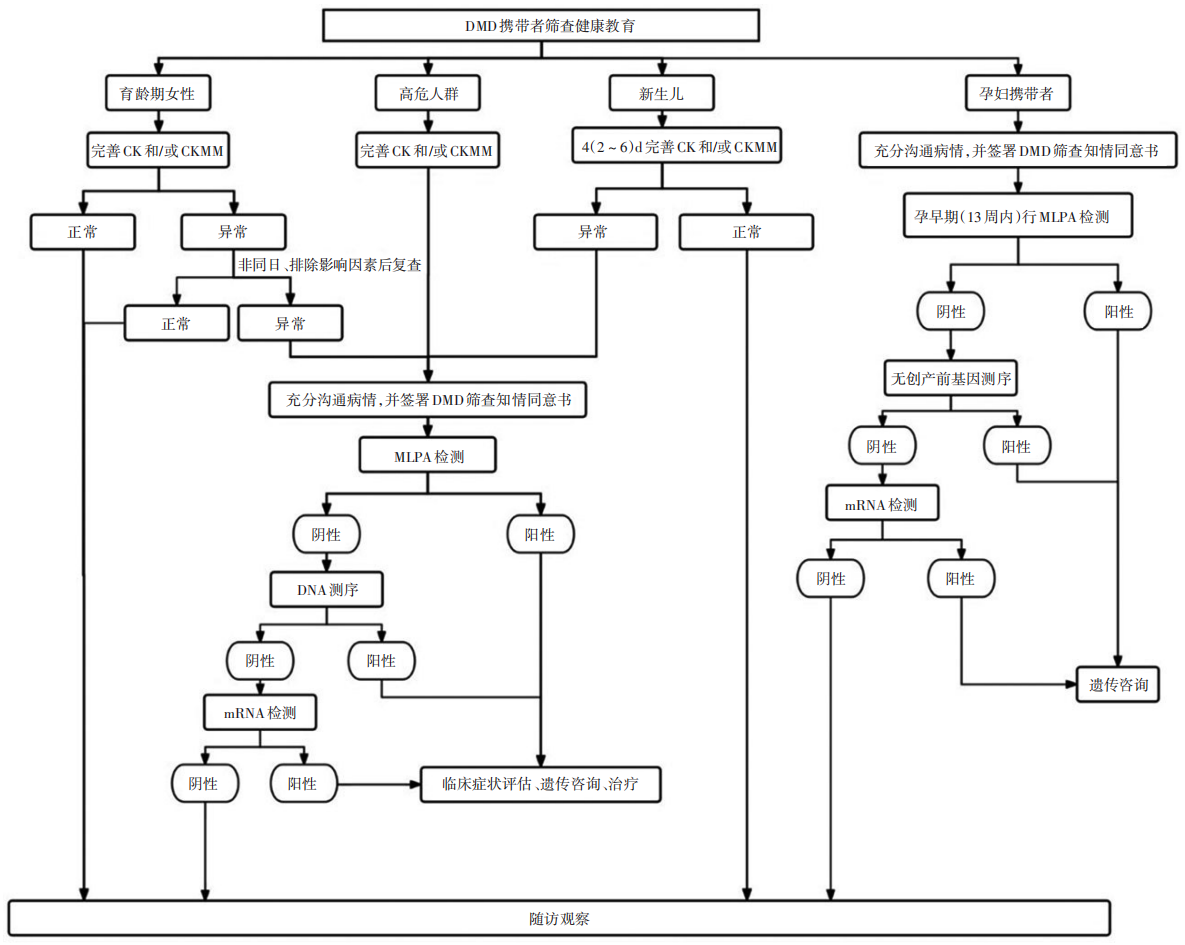
Core Insights - Duchenne Muscular Dystrophy (DMD) affects approximately 70,000 patients in China, with a prevalence of 1 in every 5,000 newborn boys [1][2] - The standard treatment with corticosteroids can extend median survival by over 10 years, yet only 23% of patients in China receive this treatment [1][6] - The approval of Vamorolone, the first innovative corticosteroid for DMD in China, marks a significant advancement in treatment options [1][7] Patient Statistics - DMD is a genetic disorder caused by mutations in the DMD gene, leading to progressive muscle degeneration and associated complications [2] - Globally, there are about 250,000 DMD patients, with China having one of the highest numbers [2] - Approximately 30% of DMD cases are due to gene mutations, while around 70% of affected children have carrier mothers [2] Treatment Landscape - The current corticosteroid treatment rate in China has increased from 26.3% in 2015 to 54% in 2020, but nearly half of the patients have never used medication [6] - The lack of treatment is partly due to the absence of approved drugs, with Deflazacort only available through temporary importation [6][7] - Vamorolone, approved in December 2022, is expected to participate in national health insurance negotiations after passing the basic directory review [7] Gene Therapy Developments - Gene therapy is emerging as a significant area in DMD drug development, with various drugs approved globally, but only one gene therapy product has been approved [8][9] - Elevidys, a gene therapy drug, was approved by the FDA for DMD patients aged 4-5 years, but its high cost and associated controversies have raised concerns [9] - BBM-D101, a domestic gene therapy candidate, has received IND approval and is currently in clinical trials [9]
Amy Wilkinson Joins Protiviti Advisory Board
Prnewswire· 2025-09-05 18:17
Core Insights - Protiviti has appointed Amy Wilkinson to its advisory board, effective September 1, 2025, to enhance its expertise in AI-enabled business models and provide strategic guidance [1][5]. Group 1: Appointment and Expertise - Amy Wilkinson is the founder and CEO of Ingenuity and a faculty member at Stanford Graduate School of Business, bringing extensive expertise in innovation and AI-enabled business models that drive growth [2]. - Wilkinson has a robust background in corporate strategy, private equity, and startups, having collaborated with major organizations like Google, Salesforce, and Roche [3]. - She has served as an Independent Director for Hut 8 and Innovate, showcasing her business judgment and financial acumen [4]. Group 2: Strategic Importance - Joseph Tarantino, president and CEO of Protiviti, emphasized that Wilkinson's depth of experience and forward-looking perspective will provide valuable insights to the advisory board and clients [5]. - Wilkinson expressed enthusiasm about contributing to Protiviti's mission and collaborating with its management team, particularly in the areas of AI and innovation [6]. Group 3: Company Overview - Protiviti is a global consulting firm with over 90 offices in more than 25 countries, providing consulting and managed solutions across various sectors [7]. - The firm has been recognized on the Fortune 100 Best Companies to Work For® list for 11 consecutive years and serves over 80% of Fortune 100 and nearly 80% of Fortune 500 companies [8].


Zealand Pharma A/S (ZLDPF) Presents at Cantor Global Healthcare Conference 2025 Transcript
Seeking Alpha· 2025-09-05 05:22
Group 1 - The company is pursuing its ambition to become a key player in the growing obesity market [1] - A significant collaboration agreement has been established with Roche regarding the main asset, petrelintide [1] - The focus with Roche is to accelerate the development program for petrelintide [1] Group 2 - Upcoming key data readouts are expected for petrelintide in Phase II and for survodutide, which is licensed to Boehringer in Phase III [1] - The company expresses excitement about the upcoming period and the rapid news flow [1]