罗氏

Search documents
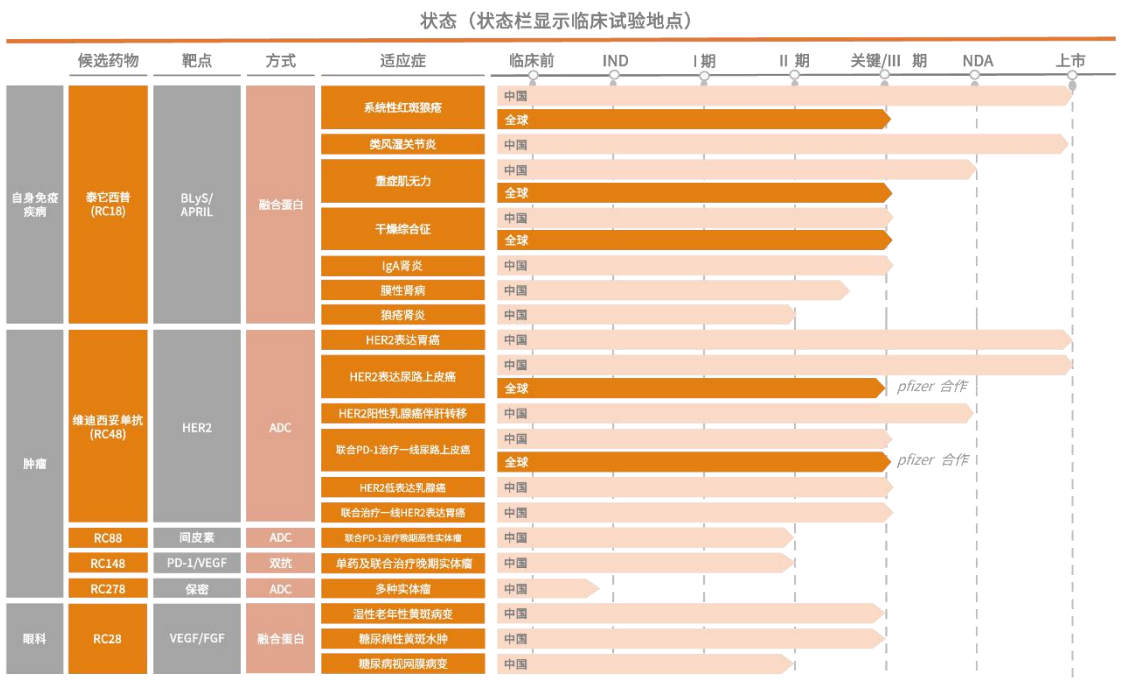
2.5亿元首付款 荣昌生物与参天中国就眼科创新药RC28-E达成合作
Mei Ri Jing Ji Xin Wen· 2025-08-19 09:21
Core Viewpoint - Rongchang Biologics has announced a business development (BD) deal with Santen Pharmaceutical for the exclusive licensing of the ophthalmic innovative drug RC28-E in several Asian markets, marking its second BD announcement this year [1][2]. Group 1: Business Development and Financials - Rongchang Biologics will receive an upfront payment of 250 million yuan, with potential milestone payments totaling up to 520 million yuan for development and regulatory achievements, and up to 525 million yuan for sales milestones [1]. - The company will also earn a tiered sales royalty based on product sales in the licensed regions, ranging from high single-digit to double-digit percentages [1]. Group 2: Product Details and Clinical Trials - RC28-E is a dual-target fusion protein drug aimed at treating neovascular eye diseases, specifically targeting VEGF and FGF pathways to inhibit new blood vessel formation [2]. - The drug is currently undergoing Phase III clinical trials for wet age-related macular degeneration (wAMD) and diabetic macular edema (DME), with an expected submission for market approval in China for DME in the second half of 2025 and for wAMD in mid-2026 [3][5]. Group 3: Market Context and Competition - The domestic ophthalmic drug market is transitioning from generics to innovative products, with increasing competition as patents for existing drugs expire [6][9]. - Other companies, such as Qilu Pharmaceutical and Innovent Biologics, are also advancing in the development of biosimilars and innovative drugs in the ophthalmic space, indicating a shift towards more competitive innovation in the sector [9].


多款救命药有望商保报销 保费怎么定是关键
经济观察报· 2025-08-16 13:32
Core Viewpoint - The article discusses the introduction of the commercial insurance innovative drug directory in China, which supplements the basic medical insurance directory and aims to include high-priced innovative drugs that provide significant clinical value and patient benefits [2][10]. Summary by Sections Introduction of the Commercial Insurance Innovative Drug Directory - The National Healthcare Security Administration announced a list of drugs that passed the initial review for the commercial insurance innovative drug directory, with a total of 121 drugs, over half of which are cancer or rare disease medications [2][5]. - The directory is expected to include high-priced drugs, such as CAR-T therapies costing over 1 million yuan per injection and gene therapies priced around 98,000 yuan per injection [2][4]. Drug Approval and Characteristics - To qualify for the commercial insurance innovative drug directory, drugs must either be newly approved from January 1, 2020, to June 30, 2025, or have indications included in the national rare disease directory by June 30, 2025 [5]. - Among the 121 drugs, 57 are imported, accounting for 47%, with notable entries from companies like Pfizer and Johnson & Johnson [5]. Focus on Cancer and Rare Diseases - The majority of drugs that passed the initial review are cancer treatments, with over 40 entries, followed by 35 for rare diseases [5][6]. - The article highlights the potential for the directory to alleviate payment challenges for rare disease medications, with companies actively submitting applications [6]. Pricing and Negotiation Challenges - The pricing negotiation process for drugs in the commercial insurance directory remains uncertain, as it involves collaboration between the National Healthcare Security Administration, commercial insurers, and pharmaceutical companies [12][13]. - The article notes that the commercial insurance directory may serve as a "double insurance" for companies, allowing them to apply for both the basic medical insurance and the commercial insurance directories simultaneously [9]. Future Considerations and Recommendations - The article suggests that the implementation of the commercial insurance innovative drug directory requires further exploration and refinement, with recommendations for pilot programs in specific insurance products [14]. - It emphasizes the need for insurance companies to develop reasonable pricing mechanisms and improve data integration with basic medical insurance to enhance their pricing strategies [13][14].

多款救命药有望商保报销 保费怎么定是关键
Jing Ji Guan Cha Wang· 2025-08-16 12:50
Core Insights - The National Healthcare Security Administration (NHSA) has released a list of drugs that passed the preliminary review for the commercial insurance innovative drug directory, which is a new supplement to the basic medical insurance directory aimed at covering high-priced drugs [2][3] - A total of 121 drugs have passed the initial review, with over half being cancer or rare disease medications, including several high-cost therapies [2][5] - The final commercial insurance innovative drug directory is expected to be published between October and November 2023, following expert evaluations and price negotiations [2][3] Summary by Category Drug Characteristics - The drugs included in the commercial insurance innovative drug directory are characterized by high innovation, significant clinical value, and substantial patient benefits, exceeding the basic insurance's "basic protection" scope [2] - Among the 121 drugs, 57 are imported, accounting for 47%, with notable entries from companies like Pfizer, Johnson & Johnson, and Merck [5] Pricing and Negotiation - The drugs will undergo price negotiations, which may lead to price reductions, but the extent of these reductions remains uncertain [9][10] - The commercial insurance innovative drug directory allows for simultaneous applications to both the basic medical insurance and the commercial insurance directories, providing a "double insurance" for companies [7] Market Dynamics - The directory includes a variety of drugs, including CAR-T therapies priced around 1 million yuan per injection, which have faced challenges in entering the basic medical insurance directory [6][9] - The directory's implementation may alleviate payment difficulties for rare disease medications, with companies actively submitting applications [6][8] Insurance Industry Considerations - The insurance industry faces challenges in pricing and market growth potential due to the voluntary nature of commercial insurance participation [9][11] - There is a need for better data integration between commercial insurance and basic medical insurance to enhance pricing strategies and product development [11]

“减肥双雄”市值距离高点已蒸发超6000亿美元,今年就跌掉1个“爱马仕”
美股IPO· 2025-08-16 07:23
Core Viewpoint - Investor enthusiasm for obesity treatment drugs is waning due to concerns over the rise of generic drugs, disappointing results from next-generation drug trials, and aggressive price reduction demands from the Trump administration [1][3]. Group 1: Market Performance - The two major weight loss drug manufacturers, Novo Nordisk and Eli Lilly, have faced a crisis of investor confidence, losing a total of $252 billion in market value this year, equivalent to the entire market value of Hermès [3]. - Since their peak last year, the total market value loss has exceeded $600 billion, with Novo Nordisk's stock down 49% and Eli Lilly down 11% [3]. - Novo Nordisk has lost $166 billion in market value, while Eli Lilly has lost $86 billion [3]. Group 2: Product and Market Dynamics - The once-promising obesity treatment business is undergoing a sharp adjustment, with products like Novo Nordisk's Wegovy and Ozempic, and Eli Lilly's Zepbound and Mounjaro, seeing a return to rational market expectations [4]. - Novo Nordisk has lost $367 billion in market value since its peak in June last year, with a decline of over two-thirds [5]. - Eli Lilly's stock hit a low not seen since February 2024, primarily due to disappointing trial results for its oral weight loss drug orforglipron, resulting in a 29% decline and a $250 billion market value loss since its historical peak [5]. Group 3: Policy and Regulatory Environment - The Trump administration's tough stance on the pharmaceutical industry has become a major concern for investors, with 15 other pharmaceutical companies also receiving price reduction demands [7]. - Broader concerns over tariffs and price reductions have impacted the entire pharmaceutical sector, with the top ten pharmaceutical groups in the US and Europe losing a combined $128 billion in market value this year [7]. Group 4: Insider Confidence Signals - Despite challenges, there are signs that market sentiment may be bottoming out, as five directors and executives at Eli Lilly purchased stock following disappointing earnings, marking the first insider buying in three years [9]. - CEO Dave Ricks made a significant purchase of $1.1 million in stock, indicating a belief that the sell-off was excessive [9]. - The current low price-to-earnings ratio for the pharmaceutical sector may lay the groundwork for a future rebound, highlighting the vulnerability of even the most promising medical innovations to policy changes and market sentiment fluctuations [9].


“减肥双雄”市值距离高点已蒸发超6000亿美元,今年就跌掉1个“爱马仕”
Hua Er Jie Jian Wen· 2025-08-16 06:59
Core Insights - The two major weight loss drug manufacturers, Novo Nordisk and Eli Lilly, are facing a crisis of investor confidence, having lost a total market value of $252 billion this year, equivalent to the entire market value of Hermès [1] - Investor enthusiasm for obesity treatment drugs is waning due to concerns over the rise of generic drugs and disappointing results from next-generation drug trials [1] - The pharmaceutical sector's price-to-earnings ratio has dropped to its lowest level in over a decade, despite having just completed a strong earnings season [1] Group 1: Market Performance - Novo Nordisk's stock has fallen by 49% this year, resulting in a market value loss of $166 billion, while Eli Lilly's stock has decreased by 11%, losing $86 billion [1] - Since its peak in June last year, Novo Nordisk has lost $367 billion in market value, a decline of over two-thirds [2] - Eli Lilly's stock hit a low not seen since February 2024, primarily due to disappointing trial results for its oral weight loss drug orforglipron, leading to a 29% drop in market value since its historical peak [2] Group 2: Policy Uncertainty - The Trump administration's tough stance on the pharmaceutical industry is a major concern for investors, with 15 pharmaceutical companies receiving price reduction requests [3] - The broader concerns over tariffs and price reductions have impacted the entire pharmaceutical sector, with the top ten pharmaceutical groups in the US and Europe losing a combined $128 billion in market value this year [3] - Investors are questioning the rationale for investing in the pharmaceutical sector amid these challenges, with some preferring to invest in AI stocks instead [3] Group 3: Insider Confidence - Despite the challenges, there are signs that market sentiment may be bottoming out, as five directors and executives at Eli Lilly purchased stock following disappointing earnings, marking the first insider buying in three years [4] - CEO Dave Ricks made a significant purchase of $1.1 million in stock, the largest in over a decade, signaling that insiders believe the sell-off has been excessive [5] - The current low price-to-earnings ratio in the pharmaceutical sector may lay the groundwork for a future rebound, despite the ongoing challenges [5]
科研试剂行业格局生变!跨国巨头“护城河”会被打破吗
Di Yi Cai Jing· 2025-08-16 01:46
Core Insights - The trend of local procurement for scientific reagents in China is increasing, particularly after the pandemic and amid uncertainties in US-China tariff negotiations [2][3] - Domestic companies are gaining market share in the scientific reagent sector, with firms like Titan Technology and Novogene seeing significant stock price increases [2] - The Chinese government is actively promoting the innovation and development of domestic scientific instruments and reagents, aiming for substantial growth in the industry by 2027 [3] Industry Dynamics - Major multinational suppliers of scientific reagents include Thermo Fisher, Merck, Danaher, and Agilent, which have historically dominated the market [2] - Domestic manufacturers are noted for their cost advantages and delivery flexibility, which are becoming increasingly attractive to local drug research and development companies [2][3] - Despite the rise of local firms, multinational companies still maintain a strong technological edge, particularly in high-end products [4][5] Market Trends - The Chinese reagent market is projected to grow by over 10% annually, driven by government support and increasing drug research activities [3] - Multinational companies are responding to market changes by investing in local manufacturing capabilities, such as Merck's €70 million investment in a new reagent production facility in Nantong [5][6] - Collaborations between multinational instrument manufacturers and local reagent companies are emerging, indicating a shift towards integrated solutions in the market [6]

Can Eylea HD and Dupixent Profits Revive Regeneron Stock?
ZACKS· 2025-08-15 15:11
Core Insights - Regeneron's performance has been lackluster in 2023, with Eylea sales under pressure, but the company achieved revenue growth in Q2, providing some relief to investors [1][2] Eylea Performance - Eylea, a key drug for Regeneron, has faced declining sales due to competition from Roche's Vabysmo, which has seen significant uptake [3][4] - Eylea HD sales in the U.S. increased by 29% in Q2, driven by higher sales volumes and demand [4] - Regulatory approvals for Eylea HD are expected to be delayed until August 2025 due to issues identified during an FDA site inspection [5] Dupixent Contributions - Dupixent sales have positively impacted Regeneron's top line, with the drug approved for multiple conditions, including atopic dermatitis and asthma [7][8] - Recent label expansions for Dupixent are expected to further boost sales, with strong demand trends noted [11] Oncology Portfolio Expansion - Regeneron is expanding its oncology portfolio, with Libtayo sales reaching $561.3 million in the first half of 2025, an 18% year-over-year increase [12] - The FDA has accepted a supplemental biologics license application for Libtayo, with a target action date in October 2025 [13] - Recent FDA approvals for linvoseltamab (Lynozyfic) and odronextamab (Ordspono) have strengthened the oncology franchise, although odronextamab faced a setback due to a complete response letter from the FDA [14][15] Future Outlook - The progress in the oncology portfolio and consistent label expansions for Dupixent are expected to support Regeneron's top-line growth [16][17] - Pipeline setbacks, particularly related to the studies on itepekimab for COPD, have raised concerns among investors [18]


2025国家医保目录与商保创新药目录“双调整”:罕见病、肿瘤、CAR-T成三大关键词|创新药观察
Hua Xia Shi Bao· 2025-08-15 05:01
Core Insights - The National Healthcare Security Administration (NHSA) has released the initial review list for the "Commercial Insurance Innovative Drug Directory," marking a significant step in integrating commercial insurance with the national medical insurance system [2][3] - The list includes various high-value innovative drugs, such as CAR-T therapies and rare disease medications, which are expected to enhance market confidence and improve patient outcomes [2][6] Group 1: Commercial Insurance Directory - A total of 141 applications were received for the commercial insurance innovative drug directory, with 121 drug names passing the initial review [3] - The directory features expensive high-value innovative drugs, including CAR-T therapies, which have an average price in the million yuan range [3][4] - Some CAR-T products are being submitted for both basic medical insurance and commercial insurance, providing a second chance for reimbursement if they fail in the first round [4][5] Group 2: Rare Disease Medications - The commercial insurance directory includes 51 products for 52 rare diseases, potentially allowing patients to access previously unaffordable "orphan drugs" through commercial insurance [6] - The example of nusinersen for spinal muscular atrophy (SMA) illustrates the significant cost reduction from nearly 700,000 yuan to approximately 33,000 yuan after entering the insurance system [6] - The number of rare disease drugs in China is expected to increase, with 210 drug development pipelines projected for 2024, 38% of which are in Phase III clinical trials [6][7] Group 3: Market Dynamics and Future Outlook - The integration of commercial insurance with the national medical insurance system is seen as a flexible approach to facilitate access to high-value innovative drugs [7] - The expected results from national negotiations on drug pricing will be announced between October and November 2025, while the commercial insurance directory is set to be finalized by the end of September [7] - The evolving landscape indicates a narrowing gap between the availability and affordability of innovative treatments for patients [7]

31起并购、超两千亿交易!2025年,仪器巨头为何逆势“买买买”?
仪器信息网· 2025-08-15 03:58
Core Viewpoint - The scientific instrument industry has seen a resurgence in mergers and acquisitions (M&A), with 31 transactions totaling over 220.6 billion yuan as of August 11, 2025, indicating a trend of "reduced volume but increased value" compared to the previous year [1][2]. Summary by Sections M&A Activity Overview - As of August 11, 2025, the scientific instrument industry recorded 31 M&A transactions with a total disclosed value exceeding 220.6 billion yuan, with the highest single transaction amounting to 125.4 billion yuan [2]. - In comparison, the previous year saw 39 transactions with a total value of only 53.4 billion yuan, highlighting a significant increase in transaction value in 2025 [2]. Strategic Focus of M&A - Unlike the previous year where Brook dominated with high-frequency acquisitions, 2025 has seen major players like Waters, bioMérieux, and Saint Shining Biotech each completing two transactions, focusing on technology integration and market expansion [2][3]. - The majority of M&A activities are concentrated in the life sciences sector, accounting for 78% of total transactions, while semiconductor measurement and optoelectronic sensing sectors saw a decline in activity [3]. Notable Transactions - Waters initiated a significant acquisition of BD's biosciences and diagnostics business for 17.5 billion USD (approximately 125.4 billion yuan), positioning it as a transformative move aimed at achieving substantial value growth through synergies [4]. - Siemens acquired Dotmatics, a life sciences software company, for 5.1 billion USD, enhancing its competitive edge in medical technology [4]. - Thermo Fisher's acquisition of Solventum for 4.1 billion USD fills a critical gap in purification and filtration technology, aiming to capture growth in the biopharmaceutical market [5]. Domestic M&A Trends - Domestic companies like Saint Shining Biotech and Crystal Technology have also been active, with each completing two acquisitions, although the total amounts are significantly lower than those of foreign firms [6]. - The trend of acquiring overseas companies is evident, as seen with Titan Technology's acquisition of the UK-based biochemical reagent brand Apollo Scientific, aimed at expanding its global market presence [9]. Strategic Implications - The M&A landscape reflects a shift towards cross-industry acquisitions as companies seek new growth avenues, supported by favorable policies from regulatory bodies [8]. - Companies are increasingly focusing on core business areas while divesting slower-growing segments to streamline operations and enhance strategic precision [8]. - The integration of global channels and technology through acquisitions is becoming essential for domestic firms to compete internationally [11].

Sarepta Sells Arrowhead Stake to Fund Milestone Payment
ZACKS· 2025-08-14 16:25
Core Insights - Sarepta Therapeutics (SRPT) has sold at least $174 million worth of its equity investment in Arrowhead Pharmaceuticals to fund a $100 million milestone payment related to the phase I/II study of SRP-1003 for treating myotonic dystrophy type 1 (DM1) [1][4][5] - Following the announcement, Sarepta's shares rose approximately 9%, although the stock has declined 83.2% year-to-date compared to a 2% decline in the industry [1][4] Company Developments - Sarepta entered an exclusive global licensing and collaboration agreement with Arrowhead Pharmaceuticals in February 2025, acquiring rights to four investigational RNA interference therapeutics [3] - The decision to sell equity in Arrowhead was driven by a milestone payment obligation due to the successful early enrollment and safety review of SRP-1003 [4][6] - Sarepta has sold 9.26 million shares of Arrowhead in a private sale and expects to receive at least $174 million in cash proceeds [5] Financial and Operational Challenges - The company is facing scrutiny from investors due to three patient deaths linked to its gene therapy treatments, which were attributed to acute liver failure [6][7] - Following these incidents, Sarepta suspended dosing of Elevidys for non-ambulatory patients but has since resumed shipments after FDA clearance for ambulatory patients [8][9] - To address safety concerns, Sarepta is developing a new protocol for Elevidys administration in non-ambulatory patients and plans to submit findings to the FDA [9] Strategic Restructuring - Last month, Sarepta initiated a restructuring plan aimed at saving nearly $400 million annually starting in 2026, which includes laying off 36% of its workforce [10] - The company is now focusing on its siRNA pipeline acquired from Arrowhead Pharmaceuticals as part of its strategic shift [10]