质谱仪

Search documents
ACCSI 2026:最新赞助企业名单重磅公布
仪器信息网· 2026-03-29 09:01
Core Viewpoint - The 19th China Scientific Instrument Development Annual Conference (ACCSI2026) will be held from April 22-24, 2026, in Haidian District, Beijing, focusing on the theme "AI Empowerment, Intelligent Future" and aims to create a high-end communication platform for various sectors in the scientific instrument industry [3][12]. Group 1: Event Overview - ACCSI2026 is expected to attract over 1,500 participants, showcasing its significance as a premier event in the scientific instrument sector [3][18]. - The conference will feature a diverse range of sponsorship from nearly 100 leading domestic and international companies across key areas such as mass spectrometry, spectroscopy, life science instruments, and laboratory services [5][12]. Group 2: Core Value Proposition - ACCSI serves as a connector, accelerator, and promoter for the scientific instrument industry, facilitating resource flow across the supply chain and aiding Chinese scientific instrument companies in achieving high-end and international standards [4][12]. - The event provides four core values to instrument companies, including precise matching of development needs and fostering brand building [4][7]. Group 3: Industry Trends and Focus Areas - The conference will address critical industry topics such as AI integration, talent development, and post-market services, with specialized forums dedicated to capturing emerging trends and market opportunities [7][10]. - Key discussions will revolve around the latest advancements in technology, policy implementation, and the promotion of domestic instruments, aiming to enhance brand influence and market recognition [7][12]. Group 4: Sponsorship and Participation - A comprehensive list of sponsors includes prominent companies like Agilent Technologies, Mettler Toledo, and Oxford Instruments, reflecting the event's high-profile nature [8][11]. - The conference encourages participation from various stakeholders, including enterprises, research institutions, and testing units, to share resources and seize new opportunities in the AI-driven industry landscape [12][19].


年薪40万,安捷伦 艾力蒙塔 睿科 凯来等高薪招聘生化环材等专业仪器人才
仪器信息网· 2026-03-28 09:01
Job Opportunities - Agilent is hiring a Sales Engineer with a Master's degree in relevant fields such as pharmaceuticals, food, environment, chemistry, biology, or materials, requiring strong communication skills and a willingness to learn [3] - Tianmei Yituo is urgently seeking a Chromatography Sales Engineer in Hangzhou, offering a salary range of 8k-12k with 13 months' salary, requiring at least 3 years of relevant experience [4] - Zhice Technology is looking for a Sales Manager in Shanghai with a Master's degree in chemistry-related fields and 1-2 years of sales experience in semiconductor or laboratory equipment [5] - Kailai is hiring a Salesperson for Life Sciences in Beijing, requiring over 5 years of sales experience and familiarity with ICP-MS technology [6] - Yic Precision is seeking a Regional Sales Manager focused on the semiconductor industry, requiring technical background and experience in managing large clients [8] - Difen De is hiring a Sales Engineer with a focus on food, chemistry, or environmental sciences, requiring strong communication and project coordination skills [10] - Sanze Instruments is looking for a Sales Engineer in Suzhou, offering a salary range of 7k-20k, requiring relevant educational background and sales experience [11] - Ruike is hiring a Sales Manager for water quality analysis products in Guangzhou, requiring over 5 years of sales experience in the environmental sector [12] - Beiyin Biological is seeking a Sales Engineer in Wuxi, requiring 3 years of sales experience and familiarity with scientific instruments [13] - Pannuo Technology is looking for an International Sales Engineer in Shanghai, requiring 2-5 years of sales experience and fluent English [14] - Guangzhou Jingying is urgently hiring an Application Engineer with experience in SEM/TEM equipment [15] - Linli Instruments is seeking an Assistant Engineer in Fuzhou to assist with various technical tasks related to chromatography and spectroscopy [16] - Beifen Ruili is hiring a Pre-sales Technical Support in Beijing, requiring over 3 years of experience in analytical chemistry or precision instruments [17] - Shigao is looking for a Chromatography Application Engineer in Chengdu, requiring proficiency in GC and GC-MS instruments [18] - Ailimonte is hiring an After-sales Engineer in Guangzhou, requiring at least one year of experience in the measurement or analysis industry [19] - Gangyan Nake is urgently seeking an Electrical Engineer in Guangzhou, requiring a Master's degree in relevant fields and familiarity with PCB design [20] - Tianmei Yituo is looking for a Chromatography Engineering Supervisor in Shanghai, requiring over 3 years of experience in instrument development [21] - Laibotai is hiring an Atomic Absorption Spectrometer R&D Engineer in Beijing, requiring over 5 years of relevant experience [22] - Linsais is seeking an Application Engineer in Shanghai, requiring a Master's degree and experience in analytical instruments [24] - Jingke Ruida is looking for a Quality Control Engineer, requiring over 2 years of relevant experience and familiarity with various analytical instruments [26]




华源晨会精粹20260318-20260318
Hua Yuan Zheng Quan· 2026-03-18 11:10
Group 1: Economic Data Overview - In January-February 2026, the year-on-year growth of social retail sales was +2.8%, an increase of 1.9 percentage points compared to December 2025, but a decrease of 0.89 percentage points compared to the entire year of 2025 [6][7] - Fixed asset investment (FAI) in January-February 2026 showed a year-on-year increase of +1.8%, recovering from a decline of -3.8% in 2025, primarily driven by strong infrastructure investment [8][9] - The industrial added value for large-scale enterprises increased by +6.3% year-on-year in January-February 2026, marking a significant acceleration compared to December 2025 [10][11] Group 2: Banking Sector Insights - The banking sector is experiencing a new normal of "quality over quantity" in credit growth, with a projected loan growth rate of around 6.0% for 2026, influenced by fiscal policies and a focus on supported industries [14][15] - Profitability in the banking sector is stabilizing, with retail risks still present but manageable; large state-owned banks are expected to maintain dividend value due to low valuations [16][17] - Investment strategies should focus on two main lines: banks with strong wealth management capabilities and low valuation targets, as well as city and rural commercial banks with controllable risks and strong profit certainty [17] Group 3: Jiangsu Bank Analysis - Jiangsu Bank, a leading city commercial bank in the Yangtze River Delta, holds a significant market share in loans and deposits within Jiangsu province, with a loan balance accounting for 7.23% of the province's total [19][20] - The bank's corporate lending is supported by strong demand in manufacturing and infrastructure, while retail lending is steadily growing, particularly in consumer loans [20][21] - Jiangsu Bank's financial performance is robust, with a return on equity (ROE) significantly higher than the industry average, and a declining non-performing loan ratio of 0.84% [22][23] Group 4: HaiNeng Technology Overview - HaiNeng Technology reported a revenue of 362 million yuan in 2025, a year-on-year increase of 16.63%, with a net profit of 42.13 million yuan, reflecting a substantial growth in profitability [25][26] - The company is expanding its product lines in high-end scientific instruments, with significant growth in sample preparation and chromatography products, and is expected to continue this trend in 2026 [26][27] - HaiNeng Technology emphasizes shareholder returns, planning to distribute a cash dividend of 1.00 yuan per 10 shares, alongside a share buyback of 348,900 shares [30]

海能技术(920476):色谱光谱新品+切入质谱强化高端品类矩阵,简易程序定增有望加速业务扩张:海能技术(920476.BJ)
Hua Yuan Zheng Quan· 2026-03-17 13:11
Investment Rating - The investment rating for the company is "Buy" (maintained) [5] Core Views - The company achieved a revenue of 362 million yuan in 2025, representing a year-on-year growth of 16.63%, and a net profit attributable to shareholders of 42.13 million yuan, which is a significant increase of 222.30% year-on-year [6] - The company is focusing on expanding its high-end product matrix through new product launches in chromatography and mass spectrometry, which is expected to accelerate business growth [5] - The overall gross margin improved to 65.04%, with a notable increase in the chromatography series gross margin by 4.12 percentage points to 58.55% [6] - The company plans to implement a simplified procedure for a targeted stock issuance to raise funds, which could facilitate efficient financing of less than 100 million yuan [6] Financial Performance Summary - In 2025, the company reported a net cash flow from operating activities of 50.52 million yuan, up 80.52% year-on-year [6] - The company’s four core scientific instrument series showed robust growth, with the sample pretreatment series leading with a revenue of 70.86 million yuan, a year-on-year increase of 23.27% [6] - The domestic market revenue reached 284 million yuan, growing by 18.40% year-on-year, while overseas revenue was 77.79 million yuan, up 10.59% [6] - The company’s earnings per share (EPS) for 2025 is projected at 0.49 yuan, with a forecasted PE ratio of 45.55 [8] Future Outlook - The company is expected to continue its growth trajectory with projected net profits of 60 million yuan in 2026, 80 million yuan in 2027, and 102 million yuan in 2028, corresponding to a PE ratio of 32, 24, and 19 respectively [8] - The company is actively expanding into strategic emerging sectors such as biomanufacturing, nuclear industry, new materials, and new energy, with significant customer acquisition success [6] - The company is also focusing on R&D and product breakthroughs across its major product lines, including the development of an automated nitrogen analyzer and a new generation microwave digestion instrument [7]
ACCSI 2026 | 从“造得出”到“卖得动” ,第十届质谱产业化发展论坛一轮通知
仪器信息网· 2026-03-09 03:56
Core Insights - The article emphasizes the need for the Chinese mass spectrometry industry to evolve from merely producing instruments to ensuring they are marketable, usable, and sustainable. The upcoming forum will focus on real application scenarios and industry demands [1][4]. Industry Overview - The mass spectrometry market in China is projected to reach 19.27 billion yuan in 2024, reflecting a year-on-year growth of 15.37%. Domestic manufacturers hold approximately 10-17% market share, indicating that the industry is still in a phase where it is large in market size but heavily reliant on imports, necessitating accelerated product development and application [3]. Demand and Application - The article highlights a shift in demand, with various industries requiring advanced capabilities from mass spectrometry technology. The forum will address these evolving needs by inviting representatives from pharmaceutical companies, regulatory bodies, food safety, environmental monitoring, and research platforms to share their experiences and procurement logic [4]. Forum Details - The 10th Mass Spectrometry Industrial Development Forum will take place on April 23, 2026, in Beijing, organized by Instrument Information Network in collaboration with Ningbo University and Zhejiang Province Advanced Mass Spectrometry Technology Laboratory. The forum aims to discuss realistic and critical issues surrounding demand and industrialization pathways [5][8].
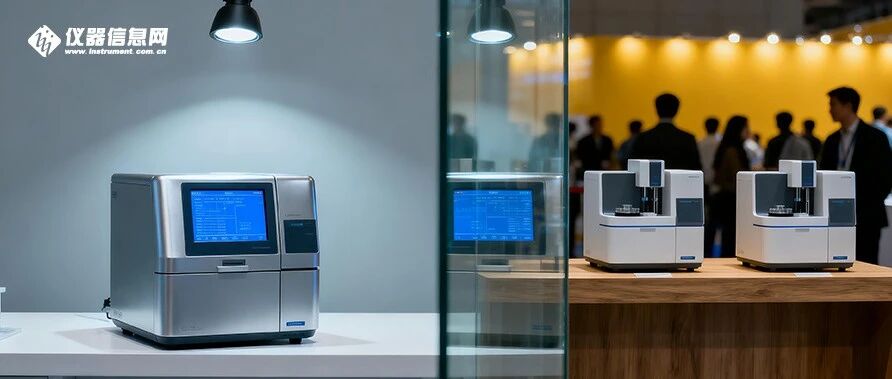
从“十四五”17个重大专项,看质谱仪的三大趋势
Xin Lang Cai Jing· 2026-02-06 11:26
Core Insights - The article highlights the evolution of domestic mass spectrometry technology in China, transitioning from addressing shortcomings to building modular capabilities, ultimately moving towards "catching up" and "leading" in the field [1][6][12] Policy and Planning - During the "14th Five-Year Plan" period, 26 mass spectrometry-related projects were laid out, with 16 officially approved and one pending approval for 2025, reflecting a strong policy drive to enhance core technologies [1][8] - 20 provinces have included "scientific instruments" in their "15th Five-Year Plan" proposals, focusing on key technology breakthroughs and industry cluster development [1][8] Project Development Stages - In the early phase (2021-2022), projects focused on improving machine performance, particularly in high resolution and sensitivity, addressing critical indicators that have historically constrained domestic mass spectrometry [3][10] - By mid-phase (2023), the focus shifted towards application-driven projects, emphasizing high-end scientific instruments and the autonomy of core components, aiming to reduce reliance on imports in the life sciences sector [4][11] - In the later phase (2024-2025), projects became more targeted, aligning closely with current research and detection needs, such as nucleic acid mass spectrometry for public health and high molecular weight protein analysis for structural proteomics [5][12] Technological Advancements - Key components like interface cones, ion traps, and dissociation modules became focal points for development, indicating a shift from complete machine usability to enhancing modular capabilities [4][11] - The increasing participation of enterprises in leading projects reflects a collaborative approach between research institutions and industry, enhancing the overall innovation ecosystem [4][11] Future Outlook - The ongoing improvements in the autonomy of core components and increased enterprise involvement suggest that domestic mass spectrometry is transitioning from "following" to "keeping pace" and potentially "leading" in certain niches [6][12] - The establishment of a major project for a high-performance chromatography-mass spectrometry system, currently pending approval, indicates a forward-looking strategy for nurturing young scientific talent and ensuring future technological reserves [5][12]

从“十四五”17个重大专项,看质谱仪的三大趋势
仪器信息网· 2026-02-06 09:02
Core Viewpoint - The article highlights the evolution of domestic mass spectrometry technology in China during the "14th Five-Year Plan" period, transitioning from addressing shortcomings to building modular capabilities, ultimately aiming to achieve "catching up" and "leading" in the field [1][2]. Group 1: Policy and Project Overview - A total of 26 mass spectrometry-related projects have been laid out under the "14th Five-Year Plan," with 16 officially approved and one pending approval for 2025 [2]. - The projects encompass the entire chain from the development of high-end mass spectrometers to breakthroughs in core components and methodological innovations, reflecting China's commitment to self-reliance and capability enhancement in mass spectrometry technology [2][5]. Group 2: Project Development Stages - In the initial phase (2021-2022), projects focused on improving overall machine performance, targeting key indicators such as high resolution and sensitivity, which have historically constrained domestic mass spectrometry development [4][5]. - The projects began to extend into cutting-edge life sciences, indicating early traction from application demands on instrument development [4][6]. Group 3: Mid-Term and Application Focus - By mid-term (2023), the application orientation of mass spectrometry projects significantly increased, with keywords like "single-cell" and "high-throughput analysis" indicating a shift towards higher spatial resolution and complex system quantification capabilities [6][7]. - The focus on engineering capabilities for high-end general scientific instruments and the autonomy of core components aims to reduce reliance on imports in the life sciences sector [6][9]. Group 4: Late-Term Trends and Future Directions - In the later phase (2024-2025), projects are increasingly aligned with current research and testing needs, such as nucleic acid mass spectrometry for public health and high molecular weight protein analysis for structural proteomics [8]. - The significant increase in projects led by enterprises reflects a transition from research validation to practical application, indicating a clear evolution in the mass spectrometry landscape [8][9]. - The planned high-performance chromatography-mass spectrometry analysis instrument for 2025 highlights a forward-looking approach to nurturing young scientific talent and ensuring future technological reserves [8].
禾信仪器1月29日获融资买入2349.19万元,融资余额2.01亿元
Xin Lang Cai Jing· 2026-01-30 01:51
Core Viewpoint - HeXing Instruments experienced a decline of 5.96% in stock price on January 29, with a trading volume of 243 million yuan, indicating market volatility and investor sentiment concerns [1]. Financing Summary - On January 29, HeXing Instruments had a financing buy-in amount of 23.49 million yuan, with a net financing buy of 6.23 million yuan after 17.26 million yuan in financing repayments [1]. - The total financing and margin trading balance reached 201 million yuan, accounting for 2.92% of the circulating market value, which is above the 50th percentile level over the past year, indicating a relatively high financing level [1]. - In terms of margin trading, there were no shares sold or repaid on January 29, with a margin balance of 0 shares, placing it in the 90th percentile level over the past year, suggesting a high level of margin trading activity [1]. Company Performance - As of September 30, the number of shareholders for HeXing Instruments increased by 27.54% to 3,228, while the average circulating shares per person decreased by 21.59% to 21,829 shares [2]. - For the period from January to September 2025, HeXing Instruments reported a revenue of 70.54 million yuan, a significant year-on-year decrease of 52.81%, and a net profit attributable to shareholders of -36.20 million yuan, reflecting a 63.40% decline compared to the previous year [2]. Dividend Information - Since its A-share listing, HeXing Instruments has distributed a total of 11.90 million yuan in dividends, with no dividends paid in the last three years [3].

市场监管总局:在汽车、食品等领域制定国产仪器设备验证评价系列标准
仪器信息网· 2026-01-21 09:02
Core Viewpoint - In 2026, the State Administration for Market Regulation will comprehensively promote the verification and evaluation of domestically produced inspection and testing instruments, aiming to establish an authoritative standard system, tackle key technologies, cultivate international brands, and enhance reliability and competitiveness [1]. Group 1 - The verification and evaluation system for domestic inspection and testing instruments will focus on three main areas: establishing an authoritative standard system, addressing core key technologies, and cultivating internationally competitive brands [2]. - The standard system will be market demand-oriented, particularly in the automotive and food sectors, developing a series of verification standards to help users build confidence through technical validation [2]. - A collaborative effort among industry, academia, and research will be organized to focus on high-end general equipment such as mass spectrometers, chromatographs, and tire-coupled road simulation test machines, aiming to overcome bottlenecks in core components and software [2]. Group 2 - Support will be provided to leading domestic testing instrument companies for technological innovation, with a focus on advancing the "Artificial Intelligence + Inspection and Testing" initiative to promote the iterative upgrade of domestic intelligent testing equipment, transitioning from "catching up" to "leading" [2].

检验检测仪器设备国产化验证评价工作全面启动
Yang Guang Wang· 2026-01-20 03:59
Core Viewpoint - The State Administration for Market Regulation will fully promote the domestic verification and evaluation of inspection and testing instruments and equipment by 2026, accelerating the "import substitution" process [1] Group 1: Domestic Verification and Evaluation System - The verification and evaluation system will focus on three main areas: establishing an authoritative standard system, tackling core key technologies, and cultivating internationally competitive brands [1][2] - By the end of 2024, 11.36% of inspection and testing institutions will be recognized as high-tech enterprises, significantly higher than the national average of 14.95 times [1] Group 2: Standard System and Technology Development - The system will develop series of verification and evaluation standards for domestic instruments, particularly in the automotive and food sectors, to help users build confidence and break foreign product monopolies [1] - A collaborative effort among industry, academia, and research will focus on high-end general equipment such as mass spectrometers and chromatographs to overcome bottlenecks in core components and software [1] Group 3: Brand Development and Innovation - Support will be provided for leading domestic testing instrument companies to innovate technologically, enhancing the verification and evaluation standard system and promoting application scenarios to gradually increase the domestic rate [2] - The initiative will also advance the "Artificial Intelligence + Inspection and Testing" action, promoting the iterative upgrade of domestic intelligent testing equipment to transition from "catching up" to "leading" [2]