
北京银河通用机器人有限公司

Search documents
银河通用获11亿元融资创纪录,机器人行业关注其与宇树技术和资本结合可能性
Tai Mei Ti A P P· 2025-06-23 04:51
Core Insights - The article highlights the significant financing round of 1.1 billion RMB (approximately 160 million USD) completed by Beijing Galaxy General Robotics, marking the largest single financing in the humanoid robot and embodied intelligence sector to date [2][5] - Galaxy General has raised over 2.4 billion RMB (approximately 340 million USD) since its establishment two years ago, with a projected valuation of 1 billion USD by mid-2025 [2][3] - The company focuses on high-value scenarios, emphasizing the cost-saving potential of their robots, which can replace human labor costs significantly [2] Financing Overview - Galaxy General Robotics secured seed funding shortly after its establishment, followed by a series of financing rounds, including 700 million RMB in angel funding and 500 million RMB in strategic funding [3] - The latest round of financing involved prominent investors such as CATL Capital and various national and local funds, indicating strong market interest and confidence in the company's potential [3][5] Technological Developments - The company announced the launch of OpenWBT, the world's first fully open-source, multi-model humanoid robot remote operation system, in collaboration with Tsinghua University [4] - Galaxy General's Galbot has been enhanced with a new end-to-end VLA model, improving its scalability and generalization capabilities [4] Commercial Applications - Galaxy General introduced the world's first humanoid robot smart retail solution, capable of managing a wide range of products in automated stores, with plans to deploy in 100 stores nationwide by the end of the year [4] - A joint venture with Bosch Group aims to explore commercial applications of embodied intelligence robots in industrial manufacturing [4] Market Potential - The humanoid robot market in China is projected to see sales of 2,400 units in 2024, increasing to 7,300 units in 2025, with a market size approaching 2.4 billion RMB [13] - By 2035, the humanoid robot market could reach approximately 140 billion RMB, with significant growth expected as production ramps up [13][14] Industry Dynamics - The collaboration between Galaxy General and Yushutech is noted for its potential to combine embodied intelligence technology with hardware and motion control [5][10] - The global humanoid robot market is anticipated to grow substantially, with estimates suggesting 200 million humanoid robots could be operational by 2050, addressing labor shortages and creating a market worth 30 to 50 billion USD by 2035 [14]


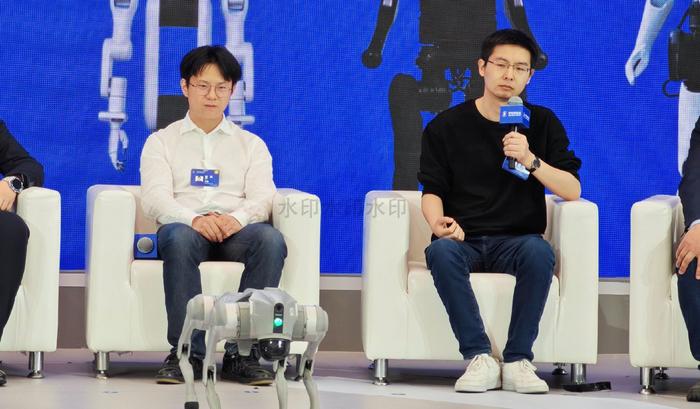
11亿,今年最大机器人单笔融资刷新
3 6 Ke· 2025-06-23 00:54
Group 1 - Beijing Galaxy General Robot Co., Ltd. has completed a financing round of 1.1 billion RMB, marking a record in both single and cumulative financing amounts in the embodied AI robotics sector [1] - The lead investor is CATL Capital, with a strong backing from major investment institutions, indicating a market consensus on the potential of embodied intelligence [1][2] - The company has raised over 2.4 billion RMB in total financing within two years, reflecting a stable investment rhythm and increasing scale [3][8] Group 2 - Galaxy General aims to develop robots that can effectively enhance productivity, focusing on creating intelligent agents that utilize hand, brain, and eye coordination [3][7] - The founding team, led by Dr. Wang He and Yao Tengzhou, combines academic and industry expertise, contributing to the company's innovative approach [5][7] - The company has launched several products, including the world's first humanoid robot smart pharmacy solution, which automates various pharmacy tasks [11][9] Group 3 - The establishment of a joint venture with Bosch Group's Boryan Capital aims to advance the application of embodied intelligence in complex manufacturing scenarios [2] - The investment from CATL is seen as a strategic move to leverage its extensive industrial ecosystem, enhancing the potential for embodied AI applications [14] - The industry is expected to face challenges in technology maturity and commercialization, but the entry of major players like CATL is likely to attract more capital and resources [14]


首发丨宁德时代,投了一位90后教授
投资界· 2025-06-23 00:29
Core Viewpoint - The article highlights the significant financing round completed by Beijing Yinhe General Robotics Co., Ltd., which raised over 1.1 billion yuan, marking the largest single financing in the field of embodied intelligence robots and setting a record for total financing in this sector [1][2][3]. Financing Details - Yinhe General was established in May 2023 and has raised over 2.4 billion yuan to date, attracting top-tier investors including CATL Capital, National Development Bank, and others [2][4]. - The recent financing round included participation from major investment firms and existing shareholders, indicating high demand and interest in the company [1][4]. - The company completed a 700 million yuan angel round in June 2023 and a 500 million yuan strategic round in November 2023, showcasing a rapid financing pace [4]. Industry Trends - The embodied intelligence sector is experiencing a surge in interest and investment, with 27 financing deals amounting to 4.45 billion yuan reported in the first two months of 2025, nearing the total for the entire year of 2024 [19]. - The entry of CATL into the robotics field is seen as a significant indicator of market trends, as the company has increased its investments in robotics since late 2024 [4][5]. Technological Developments - Yinhe General's recent advancements include the launch of the Galbot, which is capable of managing inventory and operations in smart pharmacies, with plans to deploy in 100 stores by the end of the year [16][18]. - The company is also focusing on training robots for material handling and sorting in industrial settings, collaborating with major automotive companies [18]. Leadership and Vision - The company is led by Wang He, a professor from Peking University, who has a strong background in embodied intelligence research and aims to integrate physical interaction skills with cognitive abilities in robots [11][12][14]. - Wang envisions a future where robots can seamlessly assist in daily life, emphasizing the importance of robots being competent in various scenarios [18][20].

活力中国调研行|“4S”店开张在即,机器人冲出“大世界”
Bei Jing Shang Bao· 2025-06-18 13:39
6月17日,北京商报记者跟随"活力中国调研行"北京市主题采访团走进位于亦庄的机器人大世界,据相关负责人介绍,一个月后在这里将 亮相一家全球首个具身智能机器人4S店。4S店集场景化展示、沉浸式交互、标准化交付、无忧化售后等多种功能于一身,首批将有近30 家企业的机器人入驻。 从春晚到马拉松再到机器人4S店,北京市充分发挥科技和产业创新优势,聚焦发展机器人"1+4"产品体系,通过实施"百项机器人新 品"和"百种应用场景示范"的"双百工程",初步打造了国内机器人技术创新策源地、应用示范高地和高端产业集聚区。机器人4S店的开 张,是北京亦庄在机器人产业生态构建上迈出的关键一步,将引领成为孕育机器人产业未来、链接全球市场的创新策源地。 作为北京机器人产业的重要集聚地和世界机器人大会的永久举办地,北京亦庄的深厚积淀与产业基础为机器人4S店的诞生提供了得天独 厚的沃土。目前,北京亦庄已汇聚300余家机器人和智能制造生态企业,产业链规模突破百亿元,占北京市机器人产业的半壁江山。 据了解,北京人形机器人创新中心有限公司、星海图(北京)人工智能科技有限公司、北京优必选智能机器人有限公司、北京加速进化 科技有限公司、北京银河通用机 ...
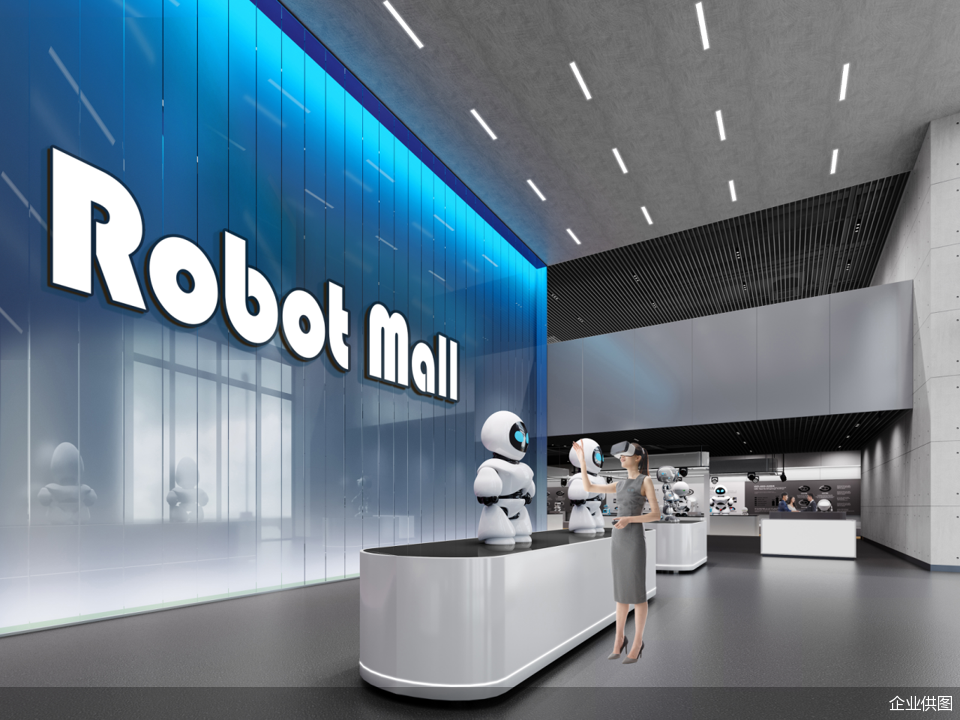
活力中国调研行|全球首家具身智能机器人4S店将于8月亮相
Bei Jing Shang Bao· 2025-06-18 06:21
据了解,北京人形机器人创新中心有限公司、星海图(北京)人工智能科技有限公司、北京优必选智能 机器人有限公司、北京加速进化科技有限公司、北京银河通用机器人有限公司、北京中科慧灵机器人技 术有限公司、上海智元新创技术有限公司、乐聚通研(北京)机器人技术有限公司、广州高擎机电科技有 限公司、北京星源智机器人科技有限公司10家具身智能机器人头部企业与机器人4S店签署合作意向协 议,有望成为机器人4S店首批入驻伙伴。截至目前,已有超100家产业链上下游企业表达入驻意向,其 中人形机器人企业达30家,产业生态初具规模。 当前,北京亦庄已聚集机器人和智能制造企业超300家,产业链规模突破百亿元,占据北京市"半壁江 山"。2025年2月北京亦庄发布机器人九大标杆场景机会清单,将在两年内释放超万台、近50亿元具身智 能机器人应用机会,其中超千台为人形机器人需求。 王一凡表示,机器人4S店具备场景化展示、沉浸式交互、标准化交付、无忧化售后等多种功能,一是 为全球顶尖具身智能机器人提供高契合度的场景展示与沉浸式交互体验空间;二是打造覆盖全国的零配 件快速响应网络和专业团队支撑的快速运维体系,确保机器人维修、保养、装配等需求得到及时 ...
机器人值守店加速落地,全球首个零售VLA大模型亮相
Bei Jing Ri Bao Ke Hu Duan· 2025-06-12 10:56
Core Insights - The company Galaxy General has launched the world's first end-to-end Vision-Language-Action (VLA) model specifically for the retail industry, which is expected to accelerate the deployment of embodied intelligent robots in retail settings [1][2] Group 1: Product Development - The newly introduced GroceryVLA model allows robots to operate without prior scene data collection, enabling them to autonomously infer and perform tasks in real-time [1] - The model can accurately grasp and place various types of products, including soft and hard packaging, without the need for individual parameter adjustments for each product type [2] Group 2: Market Strategy - Galaxy General plans to open 100 robot-staffed stores within the year, indicating a strong commitment to integrating robotics into retail operations [2] - The demonstration of the Galbot robot in a real commercial environment showcases its capabilities in visual perception, target recognition, and autonomous delivery, highlighting the practical applications of the GroceryVLA model [1]
海淀企业又有新突破,首个端到端具身零售大模型面向全球展示
Xin Jing Bao· 2025-06-10 15:05
Core Insights - The Beijing Galaxy General Robotics showcased its latest technology, the Galbot G1, at the 2025 Beijing Zhiyuan Conference, demonstrating its capabilities in the field of embodied intelligence [1] - The GroceryVLA model, developed by Galaxy General Robotics, represents a significant technological breakthrough, allowing for precise item retrieval in retail environments without the need for prior scene data collection [2] Group 1: Company Developments - Galaxy General Robotics plans to open 100 stores within the year, indicating a strong commitment to expanding its presence in the retail sector [2] - The GroceryVLA model can handle various packaging types, including soft and hard packaging, enabling a unified retrieval strategy across different product categories [2] Group 2: Industry Trends - The Haidian District has implemented multiple policies to promote the development of humanoid robots and embodied intelligence, with 297 companies in the field and 22 humanoid robot manufacturers already established [2] - The industry is transitioning from "single-point breakthroughs" to "ecological co-construction," reflecting a maturation in the humanoid robotics sector in China [2]
未来智造局|“突围”具身智能数据难题
Xin Hua Cai Jing· 2025-06-06 07:18
Group 1 - The core viewpoint of the articles highlights the challenges and advancements in the field of humanoid robots, particularly focusing on the need for training data to enhance their capabilities [1][2][3] - Humanoid robots are gradually demonstrating autonomy in complex scenarios, but they still face limitations in precision, speed, and generalization due to insufficient training data [1][3] - Major companies like Tesla and Google are actively working on creating training datasets, but they encounter high costs and long timelines in the process [2][3] Group 2 - The scarcity of training data for embodied intelligence models is a significant bottleneck, with estimates suggesting a million-fold difference compared to text data [2][3] - The largest datasets currently available for humanoid robots are only in the millions, which is inadequate compared to the billions of data points generated in the automotive sector [3] - The lack of sufficient data hampers the training of effective models, leading to a slow iteration cycle and limited real-world application [3] Group 3 - Synthetic data is emerging as a viable solution to the data scarcity issue, utilizing generative AI techniques to create data that mimics real-world scenarios [4][5] - Companies like Galaxy General Robotics are demonstrating the potential of synthetic data with models trained on datasets exceeding one billion entries, which are already being deployed in operational settings like 24-hour unmanned pharmacies [4][5] - Despite its advantages, synthetic data has limitations, particularly in generating multi-modal data such as tactile and auditory information, and concerns exist regarding the effectiveness of synthetic data in real-world applications [5][6] Group 4 - The "simulation to reality" transfer process is crucial for training embodied intelligence models, requiring a reduction in the gap between simulated and physical environments [6][7] - The National and Local Joint Innovation Center for Humanoid Robots is exploring ways to enhance data interoperability across different robot architectures to avoid redundant training efforts [7] - The center has developed a platform that collects data from over 100 robot configurations, aiming to facilitate better data sharing and training efficiency within the industry [7]
「银河通用」创始人王鹤:人形机器人跳舞是预先编程,马拉松是遥控操作!
Robot猎场备忘录· 2025-05-05 07:19
Core Viewpoint - The speech by Wang He emphasizes that humanoid robots are transitioning from a "performance era" to a "productivity era," highlighting the need for improved coordination of vision, hands, and brain to enhance their capabilities in various industries [4][9][10]. Group 1: Industry Overview - The humanoid robot sector in China is led by companies like Beijing Galaxy General Robotics, which has raised over 1.2 billion yuan and is positioned in the top tier of the industry [2]. - The first humanoid robot from Galaxy General, Galbot G1, is set to be released on June 14, 2024, showcasing the company's commitment to advancing humanoid robotics [2]. Group 2: Technological Insights - Current humanoid robots can perform tasks like dancing and running, but these actions often rely on remote control and pre-programmed sequences, lacking true autonomous capabilities [4][7]. - Wang He identifies four key capabilities for humanoid robots to be truly functional: mobility, operational ability, semantic understanding, and value intelligence [5]. Group 3: Market Dynamics - The industry is experiencing a "performance showcase" cycle, where companies focus on impressive demonstrations rather than practical applications, leading to a disconnect between showcased abilities and real-world utility [9][10]. - Major companies like Boston Dynamics have pointed out that while industrial robots are mature and commercialized, humanoid robots are still seen as more of a spectacle than a productivity tool [9]. Group 4: Future Prospects - The transition to a productivity era for humanoid robots hinges on developing real-time visual input and closed-loop feedback systems, which are essential for enhancing their operational capabilities [9][10]. - Companies are exploring various applications, such as the collaboration between Galaxy General and Meituan to create a 24-hour unmanned pharmacy solution using Galbot [12]. Group 5: Challenges and Opportunities - Despite significant investment and interest in humanoid robotics, many startups are still in the early stages of development, focusing on educational and research applications rather than industrial use [11][18]. - The market is expected to see a surge in deliveries of humanoid robots by 2025, but the actual effectiveness of these products remains to be seen, raising questions about the sustainability of the market [18].

天奇自动化工程股份有限公司2025年第一季度报告
Shang Hai Zheng Quan Bao· 2025-04-29 04:00
Core Viewpoint - The company reported significant growth in revenue and net profit for the first quarter of 2025, driven by its intelligent equipment and new energy vehicle sectors, while also facing challenges in its lithium battery recycling business due to external market factors [5][6][8]. Financial Performance - The company achieved a consolidated revenue of 622.23 million yuan and a net profit attributable to shareholders of 42.30 million yuan in Q1 2025, marking a substantial year-on-year increase [5]. - The intelligent equipment business generated sales of 429.29 million yuan, accounting for 68.99% of total revenue, with a year-on-year growth of 18.71% attributed to increased overseas project revenues [6]. Business Segments - **Intelligent Equipment Business**: The segment's growth was supported by ongoing projects with major clients like BYD and Volvo, as well as a strong performance in the new energy vehicle market, which saw a 50.4% increase in production and sales [6][7]. - **Lithium Battery Recycling Business**: This segment reported a revenue of 81.39 million yuan, representing a 24% decline year-on-year, primarily due to the impact of cobalt export bans and rising cobalt prices [8]. - **Humanoid Robot Business**: The company established a humanoid robot division and signed an investment agreement with Beijing Galaxy General Robotics to develop intelligent industrial solutions [9][12]. Market Trends - The new energy vehicle industry is becoming a key driver of green transformation, with Chinese manufacturers expanding their international presence, particularly in Southeast Asia, Europe, and South America [7]. - The government is enhancing the regulatory framework for battery recycling, which is expected to improve the supply chain for lithium battery materials and support the industry's circular economy [8]. Shareholder Information - The company has approved a total external guarantee limit of 1.796 billion yuan for 2025, which is 92.78% of its latest audited net assets, with specific limits for subsidiaries based on their asset-liability ratios [23][31].
