罗氏

Search documents
长江证券首次研报覆盖联化科技:多业务协同高增 医药CDMO与新能源打开长期成长空间
Quan Jing Wang· 2026-02-09 06:16
Core Insights - Longhua Technology (联化科技) is positioned as a leading player in the agricultural and pharmaceutical CDMO sectors, with significant achievements in small nucleic acid CDMO and potential in functional chemicals [1][2] Business Overview - Longhua Technology has established a collaborative development framework across four core industrial segments: agricultural protection, pharmaceuticals, functional chemicals, and equipment & engineering services [2] - The agricultural protection segment generated revenue of 1.702 billion yuan in the first half of 2025, with a gross margin increase of 9.48% year-on-year [2] - The pharmaceutical segment, focusing on APIs and intermediates, achieved revenue of 1.018 billion yuan in the first half of 2025, reflecting a year-on-year growth of 42.80% [2] Small Nucleic Acid CDMO - The company is leveraging small nucleic acid CDMO to tap into new growth opportunities, with advantages over traditional small molecule and antibody drugs, including broader target selection and higher success rates [3] - Since 2022, the market for small nucleic acid drugs has seen significant activity, with 32 transactions totaling 29.022 billion USD in 2025, indicating strong commercial value [3] - Longhua Technology has developed scalable production processes for modified nucleotides and has established a high-efficiency delivery system for nucleic acid drugs, enhancing its competitive edge [3] Functional Chemicals and Market Potential - The functional chemicals segment reported revenue of 0.265 billion yuan in the first half of 2025, marking a year-on-year doubling [4] - The company is focusing on lithium battery materials, including lithium hexafluorophosphate and LiFSI, with ongoing product development in various testing phases [4] - The National Development and Reform Commission's new storage action plan aims for over 1.8 million kilowatts by 2027, which is expected to drive significant market demand in the energy storage sector [4] Financial Performance - For the first three quarters of 2025, Longhua Technology reported total revenue of 4.718 billion yuan, an increase of 8.25% year-on-year, and a net profit of 316 million yuan, surging by 871.65% [1] - The projected net profit for 2025 is estimated to be between 350 million and 420 million yuan, representing a year-on-year growth of 239.35% to 307.22% [4]


Better iShares International ETF: IEFA vs. IXUS
The Motley Fool· 2026-02-08 16:06
Core Insights - The iShares Core MSCI Total International Stock ETF (IXUS) and the iShares Core MSCI EAFE ETF (IEFA) provide different exposures to international equities, with IXUS including emerging markets and IEFA focusing solely on developed markets [1][2] Cost and Size Comparison - Both IXUS and IEFA have an expense ratio of 0.07% - As of January 30, 2026, IXUS has a 1-year return of 37.7% while IEFA has a return of 34.9% - IXUS has a dividend yield of 3.2% compared to IEFA's 3.6% - IXUS has assets under management (AUM) of $51.9 billion, while IEFA has $162.6 billion [3][4] Performance and Risk Comparison - Over the past five years, IXUS experienced a maximum drawdown of -30.05%, while IEFA had a drawdown of -30.41% - An investment of $1,000 in IXUS would have grown to $1,305, whereas the same investment in IEFA would have grown to $1,353 [5] Fund Composition - IEFA tracks developed markets in Europe, Australasia, and the Far East, holding 2,589 companies with a sector focus on financial services (22%), industrials (20%), and healthcare (11%) [6] - IXUS holds over 4,100 stocks, providing broader diversification with sector allocations leaning towards financial services, industrials, and basic materials [7] Investor Implications - The choice between IXUS and IEFA depends on the desired exposure; IXUS offers global exposure including emerging markets, while IEFA provides stability and a higher dividend yield from developed markets [8][11] - IEFA's focus on developed markets avoids emerging market volatility but limits growth potential, while IXUS can deliver higher returns due to emerging market growth despite associated risks [9][10]



Roche's multiple sclerosis drug fenebrutinib meets goal in late-stage trial
Reuters· 2026-02-07 20:44
Core Insights - Roche's experimental drug fenebrutinib has successfully met its primary endpoint in a late-stage trial for patients with primary progressive multiple sclerosis [1] Company Summary - Roche is a Swiss pharmaceutical company that is advancing its research in multiple sclerosis treatments [1] - The successful trial results for fenebrutinib may enhance Roche's position in the competitive pharmaceutical market for neurological disorders [1] Industry Summary - The pharmaceutical industry is witnessing significant advancements in treatments for multiple sclerosis, particularly in progressive forms of the disease [1] - The success of fenebrutinib could lead to increased investment and interest in the development of similar therapies within the industry [1]


IEFA vs. IEMG: These Two ETFs Deliver International Exposure Through Different Paths
Yahoo Finance· 2026-02-07 17:26
While both the iShares Core MSCI Emerging Markets ETF (NYSEMKT:IEMG) and iShares Core MSCI EAFE ETF (NYSEMKT:IEFA) offer broad international equity exposure at low cost, IEFA trades at a marginally lower expense ratio and yields more, whereas IEMG has outperformed over the past year and covers riskier, higher-growth emerging markets. IEMG and IEFA are both core international ETFs from iShares, but they track different global slices: IEMG focuses on emerging markets, while IEFA excludes the U.S. and Canad ...
International ETFs: VXUS Chases Global Growth While IEFA Prioritizes Predictability
Yahoo Finance· 2026-02-07 12:35
Core Insights - Vanguard Total International Stock ETF (VXUS) includes emerging markets, while iShares Core MSCI EAFE ETF (IEFA) focuses solely on developed markets, offering a marginally higher yield and lower volatility [1][2] Cost & Size Comparison - VXUS has an expense ratio of 0.05% compared to IEFA's 0.07% - As of January 30, 2026, VXUS has a 1-year return of 29.5% and a dividend yield of 3.1%, while IEFA has a 1-year return of 26.6% and a dividend yield of 3.5% - VXUS has assets under management (AUM) of $573.7 billion, significantly higher than IEFA's $162.6 billion [3][4] Performance & Risk Comparison - Over the past five years, VXUS experienced a maximum drawdown of -29.43%, while IEFA had a drawdown of -30.41% - An investment of $1,000 would have grown to $1,297 in VXUS and $1,353 in IEFA over the same period [5] Fund Composition - IEFA holds 2,589 stocks from developed markets, with major sectors being financial services (22%), industrials (20%), and healthcare (11%), featuring top positions like ASML, Roche, and HSBC [6] - VXUS contains over 8,600 stocks from both developed and emerging markets, with significant exposure to financial services, industrials, and technology, including major positions like Taiwan Semiconductor Manufacturing, Tencent, and ASML [7][9] Market Performance Context - International stocks surged over 30% in 2025, significantly outperforming U.S. markets, driven by a weaker dollar and attractive valuations abroad, with both VXUS and IEFA benefiting from these gains [8] - VXUS provides a broader investment scope, capturing both developed and emerging markets, while IEFA selectively focuses on developed markets, trading off higher growth potential for reduced risk [10]
中新健康|全球“药王”易主
Zhong Guo Xin Wen Wang· 2026-02-07 03:49
Core Insights - Eli Lilly's tirzepatide is projected to surpass Novo Nordisk's semaglutide in global sales by 2025, claiming the title of "king of drugs" [1] - Eli Lilly reported a total revenue of $65.179 billion for 2025, a 44% year-over-year increase, with a net profit of $20.64 billion, up 95% [1] - Tirzepatide contributed over $36.5 billion in revenue, with sales of the diabetes version reaching $22.965 billion (99% increase) and the weight loss version at $13.542 billion (175% increase) [1] - Novo Nordisk's revenue for 2025 was approximately $48.95 billion, with semaglutide accounting for 73.9% of its revenue, totaling about $36.1 billion [1] Market Dynamics - The pharmaceutical industry is experiencing a shift in leadership, with the "king of drugs" title changing hands more frequently due to patent expirations [2] - Semaglutide's core patent will expire in March 2026, while tirzepatide's patent is expected to last until after 2030, but both are facing increased competition from generics [2] - A price war has begun, with both Eli Lilly and Novo Nordisk announcing price reductions for their key diabetes and weight loss drugs starting November 2025 [2][3] Future Projections - Eli Lilly anticipates total revenue of $80 billion to $83 billion for 2026, representing a 25% increase from 2025 [3] - Novo Nordisk has lowered its 2026 sales guidance, expecting a decline of 5% to 13% due to pricing pressures affecting its diabetes and weight loss drugs [3] - The global obesity treatment market is rapidly evolving, with over 600 drugs in development, primarily in the U.S. and China [3]


BIIB Beats on Q4 Earnings & Sales, Stock Gains on Upbeat '26 EPS View
ZACKS· 2026-02-06 17:30
Core Insights - Biogen reported fourth-quarter 2025 adjusted EPS of $1.99, exceeding the Zacks Consensus Estimate of $1.61, despite a 42% year-over-year decline in earnings [2][10] - Total revenues for the quarter were $2.28 billion, down 7% year over year, but above the Zacks Consensus Estimate of $2.21 billion, driven by weak sales of key drugs [3][10] Revenue Breakdown - Product sales decreased to $1.67 billion, a 9% decline year over year [4] - Revenues from anti-CD20 therapeutic programs increased by 12% to $521 million, including royalties from Roche's Ocrevus and Biogen's share of other drugs [4] - Contract manufacturing and royalty revenues fell 66% to $44 million, while Alzheimer's collaboration revenues rose to $47 million from $27 million year-over-year [5][6] Multiple Sclerosis (MS) Drug Performance - MS revenues totaled $917 million, down 14% year over year, impacted by generic competition for Tecfidera [7] - Tecfidera sales plummeted 51% to approximately $112 million, missing estimates, while Tysabri sales fell 4% to $397.5 million, beating estimates [8] - Vumerity sales increased by 3% to $181 million, but also missed estimates [7] Rare Disease Drug Performance - Spinraza sales declined over 15% to $356 million, missing estimates [9] - Skyclarys generated over $133 million in sales, up nearly 31% year over year, driven by demand growth [11] - Qalsody added $25 million in sales compared to $12 million in the previous year [11] Cost and Expense Management - Adjusted R&D expenses decreased by 6% to $478 million due to cost-saving initiatives [14] - Adjusted SG&A expenses rose 1% to $678 million, reflecting higher costs for new product launches [14] 2025 Financial Performance - Biogen's total revenues for 2025 reached $9.89 billion, surpassing estimates and showing a 2% year-over-year increase [15] - Earnings per share were $15.28, down 7% year over year, but above estimates [15] 2026 Guidance - Total revenues are expected to decline by a mid-single-digit percentage in constant currency terms, with adjusted EPS projected between $15.25 and $16.25, above consensus estimates [16] - Gross margin is expected to remain flat, with R&D and SG&A costs anticipated to be consistent year over year [17] Market Outlook - Despite challenges in the MS franchise and declining Spinraza sales, newer therapies like Leqembi, Skyclarys, and Zurzuvae are gaining traction [18][21] - The company is focused on building a multi-franchise portfolio through internal development and collaborations, with key pipeline products having a peak revenue potential of $14 billion [21][22]


“脑科学”的新淘金热
3 6 Ke· 2026-02-06 13:37
Core Insights - Neuroscience has historically been viewed as a high-risk area in pharmaceutical R&D, particularly for conditions like Alzheimer's disease and schizophrenia, due to complex pathophysiological mechanisms leading to high failure rates [1] - Recently, there has been a notable shift as the neuroscience sector is gaining momentum, driven by commercial success in Alzheimer's treatments and advancements in technologies such as small molecules, RNAi, cell therapy, and AI [1][6] - The combination of technological breakthroughs and market confidence is prompting multinational corporations (MNCs) to engage in mergers, acquisitions, and collaborations, signaling a potential "gold rush" in neuroscience [1] Industry Trends - The number of clinical trials and transactions in the neuroscience field is increasing, with 138 new drugs currently undergoing 182 clinical trials for Alzheimer's disease, marking a 9% increase from 2024 [2] - Over the past five years, more than 200 new clinical trials have been initiated for Alzheimer's disease, depression, and Parkinson's disease, indicating a growing interest in these areas [5] Market Developments - Confidence in the sector is rising, particularly due to breakthroughs in Alzheimer's treatments, such as Biogen's Leqembi, which achieved sales of $214 million in 2024 and $121 million in Q3 2025, reflecting an 82% year-over-year increase [6] - The approval of diagnostic methods, such as the Elecsys® pTau181 blood test by Roche and Eli Lilly, is enhancing the efficiency of Alzheimer's diagnosis and treatment [7] Technological Innovations - Emerging technologies like brain-computer interfaces and brain stimulation devices are becoming part of the investment narrative in neuroscience, with companies like Neuralink and Synchron conducting human clinical trials [8] - Advances in biomarkers and imaging agents are improving patient stratification in drug development, enhancing predictability of treatment efficacy [8] Policy Support - Significant government investments in brain science initiatives, such as the U.S. "Brain Initiative" with over $4 billion funding from 2014 to 2023, and China's brain plan with a budget exceeding 5 billion yuan, are fostering growth in the sector [8] Treatment Paradigms - The treatment landscape for Alzheimer's is evolving, with new therapies targeting Tau proteins gaining prominence over traditional Aβ-targeting approaches [9] - Innovations in drug delivery methods, such as brain-penetrating antibodies and RNAi technologies, are redefining treatment boundaries in neuroscience [11][12] Conclusion - After decades of exploration, the neuroscience field is experiencing unprecedented research intensity and commercialization, marking the onset of a new "gold rush" in the industry [13]

征祥医药港股IPO:唯一商业化产品面临医保、仿制药、先行者三重压力 上市前夕董事会“大换血”
Xin Lang Cai Jing· 2026-02-06 08:23
炒股就看金麒麟分析师研报,权威,专业,及时,全面,助您挖掘潜力主题机会! 出品:新浪财经上市公司研究院 作者:天利 | | 截至12月31日 | 截至9月30日 | | --- | --- | --- | | | 2024年 | 2025年 | | | (人民幣千元) | | | | | (未經濟計) | | 非流動資產 | | | | 物業、廠房及設備 | 1.605 | 1.026 | | 使用權資產 ... | | 9,048 | | 無形資産 . | 269 | 217 | | 預付款項、按金及其他應收款項 | 277 | 680 | | 非流動資產總值 | 2,151 | 10,971 | | 流動資產 | | | | 存貸 | 8.928 | 13.095 | | 預付款項、按金及其他應收款項 | 13.907 | 5.326 | | 以公允價值計量且其變動計入當期損益的金融資產 | 89.074 | 151.932 | | 定期存款 | 3.954 | 4.107 | | 現金及現金等價物 | 10.063 | 117.957 | | 流動資產總值 | 125,926 | 292,417 | 晚 ...
征祥医药冲击IPO,剑指流感市场,竞争格局正在变差
Ge Long Hui A P P· 2026-02-05 09:20
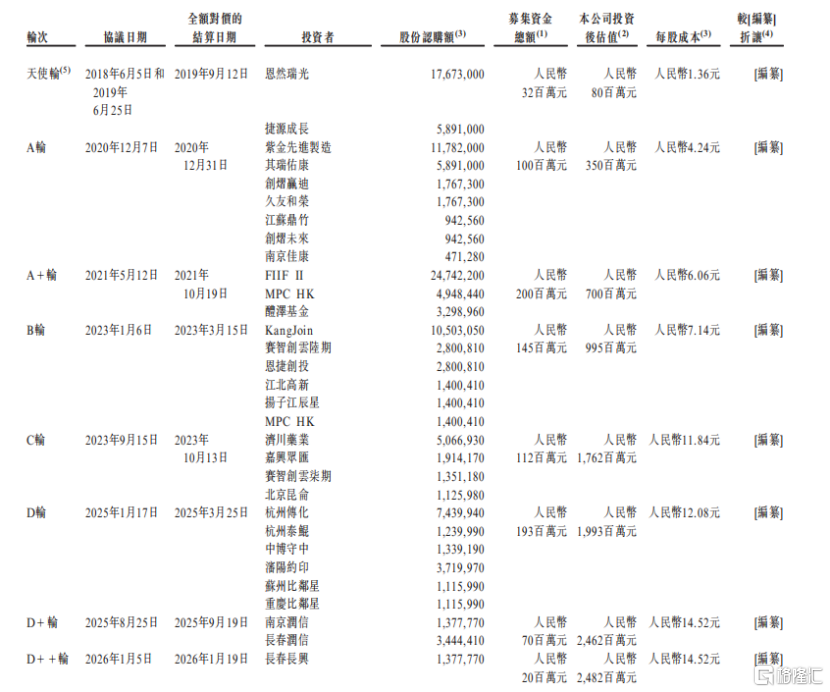
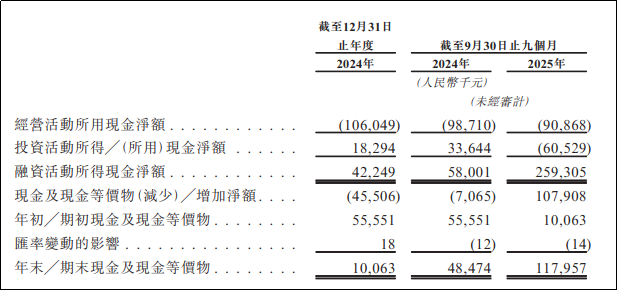
Group 1 - Seasonal influenza impacts approximately 1 billion people globally each year, with 3 to 5 million cases developing into severe illness and 290,000 to 650,000 deaths due to influenza-related respiratory diseases [1] - The domestic influenza treatment drug market is currently dominated by Dongyangguang Pharmaceutical with Oseltamivir, but new players are rapidly emerging since 2025 [1] - Zhengxiang Pharmaceutical is seeking to list on the Hong Kong Stock Exchange, having submitted its application on January 30, with CICC as its sole sponsor [2][4] Group 2 - Zhengxiang Pharmaceutical's antiviral drug, Marcilosavir, has already been approved for market release, distinguishing it from most other 18A companies [3] - The company was founded in 2018 and has undergone multiple rounds of financing, raising a total of 872 million RMB, with a post-investment valuation of 2.48 billion RMB as of January 2026 [4][5] - The company has a drug portfolio that includes six assets, with Marcilosavir being the core product, which is a new generation antiviral targeting influenza [10][12] Group 3 - The global market for influenza treatment and prevention drugs is projected to reach $4.8 billion by 2024, with China contributing $1.7 billion [16] - The Chinese market for antiviral drugs is expected to grow to 13.6 billion RMB by 2035, with PA inhibitors and other antiviral drugs accounting for 13 billion RMB [17] - Marcilosavir faces competition from several established products, including Roche's Baloxavir and others, with pricing set at 222 RMB per box, which is higher than some competitors [20] Group 4 - Zhengxiang Pharmaceutical reported zero revenue for 2024 and 400,000 RMB for the first nine months of 2025, primarily from regulatory support services for Marcilosavir [23] - The company incurred losses of approximately 145 million RMB for both 2024 and the first nine months of 2025, totaling around 290 million RMB in cumulative losses [23] - The company collaborates with a national CSO, Jichuan Pharmaceutical, to enhance market share through its established distribution network [24] Group 5 - The company has a total of 52 R&D personnel, with significant expenditures on drug development, amounting to 100 million RMB and 81.6 million RMB in R&D costs for the respective reporting periods [23] - As of November 2025, the company had cash and cash equivalents of 523 million RMB and term deposits of 141 million RMB [27] - The overall cash flow from operating activities showed a net outflow of 1.06 billion RMB for 2024, indicating financial challenges [28]