Tempus AI

Search documents
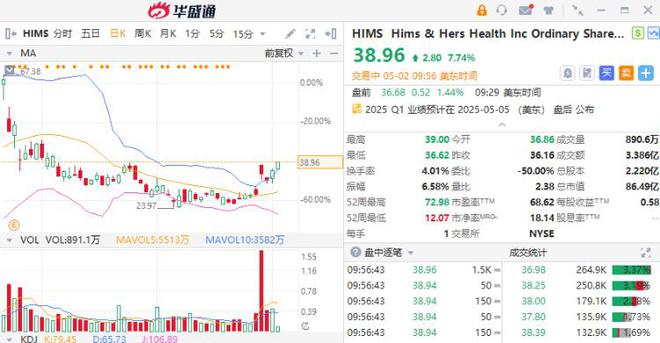
美股异动|AI应用股集体大涨!HIMS涨7%,APP涨超5%
Xin Lang Cai Jing· 2025-05-02 14:56
华盛资讯5月1日讯,受非农超预期提振, 美股三大指数高开高走,标普500指数将抹去4月2日以来 的"关税暴跌" 半导体板块领涨,台积电涨近3%,英伟达、博通涨超2%。消息面上,据悉英伟达在美国出口规定后调 整AI芯片 风险提示: 投资涉及风险,证券价格可升亦可跌,更可变得毫无价值。投资未必一定能够赚取利润,反 而可能会招致损失。过往业绩并不代表将来的表现。在作出任何投资决定之前,投资者须评估本身的财 政状况、投资目标、经验、承受风险的能力及了解有关产品之性质及风险。个别投资产品的性质及风险 详情,请细阅相关销售文件,以了解更多资料。倘有任何疑问,应征询独立的专业意见。 免责声明:华盛独家资讯引用之数据或资料可能得自第三方,华盛通将尽可能确认资料来源之可靠性, 但并不对第三方所提供数据或资料之准确性负责,也不构成任何证券、金融产品或工具要约、招揽、建 议、意见或任何保证。证券价格有时会大幅波动,价格可升亦可跌,更可变得毫无价值,敬请投资者注 意风险。在使用本文件及任何内容时必须注明稿件来源于华盛通,华盛通所属深圳市时代华盛网络科技 有限公司将保留所有法律权益。 AI应用股集体大涨,$HIMS 大涨7%,Temp ...


Why Tempus AI Stock Is Skyrocketing Today
The Motley Fool· 2025-04-23 14:48
Shares of Tempus AI (TEM 17.46%) were skyrocketing 16.5% higher as of 10:39 a.m. ET on Wednesday. The big gain came after the healthcare artificial intelligence (AI) company announced a multiyear partnership with AstraZeneca and Pathos AI to build a multimodal foundation model for cancer drug discovery and development.Tempus AI has invested heavily over the last decade to create one of the world's largest libraries of multimodal data that can be used in developing precision medicines. The company's de-ident ...


医疗器械-Tempus AI映射下的A股投资机遇
2025-04-15 14:30
各位领导晚上好我是华创医药的李晨娟感谢大家来收听我们今晚的这个华创医疗信息的随笔系列10报告的一个分享那这篇报告呢我们主题就是Tempus AI in剩下的一个A股的投资机遇本篇报告呢因为基于近期这个Tempus在美股的 前段时间的一个大涨当然近期股价略有回调我们来看Tempus AI的核心竞争力来自于哪些方面然后映射到国内为什么暂时还没有自己的Tempus AI以及我们认为目前A股的一些投资的启示首先是对Tempus AI这个公司做一个简单的介绍Tempus AI是成立于15年专注于构建能够实时获取医疗数据来实现精准诊疗的一个平台 那它的这个平台呢最初是聚焦在肿瘤领域啊之后逐步拓展到心脏病包括精神病其他几个领域公司也是在20年的6月份在美国纳斯达克实现了上市目前呢公司是由三大产品管线首先是基因组织 那精英主学我们看到公司的精英主学产品线主要就能在肿瘤领域慢慢地拓展到了精神病等等其他的领域基本上覆盖了整个肿瘤诊疗的全流程包括从病前的筛查 早期的辅助治疗监察再到疾病后期的治疗选择 预后反应监测 此前公司的经营组学主要依赖于治疗过程中的检测业务随着新产品的上市之后能够触及到更大的市场空间 基因组学员我们看到这个肿 ...
4 Healthcare Stocks With Massive Gains—and More to Come
MarketBeat· 2025-03-29 11:16
Market Overview - The American stock markets have experienced a downturn due to international tariff fears, impacting most sectors, while healthcare stocks have outperformed the general market in 2025 [1] Healthcare Sector Performance - Healthcare stocks are rising above competitors, with some appreciating by at least 30% this year, and smaller stocks seeing increases of 50% or more, indicating potential undervaluation [2] - Royalty Pharma has seen a 25% year-to-date price appreciation, with a current price of $31.37 and a 12-month price forecast of $41.60, suggesting a 32.61% upside [2][4] - CVS Health has experienced a 50% increase in share price since the beginning of the year, with a current price of $67.13 and a 12-month price forecast of $70.41, indicating a 4.89% upside [5][6] - Tempus AI has seen a 60% increase in share price year-to-date, with a current price of $47.83 and a 12-month price forecast of $61.18, suggesting a 27.92% upside [8][9] - Guardant Health's share prices have risen nearly 50% since the beginning of the year, with a current price of $43.14 and a 12-month price forecast of $48.95, indicating a 13.47% upside [11][12] Institutional Investments and Analyst Ratings - Royalty Pharma has seen significant institutional buying, with purchases rising to $748 million in Q4 2024 from $177 million in Q3 2024, and maintains a Buy rating from analysts [3] - CVS Health's short interest has fallen by over 12%, indicating increased investor confidence, and it has a Moderate Buy rating from analysts [7] - Tempus AI's quarterly revenue increased by 35.8% year-over-year to $200.7 million, with gross profit rising by 49.7% to $122.1 million, contributing to its positive analyst ratings [9][10] - Guardant Health has a consensus Buy rating from analysts, with actual revenue consistently beating estimates, although its path to profitability remains uncertain [13][14]


Tap Billion-Dollar AI Opportunity in Oncology: Stocks in the Spotlight
ZACKS· 2025-03-19 19:16
Industry Overview - Artificial Intelligence (AI) and Machine Learning (ML) are crucial in precision oncology, enhancing decision-making through the analysis of large datasets and digital pathology [1] - The global AI in oncology market is valued at $1.92 billion in 2023, with a projected CAGR of 29.4%, reaching $11.52 billion by 2030, indicating rising investor interest [3] AI Initiatives and Developments - The National Institutes of Health (NIH) is evaluating the PRIMED-AI initiative to enhance disease diagnosis and treatment through coordinated AI/ML efforts [2] - AI models developed by NIH aim to predict cancer patients' responses to therapies, showcasing the growing integration of AI in healthcare [2] Key Players in AI-Driven Precision Oncology - NVIDIA is a significant player, providing powerful GPUs essential for AI models in imaging and drug development [5] - Palantir's Foundry platform enables comprehensive data analysis across laboratories, enhancing research capabilities [5] - Google's DeepMind, IBM Watson Health, and Microsoft's AI initiatives are also shaping the competitive landscape in healthcare [6] Investment Opportunities - BioXcel Therapeutics utilizes its proprietary AI platform, NovareAI, to expedite drug development, with a long-term expected earnings growth rate of 37.9% and projected revenue growth of 71.2% by 2025 [8][9] - Tempus AI enhances precision medicine through its algorithmic test platform, with a long-term expected earnings growth rate of 42% and projected revenue growth of 78.4% by 2025 [10][12] - Quest Diagnostics is integrating AI to improve operational efficiency and has acquired PathAI Diagnostics to advance digital pathology innovations, with a long-term expected earnings growth rate of 8.2% [13][14]

行业深度报告:AI+医疗:大模型重塑医疗生态
ZHESHANG SECURITIES· 2025-03-12 01:02
Investment Rating - The report maintains a "Positive" investment rating for the AI+Healthcare industry [6] Core Insights - The reasoning and multimodal capabilities of large models are continuously upgrading, and application costs are decreasing, driving healthcare institutions to accelerate the integration of AI technology. The global generative AI market in healthcare is expected to reach $17.2 billion by 2031, with a compound annual growth rate (CAGR) of 32.60% from 2023 to 2031 [1][18] - The current phase of AI in healthcare has transitioned into a multimodal integration stage, addressing issues such as information silos and data fragmentation that existed in earlier AI applications. Large models utilize a "pre-training + fine-tuning" architecture to process multimodal healthcare data [1][12] - DeepSeek, a domestic open-source large model, is characterized by low cost and high performance, accelerating its penetration into the healthcare industry. It can quickly analyze various types of medical data, aiding doctors in complex case management [2][13] - Major international players like NVIDIA and Microsoft are actively entering the healthcare sector, leveraging their core capabilities through acquisitions and ecosystem empowerment. Companies like Tempus AI and HIMS have successfully commercialized AI solutions, showing significant revenue growth [3][42] Summary by Sections 1. Large Model Technology Upgrade Driving AI in Healthcare - The evolution of AI technology in healthcare has progressed through four key stages: rule-driven systems, traditional machine learning, deep learning with single-modal models, and the current multimodal integration era [11] - The multimodal capabilities of large models enable comprehensive data processing, enhancing clinical decision support, drug development, and telemedicine applications [12][18] 2. International Landscape: Major Players and Innovations - NVIDIA and Microsoft are leading the charge in AI healthcare, with NVIDIA focusing on hardware and ecosystem investments, while Microsoft integrates AI tools into its cloud services [22][28] - Tempus AI has built the largest multimodal database, supporting personalized treatment plans and achieving significant revenue growth [35][37] - HIMS has seen rapid growth in subscription users and revenue, driven by its AI-powered healthcare solutions [42][43] 3. Domestic AI+Healthcare Company Overview - Domestic companies in the AI healthcare sector can be categorized into three types: general large model providers, data service companies, and traditional medical IT companies transitioning to AI [4][47] - iFlytek's Starfire medical model has shown superior performance in diagnostic recommendations and health consultations compared to other models [48][50] - Yunzhisheng is leveraging its self-developed "Shanhai" large model to provide specialized medical information support [54]
医药生物行业周报:“AI+医疗、医药”主题持续发酵,短期热度或有望延续-20250319
Guodu Securities· 2025-03-05 07:55
Investment Rating - The report assigns an investment rating of "Recommended" for the pharmaceutical and biotechnology industry [3][33]. Core Insights - The "AI + Healthcare/Pharmaceutical" theme continues to gain traction, with short-term momentum expected to persist. The report highlights significant stock performance in the sector, with the pharmaceutical and biotechnology sector (SW) rising by 2.71%, outperforming the CSI 300 index, and all sub-sectors showing positive growth, particularly in medical services [3][4]. - In the U.S., Tempus AI, a representative company in medical AI, saw a weekly increase of approximately 30% and over 160% year-to-date, driving the momentum of the medical AI concept. In China, companies like KingMed Diagnostics and Dian Diagnostics announced collaborations with DeepSeek, indicating a shift towards the commercialization of AI applications in healthcare [4][3]. - The report emphasizes investment opportunities in sub-sectors such as "AI + Medical Imaging," "AI + Diagnostic Services," and "AI + Drug Development," recommending key companies including United Imaging, Mindray, BGI Genomics, and WuXi AppTec [3][4]. Industry Performance Tracking - The pharmaceutical and biotechnology sector (SW) rose by 2.71% in the week of February 10-14, ranking 5th among 31 Shenwan primary industries. The CSI 300 index increased by 1.19% during the same period [5][6]. - All sub-sectors experienced growth, with medical services leading at +6.51%, followed by medical devices at +4.81%, and pharmaceutical commerce at +4.18% [5][6]. - Notable individual stock performances included Dian Diagnostics (+46.29%), Mian Health (+31.58%), and United Imaging (+27.33%) [6]. Industry Dynamics and Key Company Tracking - The National Healthcare Security Administration released a list of key tasks for 2025, focusing on efficient medical insurance processes and direct settlements for collected drugs and consumables [7]. - The retail terminal drug sales scale in China is projected to reach 574 billion yuan in 2024, with a growth rate of 3.7%, indicating a slowdown in growth due to demographic and economic factors [8]. - The report also notes significant collaborations, such as Baiyang Pharmaceutical's agreement with Roche for the exclusive marketing rights of a targeted cancer drug in mainland China [9][11]. Industry Data Tracking - The report tracks various industry metrics, including the basic medical insurance fund income, which reached 28,507.29 billion yuan in 2024, showing a year-on-year growth of 5% [15][16]. - The domestic pharmaceutical manufacturing industry achieved a total revenue of 25,298.50 billion yuan in 2024, with profit totals declining by 1.1% year-on-year [17].



医药生物行业周报:“AI+医疗医药”主题持续发酵,短期热度或有望延续
Guodu Securities· 2025-03-05 01:48
Investment Rating - The report assigns an investment rating of "Recommended" for the pharmaceutical and biotechnology industry [3][33]. Core Insights - The "AI + Healthcare/Pharmaceutical" theme continues to gain traction, with short-term momentum expected to persist. The domestic and international markets are witnessing significant developments in AI applications within healthcare, particularly with companies like Tempus AI showing substantial stock price increases [3][4]. - The report highlights investment opportunities in specific segments such as "AI + Medical Imaging," "AI + Diagnostic Services," and "AI + Drug Development," recommending key companies including United Imaging, Mindray, BGI, and WuXi AppTec [3][4]. Industry Performance Tracking - The pharmaceutical and biotechnology sector (SW) rose by 2.71% last week, outperforming the CSI 300 index, which increased by 1.19%. All sub-sectors within the industry experienced growth, with medical services leading at +6.51% [5][6]. - Notable individual stock performances included Dean Diagnostics (+46.29%) and Meinian Health (+31.58%), while stocks like Betta Pharmaceuticals saw declines of -11.36% [6]. Industry Dynamics and Key Company Tracking - The National Healthcare Security Administration released a list of key tasks for 2025, focusing on efficient medical insurance processes and direct settlements for collected drugs and consumables [7]. - Recent collaborations include Baiyang Pharmaceutical signing a commercialization agreement with Roche for the drug Rituximab, and Sanofi Biologics partnering with Baili Tianheng to explore new treatment potentials in oncology [11][12]. Industry Data Tracking - The retail terminal drug sales in China are projected to reach CNY 574 billion in 2024, with a growth rate of 3.7%, indicating a slowdown compared to previous years [8]. - The medical insurance fund's income for 2024 is reported at CNY 28,507.29 billion, reflecting a year-on-year growth of 5.00% [15][16]. - The domestic pharmaceutical manufacturing industry achieved a total revenue of CNY 25,298.50 billion in 2024, remaining stable compared to the previous year [17].
华创医疗器械随笔系列10:Tempus AI映射下的A股投资机遇
华创医药组公众平台· 2025-02-27 14:42
Group 1 - The core viewpoint of the article emphasizes the strong recent stock performance and financial results of Tempus AI, highlighting the synergistic effect of its business model combining genomics, data services, and AI applications [2][6][9] - Tempus AI has established a comprehensive platform that facilitates real-time access to medical data, enabling precision medicine and breaking down data silos among doctors, diagnostic companies, and pharmaceutical firms [3][4][38] - The company has three main product lines: genomics, data services, and AI applications, with a focus on oncology and expanding into other disease areas [3][11][14] Group 2 - Tempus AI's revenue has shown impressive growth, with annual revenue increasing from $1.88 billion in 2020 to $6.93 billion in 2024, reflecting a CAGR of 39% [11][28] - The genomics segment is the largest contributor to revenue, with a significant increase in the number of tumor NGS tests and average reimbursement amounts, driving demand and revenue growth [21][20] - Data services have also seen substantial growth, with revenue rising from $0.36 billion in 2020 to $2.42 billion in 2024, supported by partnerships with major pharmaceutical companies [28][25] Group 3 - The AI applications segment is still in its early commercialization stage but holds significant future market potential, with products integrated into electronic health records to enhance clinical trial matching and patient care [31][39] - The company leverages a vast and diverse data source, having established partnerships with approximately 3,000 medical institutions, creating one of the largest proprietary databases in oncology [38][39] - Tempus AI's business model creates a flywheel effect, where increased patient testing leads to more data, enhancing data services and AI applications, thus driving further growth [33][34] Group 4 - The article discusses why there is currently no equivalent of Tempus AI in the domestic market, citing challenges such as fragmented data systems and slower adoption of innovative testing methods into insurance reimbursement [42][48] - The potential for breakthroughs in data sharing and integration is highlighted, with ongoing efforts to improve the data flow mechanisms within the domestic healthcare system [47][48] Group 5 - Investment insights for the A-share market are provided, suggesting a focus on companies that can leverage genomic data and AI technologies, with specific recommendations for firms like BGI Genomics and KingMed Diagnostics [52][53]

Tempus AI Falls 15% on Weak Q4 but EBITDA View Strong: Buy the Dip?
ZACKS· 2025-02-26 16:45
Core Viewpoint - Tempus AI has experienced a significant decline in stock price following weaker-than-expected Q4 2024 results, despite a strong year-to-date performance and a positive long-term growth outlook driven by revenue forecasts and strategic acquisitions [1][2][3]. Financial Performance - In Q4 2024, Tempus AI achieved a 35.8% year-over-year revenue growth, with Genomics sales growing by 30.6% and Data and Services growing by 44.6% [6]. - The company ended 2024 with a total remaining contract value of $940 million and a net revenue retention rate of 140%, indicating strong customer engagement [6]. - For fiscal 2025, Tempus AI forecasts revenues of $1.24 billion, representing a 79% year-over-year growth [12]. - The adjusted EBITDA is expected to improve to $5 million in 2025, a $110 million increase compared to 2024 [13][15]. - The cumulative operating cash outflow was reduced to $189 million at the end of Q4 2024, down from $214.3 million a year ago [16]. Strategic Developments - The acquisition of Ambry Genetics, finalized in February 2025, enhances Tempus' genomics capabilities [7]. - A five-year extension of the partnership with Google ensures favorable cloud computing costs and technological support, crucial for Tempus' AI-driven solutions [8]. - Regulatory achievements include FDA approval for the xT CDx diagnostic device and CMS reimbursement approval for the Tempus ECG-AF algorithm, validating the company's AI technology [9][10]. Market Position and Comparisons - Year-to-date, Tempus AI's stock has increased by 75%, outperforming the Medical Info Systems industry (21.6%) and the Medical sector (6.4%) [3]. - The stock is currently trading at a forward price-to-sales ratio of 9.9, higher than the industry average of 6.17 and other competitors like iRhythm Technologies (5.13) and SOPHiA GENETICS (3.15) [22]. Outlook and Investor Sentiment - The AI market is projected to grow significantly, positioning Tempus AI to capitalize on expanding opportunities in healthcare [24]. - Despite long-term growth potential, the recent disappointing Q4 performance and high valuation may limit near-term gains, suggesting that new investors should wait for a better entry point [25].