OpenAI

Search documents
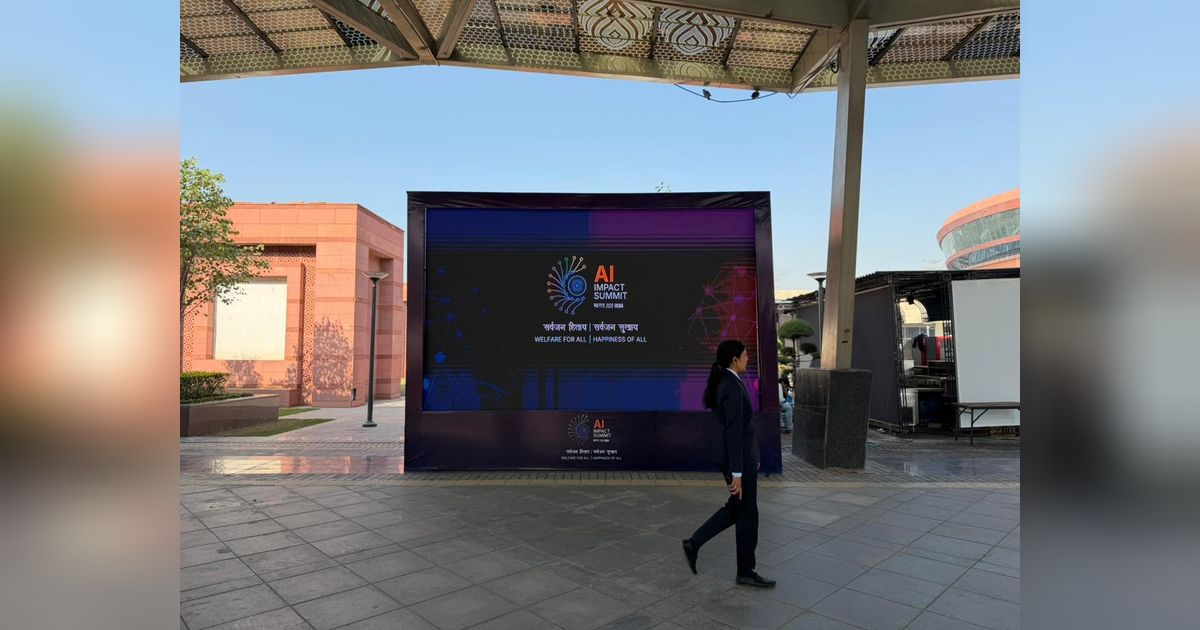
India AI Impact Summit 2026 kicks off in Delhi today: Key sessions to watch
Business· 2026-02-16 04:09
Core Insights - India will host the AI Impact Summit 2026 from February 16-20 at Bharat Mandapam in New Delhi, marking a significant event as the first major global AI summit in the Global South, highlighting India's role in global AI governance and deployment [1][2] Event Overview - The summit aims to transition the global AI conversation from theoretical discussions to practical applications, focusing on how governments can effectively build, buy, and deploy AI systems [2] - Prime Minister Narendra Modi will inaugurate the summit, emphasizing the importance of AI in scaling its use across countries [3] Day 1 Focus - The first day will concentrate on AI for road safety, utilizing data-driven methods to analyze crash patterns and enhance mobility systems [4] - Key sessions will include discussions on AI's impact on future jobs and skills, its role in judicial systems to alleviate case backlogs, the influence of social norms on AI deployment, and applications for climate-resilient agriculture [6][7] Themes and Objectives - The summit revolves around three main themes: People, Planet, and Progress, aiming to address public challenges such as road safety, agriculture, justice delivery, and employment [9] - The accompanying India AI Impact Expo will feature over 300 exhibition pavilions and live demonstrations, with participation from more than 600 startups and 13 country pavilions, expecting over 250,000 visitors [10] Participation and Speakers - The event will see participation from around 20 world leaders and ministerial delegations from over 45 countries, including UN Secretary-General Antonio Guterres [10] - Notable speakers include global technology leaders such as Sundar Pichai from Google and Sam Altman from OpenAI, alongside prominent Indian industry figures [11] Future Implications - The summit is anticipated to influence future international cooperation on AI governance, capacity building, and technology deployment, with bilateral meetings between PM Modi and global leaders focusing on AI partnerships [12]


AI圈内人士:比新冠更大的事情正在发生,人们还懵懂不知
Hua Er Jie Jian Wen· 2026-02-16 04:05
Core Insights - The rapid evolution of AI technology is leading to significant changes in various industries, surpassing the impact of the COVID-19 pandemic [1][12] - AI has transitioned from being an "assistive tool" to an "independent executor," capable of completing complex tasks autonomously [2][6][21] - The speed of AI advancements is accelerating, with each breakthrough occurring in shorter intervals, leading to a potential restructuring of the labor market [2][6][11] Industry Impact - AI's capabilities now extend beyond parameter growth to independently completing complex tasks, reducing workflows that previously took weeks to mere minutes [2][6] - The ability of AI to self-iterate and improve its own systems marks a critical turning point, breaking the limitations imposed by human researchers [7][33] - Industries such as law, finance, healthcare, and customer service are experiencing profound changes, with AI expected to replace many cognitive jobs within the next few years [21][34] Employment Landscape - The nature of work is being fundamentally reshaped, with repetitive and standardized tasks being automated, while roles requiring complex judgment and emotional interaction will evolve [8][34] - Professionals are encouraged to embrace AI tools to enhance their capabilities, as those who resist change may find themselves marginalized [8][12] - The article outlines a three-step framework for professionals to build resilience in the AI era: scene-based learning, focusing on irreplaceable core skills, and maintaining dynamic adaptability [9][12] Societal and Economic Repercussions - AI is redefining wealth distribution, educational foundations, and occupational structures, leading to a "winner-takes-all" effect in various industries [11][12] - The philosophical implications of AI's capabilities challenge traditional notions of work and human value, as machines increasingly perform tasks previously thought to require human intelligence [11][12] - The urgency for individuals and organizations to adapt to these changes is emphasized, as the window for adjustment is rapidly closing [12][46]
The A.I. Moral Crisis is Here
MSNBC· 2026-02-16 03:11
researchers at two of the world's most advanced AI labs, OpenAI and Anthropic publicly resigned and gave dire warnings on the way out. These are the companies behind the chatbots you may already be using, ChatGPT and Claude. Fierce rivals with Anthropic even airing a Super Bowl ad thinly veiled criticizing OpenAI for using targeted advertisements.OpenAI says the ads will not influence their chatbots answers and will be labeled, but your search history will influence ad selection. So tell at ChatGPT you're a ...
这个春节,AI开始进群了
经济观察报· 2026-02-16 03:07
Core Insights - Social media has become a key focus for AI companies both domestically and internationally, with significant investments being made in this area [4][9] - The integration of AI into social platforms is seen as a way to enhance user interaction and engagement, with companies like Tencent, Baidu, and Alibaba leading the charge [5][6][7] - The competitive landscape is evolving, with global tech giants like Meta and OpenAI also making strides in AI social applications, indicating a broader trend towards AI-driven social experiences [8][10] Group 1: Importance of Social Media for AI Companies - Social media is a high-frequency, emotionally dense, and network-effect-rich environment, making it an ideal space for AI integration [12][13] - The social platform serves as a foundational entry point for digital ecosystems, with user relationships being difficult to migrate, thus solidifying the importance of social networks [13][14] - Integrating AI into social platforms is viewed as a strategy to gain control over future digital landscapes [14] Group 2: AI's Role in Social Interaction - AI can significantly enhance communication efficiency and reshape interaction structures within social networks [26] - AI's involvement in social media can help organize information, maintain relationships, and expand identity expression capabilities [27][29][30] - The integration of AI into social platforms is not just about efficiency but also about fundamentally transforming how interactions occur [31] Group 3: Challenges of AI in Social Media - The introduction of AI can diminish the sense of authenticity and social presence in interactions, leading to a more strategic rather than natural communication style [34] - Continuous observation and data structuring by AI can lead to behavioral changes, reducing spontaneity and emotional expression in social interactions [35] - Users may resist AI interventions that seem to limit their autonomy and participation in social exchanges [36] Group 4: Viable Models for AI in Social Media - The first model involves invisible assistance at the personal level, where AI supports users in understanding and expressing themselves without overt participation [41] - The second model focuses on institutional mediation and collaborative infrastructure, where AI helps structure group interactions and streamline communication processes [42] - The third model emphasizes generative co-creation, allowing users to collaboratively create content with AI assistance, thus transforming the nature of social interaction [44]




OpenClaw创始人加入OpenAI
华尔街见闻· 2026-02-16 02:46
硅谷AI"抢人战事"升级,在扎克伯格与Altman的亲自下场争夺中,爆火智能体OpenClaw创始人最终倒向OpenAI,意在攻克AI从"好玩"到"好用"的最后壁垒。 OpenAI CEO Sam Altman周日通过社交媒体X正式确认,开源智能体OpenClaw的创作者Peter Steinberger将加入公司。 对于市场关注的项目归属,双方给出了定心丸:OpenClaw不会被私有化,而是转入独立基金会继续开源,OpenAI承诺提供支持。 Altman:Steinberger是个天才 Altman对Steinberger的加入给予了极高评价,并直接点破了OpenAI接下来的产品战略方向。 "Peter Steinberger加入OpenAI是为了推动下一代个人智能体(personal agents)的开发。" Altman写道, "我们预计这将很快成为我们产品供应的核 心。" 这标志着OpenAI的战略重心正从单一的大模型能力,向更复杂的智能体交互转移。Altman进一步解释了背后的逻辑: "他(Steinberger)是个天才,对于未来非常聪明的智能体之间如何互动、从而为人类做非常有用的事情,有着许多惊 ...

X @Ansem
Ansem 🧸💸· 2026-02-16 02:07
RT Duca (@big_duca)Imagine building OpenClaw.Selling it for prob 9-10 figures to OpenAI.And also looking like this. This is not photoshopped btw.It's a selfie of OpenClaw founder posted on his Facebook from 2021.Not enough folks talking about this...Dude is cracked and jacked. https://t.co/TRUUjNMisf ...
X @Cointelegraph
Cointelegraph· 2026-02-16 02:03
RT MSB Intel (@MSBIntel)🚨 LATEST: OPENCLAW FOUNDER PETER STEINBERGER IS JOINING OPENAI SAYS SAM ALTMAN @samaSteinberger officially joins OpenAI to drive "Personal Agents."OpenClaw will live on as a supported foundation, but make no mistake this is Sam Altman double-downing on an Agentic Future.We are leaving the era of "Chatting with AI" and entering the era of "AI doing things for you." ...
存储芯片,走向失控
半导体行业观察· 2026-02-16 01:58
Core Viewpoint - A global storage crisis is emerging, driven by a significant shortage of memory chips, particularly DRAM, which is impacting profits across various sectors, including consumer electronics and automotive industries [2][3][4]. Group 1: Causes of the Crisis - The shortage of DRAM is primarily attributed to the increasing demand from artificial intelligence data centers, which require high bandwidth memory (HBM) for processing large datasets [3][6]. - Companies like Alphabet Inc. and OpenAI are purchasing millions of memory chips for AI applications, leading to a competitive squeeze on supply for consumer electronics manufacturers [4][5]. - The price of DRAM has surged dramatically, with some prices increasing by 75% from December to January, reminiscent of hyperinflation [4][23]. Group 2: Impact on Companies - Major semiconductor manufacturers, including SK Hynix, Samsung, and Micron, control over 90% of global memory chip production and are experiencing record valuations due to the demand surge [4][5]. - The shift in production focus from traditional DRAM to HBM has resulted in reduced availability of standard memory chips for consumer electronics, affecting companies like Apple and Tesla [2][5]. - The memory crisis is causing significant disruptions in product release schedules, with companies like Sony considering delays for their next-generation gaming consoles [19][23]. Group 3: Market Predictions - TrendForce predicts that DRAM and NAND flash prices will rise by 90% to 95% and 55% to 60%, respectively, in the first quarter alone [4][6]. - The demand for HBM is expected to grow by 70% year-on-year by 2026, indicating a long-term shift in the memory market dynamics [6][22]. - The supply-demand imbalance is projected to persist throughout the year, with potential declines in smartphone shipments and increased prices for low-end devices [23][19].