
Stripe

Search documents
3年前投中Claude的人,今年又赚了7亿美金
Hu Xiu· 2025-08-21 08:34
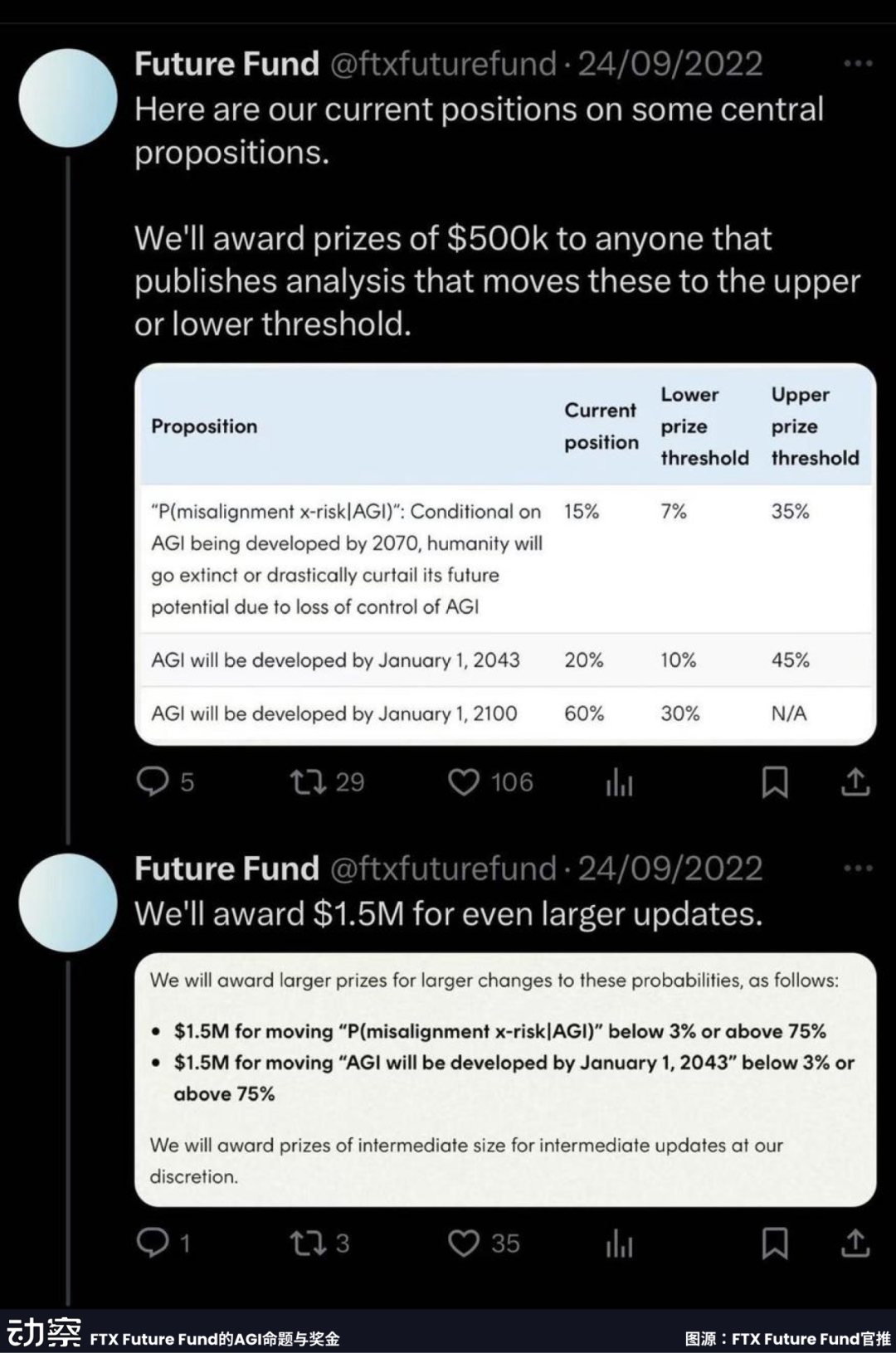
Core Insights - Leopold Aschenbrenner predicts that AGI (Artificial General Intelligence) will reach a critical point around 2027, followed by the rise of superintelligence shortly thereafter [2][8] - Aschenbrenner's hedge fund, Situational Awareness LP (SALP), has achieved a net return of 47% in just six months, showcasing a sharp investment strategy amidst skepticism in the capital markets [4][51] - The technological explosion in AI is characterized as an exponential leap rather than a linear progression, with trillions of dollars expected to flow into industries such as GPU, data centers, and energy infrastructure [3][16] Investment Strategy - SALP's initial capital reached $1.5 billion, reflecting significant confidence from prominent Silicon Valley figures [42] - The fund focuses on the AGI supply chain rather than consumer-level AI, with major holdings in companies like Broadcom, Intel, and energy suppliers [44][46] - SALP's performance has been bolstered by strategic options trading, particularly benefiting from Intel's stock surge due to acquisition rumors [45][51] Industry Dynamics - The demand for energy and infrastructure to support AGI is immense, with a single training cluster consuming as much electricity as a medium-sized city [11][12] - Major investments in AI infrastructure are projected to exceed $1.5 trillion by 2027, surpassing investments in 5G and renewable energy [16] - The emergence of AGI is framed as a national industrial deployment issue rather than merely a scientific breakthrough [17] Regulatory and Ethical Considerations - Aschenbrenner emphasizes the urgency of AGI regulation, particularly in light of lessons learned from the FTX collapse and the need for transparent governance in capital markets [30][34] - His experiences have led to a more cautious investment approach, integrating a delta-neutral strategy to mitigate risks associated with market volatility [30][52] Future Outlook - Aschenbrenner's transition from an AGI whistleblower to a capital market operator reflects a shift in focus towards practical investment strategies while maintaining engagement with ethical discussions in the EA community [65][67] - The ongoing developments in AGI and its implications for energy and technology distribution suggest that SALP may represent a significant and thoughtful investment in the future of AI [69][70]

X @HTX
HTX· 2025-08-21 02:21
Industry Collaboration & Security Initiatives - HTX joins TRM Labs as a founding member to launch the Beacon Network, a real-time crypto crime response network [1] - The Beacon Network aims to build an "iron wall" for the industry and safeguard the future of crypto [1] - The initiative involves collaboration with global partners including Coinbase, Binance, PayPal, Robinhood, Stripe, Kraken, Ripple, CryptoCom, Zodia Custody, Blockchain, Anchorage, Bitfinex, Poloniex, OKX, and 1inch [1] Focus on Crypto Security - HTX is committed to building an "iron wall" for the industry and safeguarding the future of crypto [1] - The industry emphasizes the importance of crypto security through collaborative efforts like the Beacon Network [1]
Manus对话实录:探索AI Agent支付新领域,年度化收入逼近1亿美元
Sou Hu Cai Jing· 2025-08-21 00:54
Core Insights - Manus AI's annual recurring revenue (RRR) has reached $90 million and is expected to surpass $100 million soon, with clarification that this figure is based on monthly revenue multiplied by 12 and does not equate to cash revenue [1] - The distinction between AI Agents and AGI (Artificial General Intelligence) is emphasized, with AI Agents being a subset of applied AI that interacts with the environment, while AGI possesses general capabilities to perform various tasks without specific design [3][4] Company Developments - Manus AI's team member highlighted that many AI products offer annual payment options, which can inflate revenue figures as they may represent prepayments rather than actual operating income [1] - The company aims to empower non-programmers by generalizing the use of AI tools like Cursor, which has gained traction among both engineers and non-engineers for tasks such as data visualization and writing [4] Industry Trends - The conversation addressed the challenges AI faces in interacting with the real world, such as the lack of APIs or standard interfaces and the prevalence of CAPTCHAs, which hinder AI's capabilities [4] - Despite current limitations, there is optimism about AI's future, with expectations for significant breakthroughs as the ecosystem evolves and infrastructure companies like Stripe contribute to advancements [4]

X @Poloniex Exchange
Poloniex Exchange· 2025-08-20 13:30
Industry Collaboration & Compliance - Poloniex becomes a founding member of TRM Labs' Beacon Network, aiming to combat illicit finance in real time [1] - The Beacon Network is a global initiative focused on strengthening cross-border cooperation and compliance standards within the digital asset ecosystem [1] - The initiative involves collaboration from various industry players including Coinbase, Binance, PayPal, Robinhood, Stripe, Kraken, Ripple, Crypto.com, Zodia Custody, Blockchain, Anchorage, Bitfinex, HTX Global, OKX, LFJ_gg and 1inch [1] Security & Ecosystem - The industry emphasizes the importance of building a safer digital asset ecosystem through enhanced cooperation and compliance [1] - TRM Labs' Beacon Network aims to unite the industry to prevent illicit finance [1]
深度|Perplexity CEO:我们的目标是打造一个新的生态:一种“agent浏览器”的全新产品
Z Potentials· 2025-08-20 04:19
Core Insights - The article discusses the launch and capabilities of the Comet browser by Perplexity AI, aiming to create an AI operating system that enhances user productivity through automation and integration with various applications [3][9][10]. Group 1: Comet Browser Features - Comet is designed to handle asynchronous and repetitive tasks, providing a seamless user experience by integrating with existing applications like iMessage and email [4][5]. - The browser aims to act as a central hub for managing various digital tasks, allowing users to automate workflows and access information across different platforms [9][10]. - The concept of "context engineering" is introduced, emphasizing the need for AI to autonomously gather and utilize context from various communication tools to enhance user efficiency [5][6]. Group 2: AI and User Interaction - The discussion highlights the importance of achieving a natural and fluid interaction between AI and users, focusing on both intelligence and contextual understanding [6][4]. - The browser is positioned as a next-generation tool that can evolve with advancements in AI models, enhancing its capabilities over time [8][9]. - The potential for AI to automate digital labor is compared to autonomous driving, suggesting that AI can free up time for users by handling complex tasks [4][6]. Group 3: Market Position and User Adoption - Since its launch, Comet has seen a steady increase in user adoption, with a waitlist nearing one million, indicating strong market interest despite its early-stage development [9][10]. - The company aims to create a new category of "agent browsers," differentiating itself from traditional browsers and focusing on building a unique ecosystem [9][10]. - The competitive landscape is discussed, with the expectation that larger players like OpenAI and Google will also enter the agent browser space, further validating the concept [9][10]. Group 4: Challenges and Future Directions - The article addresses the technical challenges of building a robust infrastructure to support the complex interactions required for the Comet browser [28][29]. - There is an emphasis on the need for continuous improvement and adaptation to user feedback, with a focus on maintaining a high-quality user experience [29][34]. - The potential for future hardware development is mentioned, but the primary focus remains on refining the software capabilities of the browser [21][22][25].







Circle(CRCL.US)的新野心:不想只做发行商,更要成为“稳定币支付时代的Visa”
智通财经网· 2025-08-19 14:04
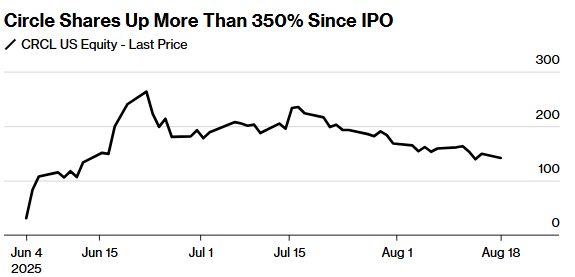
Core Viewpoint - The successful IPO of Circle marks a significant milestone for stablecoins, indicating their gradual integration into mainstream finance, with USDC becoming a foundational digital asset infrastructure [1] Group 1: Circle's Business Strategy - Circle's revenue in Q2 was approximately 95% derived from interest generated by cash and bonds supporting USDC, benefiting from high interest rates [1] - To diversify and solidify its position in digital finance, Circle launched Arc, a new blockchain technology aimed at directly processing stablecoin payments, competing with giants like Visa and Mastercard [1][2] - Circle's CEO Jeremy Allaire stated that they are in the initial stages of building a vast financial network, which they believe could become one of the largest in history [2] Group 2: Competitive Landscape - The competition is intensifying, with Stripe also aiming to establish its own end-to-end network for stablecoin payments, indicating a trend towards potentially closed ecosystems [2][3] - Circle's stock has surged over 350% since its IPO, but analysts predict a slowdown in growth, with non-interest income expected to decline in the second half of the year [2][3] Group 3: Infrastructure Development - Circle and Stripe are both focused on creating competitive financial networks for digital currencies, with companies eager to develop services that control asset flows in the next generation of digital payments [3][6] - Circle aims to maintain market neutrality by offering services like cross-chain transfer protocols to facilitate the movement of USDC and its newly launched digital euro EURC across different blockchains [7] Group 4: Challenges Ahead - A significant challenge remains in convincing other companies to develop on these private systems, as many banks realize that their private blockchains may not attract other banks [7] - The ambition to introduce competition at every stage of the transaction process could lead to more efficient capital flows, moving away from reliance on network effects [7]

独立站出海战略白皮书:从渠道搭建到品牌增值的黄金法则
Sou Hu Cai Jing· 2025-08-19 03:49
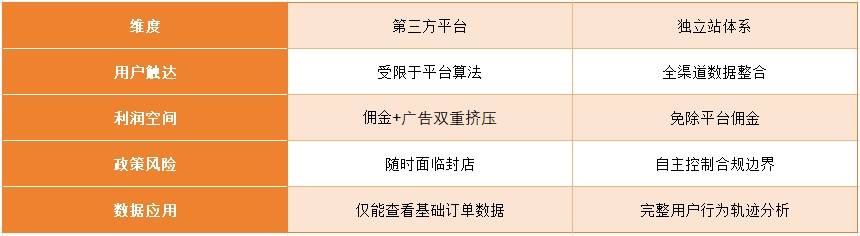
Group 1: Core Value and Market Positioning of Independent Sites - The need for independent sites arises from increasing advertising costs on platforms like Amazon, which have risen from 12% of sales in 2019 to 28% in 2024, alongside a 37% year-on-year increase in store closure rates [1] - Independent sites offer advantages over third-party platforms, including full-channel data integration, elimination of platform commissions, self-controlled compliance boundaries, and comprehensive user behavior analysis [1] Group 2: Types of Independent Sites and Technology Selection - Three types of website building systems are identified: SaaS solutions suitable for 90% of small and medium sellers, open-source systems requiring technical teams, and custom development for brand sellers [2][5] - Initial investment for SaaS solutions typically exceeds 150,000 yuan, with examples including Shopify and Ueeshop [2] Group 3: Traffic Acquisition Strategies - During the cold start phase, budget allocation is recommended as follows: 40% for paid advertising, 30% for organic traffic, and 20% for social marketing [3] - The advanced traffic formula indicates a healthy model when the ratio of SEO traffic, social content, and email marketing to advertising costs is less than or equal to 0.7 [6] Group 4: Payment and Risk Control Systems - Payment methods and their average rates include PayPal Standard at 3.90%, Stripe at 3.2% plus 0.8 yuan per transaction, and local payments ranging from 2.5% to 5% [6] - Risk control measures include using automated fraud screening, maintaining logistics proof, and addressing chargebacks effectively [9] Group 5: Long-term Compounding Operation Framework - The user asset appreciation model involves traffic entry, conversion retention on independent sites, data asset creation (CDP), and value realization through repurchase and cross-selling [7] - The technology stack evolution is crucial for enhancing operational efficiency and effectiveness [7] Group 6: Compliance and Market Strategies - Compliance with regulations such as GDPR and CCPA is essential for operating in various markets [9] - Regional operational strategies must adapt to local payment preferences and consumer behaviors, particularly in emerging markets [9]
X @Easy
Easy· 2025-08-18 19:24
Business Development & Strategy - Whop is now independent from Stripe [1] - Whop enables orchestration through multi-PSPs, potentially increasing revenue by 5-10% [1] Cryptocurrency & Global Payments - Whop facilitates Bitcoin and stablecoin payouts globally [1] - Sellers can receive payments in almost every country via local banks, BTC, or stablecoins [1] Market Trend - The crypto industry is expected to grow significantly [1]
X @Ansem
Ansem 🧸💸· 2025-08-18 18:09
Creator Driven Markets (CDMs) - CDMs, or "Creator Driven Markets," are anticipated to emerge, where creators will inject liquidity into prediction markets aligned with their audience [1] - Markets are expected to rapidly form around rumors and leaks, with the first to create the market gaining an advantage by driving liquidity [1] Market Dynamics & Potential - Most markets are projected to remain niche within their respective communities [2] - Some markets have the potential to break out and become significantly larger, potentially 100x bigger than permissioned prediction markets [2] Examples of Potential Markets - Potential markets could be created around topics such as FOMC (Federal Open Market Committee), HYPE, Solana, Ethereum, and pumpfun [2] - Speculation around Stripe launching a chain, its EVM compatibility, and the potential for a token could also drive market creation [2]
X @Ansem
Ansem 🧸💸· 2025-08-18 17:35
Company Update - Whop is now officially independent from Stripe [1] - Orchestration through multi-PSPs is now available [1] Revenue Impact - Orchestration through multi-PSPs lifts revenue by 5-10% [1] Payment Solutions - Sellers can get paid out in nearly every country via local banks, BTC, or stablecoins [1]