南京银行

Search documents
红利银行时代系列十八:银行股配置盘的三条核心思路
Changjiang Securities· 2025-11-17 23:30
Investment Rating - The industry investment rating is "Positive" and maintained [12]. Core Insights - The report identifies three core strategies for bank stock allocation: 1) Long-term strategic allocation to large banks using bond and non-standard asset replacement thinking, with recent mid-term dividend acceleration driving market performance; 2) Gradually increasing positions in high-quality city commercial banks in the Yangtze River Delta region to provide dividend yield flexibility; 3) Small and medium-sized insurance companies seeking long-term equity investment opportunities in small and medium-sized banks [2][6][9]. Summary by Sections Market Trends - Since the third quarter, bank stocks have experienced significant adjustments due to market style factors, but the direction of revaluation remains unchanged. The state-owned bank index has recently reached new highs, indicating sustained allocation power [6][7]. Large Banks - Large banks are becoming strategic allocation targets, with a focus on long-term debt cost advantages. The static PB valuation of Agricultural Bank A shares is below 3%, while most mainstream banks maintain dividend yields between 4% and 5.5%. The report recommends focusing on China Merchants Bank, low-valuation Bank of Communications, and state-owned H-shares [7][8]. City Commercial Banks - City commercial banks in the Yangtze River Delta have seen significant price adjustments, with public fund holdings decreasing by 1.4 percentage points to 0.83%. The report highlights the stable growth potential of these banks, with a focus on dividend yields and credit growth rates exceeding national averages [8][9]. Small and Medium-sized Insurance Companies - Small and medium-sized insurance companies are expected to actively seek long-term equity investment opportunities in small banks. Regulatory limits on single-stock investments will drive these companies to target mid-sized banks with market capitalizations in the hundreds of millions [9].



“中期红包”陆续到账, 省内上市银行慷慨分红
Sou Hu Cai Jing· 2025-11-17 23:09
Core Viewpoint - The recent trend of mid-term dividends among banks in Jiangsu province reflects a positive shift in shareholder returns and market confidence, with seven listed banks distributing a total of approximately 6.134 billion yuan in mid-term dividends, enhancing shareholder loyalty and expectations of stable profitability [2][5]. Group 1: Mid-term Dividends Overview - Seven listed banks in Jiangsu have recently implemented mid-term dividends, totaling around 6.134 billion yuan, with notable participation from banks that had not previously issued mid-term dividends [2][3]. - Nanjing Bank leads in mid-term dividends, distributing 3.786 billion yuan, which accounts for 30% of its net profit attributable to shareholders [3]. - Other banks participating include Su Nong Bank, Zhangjiagang Bank, Changshu Bank, and Wuxi Bank, with varying dividend amounts and ratios relative to their net profits [3][4]. Group 2: Implications of Mid-term Dividends - The trend of mid-term dividends is seen as a response to regulatory encouragement and reflects banks' confidence in their operational performance and governance [5][6]. - Analysts suggest that stable and continuous mid-term dividends signal strong operational capabilities and can attract long-term investment, creating a positive cycle of value return [7]. - The overall sentiment among banks is optimistic, with expectations of improved profitability and a stable dividend scale supported by favorable economic conditions [8].



上市银行集体撒钱 上百亿“现金红包”在路上
Mei Ri Shang Bao· 2025-11-17 23:04
Core Viewpoint - A number of listed banks in China are set to distribute substantial cash dividends to shareholders, with a total of approximately 2,637 billion yuan in cash dividends announced for the 2025 interim period, reflecting a trend of increasing shareholder returns in the banking sector [1][4]. Group 1: Dividend Announcements - Several banks, including Suzhou Bank, Hangzhou Bank, Nanjing Bank, and CITIC Bank, have announced their interim dividend distributions for 2025, with total cash dividends amounting to about 179.4 billion yuan for the week of November 17-21 [1][2]. - Suzhou Bank plans to distribute 9.39 billion yuan, Hangzhou Bank 27.55 billion yuan (up 24.10% year-on-year), Nanjing Bank 37.86 billion yuan, and CITIC Bank 104.61 billion yuan [2][3]. Group 2: Overall Dividend Trends - A total of 24 A-share listed banks have disclosed their 2025 interim dividend plans, with cumulative cash dividends reaching 2,637.90 billion yuan [4]. - Among the nine joint-stock banks, seven have either implemented or will implement interim cash distributions, with three banks, including CITIC Bank, distributing over 100 billion yuan each [3][4]. Group 3: Future Dividend Prospects - More banks are expected to announce or advance their interim dividend plans, with Jiangyin Bank and Zhejiang Commercial Bank already indicating their intentions [5]. - The trend of stable and continuous dividends is seen as a reflection of banks' operational strength and a signal to attract long-term stable capital [6]. Group 4: Market Implications - The high dividend payouts are expected to boost market confidence and enhance the defensive value of bank stocks in a low-interest-rate environment, making them attractive for medium to long-term investments [1][6]. - The stability of bank dividends and the relatively low valuations in the sector suggest a continued trend of long-term capital allocation towards bank stocks [6].



30年,突破60万亿!
中国基金报· 2025-11-17 15:09
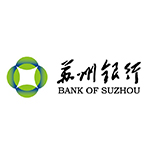
Core Viewpoint - The asset scale of urban commercial banks in China has surpassed 60 trillion yuan, marking significant growth over the past 30 years, with a 134-fold increase since 1995, and now accounting for 13.53% of the total assets of banking financial institutions [2][4]. Development of Urban Commercial Banks - Urban commercial banks have evolved into a crucial part of China's multi-tiered financial system since their establishment in 1995, with a focus on serving urban residents, small and medium-sized enterprises, and local economies [4]. - Key financial indicators for urban commercial banks show stable profitability, improved asset quality, a non-performing loan rate of 1.76%, a provision coverage ratio of 188.08%, and a capital adequacy ratio of 12.97% as of the end of 2024 [4]. Market Position and Performance - As of 2024, there are 12 urban commercial banks with asset scales exceeding 1 trillion yuan, and 5 of these banks are classified as systemically important banks in China [4]. - The market share of urban commercial banks has increased by 8.24 percentage points over the years, reflecting their growing significance in the banking sector [4]. Financial Resource Allocation - Urban commercial banks have strategically focused on high-quality development areas and sectors that align with their capabilities, continuously exploring differentiated and specialized development paths [5]. Market Capitalization of Listed Banks - Among the 17 urban commercial banks listed on the A-share market, Jiangsu Bank, Ningbo Bank, and Shanghai Bank have the highest market capitalizations, with Jiangsu Bank nearing 200 billion yuan and Ningbo Bank at 190.2 billion yuan [7][8].





30年 突破60万亿!
Zhong Guo Ji Jin Bao· 2025-11-17 14:04
中国银行业协会表示,经过30年的发展,城商行资产规模快速增长,盈利能力保持稳定,资产质量持续 改善,资本充足率稳定,流动性覆盖率稳步提升,主要经营指标保持良好。 截至2024年末,城商行资产规模为60.15万亿元,较1995年增长134倍,占银行业金融机构比例为 13.53%,市场份额提升8.24个百分点;不良贷款率为1.76%,拨备覆盖率为188.08%,资本充足率为 12.97%。共有12家城商行资产规模过万亿元,5家城商行入选我国系统重要性银行。 30年来,城商行坚守"服务城乡居民、服务中小企业、服务地方经济"定位,发挥地缘、人缘优势,从社 保、医疗、教育、住房公积金等民生领域起步,不断完善服务渠道,针对城乡居民提供多样化金融产品 和服务,更好满足人民群众金融需求。 【导读】我国城商行资产规模突破60万亿元 我国城市商业银行发展走过30个年头,资产规模突破60万亿元。中国银行业协会最新报告显示,截至 2024年末,城商行资产规模为60.15万亿元,较1995年增长134倍,占银行业金融机构总资产规模的 13.53%。 城市商业银行发展30年 近日,中国银行业协会城市商业银行工作委员会完成《城市商业银行3 ...
30年,突破60万亿!
Zhong Guo Ji Jin Bao· 2025-11-17 14:02
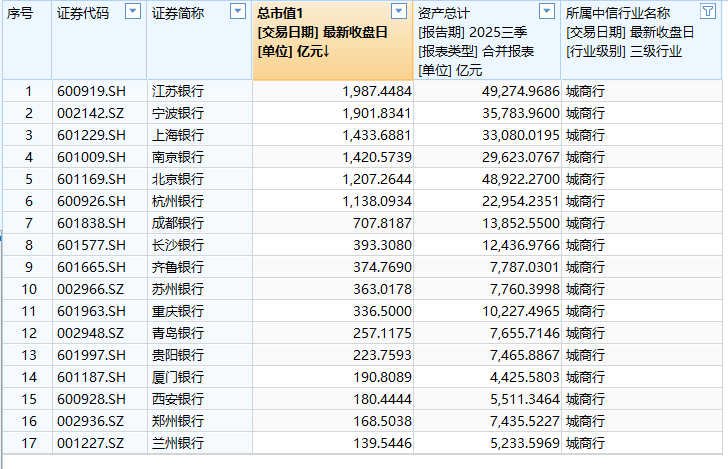
Core Insights - The asset scale of urban commercial banks in China has surpassed 60 trillion yuan, reaching 60.15 trillion yuan by the end of 2024, marking a 134-fold increase since 1995 and accounting for 13.53% of the total assets of banking financial institutions [1][2] Development of Urban Commercial Banks - Urban commercial banks have evolved over 30 years, becoming a crucial part of China's multi-tiered financial system, with stable profitability and improving asset quality [2] - Key financial metrics include a non-performing loan ratio of 1.76%, a provision coverage ratio of 188.08%, and a capital adequacy ratio of 12.97% [2] - There are 12 urban commercial banks with assets exceeding 1 trillion yuan, and 5 of them are classified as systemically important banks [2] Market Position and Performance - Among the 17 urban commercial banks listed on the A-share market, Jiangsu Bank, Ningbo Bank, and Shanghai Bank have the highest market capitalizations, with Jiangsu Bank nearing 200 billion yuan [4][5] - Jiangsu Bank and Beijing Bank both have asset scales of approximately 4.9 trillion yuan, while Ningbo Bank and Shanghai Bank exceed 3 trillion yuan [4][5] Strategic Focus - Urban commercial banks have focused on serving urban and rural residents, small and medium-sized enterprises, and local economies, enhancing their service channels and offering diverse financial products [2][3] - They have aligned their financial resources with high-quality development strategies and key sectors, exploring differentiated and specialized development paths [3]
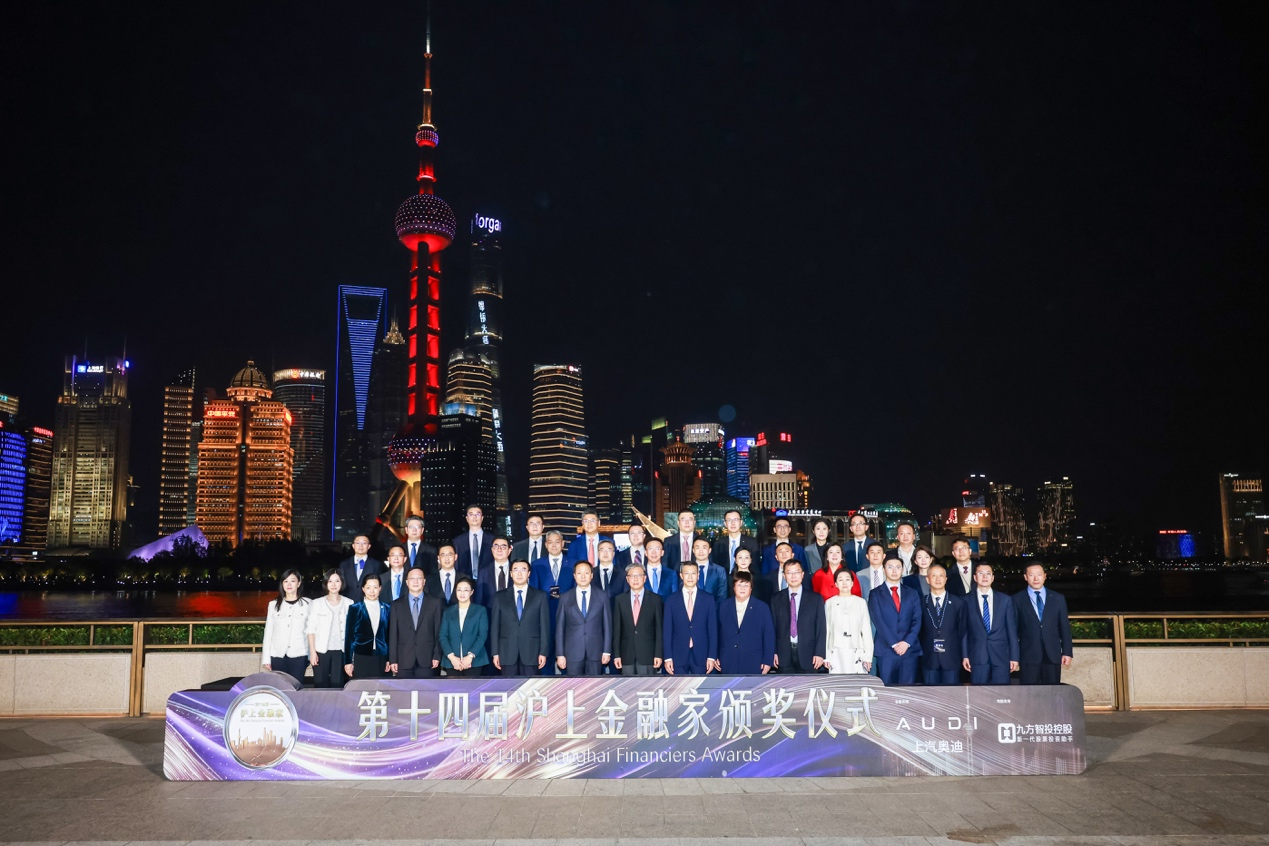
第十四届“沪上金融家”评选结果揭晓,21位金融英才分获三大奖项
Guo Ji Jin Rong Bao· 2025-11-17 13:58
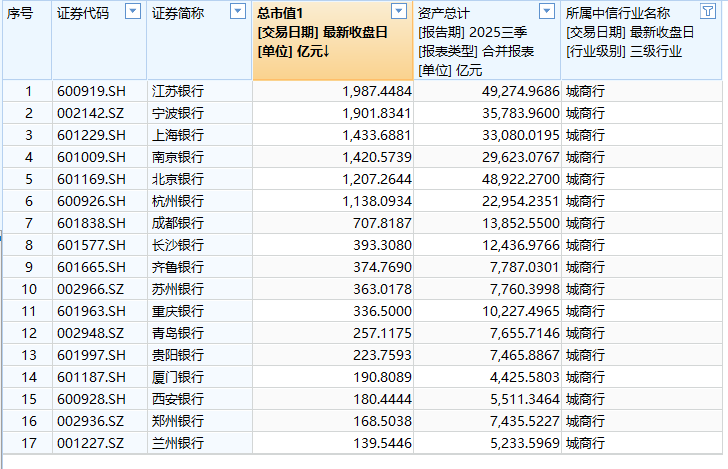
Core Insights - The 14th "Shanghai Financial Talents" awards recognized 21 financial professionals for their contributions to the Shanghai International Financial Center [1][2] - Significant policies and initiatives have been implemented this year to enhance Shanghai's status as an international financial center, leading to a continuous improvement in its capabilities [1] - Shanghai's financial market saw a total trading volume of 2967.83 trillion yuan in the first nine months of the year, marking a 12.7% year-on-year increase [1] Group 1: Awards and Recognition - Three individuals were awarded "Annual Figures in the Construction of Shanghai International Financial Center," eight as "Leaders in Shanghai's Financial Industry," and ten as "Innovators in Shanghai's Financial Industry" [2] - Notable awardees include executives from major banks and financial institutions, highlighting the recognition of leadership in the financial sector [4][5] Group 2: Financial Market Performance - Shanghai's stock market capitalization and interbank bond market scale rank among the top globally, reflecting the city's financial strength [1] - The successful launch of the digital yuan international operation center and offshore bond issuance in the Shanghai Free Trade Zone are key developments [1] Group 3: Financial Innovation and Talent Development - The event featured the release of the first "Green Finance Development Index Report," emphasizing the connection between the securities industry and green finance [5] - The importance of a strong financial talent pool was highlighted as a critical resource for building a financial powerhouse and enhancing the international financial center [5][6] Group 4: Ongoing Initiatives and Discussions - A roundtable discussion included experts from financial infrastructure, banking, and fintech sectors, focusing on how technology can support the development of Shanghai as an international financial center [6] - The "Shanghai Financial Talents" awards have been held for 14 consecutive years, contributing to the soft power and cultural atmosphere of Shanghai's financial sector [7]
年内十余家上市银行 获股东增持
Zhong Guo Ji Jin Bao· 2025-11-17 07:31
Group 1 - Over 10 listed banks have seen significant shareholding increases from shareholders and executives this year, indicating a broader scale of buybacks compared to previous years [1][2] - The increase in shareholding is characterized by a diverse range of stakeholders and a concentration of banks in specific regions [1][3] - This year's buyback activity is occurring during a market uptrend, contrasting with previous years when buybacks were initiated after stock prices fell below net asset value, signaling a shift from defensive to proactive investment strategies [1][4] Group 2 - Notable examples include Changshu Bank, which saw an increase of 561.93 million shares, raising its shareholder's stake to 3.98%, and Qilu Bank, where executives have collectively increased their holdings by approximately 315,000 yuan [2][3] - The participation of local state-owned enterprises has notably increased, with foreign investments also contributing, such as BNP Paribas increasing its stake in Nanjing Bank from 16.14% to 17.02% [3][4] - The overall performance of the banking sector has improved, with 42 A-share listed banks reporting over 4.3 trillion yuan in revenue for the first three quarters, and more than 60% of these banks showing year-on-year revenue growth [4]
债市震荡拖累银行盈利,机构主动调整投资策略
Huan Qiu Wang· 2025-11-17 07:23
Group 1 - Financial investment is increasingly becoming a key driver for the expansion of bank balance sheets, but it also significantly disturbs performance [1] - In the first three quarters of this year, the net investment income of 42 A-share listed banks totaled 477 billion yuan, a year-on-year increase of 20.71%, but the growth rate has slowed compared to 23.89% in the same period last year [1] - The net income from fair value changes for listed banks has turned negative, dropping from 59.52 billion yuan in the same period last year to -25.04 billion yuan, with 31 banks reporting negative figures [1] Group 2 - Several banks are actively adjusting their investment strategies to cope with market challenges, with some indicating that the central bank's resumption of government bond trading will benefit overall bond investment returns [3] - Institutions believe that negative factors in the bond market are gradually clearing, with some analysts expressing a bullish outlook on the bond market [3] - However, some banks may have strong incentives to sell bonds in the fourth quarter to meet annual performance targets, which could exert pressure on the market [3]

第十四届“沪上金融家”评选结果揭晓 21位上海金融英才分获三大奖项
Zhong Guo Jin Rong Xin Xi Wang· 2025-11-17 02:15
Core Insights - The 14th "Shanghai Financial Talents" awards recognized 21 outstanding financial professionals in Shanghai, highlighting the importance of talent in building a strong financial nation [1][2] - Key policies supporting the construction of Shanghai as an international financial center are set to be implemented by 2025, enhancing the city's financial capabilities [1][2] - Shanghai's financial market saw a total transaction volume of 2967.83 trillion yuan in the first nine months of 2025, marking a 12.7% year-on-year increase [2] Group 1: Awards and Recognition - The awards included categories such as "Annual Person of the Shanghai International Financial Center," "Leading Figures in Shanghai's Financial Industry," and "Innovative Figures in Shanghai's Financial Industry" [1][2] - Notable winners of the "Annual Person of the Shanghai International Financial Center" include leaders from major banks and investment companies [4][5] - The selection process involved self-nominations, committee nominations, media reviews, online voting, and expert evaluations [2] Group 2: Financial Market Performance - Shanghai's stock market and interbank bond market are among the largest globally, contributing to its status as a leading international financial center [2] - The city has successfully launched initiatives in green finance and technology finance, showcasing its role as a testing ground for financial reforms [2] Group 3: Talent Development and Future Prospects - The development of a strong financial talent pool is emphasized as a core element for building a financial powerhouse and enhancing international competitiveness [5][11] - Discussions during the event focused on how financial technology can further support the construction of Shanghai as an international financial center [5]