Neuralink

Search documents
港股概念追踪|OpenAI进军脑机接口 行业临床技术接连突破(附概念股)
智通财经网· 2025-08-14 00:32
Core Insights - OpenAI and CEO Sam Altman are launching a new company, Merge Labs, to enter the brain-computer interface (BCI) sector, directly competing with Elon Musk's Neuralink [1][2] - Merge Labs has a funding valuation of approximately $850 million, primarily backed by OpenAI's venture capital [1] - Altman believes that the integration of humans and AI will be achieved through brain-computer interfaces and AI chatbots, which are seen as two core pathways to this vision [1] Industry Developments - OpenAI's entry into the BCI market is expected to have a profound impact on the industry [2] - In China, significant clinical breakthroughs in BCI have been achieved across various approaches, including wireless minimally invasive, invasive, semi-invasive, and closed-loop stimulation [2] - Internationally, Neuralink has enabled cursor control and lower limb movement in multiple patients, while other companies like Synchron are advancing BCI applications in various countries [2] Market Potential - The potential patient pool for BCIs in China is substantial, with 50 million individuals affected by neurological disorders [3] - The Neo BCI targets 30 million patients with neurological function loss, including 28 million stroke victims and nearly 4 million spinal cord injury patients [3] - The closed-loop neuroregulation BCI aims at 20 million patients with drug-resistant neurological disorders, including Parkinson's, Alzheimer's, epilepsy, and depression [3] - The influx of capital and top talent is expected to accelerate technological development in the BCI sector [3] - OpenAI's brand influence is likely to attract more attention and investment, enhancing the social recognition and commercial value of BCIs, thus driving the entire industry chain's growth [3] Policy and Market Trends - The Chinese government has recognized BCI as a strategic emerging industry in its policy documents [3] - Recent initiatives include the establishment of the Hubei BCI Industry Innovation Development Alliance and the release of the Zhejiang Province action plan for AI and healthcare development [3] - Citic Securities reports that the BCI industry ecosystem is rapidly evolving, with clearer commercialization pathways [3] Related Companies - Companies involved in the BCI concept include Nanjing Panda Electronics (00553), Micron Brain Science (02172), and Xinwei Medical-B (06609) [4]
宇树王兴兴:只要AI技术保持进步,机器人行业就会发展得越来越好;马斯克指控苹果应用商店偏袒OpenAI,苹果否认丨AIGC日报
创业邦· 2025-08-14 00:09
Group 1 - DeepSeek's next-generation model DeepSeek-R2 is not scheduled for release in August, contrary to market rumors [2] - Tesla has undergone a significant reorganization of its engineering team after halting the Dojo AI project, redistributing personnel to various departments [2] - Elon Musk accused Apple of favoring OpenAI in its App Store rankings, which Apple denied, asserting that its recommendations are based on objective standards [3] Group 2 - Wang Xingxing, founder of Yushu Technology, stated that the humanoid robot industry is still in its early stages, with significant challenges in AI capabilities hindering widespread adoption [4][3] - OpenAI's CEO Sam Altman is planning to establish a new company, Merge Labs, aimed at competing with Musk's Neuralink, with a funding goal of $250 million at an $850 million valuation [5]



腾讯研究院AI速递 20250814
腾讯研究院· 2025-08-13 16:01
Group 1 - OpenAI and co-founder Sam Altman are backing a new brain-computer interface company, Merge Labs, which is expected to be valued at $850 million, directly competing with Elon Musk's Neuralink [1] - Altman will co-found Merge Labs but will not be involved in daily management, aligning with his vision of human-machine integration from his 2017 blog post [1] - Unlike Neuralink, which has conducted human clinical trials, Merge Labs is in its early stages but aims to develop simpler and more practical brain-computer interfaces leveraging advancements in AI [1] Group 2 - Anthropic announced that Claude Sonnet 4 now supports a context window of up to 1 million tokens, five times its previous capacity, allowing it to handle over 75,000 lines of code or multiple research papers in a single request [2] - Pricing adjustments have been made for the extended context, with costs set at $3 per million tokens for inputs under 200K and $6 for inputs exceeding that, while outputs are priced at $15 and $22.5 respectively [2] - This feature is currently in public beta on Amazon Bedrock and will soon be available on Google Cloud's Vertex AI platform, with early partners indicating it enables true "production-grade AI engineering" capabilities [2] Group 3 - Kunlun Wanwei has open-sourced the Skywork UniPic 2.0 model, creating a unified multimodal framework for understanding, generating, and editing images, achieving "efficient, high-quality, and unified" results [3] - The model consists of three core modules: an image editing module based on SD3.5-Medium, a connector for pre-trained multimodal capabilities, and a Flow-GRPO progressive dual-task reinforcement strategy [3] - The UniPic2-SD3.5M-Kontext-2B model surpasses the image generation metrics of the 12B parameter Flux.dev and outperforms the editing capabilities of the same parameter Flux-Kontakt [3] Group 4 - AI startup Perplexity has made a formal offer to acquire Google's Chrome browser business for $34.5 billion in cash, which is double its own valuation of $18 billion [4] - The timing of the acquisition proposal coincides with Google's ongoing antitrust litigation with the U.S. Department of Justice [4] - Perplexity has committed to maintaining the Chromium open-source project and investing over $3 billion within two years post-acquisition, although Google has expressed no intention to sell Chrome, leading to low market expectations for the deal's success [4] Group 5 - Pika has launched an "audio-driven performance model" that combines static images with audio to generate highly synchronized videos, achieving precise lip-syncing and natural expression changes [5] - This technology can perfectly match the image subject to the audio content, producing 720p HD videos in an average of just 6 seconds, with no length limitations [5] Group 6 - Figure has demonstrated a humanoid robot capable of folding clothes, showcasing that the original logistics sorting capabilities can be enhanced simply by adding data [6] - The robot exhibited human-like behaviors such as eye contact, nodding, and gestures, controlled by an end-to-end visual-language-action model [6] - Folding clothes is a challenging dexterous task for robots due to the deformable and diverse shapes of clothing, but Figure successfully achieved this using the Helix architecture without changing the underlying structure [6] Group 7 - DeepMind's founder Demis Hassabis revealed that Genie 3 not only generates virtual worlds but also allows these worlds to operate in reality, supporting agent training [7] - The team has begun testing the Sima agent within the worlds generated by Genie 3, marking a breakthrough in "AI running in another AI's brain" [7] - Hassabis believes that model evaluation will be crucial for future AI development, with Game Arena serving as an important benchmark due to its features of "immediate feedback" and "adaptive difficulty" [7] Group 8 - Notion's founder Ivan Zhao stated that successful AI products should aim for a score of 7.5, emphasizing the need to create an "AI workspace" that shifts AI from merely providing tools to delivering "the work itself" [8] - He compared AI product development to "brewing beer" rather than "building bridges," indicating that it often only achieves 70-80% of the desired functionality and requires extensive experimentation [8] - Zhao highlighted the importance of balancing craftsmanship and practicality in AI products, noting that excessive pursuit of perfection can detract from commercial value, particularly stressing the significance of context integration in AI applications [8] Group 9 - OpenAI co-founder Greg Brockman noted that AI development is currently experiencing a "return to foundational research" phase, where algorithms are once again the critical bottleneck rather than mere scale expansion [9] - He described the future AI infrastructure as needing to balance "long-duration heavy computation" with "real-time responsiveness," suggesting that homogeneous accelerators are a good starting point [9] - Brockman predicts that the AI ecosystem will exhibit a "blooming" pattern rather than a singular model, and achieving a tenfold economic growth in AI will require deep consideration of application methods by experts across various fields [9]

脑机接口行业近况交流
2025-08-13 14:53
Summary of Brain-Computer Interface Industry Conference Call Industry Overview - The brain-computer interface (BCI) industry is accelerating commercialization with companies like Ladder Medical and Brain Supplement actively advancing clinical trials expected to complete within one to two years for medical device registration [1][3] - Neuralink has completed multiple clinical trials and plans to expand into more countries [1][3] - BCI technology focuses on motor cortex decoding, language decoding, and visual presentation, with significant advancements in helping paralyzed patients walk independently [1][3][4] Key Points and Arguments Clinical Trials and Regulatory Process - Invasive BCI clinical trials require type testing, ethical review, and recruitment of 30 to 100 subjects, taking one to two years to validate platform stability and implantation processes before applying for registration [1][5] - Non-invasive BCIs are widely used in consumer markets for brain state monitoring, closed-loop control, rehabilitation devices, and human-computer interaction, facing challenges like low signal-to-noise ratio [1][11][13] Market Potential and Applications - The most commercially viable applications are motor decoding and language modeling, with significant market demand and clear technological feasibility [6][7] - Visual prosthetics and treatments for paralysis show different progress rates, with some patients regaining walking ability through advanced research [8][9] Cost and Pricing Dynamics - Invasive BCI devices are costly, with domestic prices dropping to 50,000 to 100,000 yuan, while non-invasive devices are cheaper and have higher profit margins [2][16] - Non-invasive products are priced between 2,000 to 3,000 yuan, with production costs around 200 yuan, allowing for broader market access [16][17] Competitive Landscape - Companies with strong financing capabilities, like Ladder Medical and New Power Island, are likely to succeed in the invasive BCI market, while smaller teams leveraging academic resources may also find success [21][22] - Domestic companies are closing the gap with international leaders like Neuralink, with advancements in multi-channel systems and chip technology [19][20] Challenges and Considerations - Major challenges include high R&D costs, regulatory hurdles, and the need for effective marketing strategies to ensure product acceptance [22][23] - The low signal-to-noise ratio in non-invasive BCIs requires innovative solutions to enhance data quality and usability [24][26] - Clinical trials in China face difficulties due to insufficient policy support and ethical review challenges [27] Future Outlook - The BCI industry is expected to see significant breakthroughs in the next few years, with advancements in technology and regulatory approvals paving the way for broader market adoption [3][4][21]
从胚胎开始抓起,硅谷高管痴迷于打造“优秀”后代
第一财经· 2025-08-13 14:42
Core Viewpoint - The article discusses the increasing interest among Silicon Valley tech executives in genetic testing for embryos, particularly for traits like intelligence and disease risk, reflecting a growing trend in reproductive technology and ethical concerns surrounding it [3][10]. Group 1: Genetic Testing Services - Venture capitalists and tech executives are investing in companies that offer embryo genetic testing services, with some willing to pay up to $50,000 for such services [4][8]. - Startups like Genomic Prediction and Nucleus Genomics provide embryo screening for traits such as intelligence, with costs ranging from $2,500 to $50,000 per embryo [7][8]. - The fertility tech sector has seen significant investment, with approximately $400 million raised annually from 2021 to 2023 [8]. Group 2: Ethical and Legal Concerns - The practice of embryo genetic testing raises ethical questions regarding its reliability, legality, and moral implications [10][12]. - Critics argue that the algorithms used for scoring traits are often opaque, leading to potential misinformed health choices by consumers [11]. - While embryo screening is legal in the U.S., it faces strict prohibitions in countries like Germany, the UK, and Italy [12]. Group 3: Societal Implications - The obsession with intelligence scores reflects a belief in meritocracy among Silicon Valley elites, who may view genetic advantages as a means to ensure their children's success [13]. - Concerns are raised about the normalization of concepts like "superior" and "inferior" genes, which could reinforce social inequalities based on biological determinism [13][14].

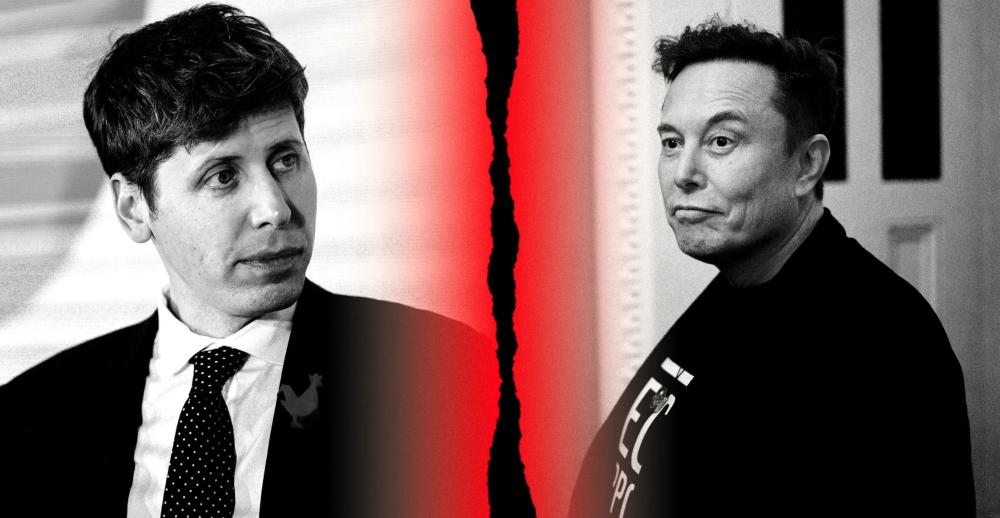
马斯克与奥特曼恩怨再起,双方AI机器人意外站错队致矛盾升级
3 6 Ke· 2025-08-13 13:15
8月13日消息,特斯拉首席执行官埃隆·马斯克(Elon Musk)与OpenAI首席执行官山姆·奥特曼(Sam Altman)之间的长期宿怨,在最近几日再 度公开爆发。这一次,战火从苹果应用商店App Store排名之争燃起,迅速波及到马斯克旗下AI聊天机器人Grok的"立场"问题。 事件升级:反垄断指控与算法质疑 当地时间8月11日晚,马斯克在社交平台X上指控苹果在App Store对OpenAI存在不公平倾斜。"苹果让除了OpenAI之外的任何AI公司都无法在 App Store排名第一,这是赤裸裸的反垄断违规行为,"马斯克写道,并称旗下xAI公司将"立即采取法律行动"。 奥特曼对此火速回应,称这一指控"令人惊讶",并暗示马斯克本人才是操纵平台算法的那一方。他表示:"这种说法颇为吸引眼球。考虑到坊 间流传着针对马斯克的指控,称他操控X平台以谋取自身及旗下公司的利益,同时损害竞争对手和与他意见相左的人,情况就更是如此了"。 奥特曼的这一回应,源自科技媒体Platformer 2023年的一篇报道。当时的报道称,马斯克收购推特(现更名为X)后,迫使工程师修改算法, 以确保自己的推文排在用户时间线最前。 奥特曼 ...

AI进化速递 | Altman和OpenAI将投资Neuralink公司竞争对手
Di Yi Cai Jing· 2025-08-13 13:05
③Sam Altman和OpenAI将投资2.5亿美元支持脑机接口初创公司Merge Labs,该公司是Neuralink公司竞 争对手; ④OpenAI与澳大利亚联邦银行签署协议,将合作为该行客户和员工提供人工智能支持的服务; AI进化速递 | Altman和OpenAI将投资Neuralink公司竞争对手 ①全国首个全尺寸人形机器人赛事将在合肥启幕; ②软银计划发行1000亿日元次级债券以推动人工智能发展; ⑤马斯克指控苹果App Store偏袒OpenAI,称其是一种"反垄断违规行为";苹果回应称App Store公平且 无偏见。 ...
Wall Street Breakfast Podcast: CAVA Slides On Sales Miss
Seeking Alpha· 2025-08-13 10:53
Company Performance - CAVA Group reported a revenue increase of 20.3% in Q2, reaching $278.2 million, driven by 16 new restaurant openings and same-restaurant sales growth of 2.1%, which was below the consensus estimate of +6.1% [3] - The restaurant-level profit margin decreased by 20 basis points year-over-year to 26.3% of sales [4] - Adjusted EBITDA rose 17% year-over-year to $42.1 million, exceeding the consensus estimate of $40 million [4] - CAVA generated a net income of $18.4 million in the quarter, compared to $19.7 million a year ago, with EPS reported at $0.16, above the consensus of $0.13 [4] Future Outlook - CAVA expects 2025 restaurant comparable sales growth of +4.0% to +6.0%, revised down from a prior outlook of +6.0% to +8.0% [5] - The adjusted EBITDA guidance for the full year remains at $152 million to $158 million [5] - Anticipated net new restaurant openings are projected to be between 64 to 68, which is below previous guidance [5] Industry Context - Brazil announced a $5.6 billion aid package to support exporters affected by increased U.S. tariffs, which rose from 10% to 50% on many Brazilian goods [5][6] - Key exports such as orange juice and aircraft are exempt from the U.S. tariff hike, indicating selective impacts on the Brazilian export market [6]


剑指马斯克Neuralink!奥尔特曼将创办脑机接口公司
Sou Hu Cai Jing· 2025-08-13 09:44
Group 1 - OpenAI CEO Sam Altman is preparing to co-found a brain-computer interface company named Merge Labs to compete with Elon Musk's Neuralink [1][2] - Merge Labs aims for a target valuation of approximately $850 million and is currently in talks to raise $250 million [2] - The focus of Merge Labs is on developing high-bandwidth brain-computer interfaces for seamless communication between human thoughts and digital systems [2] Group 2 - Although Altman will not hold an operational role in Merge Labs, his involvement highlights his long-standing fascination with the integration of humans and machines [2] - Neuralink, founded by Musk in 2016, has reached a valuation of $9 billion, indicating a significant competitive landscape between the two companies [2] - The establishment of Merge Labs is expected to add a new chapter to the competition between Altman and Musk [2]

出海速递 | 小米任命多位非洲市场高管,雷军称要加大投入/DeepSeek-R2在8月内并无发布计划
3 6 Ke· 2025-08-13 09:38
Group 1: Xiaomi's Expansion in Africa - Xiaomi has appointed several executives for its African market, including Liu Shequan as the General Manager for the Africa Region and West Africa [2] - The company is currently operating in 16 African countries, including Egypt, South Africa, Nigeria, Morocco, Algeria, and Kenya, and plans to increase its investment in the continent [2] Group 2: New Ventures in Technology - Chasing has established a new division called "Chasing Smart Display" to enter the television, projector, and audio markets, leveraging its AI algorithms and design capabilities [2] - Alibaba International Station has launched an "overseas stock" model, allowing merchants to stock goods in overseas warehouses, significantly reducing decision-making time for customers [2] Group 3: Guangdong's Trade Performance - Guangdong's foreign trade import and export reached 5.4 trillion yuan in the first seven months of the year, growing by 4.3% year-on-year, which is 0.8 percentage points faster than the national average [4] - Exports accounted for 3.44 trillion yuan, increasing by 1.7%, while imports reached 1.96 trillion yuan, growing by 9.3% [4] Group 4: Robotics and AI Development - Yushutech's founder Wang Xingxing emphasized the importance of computing power for the humanoid robot industry, particularly large-scale cluster computing [5] - He noted that the industry is still in its early stages, with significant challenges remaining in AI capabilities for widespread application of humanoid robots [5] Group 5: AI Industry Movements - Perplexity has made a $34.5 billion acquisition offer to Google Chrome [5] - OpenAI's CEO is planning to establish a new company, Merge Labs, to compete with Neuralink, aiming to raise $250 million at an $850 million valuation [5] - Anthropic is offering its AI chatbot Claude to the U.S. government for $1, joining other AI startups in seeking federal contracts [6]