PDVSA

Search documents
Trump’s Venezuela Campaign Disrupts an $8 Billion Oil Trade
Yahoo Finance· 2025-12-21 22:00
Core Insights - The U.S. military campaign against Venezuela is significantly impacting the oil market, threatening an $8 billion revenue loss for the country [1][3] - President Trump's threats have escalated tensions, leading to a blockade on Venezuelan tanker traffic and increased military presence off the coast [2] - The situation has resulted in many tankers idling off the Venezuelan coast, with only half of them on the U.S. sanction list [3] Oil Trade Dynamics - Sanctioned tankers, referred to as the "shadow fleet," account for approximately 70% of Venezuelan oil trade, with around 900 vessels involved in transporting crude mainly to Asia [4] - Tactics used by these vessels to evade sanctions include ship-to-ship transfers, sailing under false flags, and turning off transponders [5] - The U.S. Navy's presence has complicated these tactics, making it more challenging for Venezuelan crude trade to continue [5]
X @Bloomberg
Bloomberg· 2025-12-19 18:23
RT Bloomberg en Español (@BBGenEspanol)¿Quieres saber qué pasó esta semana en Latinoamérica? @ValiHilaire nos cuenta sobre los bloqueos del gobierno de Trump a buques petroleros en Venezuela, Bolivia anuncia ajustes que buscan frenar inflación y Cuba devalúa su moneda ante una profunda crisis. https://t.co/AxBiXGCzQZ ...
Chevron Ships Venezuelan Crude Despite Rising U.S. Pressure
Yahoo Finance· 2025-12-18 21:38
Core Viewpoint - Chevron Corp. is set to export up to 1 million barrels of crude oil from Venezuela despite increasing U.S. pressure on the country's oil trade following accusations from President Trump regarding Venezuela's use of oil revenues for illicit activities [1][2]. Group 1: Chevron's Operations - Chevron has successfully loaded a crude cargo onto the tanker Searuby and is in the process of loading another shipment onto the Minerva Astra [2]. - The company holds a U.S. government license that permits it to produce and export Venezuelan crude, ensuring its vessels are not subject to sanctions [3]. - Chevron's operations in Venezuela are reported to be ongoing without disruption and in full compliance with U.S. laws and sanctions frameworks [3]. Group 2: U.S. Government Actions - The Trump administration has activated a naval blockade aimed at preventing sanctioned vessels from entering or leaving Venezuela, escalating tensions in the region [4]. - U.S. authorities recently intercepted the supertanker Skipper, marking an unprecedented enforcement action [4]. Group 3: Impact on Venezuela's Oil Industry - Venezuela's oil industry is facing strain due to the crackdown, with reports indicating that the country may be forced to shut in production as storage tanks and port-based tankers reach capacity [5]. - Approximately 11 million barrels of Venezuelan crude are currently stranded at sea, leading to deeper discounts and tougher contract terms from buyers [5]. - The International Energy Agency estimates that Venezuela's crude production has declined to 860,000 barrels per day in November, down from over 1 million bpd in September, with further declines expected [6]. - Analysts warn that in a worst-case scenario, Venezuela could lose up to 500,000 bpd of production if export and diluent supply constraints persist [7].

Venezuela May Have to Start Shutting Oil Wells Soon
Yahoo Finance· 2025-12-18 07:00
Core Viewpoint - Venezuela is facing a potential shutdown of oil production due to a lack of storage space amid U.S. tanker blockades, which could lead to significant production curbs in the near future [1] Group 1: Oil Production and Storage - Venezuela's largest oil storage hub and tankers at its ports may reach full capacity within 10 days, necessitating production cuts [1] - The International Energy Agency reported that Venezuela's crude oil production is declining, with an estimated output of 860,000 barrels per day in November, down from 1.01 million bpd in October [3] - Further declines in oil supply are anticipated in December due to U.S. actions in Caribbean waters, including the seizure of tankers carrying Venezuelan crude [4] Group 2: Impact of U.S. Actions - Approximately 11 million barrels of Venezuelan crude are currently stranded at sea, leading to deeper discounts and changes in spot contracts demanded by buyers [2] - The U.S. is reportedly prepared to seize more tankers, with a list of targeted vessels already in place [4] - The blockade is also affecting Venezuela's supply of Russian naphtha, which is essential for diluting heavy crude, as at least one tanker carrying 32,000 metric tons of naphtha turned back to Europe [5] Group 3: Potential Production Loss - In a worst-case scenario, Venezuela could lose up to 500,000 barrels per day of oil production due to additional restrictions and a shortage of diluents [6]
Venezuela’s Falling Crude Supply Won’t Budge Global Oil Market
Yahoo Finance· 2025-12-17 01:00
The global oil market looks well-supplied at the end of the year, with output sufficient to absorb a supply disruption in Venezuela, the world’s biggest crude resource holder. The escalating U.S.-Venezuela tensions in recent weeks, a tanker seizure, and further U.S. sanctions squeezes on Nicolas Maduro and his allies, including companies operating tankers, have cut Venezuela’s production to a seven-month low. The International Energy Agency (IEA) estimated Venezuela’s oil supply at 860,000 barrels per ...
11月经济数据增长继续放缓,股市跟随调整
Dong Zheng Qi Huo· 2025-12-16 01:17
1. Report Industry Investment Ratings No relevant content provided. 2. Core Views of the Report - The economic data growth in November continued to slow down, and the stock market adjusted accordingly. Weak economic data may prompt the acceleration of policy introduction, and attention should be paid to policy changes [2][23]. - The gold price fluctuated slightly and rose, approaching the previous high, with increased intraday volatility. The market is concerned about the upcoming US November non - farm payroll data, and the interest rate cut expectation is fully priced. The overall tone of the Fed officials' speeches is neutral [15]. - The US stock market is expected to fluctuate at a high level in the short term, with internal differences among Fed officials and concerns about the Fed's independence [21]. - The bond market is dominated by institutional behavior, and it is recommended to focus on the right - side long - buying opportunities [28]. - For various commodities, different trends and investment suggestions are presented based on their respective fundamentals, such as the supply and demand situation, production data, and policy factors [32][41][48]. 3. Summary by Directory 3.1 Financial News and Comments 3.1.1 Macro Strategy (Gold) - Trump believes the peace agreement is closer than ever. Gold price fluctuated slightly up, approaching the previous high, with increased intraday volatility. The market focuses on the US November non - farm payroll data, and the interest rate cut expectation is fully priced. Fed officials' speeches are neutral. It is not recommended to chase the high [14][15][16]. 3.1.2 Macro Strategy (US Stock Index Futures) - There are variables in the selection of the new Fed chairman, and internal differences among Fed officials are large. The US stock market is expected to fluctuate at a high level in the short term [17][21]. 3.1.3 Macro Strategy (Stock Index Futures) - The economic data in November continued to weaken, and the stock market adjusted. High - valuation and high - expectation stocks face upward pressure. It is recommended to evenly allocate long positions in various stock indexes [22][23][24]. 3.1.4 Macro Strategy (Treasury Bond Futures) - The economic data in November was weak. The bond market decline was dominated by institutional behavior. It is recommended to focus on the right - side long - buying opportunities [25][27][28]. 3.2 Commodity News and Comments 3.2.1 Agricultural Products (Soybean Meal) - The inventory of soybean meal in oil mills decreased. NOPA's crushing data was lower than expected, and the CBOT soybean was weak. Brazilian exports increased, and the sowing was basically completed. It is recommended to continue to pay attention to China's soybean procurement, state reserve trends, and South American weather [29][32]. 3.2.2 Agricultural Products (Corn Starch) - The theoretical profit of starch enterprises remained in a good state, and the CS - C futures spread strengthened slightly. It is expected that the rice - flour spread will continue to fluctuate [33][34]. 3.2.3 Agricultural Products (Corn) - The spot price was generally stable, and the futures price first fluctuated narrowly and then dived. It is recommended to short 03 and 05 contracts on rallies in the short and medium term and pay attention to the long - buying opportunities for 07 and 09 contracts at low prices in the long term [35][36]. 3.2.4 Black Metals (Rebar/Hot - Rolled Coil) - The steel price fluctuated. The building materials demand was weak, but it was not far beyond expectations. The manufacturing demand remained resilient. It is recommended to treat the steel price with a fluctuating mindset [37][41][42]. 3.2.5 Black Metals (Coking Coal/Coke) - The coking coal price in the Linfen market was weakly stable. The supply decreased, and the demand was weak. It is necessary to pay attention to whether subsequent replenishment can support the market [43][44][45]. 3.2.6 Agricultural Products (Soybean Oil/Rapeseed Oil/Palm Oil) - The export of Malaysian palm oil from December 1 - 15 decreased. The supply pressure of palm oil was obvious. It is recommended to wait for the supply pressure to ease and then consider long - buying [46][47][48]. 3.2.7 Non - Ferrous Metals (Alumina) - A large - scale mining enterprise in Guinea will resume production. The downstream inventory is high, and the supply surplus pressure remains. It is recommended to wait and see [49][50]. 3.2.8 Non - Ferrous Metals (Polysilicon) - The polysilicon capacity integration and acquisition platform was officially launched. It is expected that the spot price is difficult to fall. It is recommended to pay attention to the long - buying opportunities after the futures price is at a discount to the spot price [52][54]. 3.2.9 Non - Ferrous Metals (Industrial Silicon) - The power price in Yunnan in 2026 was announced. The inventory increased slightly. It is recommended to pay attention to the short - selling opportunities on rallies [55][56][57]. 3.2.10 Non - Ferrous Metals (Lead) - The LME lead price and the Shanghai lead price fluctuated and declined. The social inventory increased slightly. It is recommended to short on rallies in the short term [58][59]. 3.2.11 Non - Ferrous Metals (Zinc) - The LME zinc price fluctuated and declined. The domestic zinc demand increased, and the inventory decreased. It is recommended to buy on pullbacks, hold long - spread positions, and maintain the long - domestic and short - overseas strategy [60][63]. 3.2.12 Non - Ferrous Metals (Nickel) - The supply surplus of nickel is expected to increase. The short - term disk is expected to be weak at a low level. It is not recommended to chase the short. It is necessary to pay attention to the supply changes in Indonesia [64][66]. 3.2.13 Non - Ferrous Metals (Lithium Carbonate) - The price of lithium iron phosphate increased. The supply may increase after the resumption of production, and the demand may decline in the off - season. It is recommended to buy on pullbacks in the long term [67][69]. 3.2.14 Non - Ferrous Metals (Copper) - The macro - mid - term support for copper remains, but the short - term expected difference is significant. The short - term spot premium is expected to be under pressure. It is recommended to wait and see in the short term and buy on pullbacks in the mid - term [70][72]. 3.2.15 Non - Ferrous Metals (Tin) - The inventory of tin increased at home and abroad. The supply increased, and the demand was weak. It is expected that the tin price will fluctuate at a high level in the short term [74][75]. 3.2.16 Energy Chemicals (Crude Oil) - The oil price continued to decline. The concern about oversupply depressed the oil price. It is expected to be weakly fluctuating in the short term [76][77]. 3.2.17 Energy Chemicals (Asphalt) - The refinery inventory of asphalt increased, and the social inventory decreased. The supply increased, and the demand weakened. It is expected to be weakly fluctuating in the short term [78][79][80]. 3.2.18 Energy Chemicals (Methanol) - Two methanol plants in Iran stopped production. The short - term opportunity for methanol is limited, and it is recommended to wait and see [80][81]. 3.2.19 Energy Chemicals (PTA) - The PTA spot market negotiation was average, and the basis was strong. The supply - demand pattern improved in the medium - and long - term. It is recommended to buy on pullbacks in the medium - term [82][83]. 3.2.20 Energy Chemicals (Urea) - The urea price fluctuated weakly. It is necessary to pay attention to the demand for spring plowing and the new export quota policy [86][87]. 3.2.21 Energy Chemicals (Styrene) - The inventory of pure benzene in East China ports was stable. The pure benzene was in a bottom - grinding stage. It is recommended to pay attention to the long - buying opportunities for far - month contracts on panic selling [88][90]. 3.2.22 Energy Chemicals (PVC) - The PVC price rebounded. The supply remained high, and the demand was weak. It is necessary to pay attention to the supply - demand changes in 2026 [91][92].
委内瑞拉是个濒海国家,石油储量世界第一,为什么却穷的揭不开锅
Sou Hu Cai Jing· 2025-12-01 09:19
Core Insights - Venezuela possesses the largest oil reserves globally, totaling 303.2 billion barrels, surpassing Saudi Arabia's reserves by 36.2 billion barrels. However, despite this wealth, the country faces severe economic challenges, including a staggering inflation rate of 130,060% in 2018 and a significant drop in per capita GDP, which evaporated by $10,000 over five years [1][12]. Oil Quality and Extraction Challenges - While Venezuela's oil reserves are vast, the quality is poor, with 74% of the reserves being extra-heavy crude oil located in the Orinoco Belt. This type of oil is difficult to refine and process [3][5]. - The API gravity index, which measures oil quality, indicates that Venezuelan oil has an API of only 8 to 12, making it nearly immobile and requiring high extraction costs of $16.5 to $23.5 per barrel, with total costs potentially reaching $50 to $60 per barrel [5][7]. Production Decline and Economic Impact - Venezuela's oil production has drastically declined from 1.9 million barrels per day in 2015 to just 350,000 barrels per day in 2020, with a slight recovery to 1.048 million barrels per day by March 2025. This represents only 1% of the global daily production of 100 million barrels [10][20]. - The country's oil industry has suffered from a lack of investment and maintenance, leading to outdated facilities and low recovery rates, with some fields achieving less than 20% recovery compared to Saudi Arabia's 70% [8][10]. Government Policies and Economic Mismanagement - The Venezuelan government has historically mismanaged the oil sector, using the state-owned PDVSA as a cash cow without reinvesting in infrastructure or technology. This has led to a significant talent drain, with over 6 million Venezuelans, including many oil professionals, leaving the country between 2014 and 2020 [10][12]. - The government's monetary policy, characterized by excessive money printing to cover fiscal deficits, has resulted in hyperinflation and a devaluation of the currency, further exacerbating the economic crisis [12][13]. Sanctions and Market Dependency - U.S. sanctions have severely restricted Venezuela's ability to trade oil, particularly with American markets, leading to a significant drop in oil exports. In 2025, sanctions intensified, resulting in a 120,000-barrel decrease in exports compared to the previous year [14][16]. - China has become Venezuela's largest oil importer, with daily imports reaching 584,000 barrels in May 2025, a year-on-year increase of 11.21%. However, this dependency on China is precarious, as falling oil prices could lead to further financial losses for Venezuela [16][18]. Economic Viability and Future Outlook - Despite efforts to maintain oil production above 850,000 barrels per day, this volume is insufficient to support a population of 28 million, compounded by heavy external debt and ongoing U.S. sanctions, leaving the economy on the brink of collapse [20].


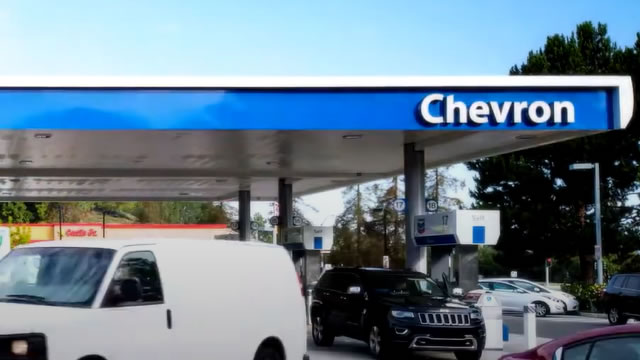
Chevron Steps In as Venezuela's Feedstock Supplies Tighten
ZACKS· 2025-11-26 13:36
Core Insights - Chevron Corporation (CVX) is actively supplying critical feedstock to Venezuela amidst disruptions caused by geopolitical tensions and a recent incident involving a Russian vessel, showcasing its adaptability to changing dynamics [1][4][8] Group 1: Operational Adaptability - Chevron's ability to procure and deliver diluent naphtha has become crucial for Venezuela, especially after an explosion at a local facility that typically separates the material [2] - The vessel Nave Neutrino was rerouted to the U.S. Virgin Islands to secure naphtha, ensuring it could return to Venezuela to resume crude-loading operations, highlighting Chevron's operational flexibility [3] Group 2: Geopolitical Context - The diversion of the vessel occurred after a U.S. destroyer interacted with a Russian ship, which has increased tensions affecting regional maritime logistics [4] - As U.S. covert operations against the Venezuelan government intensify, the political and economic pressures on Venezuela's oil sector are expected to increase [6] Group 3: Chevron's Historical Presence - Chevron has a long-standing presence in Venezuela through joint projects with the state-owned PDVSA, and its operations expanded after receiving a limited U.S. license in 2022, allowing for higher output [5] - The company was exporting approximately 240,000 barrels per day, which accounted for over a quarter of Venezuela's total production, but this progress was hindered when the license was revoked in February 2023 [5]
Court Approves Elliott Bid for Citgo
Yahoo Finance· 2025-11-26 08:30
Core Viewpoint - A Delaware judge has approved Elliott Management's bid for Citgo, the U.S. refining arm of Venezuela's PDVSA, stating that the Amber Bid offers the best combination of price and certainty of closing [1]. Group 1: Bids and Offers - Amber Energy, an affiliate of Elliott Management, made a bid of $5.86 billion to PDV Holding creditors and an additional $2.86 billion for bondholder claims [2]. - A rival bid from a consortium led by Gold Reserve was for $7.4 billion, exceeding both the Amber Energy bid and the court's floor price of $3.7 billion [3]. - Gold Reserve's lawyers criticized the Elliott bid as a back-room deal that diverts funds from legitimate creditors to bondholders [3]. Group 2: Legal and Procedural Issues - Gold Reserve requested a stay in the auction process, and PDV Holding's lawyers expressed concerns over the low amount of the Amber Energy bid, calling it shocking [4]. - The auction has been described as having significant conflicts of interest, including $170 million in fees collected by advisors linked to Elliott and the 2020 bondholders [5]. Group 3: Creditor Compensation - Proceeds from the sale are intended to compensate 15 creditors seeking to recover losses from Venezuela's nationalization efforts and debt defaults since 2017, with total claims amounting to $19 billion [5].
Rusoro Updates CITGO Auction Process
Newsfile· 2025-11-13 18:30
Vancouver, British Columbia--(Newsfile Corp. - November 13, 2025) - Rusoro Mining Ltd. (TSXV: RML) (the "Company" or "Rusoro") announces that the Delaware Court of Chancery, following a hearing earlier today, denied Gold Reserve's request for expedited treatment of its motion for a preliminary injunction. Specifically, Vice Chancellor Lori Will found that Gold Reserve had failed to make an adequate showing that the continuation of the sale process before the federal court in Delaware poses a risk of irrepa ...