
Anthropic

Search documents
Nikhil Kamath announces upcoming podcast with Anthropic CEO Dario Amodei: ‘No script conversation about the tech…’
MINT· 2026-02-22 12:43
Core Insights - The upcoming podcast episode features Nikhil Kamath and Dario Amodei discussing the transformative impact of artificial intelligence (AI) on economics, geopolitics, and safety concerns [1][3][4] Group 1: Podcast Overview - The podcast will cover various topics including economics, geopolitics, and safety related to AI, emphasizing an unscripted and honest dialogue [3][4] - Dario Amodei, CEO of Anthropic, expresses the need to steer AI in the right direction, likening its potential impact to a tsunami [2][4] Group 2: Dario Amodei's Background - Dario Amodei is the CEO and co-founder of Anthropic, with a strong academic background including a PhD in Computational Neuroscience from Princeton [5][6] - His career includes roles at Google and OpenAI, where he focused on AI safety before co-founding Anthropic in February 2021 [6] Group 3: AI's Role in India - At the India AI Impact Summit 2026, Amodei highlighted India's crucial role in addressing challenges related to AI, including its autonomous behavior and potential misuse [7] - He noted the unprecedented capabilities of AI agents, which could lead to significant opportunities and concerns for humanity [8][9]



国金证券:AI应用产业趋势确立 2026年有望迎来双击
智通财经网· 2026-02-22 11:57
Core Viewpoint - The launch of ByteDance's AI video generation model Seedance 2.0 significantly lowers the barrier for high-quality video content creation, marking a pivotal moment in AI film development. The domestic AI application is accelerating its penetration into vertical fields, creating a new pattern of deep integration between technology and industry. Under policy-driven initiatives, intelligent technology is becoming a core growth engine, with applications in industrial quality inspection and medical diagnosis, pushing AI from "perception" to "decision-making." The year 2026 is anticipated to be a critical year for AI applications transitioning from "technology validation" to "commercial promotion" [1][2]. Industry Trends - AI application industry trends are solidifying, with 2026 expected to witness a dual impact. Companies are increasingly seeing AI orders and revenue constituting over 10% of their overall income, indicating that the cold start phase has passed. The Chinese IT sector, primarily project-based, necessitates deep integration of AI with complex business processes to create greater value for clients [2][3]. Recommended Directions for AI Applications - **Super Entry Points**: Large models are establishing themselves as dominant flow entry points in the AI era, with significant commercial acceleration. OpenAI's ARR is projected to exceed $20 billion by the end of 2025, while Google Gemini's token usage is expected to reach 1.3 trillion per month by October 2025. Domestic platforms are also experiencing similar growth, with daily token usage expected to surpass 50 trillion by December 2025 [3][4]. - **AI Infrastructure**: Software-defined computing is crucial for determining the cost curve and capability ceiling of AI applications. Companies like Databricks and Snowflake are leading in this space, with Databricks achieving a valuation of $134 billion and annualized revenue exceeding $4.8 billion, reflecting strong enterprise investment in data governance and computing scheduling [4][5]. - **High Growth Areas**: AI technology is evolving, with marketing and animated series becoming pioneers in commercialization. For instance, AppLovin has demonstrated that AIGC can directly enhance customer ROI, while the demand for AI-generated animated series has surged, with Douyin's daily paid traffic reaching over 10 million by August 2025 [5][6]. - **High Barriers**: Industries with deep know-how, proprietary data assets, and complex process integration capabilities will benefit from large models, which will reinforce their core advantages. The AI healthcare sector is rapidly expanding, with companies like Ant Group entering the market and achieving significant app store rankings [6][7]. Animation Series Market Insights - The short drama industry has reached a scale of hundreds of billions, indicating the commercial potential of fragmented entertainment. The animated series market is expected to exceed 22 billion yuan by 2026, with significant growth in commercial data observed in 2025. Douyin's daily GMV for animated series surpassed 10 million, reflecting a robust monetization cycle [7][8]. - ByteDance is positioned as the absolute leader in the animated series market, leveraging its comprehensive advantages in traffic, IP, and AI. By 2025, Douyin's cumulative playback volume for animated series is projected to exceed 75.772 billion [8]. Long-term Outlook - AI technology is transforming the production paradigm of animated series, reducing production cycles and costs significantly. For example, the production cycle has been compressed from over 50 days to under 30 days, with costs dropping to the thousand-yuan level. This trend is exemplified by companies like Qixiang Wuxian Network, which has integrated AI capabilities to streamline production processes [8]. - Dynamic animation agents are expected to evolve into foundational platforms for virtual worlds, with the potential for technology spillover into game development and architectural design [8].

无视海外“AI恐慌”,中国市场狂炒AI赢家
Xin Lang Cai Jing· 2026-02-22 10:43
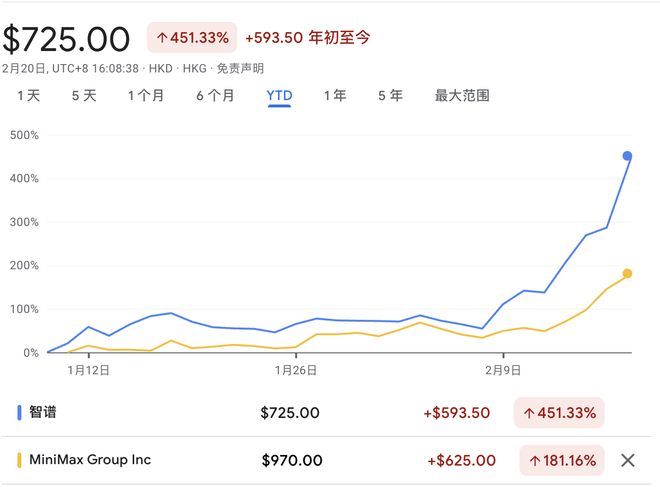
炒股就看金麒麟分析师研报,权威,专业,及时,全面,助您挖掘潜力主题机会! (来源:网易科技) 当美国市场陷入"AI恐慌交易",投资者抛售软件公司和财富管理机构之际,中国投资者却在大举追捧人 工智能概念股。这种截然不同的市场情绪反映出两地投资者对AI技术的根本性分歧:美国担忧既有商 业模式被颠覆,中国则聚焦于增长机遇和降本潜力。 本月发布新模型或升级现有产品的国内公司成为投资者宠儿。MiniMax和智谱AI最为典型,两家公司股 价在2月均翻倍。摩根士丹利等华尔街投行的看涨评级进一步推高市场热情,纯AI概念股正从传统互联 网巨头手中抢夺资金。 这种市场分化背后是投资逻辑的差异。盛宝市场首席投资策略师Charu Chanana表示,中国市场仍专注 于AI能带来什么帮助,而非它会从现有企业手中夺走什么。美国投资者焦虑于丰厚利润池面临竞争威 胁,而中国关注的仍是市场渗透。 新上市AI股领涨 MiniMax和智谱AI受到投资者青睐,部分原因在于全球范围内构建大模型的上市公司稀缺。两家公司均 于1月在香港上市,智谱AI股价此后一度飙升524%,MiniMax大涨488%。相比之下,被视为行业先驱的 OpenAI和Anthr ...
AI Is Giving English Majors Some Unexpected Leverage in the Job Market
Business Insider· 2026-02-22 10:17
Core Insights - The University of Colorado Boulder has introduced interdisciplinary courses that combine AI and humanities, leading to increased interest in liberal arts degrees like English, which had been declining pre-pandemic [3][5][7]. Group 1: Course Offerings and Student Interest - The course "Inclusive Interdisciplinary Data Science for All" allows STEM students to explore the ethics of AI while humanities majors analyze AI's impact on writing and self-identity [1][2]. - There has been a 9% increase in English majors at the University of Colorado Boulder since 2021, reversing a previous trend of decline [3]. - Other institutions, such as Rice University, have also seen growth in English class enrollment and faculty numbers in Creative Writing [11]. Group 2: Perception of Humanities Majors - The utility of English majors is being recognized as companies seek candidates with strong communication and soft skills, which are essential in a technology-driven world [6][7]. - Despite previous skepticism about the relevance of humanities degrees, there is a growing acknowledgment of their importance in fostering critical thinking and creativity [19][30]. Group 3: Employment Landscape - The overall hiring rate has slowed, affecting all graduates, including those with humanities degrees, leading to a higher unemployment rate for early-career humanities graduates compared to other fields [20][21]. - However, the unemployment rate for humanities and liberal arts graduates remains below post-2008 recession highs, indicating some resilience in the job market [28]. - Smaller firms are beginning to show interest in hiring candidates with humanities backgrounds, suggesting a potential shift in hiring practices as larger companies adopt AI tools [29][30].


表面风光之下,OpenAI的“四大困境”
Hua Er Jie Jian Wen· 2026-02-22 03:12
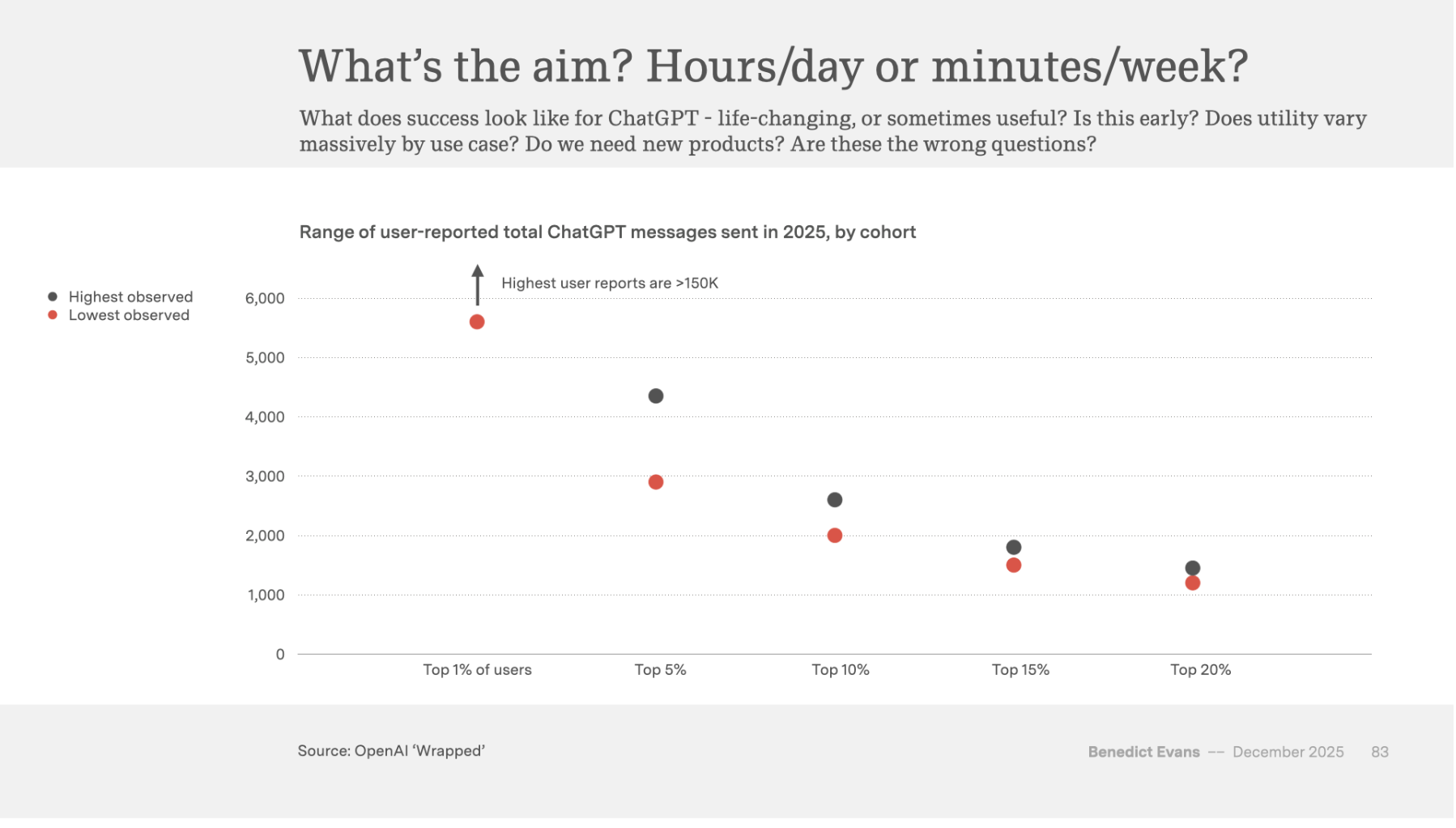
Core Insights - OpenAI faces four fundamental strategic dilemmas despite its large user base and ample capital, including a lack of technological moat, insufficient user engagement, rapid competition, and product strategy constrained by laboratory research direction [1][2] Group 1: Competitive Position - OpenAI's current business model lacks a clear competitive advantage, with only 5% of its 900 million weekly active users paying for the service, and 80% of users sending fewer than 1,000 messages in 2025, indicating that ChatGPT has not become a daily habit for most users [1][5] - Major tech giants like Google and Meta are catching up technologically and leveraging their distribution advantages to capture market share, while the true value in AI will come from new experiences and applications that OpenAI cannot solely create [1][3] Group 2: User Engagement - Despite having a significant user base, OpenAI struggles with user engagement, as most users do not use ChatGPT regularly, with only 5% paying and 80% sending fewer than 1,000 messages in 2025, averaging less than three prompts per day [5][9] - OpenAI acknowledges a "capability gap" between model capabilities and actual user engagement, raising questions about product-market fit [9] Group 3: Strategic Challenges - OpenAI's platform strategy is questioned due to a lack of true flywheel effects, as the company does not possess the ecosystem dynamics that companies like Microsoft or Apple have historically enjoyed [10][13] - Large capital investments may only secure a seat at the table rather than a competitive advantage, as the AI infrastructure costs are high and do not inherently create network effects [14] Group 4: Product Development - OpenAI's product strategy is heavily influenced by laboratory research, limiting the ability to control the product roadmap and respond to market needs effectively [15][16] - The company has attempted to integrate various initiatives but lacks a coherent strategy, leading to a perception of disorganization and a failure to understand the underlying dynamics of successful platforms [16][18]
硅谷的忠诚已死:只要价码足够高,任何人都可以被挖走
3 6 Ke· 2026-02-22 01:22
Core Insights - The alliance between founders and companies in Silicon Valley is deteriorating, replaced by lucrative offers and constant talent "transfers" [2][4] - Major tech giants like Meta, Google, and Nvidia have spent over $36 billion on "acquisition hiring" since mid-2025, directly poaching top talent rather than traditional acquisitions [2][5] - The concept of loyalty is collapsing, with founders leading the way in leaving their companies, and early employees becoming mere bargaining chips [2][12] Group 1: Talent Acquisition Dynamics - Compensation has no ceiling, with reports of Meta offering over $200 million total packages to top talent, making nine-figure offers commonplace [2][12] - "Legal poaching" has become mainstream, exemplified by Nvidia's $20 billion technology licensing deal with Groq, which is seen as a workaround for antitrust regulations [2][7] - The trend of "acquisition hiring" focuses on securing top talent and their technological contributions rather than acquiring products [5][7] Group 2: Impact on Company Culture - The massive salary disparities between new and existing employees are creating tensions within companies, as seen in Meta's attempts to mitigate the impact of high salaries on company culture [12][18] - The traditional narrative of loyalty and shared mission is being replaced by a transactional mindset, where founders prioritize personal financial gain over employee welfare [14][17] - The shift towards viewing teams as low-risk assets by investors reflects a changing landscape where talent acquisition is prioritized over product success [18][19] Group 3: The Future of Silicon Valley - The ongoing talent war is reshaping the industry, leading to more concentrated capital and income, as well as faster talent turnover [21] - The emergence of a new social contract for tech talent is anticipated, involving stricter confidentiality agreements and collective bargaining [20] - The long-term winners in this evolving landscape may be those companies that can foster team cohesion and create lasting value amidst the chaos [21]




亚马逊(AMZN.US)报告揭露:一黑客团伙凭AI工具五周横扫600个防火墙
智通财经网· 2026-02-22 00:46
根据亚马逊(AMZN.US)发布的安全研究报告,在过去五周内,少数黑客借助市面上广泛可得的人工智能(AI)工具,攻破 了分布在数十个国家的600多个防火墙。 报告称,这一小团体(甚至可能只有一人)利用商业生成式AI服务,迅速攻破了安全措施的薄弱环节,例如简单的登录凭 证或单因素身份验证。 亚马逊称,这些技术使入侵者能够大规模攻陷防火墙,原本这项任务需要更大规模、技术更熟练团队才能实现。 这些黑客利用其对安全设备的访问权限,进一步渗透部分受害者网络,其行为模式看起来像是在为勒索软件攻击做准 备。 亚马逊表示,这些大范围入侵事件具有经济动机,是黑客利用AI来简化并加速网络攻击的最新案例。报告未披露黑客具 体使用了哪些AI工具,也未点名受害者。 亚马逊安全工程与运营负责人CJ Moses在报告中表示,"这就像一条由AI驱动的网络犯罪流水线,让技术不那么高明的人 也能实现规模化作案。" 研究人员认为,这些黑客并非针对特定行业,而是"机会主义地"攻击防护薄弱的防火墙设备。 Moses称,一旦遇到更强的安全防护,黑客就会转向其他目标。而即便成功进入网络内部,他们"也只能执行最简单、自 动化的攻击路径"。 去年,黑客曾利用 ...

超级利空?AI圈炸锅了
Zhong Guo Ji Jin Bao· 2026-02-21 16:09
Core Insights - OpenAI has significantly reduced its total computing expenditure target to approximately $600 billion by 2030, down from a previously stated $1.4 trillion commitment for infrastructure [2] - The company anticipates total revenue exceeding $280 billion by 2030, with consumer and enterprise segments contributing nearly equally [2] - OpenAI is finalizing a funding round potentially exceeding $100 billion, with around 90% coming from strategic investors, including Nvidia, which is considering an investment of up to $30 billion [2][3] Financial Performance - OpenAI achieved $13.1 billion in revenue in 2025, surpassing its target of $10 billion, while its cash burn was $8 billion, lower than the expected $9 billion [3] User Engagement - ChatGPT's weekly active user count has surpassed 900 million, an increase from 800 million in October, indicating a recovery in user engagement after a slight decline [4] - The active user count for OpenAI's programming product Codex has exceeded 1.5 million, competing directly with Anthropic's Claude Code [4] Market Interpretation - The market has interpreted OpenAI's reduction in computing expenditure as a negative signal for computing hardware, given the company's status as a leading AI firm [5] - There is a contrasting interpretation suggesting that the figures presented by CEO Sam Altman represent different scopes and timeframes, with the $1.4 trillion being an 8-year commitment and the $600 billion being a narrower focus on computing expenditure by 2030 [6]
10 Stocks On Jim Cramer’s Mind & His Thoughts On Enterprise AI
Insider Monkey· 2026-02-21 13:12
Core Insights - The article discusses stocks mentioned by Jim Cramer, particularly focusing on the impact of AI on enterprise software and companies like Anthropic, DoorDash, and Klarna [2][4]. Group 1: AI and Enterprise Software - Anthropic is recognized as a leader in the enterprise AI space, with stable demand in the industry [2]. - Cramer emphasizes that the narrative surrounding Anthropic's potential to disrupt all software is exaggerated, suggesting that other firms like Vista and Thoma Bravo will continue to thrive [2]. Group 2: DoorDash Inc. (NASDAQ:DASH) - DoorDash reported $3.96 billion in revenue and $0.48 earnings per share for the fourth quarter, missing analyst estimates of $3.99 billion and $0.59 respectively [6]. - The company's orders grew by 32% compared to a year ago, which is an improvement from the previous year's growth of 19% [6]. - Analysts have mixed views on DoorDash, with UBS raising the price target to $245, Guggenheim lowering it to $275, and Stifel cutting it to $224, while maintaining various ratings [6]. - Cramer referred to DoorDash as "powerful" in a recent tweet [6]. Group 3: Klarna Group (NYSE:KLAR) - Klarna's stock has decreased by 71% since its IPO and by 54% year-to-date, with a recent drop of nearly 25% following its fourth-quarter earnings report [7]. - The company reported $1.08 billion in revenue, surpassing analyst estimates of $1.07 billion, but posted a loss per share of $0.19, which was worse than the expected loss of $0.02 [7]. - Klarna's US business showed strong performance with a 58% revenue increase, driven by its Fair Financing product, which saw a 165% sales growth [7]. - Cramer criticized Klarna for not mentioning earnings per share in its release, reflecting on the company's communication strategy [7].


X @The Wall Street Journal
The Wall Street Journal· 2026-02-21 12:58
Anthropic has entrusted Amanda Askell to endow its AI chatbot, Claude, with a sense of right and wrong https://t.co/VDzmNv5uN1 ...