
宇立仪器

Search documents
六维力传感器行业终将去伪存真
机器人大讲堂· 2026-01-25 04:03
Core Viewpoint - In 2025, the six-dimensional force sensor sector in China experienced a capital frenzy, with total financing reaching several hundred million RMB, primarily in early-stage rounds. Many startups claimed to be "first" in various aspects, but the actual market landscape is more complex than presented in promotional materials [1][5]. Group 1: Market Dynamics - The global humanoid robot industry is expected to see over 20,000 units sold in 2025, with China contributing over 80% of this market share. However, actual factory installations are only around 2,000 units, indicating that the industry is still in early production stages [2]. - The market for six-dimensional force sensors remains small and undeveloped, with most humanoid robot projects only validating sensors in limited areas, such as feet or wrists, rather than achieving standardization or bulk procurement [4]. Group 2: Investment Trends - Many companies in the sector are leveraging "leading" claims to attract attention and funding, often based on specific parameters achieved in controlled environments rather than practical applications [5][6]. - Investors are adopting a "broad net" strategy, focusing on the overall sector rather than individual companies, as the market is still fragmented and uncertain [8]. Group 3: Production and Cost Challenges - The primary path to cost reduction in the industry is through scaling production, creating a cyclical dilemma where increased robot deployment is needed to lower sensor costs, but high sensor costs hinder robot production [9]. - Most companies are currently in a transitional phase from prototype validation to small-scale production, making it difficult for sensor manufacturers to secure stable, large-volume orders [8][9]. Group 4: Future Outlook - By 2030, the annual shipment of six-dimensional force sensors is expected to exceed one million units, with the market potentially reaching a scale of billions. Current production capacity is seen as a strategic asset for future competition [12]. - The core challenge in manufacturing six-dimensional force sensors lies in "decoupling" complex force signals into independent components, which remains a significant technical hurdle for many domestic companies compared to international brands [13][14]. Group 5: Industry Evolution - As the humanoid robot industry matures, the focus will shift from mere funding and market visibility to actual product performance, delivery capabilities, and deep customer relationships [16][17]. - The first phase of the sensor competition is concluding, with the next phase emphasizing tangible product quality and reliability over financial metrics [17].


进军机器人全身检测,集智股份拟收购行业先驱
仪器信息网· 2026-01-12 03:55
Group 1 - The core viewpoint of the article is that Jizhi Co., Ltd. plans to acquire at least 51% of the shares of Pumai Technology, a leading company in the field of robot performance testing, to gain control and enhance its capabilities in the robot detection industry [1] - The acquisition is seen as a strategic move during a growth cycle, aiming to create a closed-loop detection capability from precision components to complete machines, highlighting its long-term strategic value [1] - Jizhi Co., Ltd., established in 2004, specializes in high-end equipment manufacturing, primarily focusing on automatic balancing machines for precision detection and correction of rotating parts [1] Group 2 - Pumai Technology, founded in 2016, is a pioneer in the industrial robot testing and calibration field, which was previously a market void in China, making it the first company to utilize binocular vision technology for industrial robot performance testing [2] - The company launched the ARTS-5025 robot performance testing and calibration system in late 2016, achieving micron-level detection accuracy, and it was recognized as the first product in Zhejiang Province's key intelligent equipment sector in 2018 [2] - Pumai Technology is considered a "scarce asset" due to its pioneering role, which is difficult to replicate through short-term internal R&D, and it has proactively extended its business into humanoid robots, launching full gait simulation and durability testing systems [2]

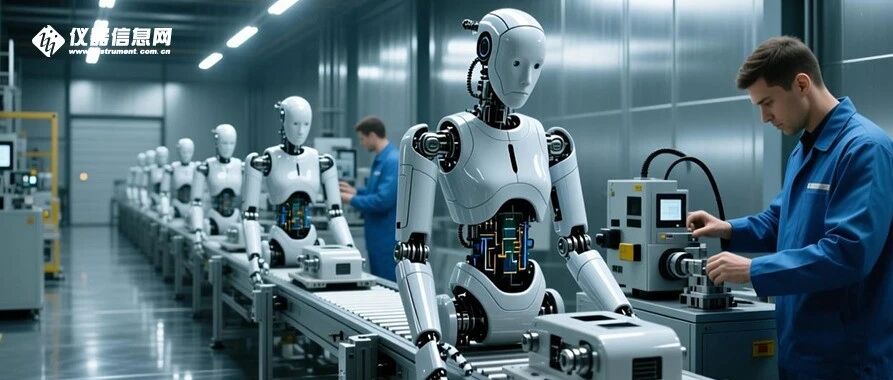
展商阵容揭晓!21家机器人领域先锋企业集结,第六届中国机器人行业年会邀你赴杭探商机!
机器人大讲堂· 2025-12-14 00:00
Core Insights - The "6th China Robot Industry Annual Conference" will be held on December 18-19, 2025, in Hangzhou, focusing on humanoid robot technology and embodied intelligence [1] - The conference aims to create a high-end dialogue platform for government, industry, academia, and investment, leveraging Hangzhou's advantages in innovation and technology [1] - A total of 21 companies will exhibit their innovative products and case studies in the robotics field at the conference [1] Company Highlights - **HIT Huawike**: Founded by an academician from the Chinese Academy of Sciences, focusing on flexible intelligent perception technology, with over 150 intellectual property rights and participation in 8 national/industry standards [3][4] - **Linkerbot**: Holds over 80% of the global market share in high-freedom dexterous hands, recognized in multiple prestigious awards, and collaborates with top universities and companies [6][7] - **Greens Harmonic Drive**: A leading manufacturer in precision harmonic drive technology, holding the largest domestic market share and second globally, with 160 patents and 6 national standards [16][18] - **Hefei Xinghui Sensing Technology**: Established in April 2025, focuses on robot tactile sensors, with a management team from a global leader in the field [26][27] - **Yinshij Robot**: Specializes in micro precision actuators, with over 80 intellectual property rights and a production capacity of 100,000 micro servo cylinders annually [29][30] - **Yushu Technology**: A well-known civil robot company, involved in high-performance humanoid robots and dexterous robotic arms, with participation in major events like the Winter Olympics [39][40] - **Shenzhen Anpeilong Technology**: A national-level specialized enterprise focusing on intelligent sensors, with a complete vertical industry chain from chip development to sensor manufacturing [51][52] - **Cloud Deep Technology**: Focuses on embodied intelligence technology, with core technologies in motion control and intelligent environment perception, leading in various industry applications [58][59] - **Blue Dot Touch Control**: Dominates the domestic market for six-dimensional force sensors, with a 95% share in joint force sensors expected in 2025 [66] Event Details - The conference will feature various forums and discussions on topics such as the current trends in humanoid robots, AI integration, and the commercialization of embodied intelligence [127][128] - Notable speakers include experts from leading universities and companies, discussing the future of humanoid robots and their applications [127][128]

宇树科技、因时机器人、灵心巧手等行业力量集结,第六届中国机器人行业年会邀你共探新局!
机器人大讲堂· 2025-12-02 09:26
Core Viewpoint - The "6th China Robot Industry Annual Conference" will be held on December 18-19, 2025, in Hangzhou, focusing on humanoid robot technology and embodied intelligence, aiming to create a high-end dialogue platform for industry, academia, and investment [1]. Exhibiting Companies and Products - **Yushu Technology Co., Ltd.**: A leading global company in consumer and industrial robots, focusing on high-performance humanoid robots and dexterous robotic arms. The company has participated in major events like the 2023 Super Bowl and the 2025 CCTV Spring Festival [2]. - **Yinshi Robot Technology Co., Ltd.**: Established in 2016, this national-level specialized enterprise focuses on micro precision actuators and dexterous end-effectors. It has over 80 domestic and international intellectual property rights and serves more than 1,800 clients, with an annual production capacity of 100,000 micro servo cylinders [4][7]. - **Lingxin Qiaoshou (Linkerbot)**: A company with a mission to "create everything," holding over 80% of the global market share for high-degree-of-freedom dexterous hands. It has received multiple awards and is used by prestigious institutions and companies [13]. - **Hefei Xinghui Sensor Technology Co., Ltd.**: Founded in April 2025, this high-tech company specializes in the research and production of robotic tactile sensors, leveraging a management team from a leading global sensor company [18]. - **Blue Dot Touch Control (Beijing) Technology Co., Ltd.**: Established in 2019, this national high-tech enterprise focuses on advanced force control technology for robots, achieving over 80% market share in domestic humanoid robots [20]. - **Kunwei (Beijing) Technology Co., Ltd.**: A high-tech enterprise dedicated to the research and production of high-performance tactile sensors, with a founding team from national aerospace research institutions [21][23]. - **Sunrise Instruments**: A leading global manufacturer of six-dimensional force sensors, with a fully controlled production process and a diverse client base [25]. Event Participation and Ticketing - Early bird tickets for the "6th China Robot Industry Annual Conference" are now available, with only 200 tickets offered at a significant discount until December 10, 2025. Free admission tickets are also available, but do not include lunch or the annual report [27].

工业机器人力传感器市场调研报告-主要企业、市场规模、份额及发展趋势
Sou Hu Cai Jing· 2025-10-31 09:42
Core Insights - The industrial robot force sensor market is projected to grow from approximately $24.4 million in 2024 to $117.8 million by 2031, with a CAGR of 24.3% from 2025 to 2031 [1] - The six-dimensional force sensor is crucial for enhancing automation by providing robots with tactile feedback, enabling them to perform tasks previously reserved for skilled artisans [1][2] Market Overview - In 2024, global sales of industrial robot six-dimensional force sensors are expected to reach nearly 55,000 units, with China accounting for about 16,000 units, reflecting a year-on-year growth of over 40% [2] - By 2031, global market sales are projected to reach 430,000 units, with China's sales expected to hit 160,000 units, indicating a CAGR of 34.38% from 2025 to 2030 [2] Competitive Landscape - The high-end market for six-dimensional force sensors is currently dominated by foreign brands such as ATI Industrial Automation and Epson, although their market share has been declining [2] - Domestic manufacturers like Yuli Instruments, Kunwei Technology, and Xinjingcheng are gaining market share, with several companies beginning to develop and research industrial robot six-dimensional force sensors [2][5] Product Types and Applications - Strain gauge sensors are the most widely used type, accounting for over 80% of the total force sensor market [3] - Industrial robot force sensors are extensively applied in assembly robots, polishing robots, and collaborative robots, with assembly robots representing over 40% of the application share in 2024 [3] Regional Insights - The Asia-Pacific region holds the largest market share for industrial robot force sensors and exhibits the highest growth rate, with China showing particularly strong performance [3] - The demand for high-precision automation in industries such as automotive, electronics, and aerospace is driving significant growth in the industrial robot force sensor market [3]

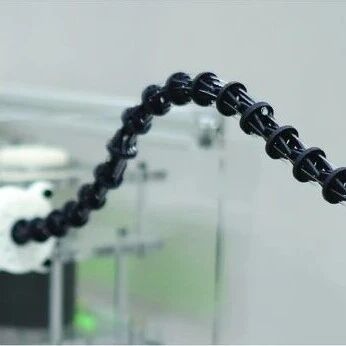
港城大等团队突破连续体机器人控制难题,让柔性臂实现毫米级精准定位!
机器人大讲堂· 2025-09-04 11:23
Core Viewpoint - Continuous robots exhibit great potential in fields such as robotic surgery and narrow space detection, but precise control remains a significant challenge. Recent breakthroughs by research teams from City University of Hong Kong and Hefei University of Technology have applied Kalman filtering technology to enhance the online control precision of these robots [1][2]. Group 1: Continuous Robots and Control Challenges - Continuous robots possess infinite degrees of freedom and adaptability, making them difficult to control accurately due to their deformable nature, akin to controlling a cooked noodle [4]. - Traditional rigid-link robots have simpler control mechanisms, while continuous robots face challenges from large deformations, friction effects, and inherent non-linear characteristics [4][5]. - The research team designed a lightweight robot with a complex internal structure, consisting of three flexible segments, each with five spacer disks and one drive disk, weighing only 8.4 grams [5]. Group 2: Control Methodology - The team utilized a piecewise constant curvature (PCC) model for initial control, which, while computationally efficient, resulted in position errors exceeding 1.6 mm and angle errors over 1.4 degrees, unacceptable for high-precision applications [7]. - Instead of developing a more complex model, the team innovatively employed the Kalman filter to allow the robot to self-correct during motion, estimating and compensating for errors in real-time [8][9]. - The control system operates at a frequency of 20 Hz, integrating steps such as obtaining end pose, calculating model Jacobians, estimating and compensating for Jacobian errors, and generating control commands [11]. Group 3: Experimental Validation - The research team conducted three trajectory tracking experiments and two disturbance resistance tests, demonstrating the effectiveness of the new method [12]. - In the first experiment, the root mean square error (RMSE) in the x-direction improved from 1.6 mm to 1.1 mm, and in the y-direction from 2.3 mm to 2.1 mm, showcasing significant enhancements in tracking precision [12][14]. - The second experiment focused on attitude control, achieving a reduction in RMSE from 2.1 degrees to 1.5 degrees, while maintaining position accuracy [14]. - The robustness of the method was further validated through disturbance tests, where the robot maintained performance even under significant load changes [15]. Group 4: Innovation and Future Prospects - The research combines model-driven and data-driven approaches, leveraging the strengths of both to enhance control precision while maintaining computational efficiency [17]. - The method's advantages include no need for offline data collection, high computational efficiency, and robustness against external disturbances, indicating strong potential for practical applications [17]. - Future research directions include incorporating dynamic effects and expanding to three-dimensional motion to improve estimation accuracy and applicability [17].
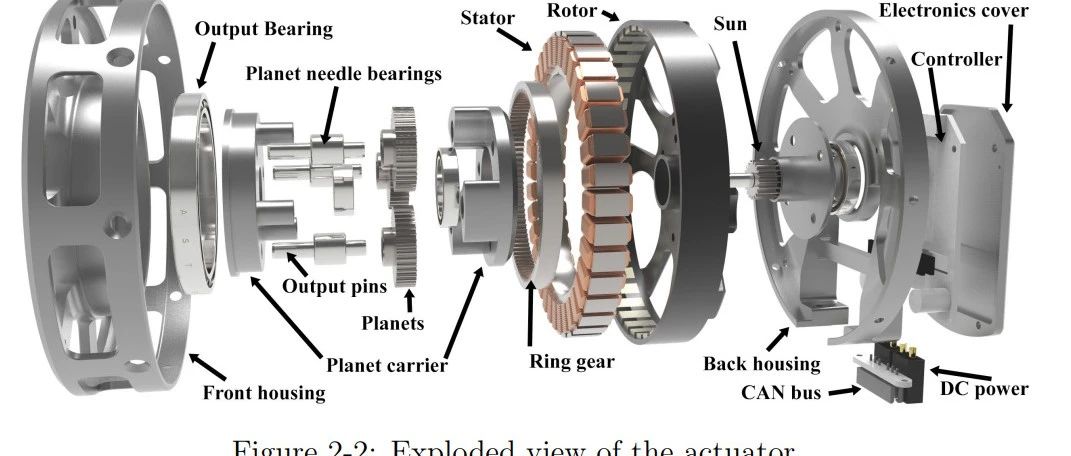
人形机器人旋转关节:核心部件技术解析与产业竞争观察
机器人大讲堂· 2025-07-13 07:22
Core Insights - The article emphasizes the rapid growth of humanoid robots, particularly focusing on the significance of rotary joints as a core component that affects both performance and manufacturing costs [1] - The rotary joints are expected to maintain double-digit growth in the coming years due to the booming humanoid robot industry [1] Group 1: Technology Routes of Rotary Joints - The three main technological routes for rotary joints are rigid actuators, elastic actuators, and quasi-direct drive (QDD) actuators [2] - Rigid actuators have played a crucial role in early humanoid robot development due to their high torque output and precision, maintaining a dominant position in the market [4] - Elastic actuators enhance compliance control but face challenges in industrial application due to complex control algorithms and high hardware costs [4][6] Group 2: QDD Actuators - QDD actuators combine the advantages of both rigid and elastic actuators, becoming a mainstream solution for humanoid robot rotary joints [6] - They optimize structural design and control algorithms to reduce manufacturing costs and system complexity while ensuring joint performance [6][7] Group 3: Motors in Rotary Joints - Motors are critical for rotary joints, requiring high torque output, dynamic response, low inertia, and lightweight characteristics [8] - The frameless torque motor has emerged as a popular choice due to its compact design and flexibility, aligning well with high integration needs [8] - Axial flux motors show promise for future applications in humanoid robots due to their high torque density and efficiency [9] Group 4: Gearboxes in Rotary Joints - Gearboxes play a key role in torque output, precision, and lifespan of rotary joints, with harmonic and planetary gearboxes being the primary types used [10] - Harmonic gearboxes are widely used for their compact size and high precision, while planetary gearboxes are favored for their cost-effectiveness and durability [13][15] - Both types of gearboxes complement each other to meet diverse joint requirements [16] Group 5: Sensors in Rotary Joints - Sensors are essential for measuring force/torque information to achieve precise motion control in humanoid robots [17] - Force/torque sensors provide high precision but are costly and require careful installation [19] - Current loop sensors offer a cost-effective alternative with lower precision, suitable for cost-sensitive applications [21] Group 6: Market Competition in Core Components - The market for humanoid robot rotary joints is characterized by intense competition among core components like motors, gearboxes, and sensors [22] - Domestic companies such as Boke, Haozhi, and Weichuang have made significant advancements in frameless torque motors, enhancing domestic competitiveness [24] - The harmonic gearbox market is led by companies like Harmonic Drive and Lide, while the planetary gearbox sector is competitive with domestic players like Zhongdali and Niusidate [27][31] Group 7: Six-Dimensional Force Sensors - Six-dimensional force sensors are increasingly used in various fields, including humanoid robots, where they have become a standard trend [34] - The market for these sensors is expected to grow significantly, with a current average price of around 40,000 RMB for foreign brands and 20,000 RMB for domestic products [34] - The market is concentrated, with leading companies like ATI and Yuli Instruments holding significant market shares [35] Group 8: Future Outlook - The humanoid robot industry is seen as a new direction in industrial automation with substantial growth potential [36] - The demand for key products like motors, controllers, gearboxes, and six-dimensional force sensors is expected to rise as the industry develops [36] - Companies with technological advantages in gearboxes and sensors are likely to benefit from the growth in humanoid robot demand [36]
Science Robotics最新模块化开源外骨骼系统
机器人大讲堂· 2025-06-28 02:19
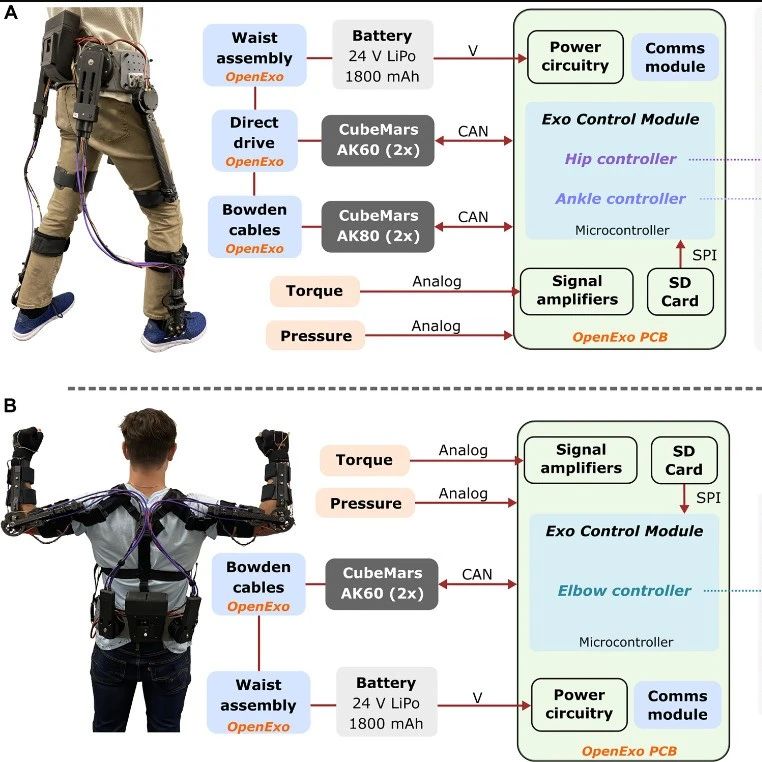
Core Viewpoint - The research team from Northern Arizona University has developed a modular exoskeleton system that is fully open-source, allowing more researchers to participate in this promising field [1][17]. Group 1: Challenges in Exoskeleton Development - Exoskeleton technology has faced high barriers to entry, requiring expertise in multiple disciplines such as mechanical engineering, electrical engineering, robotics, and biomechanics [4][5]. - Current exoskeleton systems are often specialized for specific applications, limiting their adaptability to new research questions and environments [5]. - The existing systems create technology silos, making it difficult to reproduce research results due to independent software and hardware systems [5]. Group 2: OpenExo's Modular Design - OpenExo addresses these challenges with a modular design, allowing users to easily swap hardware modules and modify configurations without extensive coding or redesign [6][8]. - The system consists of four main components: software system, electronic architecture, hardware interface, and control scheme [8]. - The software is developed using C++ and Arduino, emphasizing modularity and reducing code redundancy [9]. - The electronic architecture is designed to be simple and intuitive, using a single board to control up to four joints, which differs from other open-source projects [9]. - Hardware designs include direct-drive hip joints and Bowden cable-driven ankle joints, all compatible with the same belt interface for quick assembly [10]. Group 3: Performance Validation - The system demonstrates high torque tracking accuracy, with root mean square errors for hip, ankle, and elbow joints being 0.30 Nm, 2.00 Nm, and 0.84 Nm respectively [12]. - Battery tests show that the hip joint configuration can run for 35 minutes, while the ankle configuration lasts 25 minutes, indicating potential for extended use with improved battery capacity [12]. - Real-world tests show that the exoskeleton reduces transportation costs by 8% to 18% in various walking scenarios, highlighting its practical value [13][15]. Group 4: Open Source and Community Engagement - OpenExo's significant contribution lies in its open-source philosophy, providing complete software packages, electrical designs, and hardware instructions [17][18]. - The research team aims to create an open research community, inviting contributions from various disciplines to accelerate exoskeleton technology development [19]. - The unified open-source platform allows for large-scale collaborative research, improving the reproducibility of results across different institutions [20]. Group 5: Future Improvements - The research team acknowledges that battery life remains a key limitation, particularly in high-torque applications, and is exploring ways to enhance battery efficiency [21]. - Continuous optimization of the Python application is planned, with features like deep learning and human-machine collaboration being considered for future updates [21].
灵巧手传感器深度汇报
2025-06-06 02:37
Summary of Conference Call Records Industry Overview - The conference call discusses the **dexterous hand sensor industry**, highlighting advancements in sensor technology and market trends related to dexterous hands and their applications in robotics and automation [1][2]. Key Points and Arguments 1. **Increased Degrees of Freedom**: Dexterous hands are evolving with degrees of freedom exceeding 10, with products like Lingqiao Intelligent's Hand Zero One 21 achieving 19 degrees and Yushu Technology's Dex 5-1 reaching 20 degrees, indicating a continuous pursuit of operational flexibility in the industry [1]. 2. **Importance of Tactile Sensors**: Tactile sensors are crucial for simulating human skin's ability to perceive temperature, pressure, and other physical variables, even in low-light conditions [1][2]. 3. **Sensor Technology Pathways**: Key technological pathways in dexterous hands include force sensors, position sensors, and various sensing principles such as strain, capacitive, and optical methods, each with distinct advantages and applications [1][5]. 4. **Market Growth Projections**: The global force sensor market reached **$8.89 billion** in 2020 and is expected to grow rapidly, particularly the six-dimensional force sensor market, which is projected to exceed a compound annual growth rate (CAGR) of **100%** post-2024 due to the mass production of humanoid robots [11][12]. 5. **Flexible/Tactile Sensor Market**: The flexible/tactile sensor market was nearly **$2 billion** globally in 2022, with China's market reaching **¥2.47 billion** in 2023, primarily applied in consumer electronics, healthcare, and automotive automation [13]. Additional Important Content 1. **Types of Dexterous Hands**: Various dexterous hand products are highlighted, such as Lingqiao Intelligent's Hand Zero One 21 with 19 degrees of freedom and Yushu Technology's Dex 5-1 with 20 degrees, showcasing the diversity in design and functionality [4]. 2. **Sensor Classification**: Tactile sensors can be classified into capacitive, resistive, piezoelectric, optical, and triboelectric types, each with unique working principles and performance characteristics [8][9]. 3. **Performance Metrics of Tactile Sensors**: Performance metrics such as sensitivity, linearity, response time, resolution, and stability vary across different types of tactile sensors, influencing their application suitability [10]. 4. **Market Concentration**: The six-dimensional force sensor market is highly concentrated, with companies like Yuli Instruments and Landpoint Touch holding over **50%** market share [12]. This summary encapsulates the key insights from the conference call, providing a comprehensive overview of the dexterous hand sensor industry, its technological advancements, market dynamics, and competitive landscape.
人形机器人系列专题之六维力传感器:高价值和高壁垒的力控核心部件,国产供应商持续发力
Guoxin Securities· 2025-05-13 12:25
证券研究报告 | 2025年05月13日 人形机器人系列专题之六维力传感器 优于大市 高价值和高壁垒的力控核心部件,国产供应商持续发力 风险提示:行业进展和技术迭代不及预期、供应商订单不确定性的风险。 投资建议:关注人形机器人进展带来的投资机遇。看好在技术升级迭代下人 形机器人发展,看好机器人量产后带来的潜在供应链零部件的需求和投资机 会,推荐在六维力传感器等领域有持续布局的公司凌云股份、中鼎股份等。 重点公司盈利预测及投资评级 | 公司 | 公司 | 投资 | 昨收盘 | 总市值 | | --- | --- | --- | --- | --- | | 代码 | 名称 | 评级 | (元) | (亿元) | | 凌云股份 | | 优于大市 | | | | 优于大市 | 中鼎股份 | | | | | 无评级 | 华培动力 | | | | | 资料来源:、国信证券经济研究所预测 | | | | | 请务必阅读正文之后的免责声明及其项下所有内容 核心观点 行业研究·行业专题 汽车 优于大市·维持 证券分析师:唐旭霞 证券分析师:孙树林 六维力传感器系人形机器人感知核心部件,重要性高、价值量大。传感器是 人形机器人与 ...