康得新

Search documents
四大证券报精华摘要:1月26日
Xin Hua Cai Jing· 2026-01-26 00:13
Group 1 - The Beijing Stock Exchange has welcomed three new listings, bringing the total number of listed companies to 290 and the total market capitalization to 967.05 billion yuan, approaching the 1 trillion yuan mark [1] - The IPO review process on the Beijing Stock Exchange is maintaining a high frequency, with expectations for continued rapid issuance of IPOs due to deepening market reforms [1] Group 2 - The semiconductor industry is experiencing strong performance driven by demand from artificial intelligence, with many companies reporting increased operating rates in chip manufacturing [2] - A total of 506 A-share companies have forecasted net profit growth for 2025, with 16 companies expecting growth exceeding 500%, driven by factors such as market expansion and cost reduction [12] Group 3 - The mandatory disclosure of ESG reports is transforming the quality and comparability of data, moving from qualitative case studies to quantitative data points, enhancing transparency in environmental information [3] - The shift towards a more systematic approach in regulatory oversight of listed companies is evident, with over 90 companies facing administrative penalties in 2025, indicating a stricter enforcement environment [6][7] Group 4 - The short-term funding environment is expected to remain reasonably ample, with the People's Bank of China focusing on guiding overnight rates to operate near policy rate levels [4] - The A-share market is witnessing a structural opportunity, with a focus on technology growth and resource sectors as brokers conduct extensive research on companies [8] Group 5 - The new fund establishment has reached 76 this year, raising a total of 71.939 billion yuan, with a significant number of funds achieving over 20% returns, indicating strong investor interest [10] - The proactive equity funds are heavily invested in the electronics, pharmaceuticals, and power equipment sectors, reflecting a strategic focus on high-growth industries [14]
从“零散治理”向“系统治理”转变 上市公司严监管迈入新阶段
Shang Hai Zheng Quan Bao· 2026-01-25 18:51
Core Viewpoint - The regulatory environment for listed companies in China's capital market has entered a new phase of strict enforcement, with over 10 companies facing investigations or penalties in early 2026, signaling a "zero tolerance" approach to violations [1]. Group 1: Regulatory Actions and Trends - In 2025, more than 90 listed companies received administrative penalties, and 8 companies announced criminal judgments against executives for various violations, including fraud and insider trading [1][2]. - The shift from "scattered governance" to "systematic governance" is evident, with a focus on collaborative regulation involving judicial and administrative measures [1][2]. - The introduction of a comprehensive accountability system is highlighted, where not only top executives but also ordinary employees and external accomplices are held responsible for financial fraud [4][5]. Group 2: Criminal Prosecutions and Penalties - Significant criminal penalties have been imposed, such as a 37 million yuan fine on Zijing Storage and prison sentences for 10 executives ranging from 2.5 to 7.5 years [2]. - The case of Kangde Xin, which involved a seven-year systematic fraud, resulted in a total fine of 410 million yuan and lengthy prison sentences for key executives [2]. - The regulatory framework now includes severe penalties for accomplices in fraud cases, as seen in the cases of Yuebo Power and ST Guangdao, where external personnel were fined for their involvement [4][5]. Group 3: Market Ecosystem and Compliance - The regulatory approach aims to reshape the credit infrastructure of the capital market through a combination of administrative enforcement, criminal accountability, and civil recovery [6]. - The introduction of a whistleblower system is expected to enhance internal compliance and make fraudulent activities more difficult to conceal [6]. - The upcoming implementation of the "most stringent delisting rules" is anticipated to increase the number of delisting cases, reinforcing the message that delisting does not exempt companies from accountability [7].
2024年以来累计查办资本市场财务造假案件159起
Jing Ji Ri Bao· 2026-01-11 00:53
Core Viewpoint - The Chinese capital market is intensifying efforts to combat financial fraud, with multiple departments collaborating to establish a comprehensive prevention and punishment system, signaling a strong commitment to eliminate fraudulent practices [1][2]. Group 1: Regulatory Actions - Since July 2024, the regulatory environment has become more stringent, with the China Securities Regulatory Commission (CSRC) handling 159 financial fraud cases and imposing fines totaling 8.1 billion yuan [2]. - The regulatory framework has shifted from a single-agency approach to a collaborative effort involving 12 ministries, enhancing the overall enforcement capability [3]. - The comprehensive punishment and prevention system is evolving from reactive measures to proactive governance, focusing on prevention, real-time monitoring, and post-incident penalties [3][6]. Group 2: Accountability and Enforcement - The accountability framework has expanded to include not only listed companies but also major shareholders, actual controllers, intermediary institutions, and third-party collaborators, addressing the issue of low penalties for violations [3][4]. - There is a clear emphasis on a multi-faceted accountability approach, ensuring that all parties involved in financial fraud are held responsible, thereby enhancing market fairness [4]. - The regulatory bodies are actively dismantling the notion of escaping consequences through delisting or restructuring, as evidenced by the forced delisting of 18 companies involved in severe fraud [4][5]. Group 3: Systemic Improvements - The ongoing development of the comprehensive prevention and punishment system is crucial for the healthy operation of the capital market and reflects a significant shift in governance philosophy [3][7]. - Future efforts will focus on enhancing legal frameworks, improving administrative and criminal coordination, and reinforcing internal controls within companies to prevent fraud at the source [6][7]. - The integration of technology, such as big data and artificial intelligence, is expected to improve the detection and prevention of fraudulent activities, facilitating early intervention [6].
筑牢不敢假、不能假、不想假防线 2024年以来累计查办资本市场财务造假案件159起
Jing Ji Ri Bao· 2026-01-10 21:58
Core Viewpoint - The Chinese capital market is intensifying efforts to combat financial fraud, with multiple departments collaborating to establish a comprehensive prevention and punishment system, signaling a strong commitment to eliminate fraudulent practices [1][2]. Regulatory Collaboration - Financial fraud is described as a cancer in the capital market, undermining the authenticity of information disclosure and harming the rights of small investors. Since July 2024, regulatory enforcement has significantly increased, with the China Securities Regulatory Commission (CSRC) handling 159 cases of financial fraud and imposing fines totaling 8.1 billion yuan [2][3]. Systematic Enforcement - The regulatory approach has evolved from isolated actions by the CSRC to a coordinated effort involving 12 ministries, enhancing the overall regulatory force. The punishment system has shifted from post-incident penalties to a comprehensive governance model that includes prevention, monitoring, and punishment [3][4]. Comprehensive Accountability - The crackdown on financial fraud involves a full-chain accountability approach, targeting not only listed companies but also major shareholders, actual controllers, intermediary institutions, and third-party collaborators. This aims to address the low cost of illegal activities and high cost of rights protection for investors [4][5]. Proactive Prevention - The fight against financial fraud is characterized as a long-term battle for market confidence and financial security, requiring both high-pressure deterrence and source prevention. The construction of a comprehensive prevention and punishment system is entering a critical phase [5][6]. Legal and Regulatory Enhancements - There is a need to improve laws and regulations to ensure that enforcement is based on clear legal frameworks. This includes enhancing administrative, criminal, and civil collaboration to effectively combat financial fraud and the complicity of third parties [6][7]. High-Quality Market Development - The development of a high-quality capital market relies on high-quality listed companies and a transparent information environment. The comprehensive prevention and punishment system aims to ensure that fraud is severely punished, accomplices are held accountable, and investors have avenues for compensation, thereby stabilizing market expectations [7][8].
2026医药开门红-后续怎么看
2026-01-05 15:42
Summary of Conference Call Records Industry Overview - The pharmaceutical sector showed strong performance in 2025, with the Guohai Pharmaceutical Index indicating a significant annual increase. However, 2026 is expected to present a more balanced market with multiple sub-sectors such as innovative drugs, CRO (Contract Research Organizations), traditional Chinese medicine, medical devices, and pharmacy distribution being favored [1][2][3]. Key Insights and Arguments - **Innovative Drugs**: The sector remains promising, with a strategic theme for 2026 titled "Innovative Drugs Going Global: From Initial Year to Major Year." The importance of Clinical Development Plans (CDP) is emphasized, recommending companies like Sanofi, Innovent Biologics, and KANGFANG Biopharma, while also highlighting KANGDE and Aidi Pharmaceutical [1][5]. - **CRO Sector**: The domestic CRO sector is viewed positively, benefiting from improved overseas demand and expectations of interest rate cuts by the Federal Reserve. Domestic demand is also expected to improve due to innovative drugs going global and better financing conditions [1][13]. - **Traditional Chinese Medicine**: The sales side is gradually recovering, with expectations for a strong start in Q1 2026. The sector is seen as having significant market share growth potential due to its consumer-oriented nature [1][16]. - **Retail Pharmacy**: The retail pharmacy sector is positioned for growth, with positive same-store sales data from leading chains. The sector is expected to benefit from the expansion of commercial health insurance and changes in basic medical insurance policies [1][14][15]. Notable Developments - **KANGDE**: The company has its dual formulation and three indications included in the medical insurance for the first time, expected to see significant volume in 2026. Aidi Pharmaceutical is also making strides in HIV treatment, with products expected to renew at original prices and maintain growth [1][7][12]. - **Claudin 18.2 ADC**: This product, owned by AstraZeneca, is set for global new drug application submission, indicating strong growth potential [1][9][10]. - **Surgical Robots**: The market for surgical robots is rapidly developing, with significant breakthroughs in overseas orders. Companies like Jingfeng Medical and MicroPort are performing well, with MicroPort ranking second globally in terms of order volume [1][17][18]. Challenges and Opportunities - **Domestic Drug Commercialization**: Domestic drugs face challenges in commercialization but are expected to enter hospitals after being included in medical insurance. The convenience of new formulations like KANGYUE's pre-filled syringe is highlighted [1][8]. - **Commercial Health Insurance**: The commercial health insurance sector is showing significant growth potential, with new policies expected to expand coverage for innovative products [1][19]. - **Basic Medical Insurance Changes**: Recent changes in basic medical insurance policies, including inter-provincial pooling and long-term care insurance, are anticipated to release medical demand and alleviate financial pressures [1][20][21]. Conclusion - The pharmaceutical industry is poised for a diverse and balanced growth trajectory in 2026, with various sub-sectors showing promise. Key players in innovative drugs, CRO, and retail pharmacy are expected to benefit from favorable market conditions and policy changes, while challenges in commercialization and competition remain.
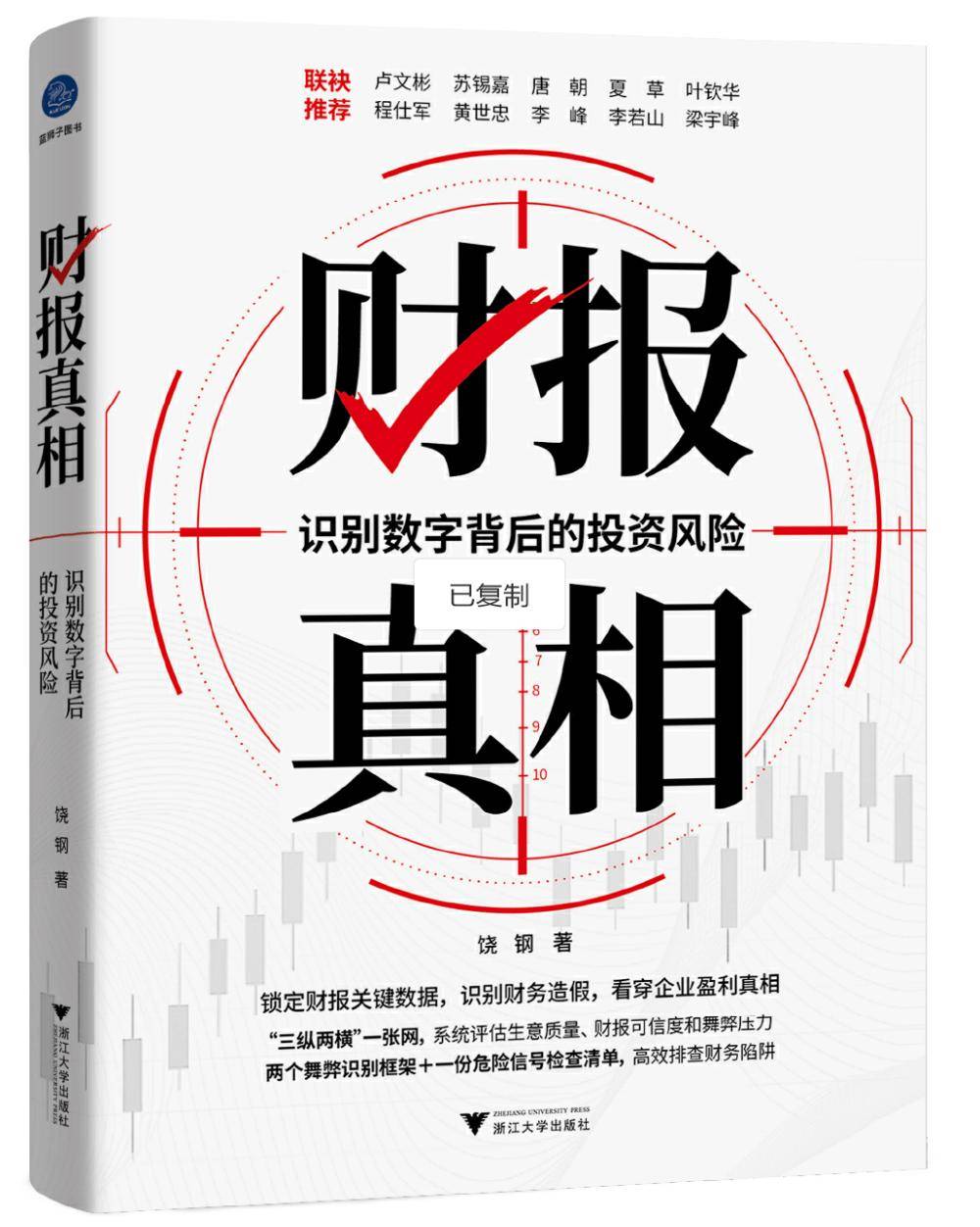
现金还能是假的?《财报真相》
Sou Hu Cai Jing· 2025-12-26 23:13
本文是我的新书《财报真相》节选,京东当当热销,上架2周已加印。 我从一个故事讲起。 2016年9月底,几位新三板董秘财总来上海开会,相聚甚欢。 老友沈总和另外一位董秘聊起最近他在新三板买的一只股票亨某股份,价格不但跌破净资产,还跌破现金价值。 闻言我耳朵立了起来:这不是格雷厄姆倡导的net-net投资法标的吗? 我随手打开手机看了看数据。亨某股份是家做鞋的公司,规模在新三板上算大的,销售额有几个亿,利润有千万,不到一年前定增发行价还有 8块多,现在股价跌到2块多。 既然沈总重仓,肯定做过研究。我顺手就下了单买了一些。后来几天有朋友问新三板有啥好标的,我随口就推荐了亨某股份。过了几天是国庆 假期,我想起亨某股份,就找来材料看。 一看发现有问题,亨某股份业绩近几年大幅下滑,但是存货和应收账款却未收缩,总额还在上升。存货和应收账款减值计提不充分,这是典型 财务造假信号。 另外,我还发现其账上有几亿元的货币资金。股价跌成这样,如果公司没问题,老板理性做法是分红再增持,不做一定是哪里有问题。 我搜索了一下发现亨某股份负面新闻很多,员工上街讨薪、政府出面纾困等都预示着亨某股份处于困境之中,绝不是股价错杀的问题。 我立即拿 ...

上市公司财务造假,财务总监和实控人都干了什么?
Sou Hu Cai Jing· 2025-12-24 16:08
Core Viewpoint - Financial fraud has severely undermined the principles of fairness and transparency in the A-share market, harming the legitimate rights and interests of investors, with over 10 listed companies facing penalties and forced delisting since 2025, including five companies receiving fines exceeding 100 million RMB [1][3]. Group 1: Financial Fraud Cases - Numerous typical cases of financial fraud in listed companies over the past three to five years have been identified, including companies like Zijing Storage, Kangde Xin, Guizhou Bailing, and Yili Clean Energy, revealing complex relationships between actual controllers and financial directors, as well as chaotic corporate governance [3][4]. - In the case of Kangde Xin, the actual controller and financial director conspired to implement systematic financial fraud for seven years, while Zijing Storage's actual controller organized high-level executives to inflate revenue through fake contracts and falsified documents [4][5]. - The financial fraud methods commonly employed include inflating profits, manipulating costs, and creating fictitious assets, often involving collusion among key personnel [6][8]. Group 2: Penalties and Consequences - The penalties for financial fraud have been severe, with individuals facing both administrative and criminal consequences. For instance, Kangde Xin's actual controller received a 15-year prison sentence and a fine of 202 million RMB, while the financial director received a 13-year sentence and a fine of 10.15 million RMB [5][9]. - Companies involved in financial fraud face significant repercussions, such as ST Gaohong, which reported a cumulative litigation amount of 3.511 billion RMB, representing 427.64% of its latest audited net assets [9][10]. - The ongoing issues of financial fraud and deceptive practices are seen as major threats to the healthy development of China's capital market, undermining investor confidence and market fairness [9][10]. Group 3: Systemic Issues and Recommendations - The prevalence of financial fraud highlights systemic issues within corporate governance, including failures in internal controls and potential negligence by auditing firms, with some cases involving extensive collusion with third parties [10]. - Experts suggest that regulatory oversight of listed companies should be strengthened, with increased penalties for fraudulent activities and accountability for auditing firms and colluding third parties to maintain the integrity of the capital market [10].



三六零那些犯了事的股东们
Xin Lang Cai Jing· 2025-12-23 09:51
Group 1 - The article discusses the complexities and challenges of moving a listed company from one capital market to another, particularly through privatization and re-listing, which often involves significant financial transactions exceeding 100 billion or even close to 1 trillion [2][17] - Successful examples of such transitions include WuXi AppTec and Focus Media, while failures include Wanda and Didi, with 360 and Bona Film being uncertain cases [2][17] - 360's privatization was led by CITIC Guoan and involved a consortium including Everbright, Sequoia, Ping An, and Taikang, with a transaction scale of approximately 20 billion [2][17] Group 2 - The article highlights the legal troubles of certain shareholders of 360, particularly focusing on Chen Xuanlin, a young entrepreneur involved in a major financial scandal, the Beiguang Investment case, which resulted in significant financial losses [3][20][22] - Chen's connections to other notable figures in the industry, such as Jia Yueting, and his ventures in the automotive sector are also discussed, illustrating the intertwining of various capital games [5][20][22] - Another shareholder, Beijing Fengyuanhong, faced legal issues due to illegal fundraising activities, leading to the freezing of shares related to 360 [7][25] Group 3 - The article mentions the involvement of the Shanghai Fuxing Group in 360's shareholder structure, which faced severe legal consequences for illegal fundraising, with significant assets being auctioned off [11][28] - The narrative also touches on the implications of political corruption, specifically mentioning Wang Liko, a high-ranking official whose actions have affected shareholder dynamics within 360 [12][29][31] - The article concludes by indicating that there are many untold stories within 360's shareholder landscape, hinting at a broader narrative of capital and power dynamics in the market [32][34]


康得新财务造假案终审落槌 原董事长获刑15年
Xi Niu Cai Jing· 2025-12-23 03:13
Core Viewpoint - The announcement from Kangde Xin indicates the conclusion of a significant financial fraud and securities issuance case, with the Jiangsu Provincial High Court upholding the original verdict and rejecting the appeal [2] Legal Outcomes - Kangde Xin was fined 410 million RMB for securities fraud and foreign exchange fraud [2] - The former chairman and actual controller, Zhong Yu, received a 15-year prison sentence and a fine of 20.2 million RMB for multiple offenses including failure to disclose important information and securities fraud [2] - Other key personnel, including the former director Xu Shu and former CFO Wang Yu, were also convicted and sentenced [2] Company Background - Kangde Xin was primarily engaged in the research and production of polymer composite materials and functional film materials, gaining significant attention after its rapid growth post-IPO in 2010, with a peak market value close to 80 billion RMB [2] - The company's downfall began in January 2019 when it failed to repay a 1.5 billion RMB short-term financing bond, leading to widespread doubts about its financial performance and subsequent investigation by the China Securities Regulatory Commission [2] Fraud Details - The investigation revealed that from 2015 to 2018, Kangde Xin inflated its profits by a total of 11.53 billion RMB through fictitious sales and inflated operating costs [2]